Connect with us

Business

As graduates face a ‘jobpocalypse,’ Goldman Sachs exec tells Gen Z they need to know their commercial impact

Published

on


For Gen Z, the entry-level career ladder is getting steeper by the month—and there’s no sign of it letting up. Unemployment among recent grads has climbed to 5.8% (the highest since 2013, excluding the pandemic) as companies rethink hiring amid AI-driven productivity gains.

The pressure is already forcing young people to rethink what it takes to stand out—especially in fields where six-figure pay once felt like a given. But for those aiming for Wall Street, one Goldman Sachs executive has a blunt message for young professionals trying to get ahead: Know what you bring to the table.

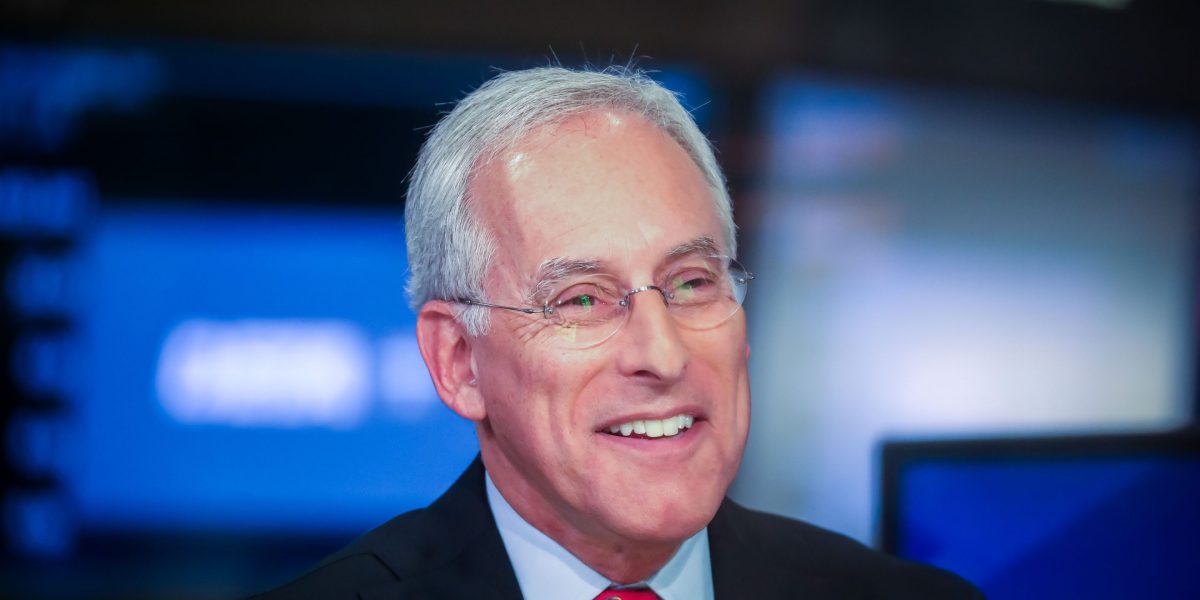
“Think about one’s role and how that fits into the broader business environment,” David Kostin, Goldman Sachs’ chief U.S. equity strategist, said on the Goldman Sachs’ Exchanges podcast

“If you understand where you sit and your contributions to the commercial process, then you can see how that changes over time.”

As AI-powered automation replaces jobs at a fraction of the cost of human labor, understanding the value of your own skills—and whether tools like ChatGPT can outperform them—has never been more critical. Investing in the development of in-demand skills may well determine whether you remain employable in the future.

Don’t know your worth? Human skills are also in demand

Luckily for those unable to put an exact number to their job function, it’s not just commercial awareness that is key in the current market. 

Kostin’s advice reflects a broader shift inside Wall Street firms, where technical skills, like using AI tools, are increasingly expected—but no longer enough on their own. 

Judgement, context, and self-awareness are also becoming real differentiators.

Data from LinkedIn backs up Kostin’s thinking. While AI literacy tops the professional networking company’s list of the fastest-growing skills in the U.S., softer skills like conflict mitigation, adaptability, process optimization, and innovative thinking round out the top five.

AI won’t kill Wall Street jobs —but it’s ramping up competitive pressure

Goldman Sachs’ CEO David Solomon has echoed the view that for those with dreams to one day earn six figures on Wall Street, not all is lost, and AI is not expected to be an outright job killer for bankers.

“There is no question that when you put these tools in the hands of smart people, it increases their productivity,” Solomon told Axios in October. “You’re going to see changes in the way analysts, associates, and investment bankers work.”

“But if you’re looking at it and assuming an organization like Goldman Sachs…is just going to have less people, I don’t think it works that way,” he added.

Even so, the pipeline into Wall Street is tightening. At several business schools, including NYU (Stern), MIT (Sloan), and Dartmouth (Tuck), the share of graduates entering investment banking has slowly declined. At Harvard and Columbia, placements have held up better, underscoring how competitive the path has become.

And even for those who manage to break in, the ride isn’t always smooth. Layoffs remain a constant threat in an industry prone to cyclical downturns, and some junior bankers have already faced this reality.

Solomon has urged young employees not to shy away from opportunities.

“I would tell you that sometimes the best opportunities come from being asked to do something you don’t want to do, and actually taking it on and trying to do it. Because that’s when people grow the most. That’s where I grew the most,” Solomon told his company’s summer interns in July.

Looking ahead, Solomon encouraged patience in an era defined by uncertainty.

“You have no idea where your career will take you, you have no idea where your life will take you,” Solomon added. “But it’s an incredible journey and you’re at the beginning of it, and my biggest and most important message is don’t be in a hurry.”


Source link

Continue Reading

Business

Top AI defense CEO sees China planning for a ‘very protracted conflict’ and the U.S. running out of weapons in 7 days

Published

on


When it comes to a potential future conflict, especially with China, the U.S. may be on its back foot, claim experts at the intersection of AI and defense.

Speaking at the Fortune Brainstorm AI conference in San Francisco last week, Tara Murphy Dougherty, the CEO of defense software company Govini, said that in a conflict with China the U.S. could run out of some munitions in seven days, while China could potentially hold out longer.

“They are planning for a very protracted conflict, and would be happy to draw that fight out to bleed American stockpiles dry, because they aren’t missing the economic piece of this puzzle,” Dougherty said.

This possibility should be troubling to the U.S., and yet there is no easy fix, explained Dougherty. The U.S. stockpile of munitions and other war time resources are held up by various obstacles established over years, she said.

“Unfortunately, those stockpiles are low enough, and the United States has outsourced so much manufacturing capacity at this point, that the amount of time it will take to build the munitions and weapons systems that the United States needs is just much, much too long,” she said.

The U.S. could indeed run out some munitions especially in a conflict with China over the Taiwan strait, according to a study by the Center for Strategic and International Studies. Still, the study only singled out certain types of munitions such as long range and precision-guided munitions in under a week.

At the same time, the U.S. has the second most number of nuclear warheads, just behind Russia, and significantly more than China’s 600, according to the International Campaign to Abolish Nuclear Weapon (ICAN).

The war in Ukraine, which has escalated since Russia’s invasion in 2022, has shown the need for countries to be nimble when it comes to the resources required for war. Yet, in a war time situation it’s unclear how quickly the U.S. would be able to mobilize, Dougherty added. 

“Our weapon systems and military platforms have historically low operational availability, which basically means, if we need to go to war, half the fleet is sitting in depot or at dock,” she said.

The Trump administration and Department of War secretary Pete Hegseth have tried to spur a change in the status quo. Earlier this year, Hegseth sent a memo to senior Pentagon leadership asking for the Army to restructure its acquisition systems and close redundant and inefficient programs.

Using AI, though, may be another way to help America’s war readiness, added Gary Steele, the CEO of AI-powered autonomous systems company Shield AI. Steele said AI will completely transform the aerospace and defense industry so much so that in 20 years it will look radically different.

“You’re gonna have lower cost systems, AI-led, software-led, not these super expensive, incredibly elaborate systems that just get shut down,” said Steele. “I think there’s a revolution happening, and we’re at the very beginning of that journey.”


Source link

Continue Reading

Business

Lovable hits $6.6 billion valuation as its CEO says it wants to be ‘the last piece of software’ companies ever buy

Published

on


Swedish AI coding startup Lovable has just raised $330 million in Series B funding round at a $6.6 billion valuation, more than tripling its worth from just five months ago. CEO Anton Osika told Fortune the funding would further the company’s mission to become “the last piece of software” needed by companies and developers.

The round was led by CapitalG and Menlo Ventures’ Anthology fund, with participation from NVIDIA’s venture arm NVentures, Salesforce Ventures, Databricks Ventures, and strategic investors including Atlassian Ventures and HubSpot Ventures. It comes just one month after Lovable announced it had hit $200 million in annual recurring revenue.

The company has grand aims to make software engineering accessible to anyone by promoting “vibe-coding,” a process in which a user describes in plain language the product they want to build or the function of a piece of software they want to create, and AI writes the code to produce that result. 

“Our mission is to let anyone be a builder,” Osika said.

He predicted a world where every company can build its own bespoke software, rather than depending on expensive, and less customized products from major tech vendors. For instance, rather than purchasing different tools for customer relationship management, project tracking, or inventory management, Osika envisions companies using Lovable to simply build whatever they need on demand. 

Companies are already seeing results from some of Lovable’s products. At Zendesk, teams using Lovable have been able to move from idea to working prototype in three hours instead of six weeks, according to Jorge Luthe, the company’s Senior Director of Product. While at management consulting firm McKinsey, Osika said engineers used his company’s product to build in a few hours what they had been waiting four to six months for their internal development team to deliver.

“Anyone being able to go with an arbitrary software problem and just explain it to Lovable and solve it, is becoming a universal reality,” he said. 

Skeptics say that vibe coding doesn’t always result in the best quality software. The code vibe coding tools produce can be inefficient or contain security flaws that could present a serious risk to the company deploying it, depending on what it is being used for. In addition, just because tools like Lovable allow people without any coding experience to create software for their specific needs, it doesn’t mean that those non-developers will be able to maintain that code over time, these critics say.

Lovable says it sees three main use cases emerge among enterprise customers, Osika said. Some organizations are building core business systems entirely on Lovable; others are using it to build internal tools that previously stalled in development backlogs for months; and some product teams are using it to validate ideas with functional prototypes rather than static designs.

“Enterprises are reworking entire workflows with AI, because you can build AI applications with Lovable in just one prompt,” Osika said. “It becomes kind of the work where work gets done.”

Competition heats up in AI-powered coding

Lovable is operating in an increasingly competitive landscape and facing competition from fellow start-ups as well as bigger players that are now releasing their own coding products. While Lovable uses foundational models from OpenAI, Google, and Anthropic to power its own product, these companies are now releasing their own coding tools that could compete more directly.

“We just see them as partners,” Okisa said of the competition with major AI labs. “I think as software and AI kind of converges, there’s going to be more overlap in what companies do, but what people say and why they choose us, despite that there are other alternatives, is that Lovable just works.”

Matt Murphy, a partner at Menlo Ventures who led the investment, said that Lovable’s strategy is to build a “beloved layer” of software on top of the AI labs’ models that customers want to pay for. “The numbers speak for themselves,” Murphy said, noting that Lovable has transformed a latent market of tens of millions of people into developers.

“Lovable has done something rare: built a product that enterprises and founders both love. The demand we’re seeing from Fortune 500 companies signals a fundamental shift in how software gets built,” Laela Sturdy, Managing Partner at CapitalG added.

This story was originally featured on Fortune.com


Source link

Continue Reading

Business

Trump suggests ‘warrior dividends’ will be partly paid for by tariff revenue, $100B below goal

Published

on


President Donald Trump will dole out more than one million checks to American military personnel as the administration seeks to address Americans’ growing cost-of-living concerns. 

Trump announced in a primetime address on Wednesday a “warrior dividend” for 1.45 million U.S. military personnel to be distributed ahead of the holidays. The announcement of the checks comes as Trump grapples with diminishing approval ratings on the economy and rising concern of an affordability crisis, in part because of the inflationary consequences of his sweeping tariff policy. 

As Trump works to assuage economic anxiety—blaming the state of the economy on the Biden administration while simultaneously saying the economy has never been better—Trump alluded to lower mortgage rates and housing reform in addition to his decision to send checks to military members.

“Military service members will receive a special—we call warrior dividend—before Christmas—a warrior dividend,” Trump said. “In honor of our nation’s founding in 1776, we are sending every soldier $1,776. Think of that. And the checks are already on the way.”

The president said the administration has been able to raise a significant amount of money as a result of levies put in place earlier this year.

“We made a lot more money than anybody thought because of tariffs, and the [One Big Beautiful] Bill helped us along,” he said. “Nobody deserves it more than our military.”

A senior administration official told Fortune the one-time “warrior dividend” checks will cost $2.6 billion and act as a housing supplement to eligible service members, including 1.28 million active component military members and 174,000 reserves. Through the One Big Beautiful Bill, Congress appropriated $2.9 million to the Department of Defense for supplements for basic housing allowances.

The White House did not address Fortune’s inquiry about how tariff revenue would finance the checks.

Lagging tariff revenue

The nearly 1.5 million checks are the latest economic relief effort Trump has associated with tariff revenues, including a $12 billion aid package for tariff-roiled farmers and $2,000 rebate checks for Americans. The president also claimed the income could be used to slash the ballooning $38 trillion debt. However, despite the president touting the import taxes as a stream of government income, actual revenue brought in from the levies fall far below White House estimates.

Economists reduced projected tariff revenue after the Trump administration scrapped tariffs on grocery staples like bananas, coffee, and beef last month in an affordability scramble. Pantheon Macroeconomics analysts wrote in a recent report the custom duties are bringing in about $400 billion annually, $100 billion less than the half-a-trillion dollars Treasury Secretary Scott Bessent forecasted in August

The analysts attributed the more modest revenue in large part to plummeting Chinese imports, which fell 7.5% year-over-year in October, and 7.8% in November, according to supply-chain software company Descartes Systems Group, as U.S. companies sought products from countries like Vietnam, where tariff rates are lower. The weaker imports follow a surge in shipments earlier this year as businesses stockpiled products in an attempt to dodge the brunt of the levies.  

Indeed, tariff revenue may have already peaked, with the Treasury Department’s monthly statement released last week showing the government collected $30.75 billion in customs duties in November, down from $31.35 billion collected in October. From April, following the announcement of “Liberation Day” tariffs, until October, revenues have been increasing month-over-month.

Trump’s lofty idea of redistributing tariff revenue to Americans has previously been caveated by his own cabinet. Bessent told Fox News’ Sunday Morning Futures in mid-November “we will see” about tariff-funded rebate checks.

The Treasury secretary said earlier last month in an interview on ABC’s This Week With George Stephanopoulos the $2,000 dividends could instead take the form of tax breaks that have already been signed into law.

“Those are substantial deductions that, you know, are being financed in the tax bill,” Bessent said.


Source link

Continue Reading

Trending

Copyright © Miami Select.