Business
As data-center operator CoreWeave prepares for earnings, stock bears worry its finances are emblematic of an AI bubble
Published
4 weeks agoon
By
Jace Porter
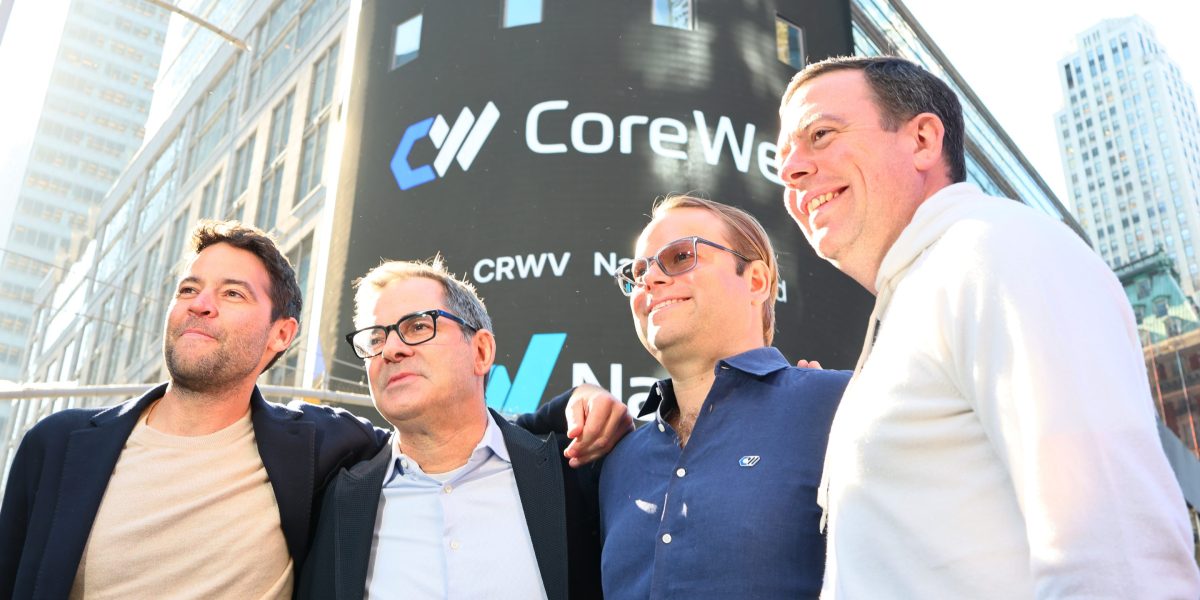
A vast data center in Plano, Texas, is a symbol of the enormous AI infrastructure boom that has boosted stock markets and driven U.S. economic growth over the past year. The data center occupies more than 450,000 square feet and cost $1.6 billion to construct and equip. It supplies 30 megawatts of computing power to train and run AI models. Yet the company that runs it is a leading candidate to be ground-zero for a future AI financial meltdown.
The data center is one of dozens around the world operated by CoreWeave, a company that develops and manages data centers and sells their computing capacity to technology companies. Its business is at the center of the AI economy—providing computing power to meet the voracious demand of the likes of Microsoft and OpenAI. But CoreWeave doesn’t own the Plano facility, nor does it own most of the data hubs it’s operating. And that is a part of the problem.
The company is built, by its own admission, on a mountain of debt—obligations it has piled up as it races to build out a network of server farms for its customers. And that mountain looms far larger than the piles of cash that CoreWeave has brought in the door so far. When the company announces earnings on Monday, bulls and bears alike will be watching to see how its revenue is growing, and whether it has been able to pare its losses. CoreWeave’s earnings are likely to be a bellwether for the state of the entire AI boom, and for the industry’s massive and expensive infrastructure buildout in particular.
CoreWeave has $7.6 billion in current liabilities—bills that fall due within 12 months—on its balance sheet, and $11 billion in debt overall, according to its most recent quarterly earnings report, filed in August. Coming from a tech giant like Google or Microsoft with tens of billions in free cash flow, such numbers wouldn’t raise an eyebrow. But CoreWeave’s revenues were only $1.9 billion in 2024. On its Q2 earnings call, CEO Michael Intrator told analysts that full year 2025 revenue would land between $5.15 billion to $5.35 billion. On the same call, the CEO said he expected CoreWeave’s capex for the year would total between $20 billion and $23 billion.
Those short-term figures pale beside a bigger and potentially more onerous obligation that isn’t on its balance sheet: the $34 billion in scheduled lease payments that will start kicking in between now and 2028. Many of those payments are stretched over relatively long terms, of 10 years or more. Still, some of this is for data centers and office buildings that have not yet begun to operate or bring in revenue—representing a vulnerability if any of the as-yet-unprofitable startups CoreWeave sells computing services to are unable to meet their contractual obligations, or if construction delays mean CoreWeave is not able to provide capacity on time, allowing customers to cancel contracts.
In a sense, Coreweave is a metaphor for the broader AI industry at the present moment, as top companies commit to enormous capex spending today in the confidence that it’ll be justified by future revenue from AI platforms and services. Investors appear to be broadly convinced by the company’s narrative: CoreWeave’s stock price is up 160% since the company’s IPO in March.
But Fortune’s analysis of CoreWeave’s filings with the Securities and Exchange Commission, which are laced with warnings and caveats, show how risky the company’s business model could be. In interviews with several analysts, bulls and bears agreed that CoreWeave’s fundamentals, as reflected in its filings, don’t currently add up. “A lot has to go right,” says Thomas Blakely, a managing director of software equity research at Cantor Fitzgerald, who rates CoreWeave “overweight.” (Of 26 equity analysts who currently cover the stock, 14 had the equivalent of buy or outperform ratings on the shares, while nine had “hold” ratings, and three had “underperform” or “sell” recommendations, according to data from S&P Market Intelligence.)
The bears see CoreWeave as a strong candidate to find itself underwater with its mounting liabilities, making it potentially the first domino to fall in the AI ecosystem. “To say they’ll scale out of this is questionable,” says Gil Luria, the head of technology research at the investment firm D.A. Davidson. “I don’t see how it becomes more profitable.” He believes that the likeliest outcome for CoreWeave on a five-year time horizon is bankruptcy—either because its current customers will be able to rely on their own infrastructure by then, or because an increasingly stretched CoreWeave will no longer be able to borrow.
In a statement to Fortune, a company spokesperson said that “CoreWeave’s capital structure and financial performance are strong and underpinned by long-term take-or-pay contracts signed with the world’s leading enterprises and AI labs who partner with CoreWeave because we deliver the best AI cloud.” The statement went on to say that the company structured its contracts to “support and repay any related debt obligations while generating additional free cash flow. CoreWeave operates in a supply-constrained market where demand far exceeds capacity, and our hyper-growth is evidence of the trust leading companies place in us to power their most critical AI workloads.”
Betting big on tomorrow’s revenue
With the company continuing to make huge new spending commitments even as it books new future revenue, AI investors’ attention will be glued to its upcoming quarterly earnings report. One number that everyone will be watching is CoreWeave’s “remaining performance obligations,” or RPOs—essentially revenues that CoreWeave has booked but that have not yet been paid. (Like its scheduled lease payments, CoreWeave’s RPOs are excluded from its balance sheet.)
If CoreWeave is booking the kinds of contracts that will pull it out of debt sooner rather than later, the RPOs level—and the forecast for how quickly those future bookings are likely to turn into actual cash—are where they would show up. The company has announced several major new deals since its last quarterly earnings announcement, including a $14.2 billion agreement to supply Meta with computing capacity, and an pact with AI startup Poolside for a data center stuffed with 40,000 Nvidia GPUs. So it is likely its RPO total will climb significantly. Wall Street analysts’ forecasts for the company’s 2026 revenue range from $10.9 billion to $14.9 billion, according to data compiled by LSEG.
Bulls argue that this is exactly how the boom will play out in CoreWeave’s favor: The revenue will come through, in great quantity, and its scale will solve the company’s problems by catching up with and then outpacing its capital expenditures. In that scenario, the company becomes the next Levi Strauss or Amazon Web Services, providing the “picks and shovels” of the AI boom, and getting filthy rich. “The potential is beyond the scope of our imagination at this point,” says Kevin Dede, a senior technology analyst at the financial services firm H.C. Wainwright, which rates CoreWeave a “buy.”
But for now CoreWeave is miles away from being profitable and is bleeding cash, absent its ability to issue debt. The RPOs it reported in its most recent earnings that are likely to be realized in the next 12 months are not, on their own, sufficient to cover its current obligations and announced growth plans (more on that shortly). The company has razor-thin operating margins—1.6% in the past quarter. After accounting for its large interest expenses, those margins turn sharply negative. The company lost more than $600 million on $2.2 billion in revenue in the first six months of 2025. “That’s not great,” Luria says. “Is there any way that gap closes?”
Barring an enormous surge in revenue over the next 12 months or so, the company will likely need to borrow more money, or renegotiate with creditors, in order to cover the obligations already on its books. To be sure, the AI boom could deliver that revenue surge—but even slight weakening in spending growth across the industry could hit CoreWeave disproportionately. Kerrisdale Capital, an investment management firm that is shorting the stock, is pithy in its conclusions: CoreWeave, it wrote in a September report, is “the poster child of the AI infrastructure bubble.”
A pivot to AI, fueled by debt
CoreWeave began as a crypto-mining company, a side project of a few friends who were hedge-fund traders. Crypto mining, like AI, relies heavily on graphic processing units, or GPUs, with the chips racing to solve complicated algorithms that spit out currency rewards for correctly verifying blockchain transactions, and CoreWeave was a steady buyer.
Over time, Brian Venturo, one of the company’s founders, realized that the rise in AI would be a major factor fueling the surge in demand for the computing power of the GPUs that CoreWeave was already accumulating. Beginning in October 2021, CoreWeave entered into two deals with asset management firm Magnetar Capital, raising first $50 million in convertible notes, and then a year later, an additional $125 million, also in convertible notes. The company used nearly all of it to buy GPUs from Nvidia. Over the next few years, CoreWeave would secure billions of dollars in a combination of debt and equity, building out a sprawling array of data centers across the U.S., and eventually expanding to the U.K.
This March, CoreWeave’s IPO made it one of the closest things to a pure-play AI company to debut on public markets. Initially, fears about the company’s debt load restrained its stock’s performance. But its shares took off in May after it reported its first quarterly earnings, including soaring revenue growth of 420% quarter-on-quarter. While the price has declined since a peak in June, CoreWeave shares closed on Friday at $104, up from a debut of $40.
But as Luria puts it, the bear case for CoreWeave is simple math. The company’s business model is to borrow capital and then use that capital to build data centers filled with GPUs and then sell time on those GPUs to AI companies. “The question is, are they getting a sufficient return … on their investment to justify the interest they’re paying on their debt?” Luria says.
Its most recent filings show how hefty that debt has become. The problem isn’t just the amount of CoreWeave’s debt. It’s the structure—most of it is more expensive than average for corporate debt, and much of it comes due in the next nine months. Of CoreWeave’s current liabilities, $3.6 billion is debt payable by June 30, 2026, just part of $11 billion in overall debt the company carries on its balance sheet. Much of that debt carries hefty interest rates of between 9% and 15%, according to the financial statements, with 11% being the weighted average rate overall. (This fall, rates on newly issued investment-grade corporate debt have hovered between 5.5% and 6%, according to Moody’s. The rate at which CoreWeave is able to borrow has come down over time, with most of its newer debt issued at closer to 9%. )
The majority of CoreWeave’s outstanding debt, its statements show, is in the form of two loans, called Delayed Draw Term Loan (DDTL)1.0 and DDTL 2.0. There is $1.8 billion outstanding on the DDTL 1.0, at a 15% interest rate, and $5 billion in DDTL 2.0, at an 11% interest rate. The company has begun payment on DDTL 1.0; quarterly principal payments on DDTL 2.0 are due beginning in January 2026. (The interest rates on both these loans are floating.)
This is where the company’s RPOs come in. CoreWeave says that as of June 30 it had a little over $30 billion, the majority of which should turn into actual sales over the next four years. The company says 50% of that amount, or $15 billion, will be recognized in the next two years. Assuming half of that will in turn be recognized in the next year, that means the company should have $7.5 billion coming in. But if its operating margins remain at just 1.6%, the company will only generate $120 million in income from this $7.5 billion—not enough to cover its interest expenses or make the principal repayments on its debt. That implies that CoreWeave’s returns remain far below the cost of its capital.
Higher RPOs, of course, would mean more revenue for CoreWeave next year. That said, there are also far more capital expenses to come. CoreWeave continues to spend heavily to purchase Nvidia GPUs—which make up the great majority of its capital expenditures—and other equipment to outfit its data centers. In the first half of 2025, for example, it invested $4.7 billion in property, plant and equipment while bringing in only $2.2 billion in revenue. The report from Kerrisdale cites similar concerns as Luria in justifying its short position. CoreWeave is “a debt-fueled GPU rental business with no moat, dressed up as innovation,” the firm writes, arguing that the stock faces a 90% downside.
Can CoreWeave count on its customers?
Luria and Kerrisdale both cite CoreWeave’s highly concentrated customer base as another potential peril—a reality that CoreWeave itself acknowledged in its last earnings report. “A substantial portion of our revenue is driven by a limited number of our customers, and the loss of, or a significant reduction in, spend from one or a few of our top customers would adversely affect our business,” the company wrote. Most notably: In the second quarter of 2025, an eye-popping 71% of CoreWeave’s revenue came from Microsoft alone.
To be sure, Microsoft has a better credit rating than many countries, including the United States, and is unlikely to renege on its contract with CoreWeave. And CoreWeave’s contracts with its lessees generally require them to pay to the ends of their leases even if they don’t wind up utilizing them, except in case of “nonperformance.”
Much of CoreWeave’s utility has come from offering readily available compute as those companies raced to scale up their own operations. But with Microsoft set to spend tens of billions of dollars on developing its own data centers, it may not need CoreWeave’s services in the future. “They will pay their obligations, but the likelihood of them renewing at the end of the contract is much less guaranteed,” Luria says.
CoreWeave’s other major customer, OpenAI, is another matter. In March, CoreWeave entered an agreement with Sam Altman’s AI giant, with OpenAI committed to paying $11.9 billion through October 2030, with a $4 billion expansion announced in May. But OpenAI itself has made commitments far beyond its current cash flow—including commitments in the many hundreds of billions to Oracle, Nvidia and other data center providers.
If OpenAI runs into any financial troubles, Luria says, CoreWeave likely wouldn’t be first to receive payments, compared to much larger OpenAI partners like Microsoft, Amazon, or even Oracle. (That’s also the case for some of the other, smaller venture-backed and loss-making AI startups CoreWeave serves, such as poolside, Cohere, and Mistral.) To rely on CoreWeave’s ties to OpenAI, he says, “You have to believe that OpenAI is going to be unbelievably successful, so much so that it can pay everybody that’s ahead in line.”
All eyes on earnings
All of this means there’ll be plenty at stake when CoreWeave reports earnings on Monday. The company will also be digesting a recent setback: In late October, the shareholders of Core Scientific, a crypto miner with a hoard of computing resources that CoreWeave coveted, rejected CoreWeave’s $9 billion all-stock acquisition offer. (CoreWeave will console itself with a $270 million breakup fee—an amount that will help it cover the $360 million it is expected to pay Core Scientific to lease data center capacity from it next year. Overall, CoreWeave is on the hook to pay Core Scientific some $10 billion in future lease payments over the next 12 years, which may have been one reason CoreWeave was eager to try to use its highly-valued shares to purchase Core Scientific in an all-equity deal valued at $9 billion when the offer was initially made.)
The argument for CoreWeave’s success is just as simple as the math against it: AI is going to represent a transformational shift in the global economy, and CoreWeave is powering the technology’s growth. As the development of AI accelerates, so will the demand for computing power from companies aside from the hyperscalers, all hungry for the services of providers like CoreWeave. What’s more, today’s creditors may be willing to wait a little longer for that demand to materialize: The lenders behind DDTL 2.0 recently renegotiated the terms of the loan to delay the start of principal payments.
Blakely, at Cantor Fitzgerald, says that CoreWeave is already diversifying its customer base, noting the recent deal with Meta. “It’s a growth business,” he says, in reference to CoreWeave’s capital expenditures. “If business is growing, you have to invest against it.” He and other bulls see a future where the company is no longer laden with debt. Once CoreWeave sheds its liabilities over the next five years, Blakely says, a growing percent of its revenue can begin coming from infrastructure that’s already paid off, boosting CoreWeave’s margins. Moreover, Blakely says that new models of chips might run more efficiently or be able to fetch a higher premium from customers, allowing CoreWeave to hold more pricing power.
Blakely says that those $30.1 billion in RPOs—the revenue that has been booked but not yet delivered—are likely to increase meaningfully in CoreWeave’s next earnings, based on recently announced agreements. But the number to watch might be the additional obligations in borrowing that the company will take on to service them: If those obligations scale up alongside the booked revenue, bears say, CoreWeave still risks running out of cash unless it takes on yet more debt, raises more equity, or gets existing creditors to extend terms.
Blakely acknowledges that a sustainable path forward for CoreWeave is perilous. “A lot has to go right,” he says. Still, he compares the current moment in AI to the beginning of the smartphone era, where analysts doubted Apple’s claims that it would transform global communication. “CoreWeave is a leader there in terms of this market,” Blakely says. “If they can maintain that lead … they will be able to participate in the spoils.”
CORRECTION: An earlier version of this story stated incorrectly that Coreweave’s quarterly principal payments for DDTL 1.0 would begin in January 2026; those payments have already begun.
This article was updated to add a range of analysts’ projections for CoreWeave’s 2026 revenue.
You may like
Business
US debt crisis: Most likely fix is severe austerity triggered by a fiscal calamity
Published
23 minutes agoon
December 6, 2025By
Jace Porter
One way or another, U.S. debt will stop expanding unsustainably, but the most likely outcome is also among the most painful, according to Jeffrey Frankel, a Harvard professor and former member of President Bill Clinton’s Council of Economic Advisers.
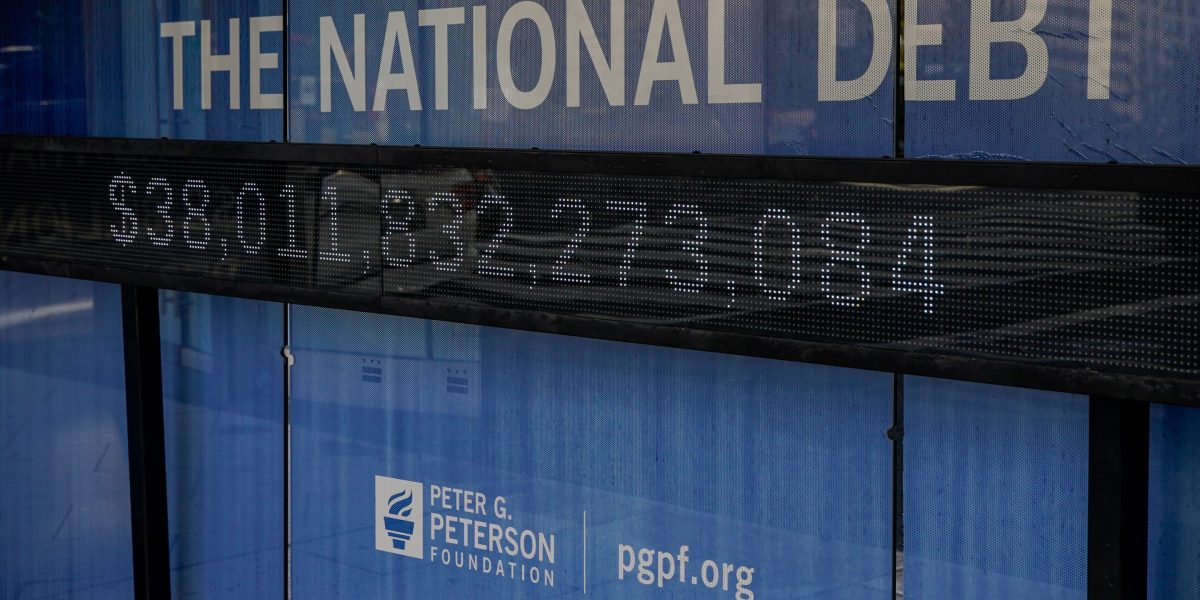
Publicly held debt is already at 99% of GDP and is on track to hit 107% by 2029, breaking the record set after the end of World War II. Debt service alone is more than $11 billion a week, or 15% of federal spending in the current fiscal year.
In a Project Syndicate op-ed last week, Frankel went down the list of possible debt solutions: faster economic growth, lower interest rates, default, inflation, financial repression, and fiscal austerity.
While faster growth is the most appealing option, it’s not coming to the rescue due to the shrinking labor force, he said. AI will boost productivity, but not as much as would be needed to rein in U.S. debt.
Frankel also said the previous era of low rates was a historic anomaly that’s not coming back, and default isn’t plausible given already-growing doubts about Treasury bonds as a safe asset, especially after President Donald Trump’s “Liberation Day” tariff shocker.
Relying on inflation to shrink the real value of U.S. debt would be just as bad as a default, and financial repression would require the federal government to essentially force banks to buy bonds with artificially low yields, he explained.
“There is one possibility left: severe fiscal austerity,” Frankel added.
How severe? A sustainable U.S. debt trajectory would entail elimination of nearly all defense spending or almost all non-defense discretionary outlays, he estimated.
For the foreseeable future, Democrats are unlikely to slash top programs, while Republicans are likely to use any fiscal breathing room to push for more tax cuts, Frankel said.
“Eventually, in the unforeseeable future, austerity may be the most likely of the six possible outcomes,” he warned. “Unfortunately, it will probably come only after a severe fiscal crisis. The longer it takes for that reckoning to arrive, the more radical the adjustment will need to be.”
The austerity forecast echoes an earlier note from Oxford Economics, which said the expected insolvency of the Social Security and Medicare trust funds by 2034 will serve as a catalyst for fiscal reform.
In Oxford’s view, lawmakers will seek to prevent a fiscal crisis in the form of a precipitous drop in demand for Treasury bonds, sending rates soaring.
But that’s only after lawmakers try to take the more politically expedient path by allowing Social Security and Medicare to tap general revenue that funds other parts of the federal government.
“However, unfavorable fiscal news of this sort could trigger a negative reaction in the US bond market, which would view this as a capitulation on one of the last major political openings for reforms,” Bernard Yaros, lead U.S. economist at Oxford Economics, wrote. “A sharp upward repricing of the term premium for longer-dated bonds could force Congress back into a reform mindset.”
Business
The $124 trillion Great Wealth Transfer is intensifying as inheritance jumps to a new record
Published
2 hours agoon
December 6, 2025By
Jace Porter
Nearly $300 billion was inherited this year as the Great Wealth Transfer picks up speed, showering family members with immense windfalls.
According to the latest UBS Billionaire Ambitions Report, 91 heirs inherited a record-high $297.8 billion in 2025, up 36% from a year ago despite fewer inheritors.
“These heirs are proof of a multi-year wealth transfer that’s intensifying,” Benjamin Cavalli, head of Strategic Clients & Global Connectivity at UBS Global Wealth Management, said in the report.
Western Europe led the way with 48 individuals inheriting $149.5 billion. That includes 15 members of two “German pharmaceutical families,” with the youngest just 19 years old and the oldest at 94.
Meanwhile, 18 heirs in North America got $86.5 billion, and 11 in South East Asia received $24.7 billion, UBS said.
This year’s wealth transfer lifted the number of multi-generational billionaires to 860, who have total assets of $4.7 trillion, up from 805 with $4.2 trillion in 2024.
Wealth management firm Cerulli Associates estimated last year that $124 trillion worldwide will be handed over through 2048, dubbing it the Great Wealth Transfer. More than half of that amount will come from high-net-worth and ultra-high-net-worth people.
Among billionaires, UBS expects they will likely transfer about $6.9 trillion by 2040, with at least $5.9 trillion of that being passed to children, either directly or indirectly.
While the Great Wealth Transfer appears to be accelerating, it may not turn into a sudden flood. Tim Gerend, CEO of financial planning giant Northwestern Mutual, told Fortune’s Amanda Gerut recently that it will unfold more gradually and with greater complexity.
“I think the wealth transfer isn’t going to be just a big bang,” he said. “It’s not like, we just passed peak age 65 and now all the money is going to move.”
Of course, millennials and Gen Zers with rich relatives aren’t the only ones who sat to reap billions. More entrepreneurs also joined the ranks of the super rich.
In 2025, 196 self-made billionaires were newly minted with total wealth of $386.5 billion. That trails only the record year of 2021 and is up from last year, which saw 161 self-made individuals with assets of $305.6 billion.
But despite the hype over the AI boom and startups with astronomical valuations, some of the new U.S. billionaires come from a range of industries.
UBS highlighted Ben Lamm, cofounder of genetics and bioscience company Colossal; Michael Dorrell, cofounder and CEO of infrastructure investment firm Stonepeak; as well as Bob Pender and Mike Sabel, cofounders of LNG exporter Venture Global.
“A fresh generation of billionaires is steadily emerging,” UBS said. “In a highly uncertain time for geopolitics and economics, entrepreneurs are innovating at scale across a range of sectors and markets.”
Business
Apple rocked by executive departures, with chip chief at risk of leaving next
Published
2 hours agoon
December 6, 2025By
Jace Porter
Apple Inc., long the model of stability in Silicon Valley, is suddenly undergoing its biggest personnel shake-up in decades, with senior executives and key engineers both hitting the exits.
In just the past week, Apple’s heads of artificial intelligence and interface design stepped down. Then the company announced that its general counsel and head of governmental affairs were leaving as well. All four executives have reported directly to Chief Executive Officer Tim Cook, marking an exceptional level of turnover in Apple’s C-suite.
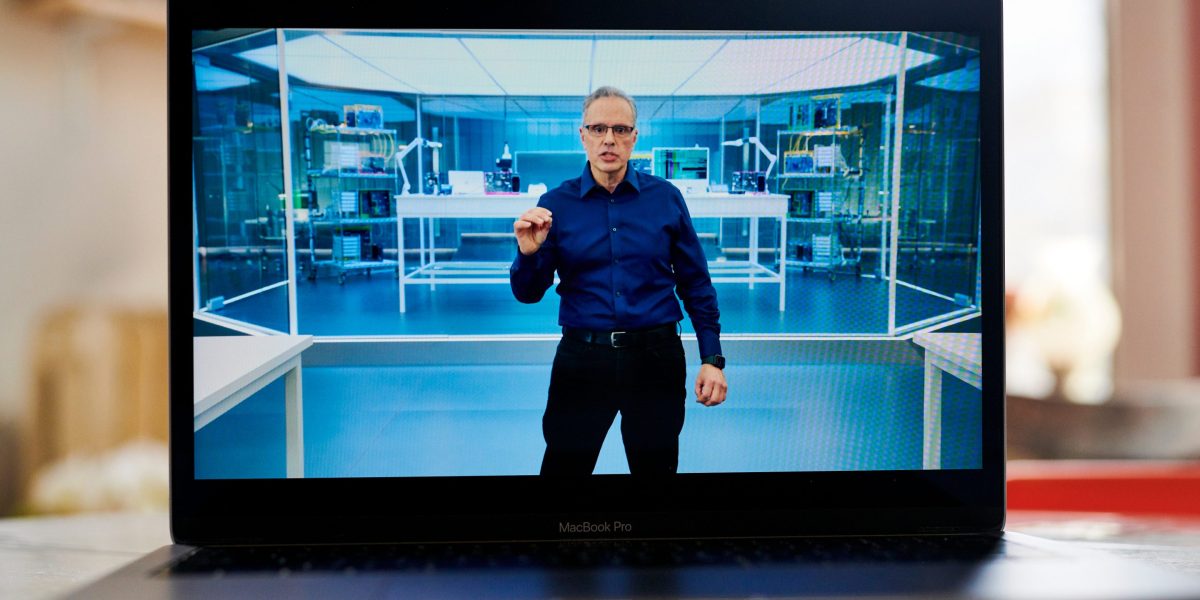
And more changes are likely coming. Johny Srouji — senior vice president of hardware technologies and one of Apple’s most respected executives — recently told Cook that he is seriously considering leaving in the near future, according to people with knowledge of the matter. Srouji, the architect of Apple’s prized in-house chips effort, has informed colleagues that he intends to join another company if he ultimately departs.
At the same time, AI talent has been fleeing for tech rivals — with Meta Platforms Inc., OpenAI and a variety of startups poaching many of Apple’s engineers. That threatens to hamper the company’s efforts to catch up in artificial intelligence, an area where it’s struggled to make a mark.
It all adds up to one of the most tumultuous stretches of Cook’s tenure. Though the CEO himself is unlikely to leave imminently, the company has to rebuild its ranks and figure out how to thrive in the AI era.
Within the company, some of the departures are cause for deep concern — with Cook looking to stave off more with stronger compensation packages for key talent. In other cases, the exits just reflect the fact that veteran executives are nearing retirement age. Still, many of the shifts constitute a disconcerting brain drain.
While Cook maintains that Apple is working on the most innovative product lineup in its history — a slate that’s expected to include foldable iPhones and iPads, smart glasses, and robots — Apple hasn’t launched a successful new product category in a decade. That leaves it vulnerable to poaching from a range of nimbler rivals better equipped to develop the next generation of devices around AI.
A spokesperson for Cupertino, California-based Apple declined to comment.
The exit of Apple’s AI chief, John Giannandrea, followed a number of stumbles in generative AI. The company’s Apple Intelligence platform has suffered from delays and subpar features. And a highly touted overhaul to the Siri voice assistant is roughly a year and a half behind schedule. Moreover, the software will rely heavily on a partnership with Alphabet Inc.’s Google to fill the gaps in its capabilities.
Against that backdrop, Apple began phasing Giannandrea out of his role in March but is allowing him to remain until next spring.
Within Apple, employees have long expected Giannandrea to step aside — and some have expressed surprise that he’s sticking around as long as he is.
But parting ways with Giannandrea sooner would have been taken as public acknowledgment of a problem, people familiar with the situation said.
Design veteran Alan Dye, meanwhile, is heading to Meta’s Reality Labs unit — a remarkable defection to one of Apple’s fiercest rivals.
Within a day of that news, Apple turned around and announced that it had poached one of Meta’s executives. Jennifer Newstead, chief legal officer at the social networking company, will become Apple’s general counsel. She helped oversee Meta’s successful antitrust battle with the US Federal Trade Commission — experience that’s likely to prove useful in Apple’s own legal fight with the Justice Department over alleged anticompetitive practices.
Read More: Apple Taps Meta Lawyer as General Counsel in Latest Shake-Up
Newstead is taking over for Kate Adams, who served eight years in the role and will retire in late 2026. Lisa Jackson, vice president for environment, policy and social initiatives, is retiring as well — and her duties will be divided up among other executives.
Though the news of Adams’ departure was jarring — especially considering the number of Apple legal disputes currently on her plate — she’s had a fairly long tenure for a general counsel at the company.
Jackson, meanwhile, was widely expected to be leaving soon. The former Obama administration official has kept a lower profile during President Donald Trump’s second term, opting to dispatch deputies to handle discussions with the White House. Bloomberg News had previously reportedthat she was considering retirement.
These exits follow an even bigger departure. Jeff Williams, Cook’s longtime No. 2, retired last month after a decade as chief operating officer. Another veteran leader, Chief Financial Officer Luca Maestri, stepped into a smaller role at the start of 2025 and is likely to retire in the not-too-distant future.
The flurry of retirements reflects a demographic reality for Apple. Many of its most senior executives have been at the company for decades and are roughly the same age — either in their 60s or nearing it.
Cook turned 65 last month, fueling speculation that he would join the exodus. People close to the executive have said that he’s unlikely to leave soon, though succession planning has been underway for years. John Ternus, Apple’s 50-year-old hardware engineering chief, is considered by employees to be the frontrunner CEO candidate.
When Cook does step down, he’s likely to shift into the chairman job and maintain a high level of influence over the iPhone maker. That makes it unlikely that Apple will select an outsider as the next CEO, even as executives like Nest Labs founder Tony Fadell are being pushed as candidates by people outside the company. Though Fadell helped invent Apple’s iconic iPod, he left the tech giant 15 years ago on less-than-friendly terms.
For now, Cook remains active at Apple and travels extensively on behalf of the company. However, the executive does have an unexplained tremor that causes his hands to shake from time to time — something that’s been discussed among Apple employees in recent months.
The shaking has been noticed by both executives and rank-and-file staff during meetings and large company gatherings, according to people familiar with the matter. But people close to Cook say he is healthy and refute rumors to the contrary that have circulated in Silicon Valley.
Read More: The Apple Insiders in the Running to Succeed Cook
A more imminent risk is the departure of Srouji, the chip chief. Cook has been working aggressively to retain him — an effort that included offering a substantial pay package and the potential of more responsibility down the road. One scenario floated internally by some executives involves elevating him into the role of chief technology officer. Such a job — overseeing a wide swath of both hardware engineering and silicon technologies — would potentially make him Apple’s second-most-powerful executive.
But that change would likely require Ternus to be promoted to CEO, a step the company may not be ready to take. And some within Apple have said that Srouji would prefer not to work under a different CEO, even with an expanded title.
If Srouji does depart, which isn’t yet a certainty, the company would likely tap one of his two top lieutenants — Zongjian Chen or Sribalan Santhanam — to replace him.
The recent shifts are already reshaping Apple’s power structure. More authority is now flowing to a quartet of executives: Ternus, services chief Eddy Cue, software head Craig Federighi and new COO Sabih Khan. Apple’s AI efforts have been redistributed across its leadership, with Federighi becoming the company’s de facto AI chief.
Ternus is also poised to take a starring role next year in the celebration of Apple’s 50th anniversary, further raising his profile. And he’s been given more responsibility over robotics and smart glasses — two areas seen as future growth drivers.
Further reorganization is likely. Deirdre O’Brien, head of retail and human resources, has been with Apple for more than 35 years, while marketing chief Greg Joswiak has spent four decades at the company. Apple has elevated the key lieutenants under both executives, preparing for their eventual retirements.
At the same time, Apple is contending with a talent drain in its engineering ranks. This has become a serious concern for the executive team, and Apple’s human resources organization has been instructed to ramp up recruitment and retention efforts, people familiar with the situation said.
Robby Walker, who had overseen Siri and an initiative to build a ChatGPT-like search experience, left the company in October. His replacement, Ke Yang, departed after only weeks in the job, joining Meta’s new Superintelligence Labs.
To help fill the void left by Giannandrea, Apple hired Google and Microsoft Corp. alum Amar Subramanya as vice president of artificial intelligence. He’ll report to Federighi, the software chief.
But there’s been a broader collapse within Apple’s artificial intelligence organization, spurred by the departure of AI models chief Ruoming Pang. Pang, along with colleagues such as Tom Gunter and Frank Chu, went to Meta, which has used eye-popping compensation packages to lure talent.
Roughly a dozen other top AI researchers have left the organization, which is suffering from low morale. The company’s increasing use of external AI technology, such as Google’s Gemini, has been a particular concern for employees working on large language models.
Apple’s AI robotics software team has also seen widespread departures, including its leader Jian Zhang, who likewise joined Meta. That group is tasked with creating underlying technology for products such as a tabletop robot and a mobile bot.
The hardware team for the tabletop device, code-named J595, has been bleeding talent too — with some headed to OpenAI. Dye also was a key figure overseeing that product’s software design.
Read More: Apple’s AI Push to Hinge on Robots, Security, Lifelike Siri
The user interface organization has been hit as well, with several team members leaving between 2023 and this year. That attrition culminated in Dye’s exit, which stemmed partly from a desire to integrate AI more deeply into products and a feeling that Apple hasn’t been keeping pace in the area. Another top interface leader under Dye, Billy Sorrentino, also left for Meta.
The hardware side of the design group — the team responsible for the physical look and feel of Apple’s products — has been nearly wiped out over the last half-decade. Many staffers followed former design chief Jony Ive to his studio, LoveFrom, or went to other companies.
Longtime interface designer Stephen Lemay is now stepping in as Dye’s replacement. Cook is also taking on more responsibility for overseeing design, a role that had been held by Williams.
Ive, a visionary designer who helped create the iPhone, iPad and Apple Watch, is now working with OpenAI to develop a new generation of AI-enhanced devices. That company acquired Ive’s startup, io, for more than $6 billion to jump-start its hardware business — setting its sights on Apple’s territory.
Like Meta, OpenAI has become a key beneficiary of Apple’s talent flight. The San Francisco-based company has hired dozens of Apple engineers across a wide range of fields, including people working on the iPhone, Mac, camera technology, silicon design, audio, watches and the Vision Pro headset.
In a previously unreported development, the AI company is hiring Apple’s Cheng Chen, a senior director in charge of display technologies. His purview included the optics that go into the Vision Pro headset. OpenAI recruited Tang Tan, one of Apple’s top hardware engineering executives, two years ago.
Read More: Apple’s Star Designer Who Introduced iPhone Air Leaves Company
And over the summer, the company lost the dean of Apple University, the internal program designed to preserve the company’s culture and practices after the passing of co-founder Steve Jobs. Richard Locke, who spent nearly three years at Apple, left to become dean of the Massachusetts Institute of Technology’s business school.
Fire at Brazil Airport Causes Evacuation, Smoke Engulfs Jet
US debt crisis: Most likely fix is severe austerity triggered by a fiscal calamity
Alix Earle and Braxton Berrios Reportedly Split
Trending
-
Politics8 years agoCongress rolls out ‘Better Deal,’ new economic agenda
-
Entertainment8 years agoNew Season 8 Walking Dead trailer flashes forward in time
-
Politics8 years agoPoll: Virginia governor’s race in dead heat
-
Entertainment8 years agoThe final 6 ‘Game of Thrones’ episodes might feel like a full season
-
Entertainment8 years agoMeet Superman’s grandfather in new trailer for Krypton
-
Politics8 years agoIllinois’ financial crisis could bring the state to a halt
-
Business8 years ago6 Stunning new co-working spaces around the globe
-
Tech8 years agoHulu hires Google marketing veteran Kelly Campbell as CMO