Business
As billionaires chase immortality, this startup cofounded by a Harvard genetics professor gets FDA approval for the first partial de-aging human trial
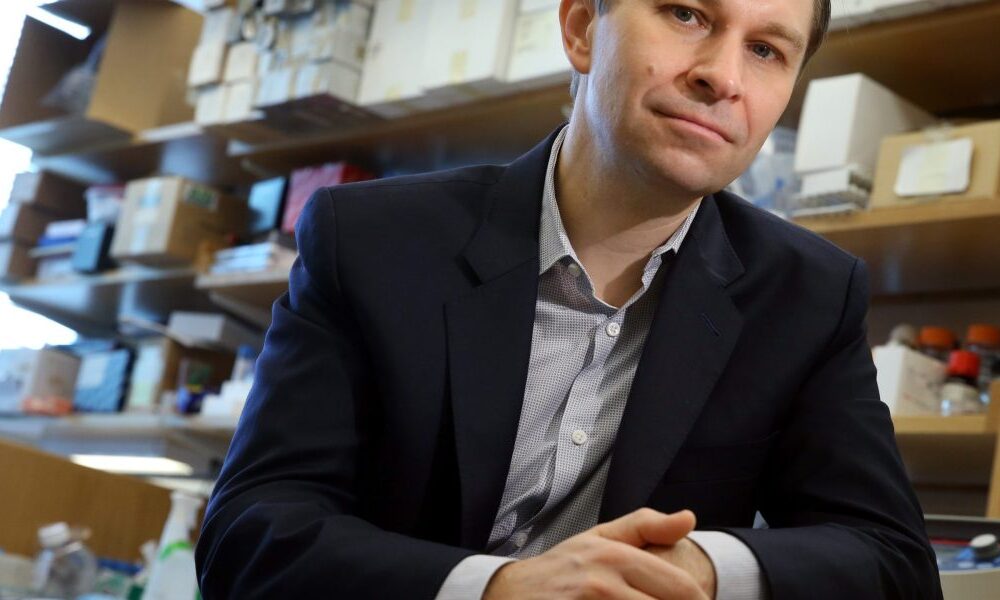
A startup cofounded by a renowned Harvard geneticist has taken a step toward cracking the human body’s biological breakdown by securing FDA approval to test its cutting-edge gene therapy on humans.
Life Biosciences, a biotech company cofounded by Harvard genetics professor David Sinclair, said Wednesday it had secured approval for a Phase 1 clinical trial aiming, in part, to restore vision in people with eye conditions such as glaucoma and non-arteritic anterior ischemic optic neuropathy (NAION) through “partial epigenetic reprogramming.” During the trial, researchers will attempt to turn back the biological clock on damaged cells in a person’s eye by directly injecting it. This allows the therapy to reach damaged retinal ganglion cells and deliver “rejuvenation instructions” directly to the target cells to help restore their function and potentially reverse vision loss.
The company will enroll its first patients over the next couple of months, with results potentially coming by the end of the year or early next year, CEO Jerry McLaughlin told Fortune.
McLaughlin, a pharmaceutical industry veteran who previously worked at Merck and at venture-backed biotechs such as Neos Therapeutics and AgeneBio said the approval was groundbreaking: “It’s a transformational day, I think, for science overall, for Life Biosciences, for the field of partial epigenetic reprogramming,” he said.
The FDA approval, which McLaughlin said researchers in his industry have been waiting on for years, puts the lean Life Biosciences team (fewer than 20 people) ahead of the pack, as the longevity boom is increasingly being underwritten by billionaire money.
Altos Labs, one of the highest-profile bets on cell rejuvenation, launched with $3 billion in funding in 2022 and reportedly counts Amazon founder and the world’s fourth-wealthiest person Jeff Bezos as an early backer. Meanwhile, NewLimit, the longevity startup cofounded by billionaire Coinbase CEO Brian Armstrong last year raised $130 million in Series B financing, to pursue epigenetic reprogramming. Even Elon Musk, Tesla CEO and the richest man in the world, has recently entered the longevity chat, saying at Davos aging is a “very solvable problem.”
Tackling vision loss first
Rather than focus on full-body de-aging, Life Biosciences’ is taking a “staged approach” to de-aging, first tackling optic neuropathies, conditions in which damage to the optic nerve erodes vision. The trial aims to restore some vision in both patients with glaucoma and NAION—both of which can cause blindness. Glaucoma is the second leading cause of blindness worldwide, according to Centers for Disease Control and Prevention, and it’s especially prevalent in adults between the ages of 64 and 84. NAION, meanwhile, is the “most common acute, optic neuropathy” in people over 50. McLaughlin said the company chose to focus on these diseases partly because of their outsized impact on patients.
“The bad news is there’s absolutely nothing to treat [NAION], and the even worse news is that there’s about a 20-to-30% chance in the next two to three years it’s going to happen in the second eye,” he said.
McLaughlin said Life Biosciences is already applying its epigenetic reprogramming to help treat other conditions. The company previously saw success in treating liver fibrosis, or MASH, which he said showed the company’s approach “transcends organs.”
While the company is first focused on helping patients with vision loss, McLaughlin isn’t ignorant about the potentially giant opportunity opening up thanks to a rapidly aging global population.
“Our population replacement is not there in the U.S. We’re well below population replacement,” said McLaughlin. “It’s worse in other parts of the world, and with a rapidly aging population, extending healthy human lifespan is critical, from an economic standpoint, and for society overall.”
The world’s cumulative fertility rate has been dropping for years, but the U.S. fertility rate, in particular, hit a record low in 2024, at 1.6 children per woman, below the replacement level of 2.1 children per woman. The country’s fertility rate is on par with other advanced economies, such as Iceland and the United Kingdom, according to data from the World Bank. Others come in even lower, like Japan, which recorded a fertility rate of 1.15 births per woman in 2024, according to a local government agency.
The science behind Life Biosciences
Life Biosciences cofounder and Harvard geneticist Sinclair is the key behind the company’s FDA breakthrough. Previously Sinclair, who earned a Ph.D. in molecular genetics from the University of New South Wales, led pioneering research on partial epigenetic reprogramming, partially de-aging cells by modifying their epigenome, biochemical markers that tell genes when to turn on or off without altering the underlying DNA sequence.
Sinclair’s research showed that, by using three of four proteins that Nobel-prize winning Japanese scientist Shinya Yamanaka previously found could fully reset the age of a stem cell to pluripotency—or a blank state—researchers could rejuvenate cells without resetting them so fully that they “forget” their original function. Partially resetting the cells had more potential for therapeutic uses because these cells “maintain” their identity, as they partially de-age, unlike the fully reset cells that “forget” their function and can turn into tumors.
Sinclair laid the foundation for his work using mice in preclinical trials, Life Biosciences then licensed the technology from Harvard and Sinclair’s lab to test on non-human primates to better match the human eye’s anatomy.
In those studies, McLaughlin said, Life Biosciences induced a NAION-like injury and then used the treatment to reverse the vision loss and restore it to that of a healthy primate.
Despite the increasing competition in the space, McLaughlin isn’t scared of competitors, and he said the large amount of money and activity in the longevity space is warranted. Following the FDA approval, more companies may even follow Life Biosciences’ footsteps and focus more on epigenetic reprogramming, he said, which could overall be positive for the field.
“We believe this has some of the highest prospects, best prospects, in aging science—partial epigenetic reprogramming,” he said. “As we continue to generate evidence, evidence is only going to bring more people to the field.”
This story was originally featured on Fortune.com