Connect with us

Business

As Americans lose faith in higher education, Gen Z turns to skills and blue-collar jobs

Published

on


Gen Z was raised on an American Dream that’s slowly disappearing from view. They followed in the footsteps of their parents, who were once told that excelling in school and landing a spot at a top college will lead to success, a house, and a six-figure career—but broadly speaking, that’s no longer the case. People are pointing fingers at universities to ease costs and skill students to find jobs.

Seven in 10 Americans say the U.S. higher education system is heading in the wrong direction, according to recent data from the Pew Research Center. It’s up from only about 56% of Americans who said the same in 2020, signaling growing discontent over tuition costs and the ability of colleges to set pupils up for gainful employment. 

Simultaneously, the study notes, the Trump administration is cracking down on elite U.S. universities. Earlier this month, nine colleges—including the likes of Brown, Dartmouth, MIT, University of Virginia, and Vanderbilt—were sent a document titled “Compact for Academic Excellence in Higher Education.” It asked schools to pledge allegiance to conservative values and policies, or risk losing their federal funding. The policies instruct colleges to prohibit identities such as gender or race from being considered in admissions decisions, give free tuition to students pursuing “hard sciences,” maintain bipartisan neutrality, and cap international undergraduate enrollment at 15%.

Colleges have since pushed back, with Harvard even taking the issue to court. But others didn’t come out unscathed; a president from the University of Virginia resigned from the pressure, and other schools like Brown and Columbia chose to strike deals with the White House. 

While universities are starting to fess up to their shortcomings, they argue the government’s interference could threaten America’s academic freedom. And as it turns out, disappointment over the state of American colleges transcends party lines. About 77% of Republicans and 65% of Democrats say U.S. higher education is heading in the wrong direction, up from 66% and 49% in 2020, respectively. The real culprits of America’s education problem may be skyrocketing tuition and lack of entry-level opportunities—pushing new Gen Z graduates into blue-collar careers. 

Tuition costs are soaring and entry-level jobs are disappearing

Americans have a bone to pick with colleges, as Gen Z graduates are leaving school with crushing student loans and a lack of job opportunities. 

Around 55% of Americans gave colleges and universities poor ratings when it comes to prepping students for well-paying jobs in the current labor market, according to the Pew data. About 52% also rate the schools poorly in giving financial assistance to students who need it, and 49% say colleges aren’t adequately developing pupils’ critical thinking and problem-solving skills. This is having a real-time impact on Gen Z’s careers.

With tuition costs soaring, many young people are forced to take on debt—or ask their parents to do the same—in order to attend school. The average Gen Zers carries more than $94,000 in personal debt, according to a Newsweek poll, compared to millennials owing roughly $60,000 and Gen Xers needing to pay $53,000. Earlier this month it was reported that Gen Z had the steepest annual drop of any age group since 2020. Their average FICO credit score slipped three points to 676, according to a report—39 points lower than the national average of 715.

Gen Z could pay off their dues by landing high-paying jobs, but those are in short supply, too. AI is increasingly automating roles traditionally reserved for entry-level workers, or those fresh out of college, locking Gen Z out of stepping-stone jobs essential for career success. As of July, 58% of students who graduated college in the past year were still trying to find stable work, compared to 25% of millennials and Gen Xers who faced the same issue. And they’re losing prospects at some of the most sought-after employers; hiring for new graduates among the 15 largest tech companies fell by over 50% since 2019, according to VC firm SignalFire. 

The Gen Z blue-collar wave

Gen Z is searching for professional refuge as AI continues to sweep corporate workplaces—and many have found shelter in blue-collar work. 

About 78% of Americans have noticed a rising interest in trade jobs among young adults, according to a 2024 Harris Poll survey for Intuit Credit Karma. Many of these roles, from carpenters to electricians, offer the ideal of being your own boss while making good pay. It gives Gen Z workers a chance to skip college and still make six-figures without being burdened by student loans.

Enrollment in vocational-focused community colleges also jumped 16% last year, reaching the highest level since the National Student Clearinghouse began tracking the data in 2018. And certain professions were catching young workers’ eye; there was a 23% surge in Gen Z studying construction trade from 2022 to 2023, and a 7% hike of participation in HVAC and vehicle-repair programs. Even more opportunities are on the horizon, as 3.8 million new manufacturing jobs are expected to open up by 2033, according to research from Deloitte and the Manufacturing Institute.

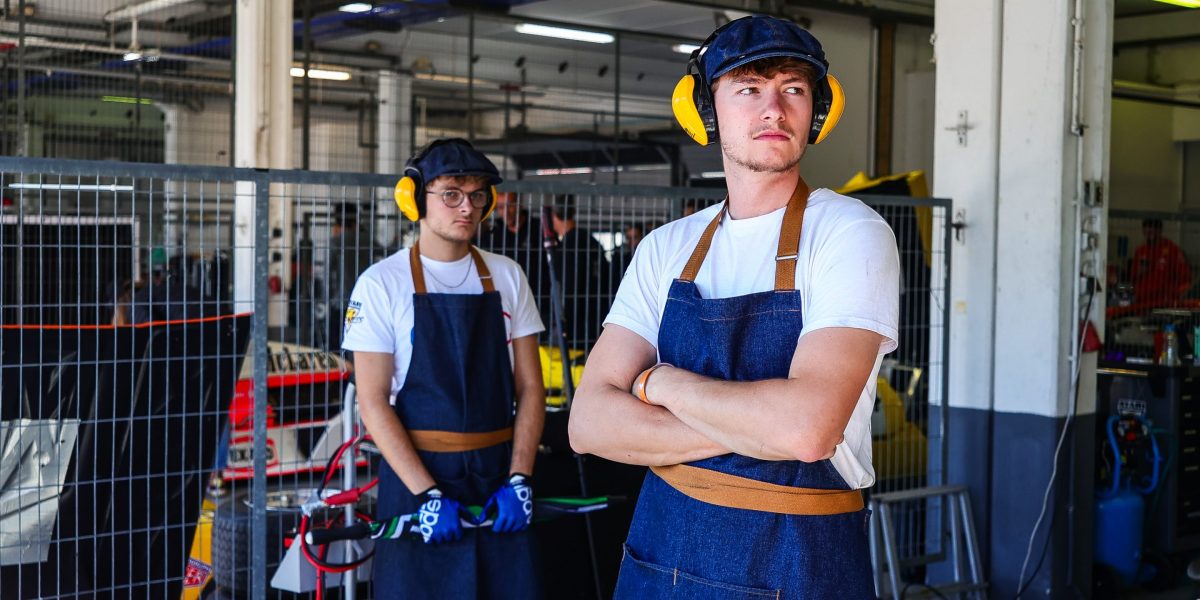
Even major business leaders are witnessing the trend first-hand. Ford CEO Jim Farley revealed his son didn’t follow in his C-suite footsteps, opting to instead work as a mechanic this past summer. He said his kid questioned why he even needs to go to college when he could take up a blue-collar job and be part of an “essential economy,” according to Farley. 

“Should we be debating this?” Farley recalled discussing with his wife, adding that it’s a conversation stirring in many American households. “It should be a debate.”


Source link

Continue Reading

Business

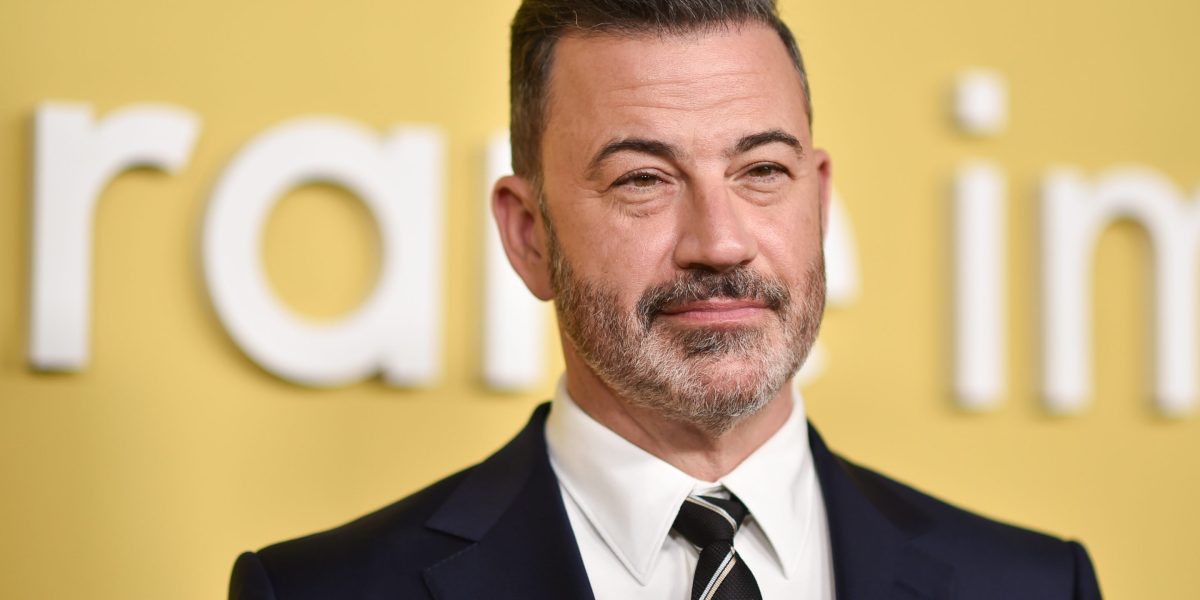
Jimmy Kimmel signs ABC extension through 2027

Published

on


Kimmel’s previous, multiyear contract had been set to expire next May, so the extension will keep him on the air until at least May 2027.

Kimmel’s future looked questionable in September, when ABC suspended “Jimmy Kimmel Live!” for remarks made following the assassination of conservative activist Charlie Kirk. Following a public outcry, ABC lifted the suspension, and Kimmel returned to the air with much stronger ratings than he had before.

He continued his relentless joking at the president’s expense, leading Trump to urge the network to “get the bum off the air” in a social media post last month. The post followed Kimmel’s nearly 10-minute monologue on Trump and the Jeffrey Epstein files.

Kimmel was even on Trump’s mind Sunday as the president hosted the Kennedy Center Honors in Washington.

“I’ve watched some of the people that host,” Trump said. “I’ve watched some of the people that host. Jimmy Kimmel was horrible, and some of these people, if I can’t beat out Jimmy Kimmel in terms of talent, then I don’t think I should be president.”

Kimmel has hosted the Oscars four times, but he’s never hosted the Kennedy Center show.

Just last week, Kimmel was needling Trump on the president’s approval ratings. “There are gas stations on Yelp with higher approval ratings than Trump right now,” he said.

Kimmel will be staying longer than late-night colleague Stephen Colbert at CBS. The network announced this summer it was ending Colbert’s show next May for economic reasons, even though it is the top-rated network show in late-night television.

ABC has aired Kimmel’s late-night show since 2003, during a time of upheaval in the industry. Like much of broadcast television, late-night ratings are down. Viewers increasingly turn to watching monologues online the day after they appear.

Most of Kimmel’s recent renewals have been multiyear extensions. There was no immediate word on whose choice it was to extend his current contract by one year.

Bill Carter, author of “The Late Shift” and veteran chronicler of late-night TV, cautioned against reading too much into the length of the extension. Kimmel, at age 58, knows he’s getting close to the end of the line, Carter said, but when he leaves, he doesn’t want it to appear under pressure from Trump or anyone.

“He wants to make sure that it’s on his terms,” Carter said.

Kimmel has become one of the leading voices resisting Trump. “I think it’s important for him and for ABC that they are standing up for him,” Carter said.

Following Kirk’s killing, Kimmel was criticized for saying that “the MAGA gang” was “desperately trying to characterize this kid who murdered Charlie Kirk as anything other than one of them and doing everything they can to score political points from it.” The Nexstar and Sinclair television ownership groups said it would take Kimmel off the air, leading to ABC’s suspension.

When he returned to the air, Kimmel did not apologize for his remarks, but he said he did not intend to blame any specific group for Kirk’s assassination. He said “it was never my intention to make the light of the murder of a young man.”


Source link

Continue Reading

Business

Trump says he’ll allow Nvidia to sell advanced chips to ‘approved customers’ in China

Published

on


President Donald Trump said Monday that he would allow Nvidia to sell an advanced type of computer chip used in the development of artificial intelligence to “approved customers” in China.

There have been concerns about allowing advanced computer chips to be sold to China as it could help the country better compete against the U.S. in building out AI capabilities, but there has also been a desire to develop the AI ecosystem with American companies such as chipmaker Nvidia.

The chip, known as the H200, is not Nvidia’s most advanced product. Those chips, called Blackwell and the upcoming Rubin, were not part of what Trump approved.

Trump said on social media that he had informed China’s leader Xi Jinping about his decision and “President Xi responded positively!”

“This policy will support American Jobs, strengthen U.S. Manufacturing, and benefit American Taxpayers,” Trump said in his post.

Nvidia said in a statement that it applauded Trump’s decision, saying the choice would support domestic manufacturing and that by allowing the Commerce Department to vet commercial customers it would “strike a thoughtful balance” on economic and national security priorities.

Trump said the Commerce Department was “finalizing the details” for other chipmakers such as AMD and Intel to sell their technologies abroad.

The approval of the licenses to sell Nvidia H200 chips reflects the increasing power and close relationship that the company’s founder and CEO, Jensen Huang, enjoys with the president. But there have been concerns that China will find ways to use the chips to develop its own AI products in ways that could pose national security risks for the U.S., a primary concern of the Biden administration that sought to limit exports.

Nvidia has a market cap of $4.5 trillion and Trump’s announcement appeared to drive the stock slightly higher in after hours trading.


Source link

Continue Reading

Business

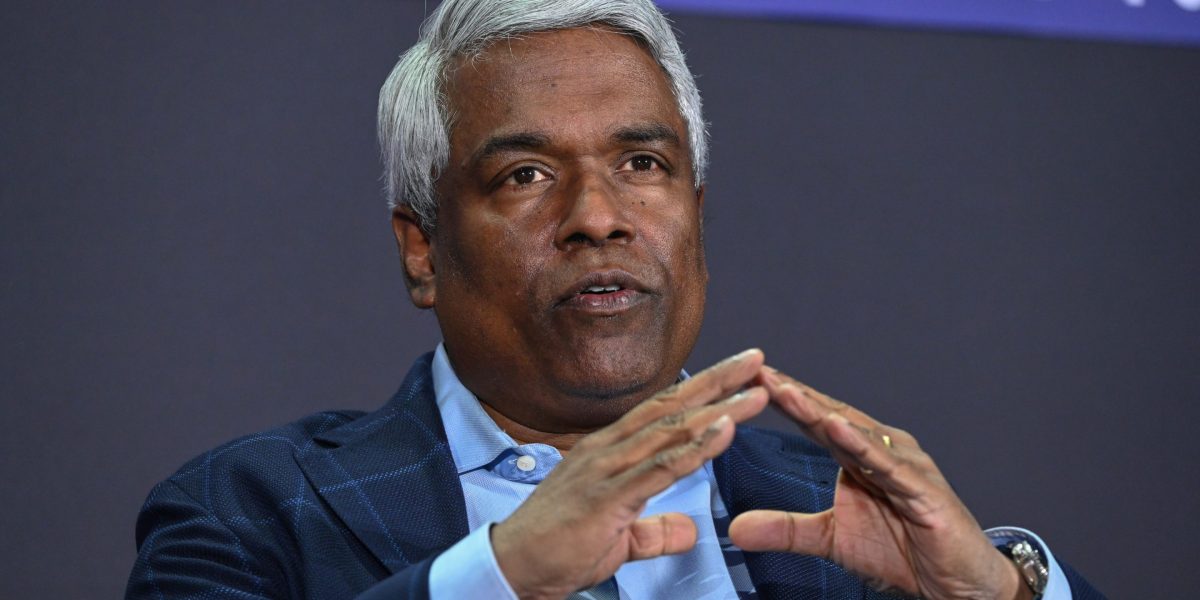
Google Cloud CEO lays out 3-part AI plan after identifying it as the ‘most problematic thing’

Published

on


The immense electricity needs of AI computing was flagged early on as a bottleneck, prompting Alphabet’s Google Cloud to plan for how to source energy and how to use it, according to Google Cloud CEO Thomas Kurian.

Speaking at the Fortune Brainstorm AI event in San Francisco on Monday, he pointed out that the company—a key enabler in the AI infrastructure landscape—has been working on AI since well before large language models came along and took the long view.

“We also knew that the the most problematic thing that was going to happen was going to be energy, because energy and data centers were going to become a bottleneck alongside chips,” Kurian told Fortune’sAndrew Nusca. “So we designed our machines to be super efficient.”

The International Energy Agency has estimated that some AI-focused data centers consume as much electricity as 100,000 homes, and some of the largest facilities under construction could even use 20 times that amount.

At the same time, worldwide data center capacity will increase by 46% over the next two years, equivalent to a jump of almost 21,000 megawatts, according to real estate consultancy Knight Frank.  

At the Brainstorm event, Kurian laid out Google Cloud’s three-pronged approach to ensuring that there will be enough energy to meet all that demand.

First, the company seeks to be as diversified as possible in the kinds of energy that power AI computation. While many people say any form of energy can be used, that’s actually not true, he said.

“If you’re running a cluster for training and you bring it up and you start running a training job, the spike that you have with that computation draws so much energy that you can’t handle that from some forms of energy production,” Kurian explained.

The second part of Google Cloud’s strategy is being as efficient as possible, including how it reuses energy within data centers, he added.

In fact, the company uses AI in its control systems to monitor thermodynamic exchanges necessary in harnessing the energy that has already been brought into data centers.

And third, Google Cloud is working on “some new fundamental technologies to actually create energy in new forms,” Kurian said without elaborating further.

Earlier on Monday, utility company NextEra Energy and Google Cloud said they are expanding their partnership and will develop new U.S. data center campuses that will include with new power plants as well.

Tech leaders have warned that energy supply is critical to AI development alongside innovations in chips and improved language models.

The ability to build data centers is another potential chokepoint as well. Nvidia CEO Jensen Huang recently pointed out China’s advantage on that front compared to the U.S.

“If you want to build a data center here in the United States, from breaking ground to standing up an AI supercomputer is probably about three years,” he said at the Center for Strategic and International Studies in late November. “They can build a hospital in a weekend.”


Source link

Continue Reading

Trending

Copyright © Miami Select.