
Politics
Anti-vax discrimination, behind-the-counter ivermectin access bill filed in the House

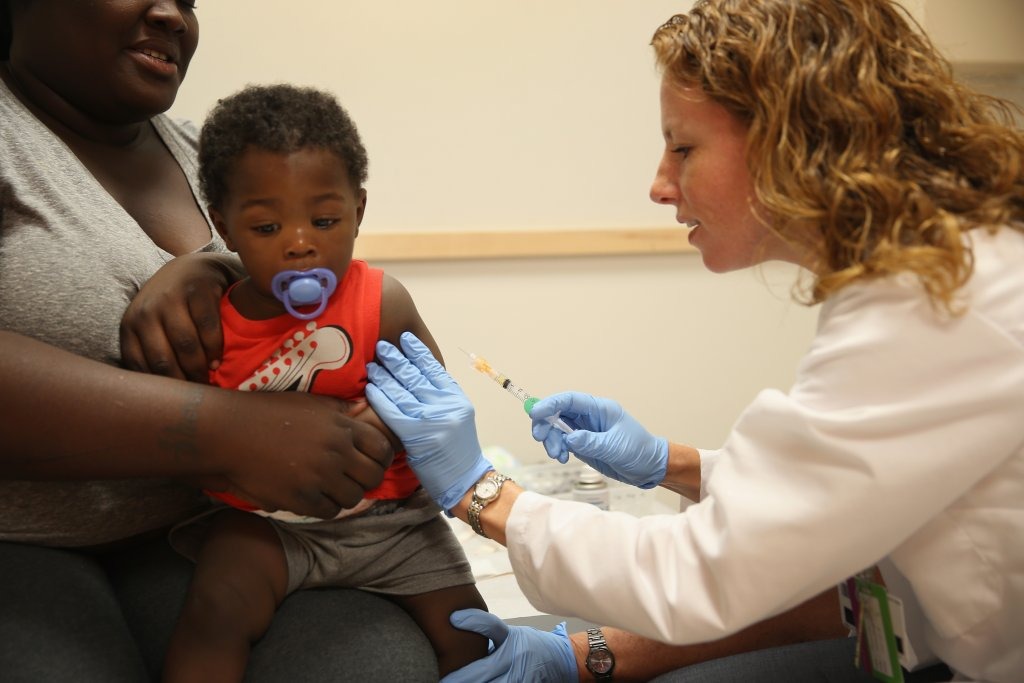
A House Republican is charging back into a continuing fight over vaccines and doctors that created a huge rift during last year’s Legislative Session.
Rep. Jeff Holcomb late last month filed HB 917, a proposal that takes aim at doctors who refuse to treat patients based on their vaccination schedule while also delving into other contentious health care treatment disputes.
The administration of Gov. Ron DeSantis backed a similar bill last year championed by Department of Health (DOH) Secretary and State Health Officer Dr. Joseph Ladapo, but the vaccine provision was stripped from the bill.
In an email to the Florida Phoenix, Holcomb said he “feels strongly” the bill will pass this year.
“We saw during the COVID pandemic that medical decisions were made without proper safety measures. We have a similar situation with the childhood vaccine schedule. The vaccines our children are mandated to have do not have sufficient safety studies. This was confirmed yesterday with CDC shrinking the recommended childhood vaccine schedule,” he said, referencing the decision Monday to shrink the recommended number of childhood vaccines from 17 to 11.
Holcomb’s bill doesn’t eliminate any vaccine mandate now in Florida statute or rule.
The bill does amend Florida’s Patient’s Bill of Rights and Responsibilities to make clear that a health care provider or facility cannot discriminate against a patient based upon the patient’s vaccination status.
Additionally, Holcomb’s bill would add “vaccine status” to the list of reasons protected in law why patients cannot be discriminated against. That list now includes race, national origin, handicap and source of payment.
The bill would allow DOH or the appropriate licensing board to discipline providers who discriminate against patients based on vaccine status. The penalties in law vary from restricting, suspending or revoking a license to imposing administrative fines, or both.
Florida Chapter of the American Academy of Pediatrics President Rana Alissa, a Jacksonville physician, said the association does not support HB 917.

“When you have somebody that is unvaccinated and coming with fever, what if that patient has measles? If they are going to come and be in the waiting room with people who have leukemia, or for any reason they do have a lower immune system, they are going to expose them to measles,” Alissa said.
Physician’s offices aren’t designed to safely accommodate unvaccinated patients, she said.
“You have to change the way clinics are built. You have to have a different waiting room, you have to have a different stairs, you have to have a different elevator. You have to have negative-pressure rooms to accommodate these unvaccinated kids when they have signs and symptoms of the illness,” she said.
“You want to force them to take unvaccinated kids? Then you have to help them reconstruct their clinics and you have to basically accommodate them accordingly.”
The language is identical to what the DeSantis administration pushed for last year in a far-reaching bill that addressed an array of DOH-related issues, from background screening requirements for staff at medical marijuana treatment centers to physician licensure requirements.
While HB 1299 ultimately passed and was signed by the Governor, it didn’t contain the anti-discrimination language the DeSantis administration wanted.
Another vaccine-related provision in HB 917 left over from the 2025 Session addresses messenger ribonucleic acid (mRNA) vaccines.
The Legislature in 2023 passed a law that banned governmental entities, business establishments and educational institutions from discriminating against someone based on mRNA vaccination status. Essentially, the law banned the use of vaccine passports in Florida. But it was valid only through June 2025.
The DeSantis administration tried unsuccessfully last year to make the ban permanent in HB 1299, but the Legislature refused to go along. Lawmakers did agree, however, to extend the ban through June 2027. HB 917 would make the ban permanent.
DeSantis in September criticized the Legislature for refusing to go along with his health-care proposals. Specifically regarding the mRNA provisions, DeSantis said: “That’s got to be made permanent. I mean, everyone is glad that we did that. Even the far left, I don’t hear them, at least publicly they won’t admit they’re for vaccine passports. It doesn’t make sense. So, they need to do that.”
The Governor and Ladapo said over the Summer that they want to eliminate all vaccine mandates from Florida statutes. That would require legislative buy-in that isn’t clear the Governor and Ladapo, his state health czar, can expect.
In the meantime, DOH has proposed changing its rules regarding vaccine requirements for school and day care, specifically removing requirements for children to receive the hepatitis B, varicella (chicken pox), and haemophilus influenza B, or Hib, vaccine. DOH is proposing to also eliminate those vaccines, along with the pneumococcal conjugate vaccine for admission to a licensed day care facility.
It held a lengthy public meeting on the proposed rule changes in December.
Vaccines maintained, disclosure added
HB 917 wouldn’t eliminate any vaccine mandate from statute. But the legislation would require every licensed health care provider authorized to vaccinate children to advise parents and legal guardians of the “unique risks, benefits, safety, and efficacy of each vaccine included on the Centers for Disease Control and Prevention’s Child and Adolescent Immunization Schedule.”
Holcomb’s bill would require health care providers to give parents and legal guardians the option of following “alternative vaccination schedules that may consist of not more than one injection or oral administration at each encounter.”
Parent and legal guardians would be required to sign a document attesting they have been provided the requisite immunization information.
Behind-the-counter ivermectin
HB 917 would authorize pharmacists to sell ivermectin “behind the counter.”
Ivermectin is an effective treatment for parasites in animals and for use by humans to treat parasites such as head lice and scabies, according to the National Institutes of Health. The Food and Drug Administration has not approved ivermectin for treatment or prevention of COVID, and so far recommends against taking it for COVID, instead suggesting people get vaccinated for protection.
Nevertheless, there was buzz during the pandemic about using it for treatment for COVID.
HB 917 provides pharmacists who sell ivermectin from behind the counter with immunity from civil and criminal liability as well as disciplinary protections.
Specifically, HB 917 would authorize pharmacists to provide ivermectin to patients and customers as long as the pharmacist provides written information about the indications and contraindications of the use of ivermectin and the appropriate dosage for using ivermectin. The information must advise the person to seek follow up care from a primary care physician.
There is no age restriction in HB 917 for the purchase of ivermectin. Holcomb has also filed HB 29, to legalize over-the-counter sale of ivermectin. That means it wouldn’t be limited but freely accessible.
HB 29 has been referred to three House committees. There is no Senate companion.

One of Florida’s major government watchdog groups has issued its priority list heading into the Legislative Session Tuesday.
Florida TaxWatch officials issued a top 10 list of priorities they’d like to see accomplished before the Regular Session ends March 13. TaxWatch President and CEO Jeff Kottkamp said Florida’s economic standing is superior to many states in America, and with the right commitment from lawmakers, that should continue.
“Florida continues to be the most envied of states in the nation due to our economic vitality, business-friendly incentives, high quality education, and health care priorities, truly making the Sunshine State the best place in the country to live, work, vacation, and raise a family,” Kottkamp said in a news release.
“That is why, as the ‘eyes and ears’ of taxpayers, Florida TaxWatch has once again identified these important taxpayer priorities and will be closely monitoring how elected officials allocate precious taxpayer dollars to meet the needs of all Floridians.”
The TaxWatch legislative priority list includes:
— A fair and equitable system of taxation which centers on, at the very minimum, reducing the property tax burden on Florida homeowners with increased tax relief. TaxWatch is advocating equitable distribution of tourist development taxes and reducing taxes on communication services in order to expand growth of broadband services.
— TaxWatch is also pushing for increased transparency, accountability and efficiency in all levels of Florida government. The watchdog organization is advocating the implementation of a Florida Government Efficiency Act which would require an annual budget from the Governor’s Office that includes cost-saving items along with efficiency stipulations that includes inspectors general, state agencies, and outside organizations such as TaxWatch.
— Health care policies should enhance the lifespan of Floridians by improving access, quality and affordability among all those who live in the state. The TaxWatch Institute for Quality Health and Aging has proposed multiple solutions to improve health care in the state.
— TaxWatch is also advocating more legislation to protect the state’s water system and other environmental elements in Florida. One of the key elements in that objective for TaxWatch is the proposal to create a five-year water projects work program. The group is also advocating conversions of septic systems to public sewer systems.
— Reducing the cost of property insurance while increasing the resilience of infrastructure throughout the state is another area TaxWatch officials say needs serious attention by lawmakers. The organization is supporting increased competition among insurance carriers while, at the same time, reducing the size of Citizens Property Insurance Corp., the state-established firm that provides insurance policies for Florida homeowners who can’t get coverage with for-profit companies.

— TaxWatch is also encouraging legislators to stop “municipal utility revenue sweeps,” which is a process of public utilities transferring money from their general funds to other government services. TaxWatch specifically is endorsing legislation (HB 773) that would reduce those so-called “sweeps” to 10% of utility revenue. Beyond that, a referendum would require approval by voters.
— The group also wants to see “growth of a robust manufacturing industry.” TaxWatch is endorsing bills in both the House (HB 483) and Senate (SB 528) that propose the creation of a chief manufacturing officer for the state that would coordinate plans to increase manufacturing projects across the state. That could also include the establishment of a Florida Manufacturer’s Workforce Development Grant program that would help incentivize projects that would include new technologies and cybersecurity infrastructure.
— Parents would also get increased help under the TaxWatch legislative agenda, as the group is advocating increased access to quality child care. TaxWatch has already prepared a brief outlining how to increase access and how that access reduces economic inequality.
— Along the lines of enhancing the well-being of children, TaxWatch is advocating increased programs that teach children how to swim in Florida. The Swimming Lessons Voucher Program already exists in the state, but a revision to that program in both the House (HB 85) and Senate (SB 428) would expand the age of children of families who can get the vouchers.
— And TaxWatch is also pushing the state to make the Florida employees health insurance trust fund solvent. A TaxWatch report shows that despite an estimated $652.7 million balance for Fiscal Year 2024-25, the state trust fund is projected to see operating losses in the next half-decade.

From keeping seniors safe in emergencies to protecting them from scammers, AARP Florida released its 2026 Legislative Priorities.
“AARP’s mission in the legislative process is clear: provide data-driven insights, champion innovative policy solutions, and ensure the voices of older Floridians are heard,” said AARP Florida State Director Jeff Johnson. “We’re committed to working hand-in-hand with lawmakers to make Florida a place where people of all ages can thrive.”
As the Regular Session convenes Tuesday, the AARP said its agenda fits into four key areas — affordable housing, “health security” to improve Home and Community-Based Services and enhance nursing home quality, expand consumer protections to protect seniors from fraud and abuse, as well as providing more accessible retirement saving opportunities, the organization said in a press release.
AARP Florida said it wants to improve staffing and training and stronger oversight in nursing homes.
Florida’s 2.7 million family caregivers need more support — including respite care — as they care for aging family members, AARP Florida said.
Seniors also need more telehealth and digital tools, but that needs to come with training and infrastructure to help people access them, AARP Florida said.
The AARP Florida also wants to expand access to Home and Community-Based Services by increasing state investment through Medicaid and other funding streams,” the organization said, adding it wants to “prioritize services that allow older adults to age in place with dignity and independence.”
Strengthening consumer protections, the AARP Florida wants better “interagency and interorganizational coordination, data sharing and reporting to protect vulnerable adults from abuse, neglect and exploitation,” the press release said.
To keep seniors safe from scams, AARP Florida is also asking lawmakers for stronger law enforcement and increased education to warn seniors about exploitative schemes targeting the elderly.
When it comes to housing, the AARP Florida backs zoning reforms, inclusive development and eviction protections to help seniors find affordable housing, the organization said. In addition, AARP Florida is urging lawmakers to ensure seniors and people with disabilities aren’t overlooked in emergency planning so they can access shelters and post-emergency assistance.

Johnson said volunteer advocates will help lobby lawmakers as AARP Florida seeks to support Floridians ages 50 and up.
“Our volunteers will once again join us at the Capitol during this Legislative Session. Their passion and real-life experiences help lawmakers understand how legislation impacts older adults,” Johnson said. “Over the years, their advocacy has championed meaningful changes for Floridians.”

Miami Gardens Sen. Shevrin Jones is entering the 2026 Legislative Session with a people-focused policy agenda.
His priority measures, he said, center on three issues: “protecting people’s pocketbooks, protecting people’s rights and, most importantly, protecting people’s lives.”
“What I’m noticing while talking to constituents is people are scared. People are anxious. People don’t know if their government is actually working for them,” he told Florida Politics.
“Our goal this Session is to show people that we hear them, see them and are trying to execute for them.”
Jones highlighted a handful of proposals he especially hopes will get across the proverbial finish line this year.
The first is SB 114, which deals with the ever-vexing issue of health care and was inspired by recent problems he and tens of thousands of others encountered late last year after Florida Blue removed Memorial Healthcare System from its in-network provider list.
At the time, Jones had just been released from a Memorial hospital following treatment for a serious health condition and found himself suddenly without coverage.
“I’m in limbo,” he said. “I have to find another doctor, and I’m paying out-of-pocket right now.”
SB 114 would ensure that people don’t suddenly find themselves in the lurch due to corporate disagreements outside their control by requiring insurers and health care providers to give affected patients at least 60 days’ advance notice.
The notice would have to explain, in plain language, each patient’s rights, transition timeline and where to direct questions or complaints, with regulators authorized to impose fines for violations.

The bill would also allow patients already in active treatment, including those receiving prenatal care, to continue seeing their current provider under the same contract terms for up to six months or through postpartum care, whichever applies.
“It basically just protects patients from financial and medical harm,” he said.
Hollywood Democratic Rep. Marie Woodson is carrying the bill’s House companion (HB 577).
Jones is also sponsoring SB 178, which would enable coaches to provide financial help to public K-12 students while mandating new safeguards against misuse or recruitment-related incentives.
Inspiration for the bill, which Florida Politics first reported on Oct. 15, came from the story of NFL quarterback-turned-Miami high school football coach Terry Bridgewater, who was suspended last July for paying out-of-pocket for Uber rides, clothing, meals and a preseason training camp for his players — impermissible under Florida High School Athletic Association (FHSAA) rules.
Bridgewater, who retired from the NFL in 2024 but returned to the league in August with the Tampa Bay Buccaneers, said he spent the money on his players for protective reasons. “I’m a father first before anything,” he said. “And when I decided to coach, those players became my sons.”
SB 178, which awaits a House companion, would require the FHSAA to adopt rules allowing high school coaches to use personal funds to help meet students’ basic welfare needs — food, transportation or recovery services — without that assistance being treated as an improper athletic benefit.
Under the new rules, coaches would have to report such spending, which would be presumed permissible unless it is unreported, not made in good faith or used for recruiting.
“Teddy Bridgewater wasn’t buying these kids anything quid pro quo. He was making sure they ate and got home on time,” Jones said. “What he did was absolutely noble.”
Another bill (SB 252), dubbed the CROWN Act, would prohibit discrimination against students in Florida’s public education system based on hairstyles historically associated with race, such as afros, braids, locks and twists.
The bill — which Jones also ran last year; it died unheard — would define “protected hairstyle” in state law and extend those protections to public K-12 schools and private schools that participate in state scholarship programs.
Schools that violate the policy could face enforcement actions, including loss of eligibility for scholarship funding.
House Democratic Leader Fentrice Driskell and Fort Lauderdale Democratic Rep. Daryl Campbell are carrying an identical, lower-chamber version of the bill (HB 235), which mirrors an identically named law Texas Gov. Greg Abbott signed in May 2023.
“This bill absolutely protects individual rights while reinforcing that opportunity in Florida should be based on merit, not appearance,” Jones said.
There’s also SB 418, which would create a statewide “blue envelope” program to help people with autism spectrum disorder communicate more effectively with police during traffic stops.
If passed, Jones’ bill or its House analogue (HB 365) by Tampa Republican Rep. Susan Valdés would institute a policy through which participating drivers would be issued blue envelopes to hold their driver’s license, proof of insurance, vehicle registration and emergency contact information.
The measure would also mandate training for law enforcement officers on recognizing autism, de-escalation techniques and appropriate responses, with the training incorporated into both recruit certification and ongoing education.
It’s a policy already in place or being implemented in 14 other states, and Jones said it would make a big difference for some of Florida’s most vulnerable residents.
“There are individuals on the autism spectrum who are fully functional — they work, they drive, and some of them are probably nonverbal — and we have seen instances where they’ve been pulled over by a police officer, and because the officers do not know how to interact with them, unfortunate things have happened,” he said.
“I’m happy we were able to work with police associations and autism organizations to get this to a place where we are now. There was a lot of back-and-forth, but we did it.”
Lastly, Jones and freshman Democratic Rep. Rashon Young of Orlando are collaborating on legislation (SB 814, HB 715) to improve safety measures at public schools, private schools and child care facilities.
If passed, the proposal would require local law enforcement agencies to issue a new “Ya Ya Alert” to those schools, directing them to lock down and remain vigilant when a violent suspect is believed to pose an immediate threat within a 3-mile radius.
It would also establish a broader “Imminent Threat Alert” to warn the general public through the emergency alert system and highway message signs when similar dangers exist. Agencies, media and others who disseminate the alerts in good faith would have civil liability protections.
The alert honors, and is named for, T’Yonna “Yaya” Major, a 9-year-old who was killed in a 2023 Pine Hills shooting while a violent suspect was still at large. The man charged with her killing, Keith Moses, had previously murdered a woman and later returned to the scene, shooting Major and her mother, who survived and has since sued the Orange County Sheriff’s Office.
Former Republican Sen. David Simmons of Altamonte Springs filed a similar proposal (SB 834) for the 2020 Session, but it died in its final committee stop.
“It creates a clear, statewide system,” Jones said, “that simply makes sure that schools are never left in the dark when danger is nearby.”
The 2026 Legislative Session begins Tuesday.


Productivity gains fuel U.S. growth while hiring slows

Jennifer Lawrence Stuns in Naked Dress at 83rd Golden Globe Awards

Burberry doubles down on heritage with gabardine capsule launch
-

 Politics8 years ago
Congress rolls out ‘Better Deal,’ new economic agenda
-
Entertainment8 years ago
New Season 8 Walking Dead trailer flashes forward in time
-
Politics8 years ago
Poll: Virginia governor’s race in dead heat
-
Entertainment8 years ago
The final 6 ‘Game of Thrones’ episodes might feel like a full season
-
Politics8 years ago
Illinois’ financial crisis could bring the state to a halt
-
Entertainment8 years ago
Meet Superman’s grandfather in new trailer for Krypton
-
Business8 years ago
6 Stunning new co-working spaces around the globe
-
Tech8 years ago
Hulu hires Google marketing veteran Kelly Campbell as CMO