Connect with us

Politics

An argument for increased collegiate safety — the AAA Proposal
Published

on


On April 17, 2025, a gunman entered the campus of Florida State University, killing two people and injuring six others.

Phoenix Ikner, 20, an FSU undergraduate student from Tallahassee, is being charged with the murder of Coach Robert Morales, a local legend who coached high school football and ensured students had access to allergen-free food and Tiru Chabba, a South Carolinian food service executive visiting Florida State in his job capacity.

A lack of gun control didn’t cause this tragedy; Ikner used his parents’ firearms, which he could legally access. While there is no ironclad solution to the issue of gun violence, a group of FSU students has developed a three-part proposal that will attempt to mitigate the risk associated with school shootings on college campuses.

We propose three bills: the ACCESS Act, the ARMOR Act and the AGENT Act.

The ACCESS Act addresses a long-standing issue for college students, an incredibly vulnerable group when it comes to mental health: knowledge of and access to resources. This act creates the Office of Mental Health Services to provide oversight and coordinate mental health resources for students in Florida’s public university system. This will bring additional licensed mental health practitioners to campus to ensure that students have access to specialized care and to help train existing staff on specialized mental health care practices.

The act requires that licensed professionals perform a portion of mental health care along with students pursuing clinical hours.

Unfortunately, mental health counseling can only do so much to prevent gun violence. To fill those gaps, we wrote the ARMOR Act, a bill to ensure that every classroom door across the 110 campuses within Florida’s public higher education system can be locked from the inside in an emergency.

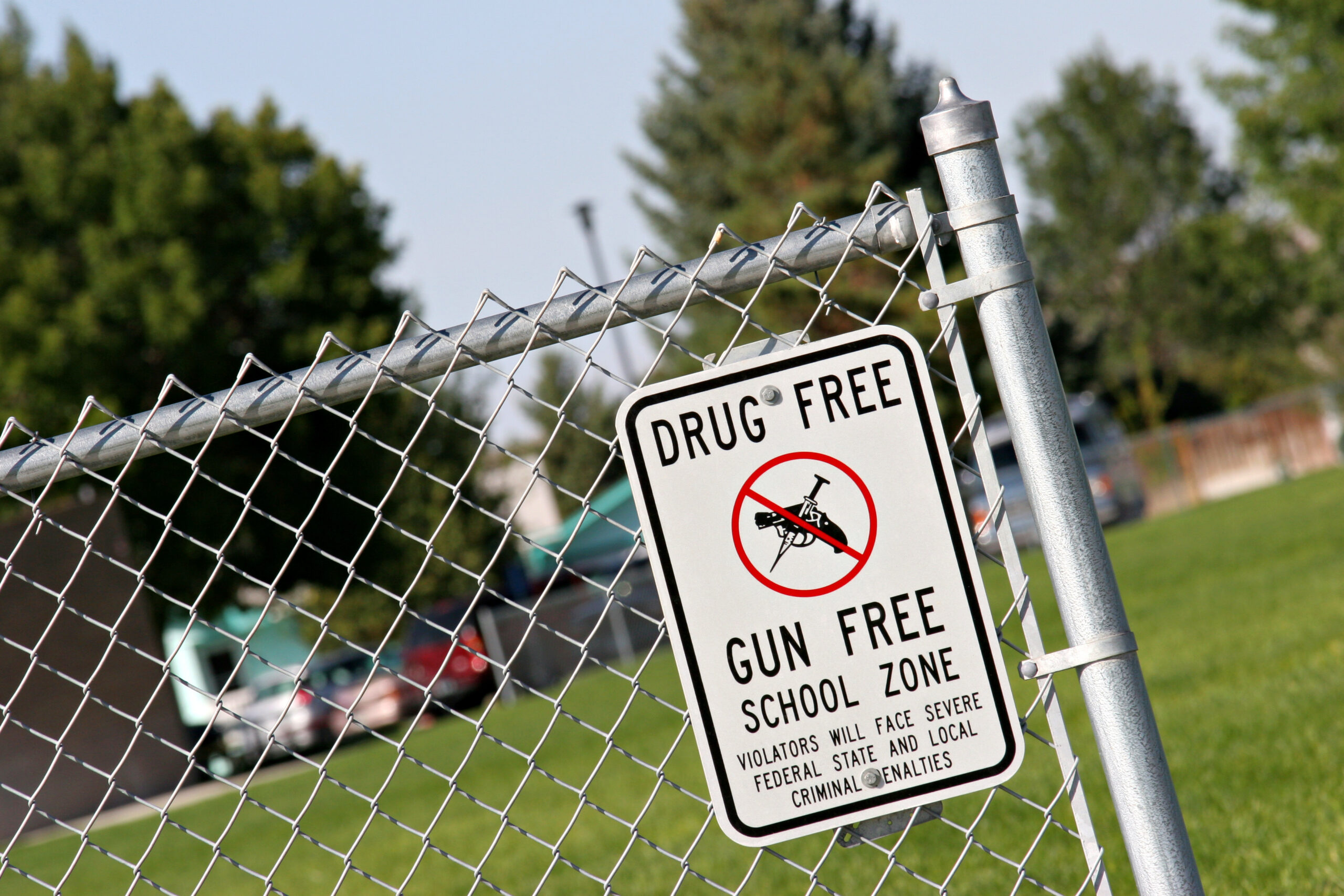
While the ARMOR Act mitigates risk, the AGENT Act allows students the right to protect themselves from armed threats like we faced this past April. In 1990, President George H. W. Bush signed the Gun Free School Zones (GFSZ) Act to address the problem of campus gun violence. However, this measure sets a target on our schools as a space where people cannot practically respond to armed threats.

The AGENT Act, following 18 USC §922 (q)(3)(B)(iv), will allow for campus carry in the state of Florida.

This bill will help to eliminate the soft target for terror that has become our schools, while establishing common sense measures for campus carry. The AGENT Act requires concealed carry weapons (CCW) permits to carry on campus.

This is an essential distinction between the formal laws of constitutional carry in Florida, as the CCW permit requires live fire proficiency tests.

Our bill requires an annual live-fire test to permit campus carry. Another requirement is regular mental health check-ins under the newly created Office of Mental Health Services or a similar institution on private campuses.

The AGENT Act also borrows from the Georgian and West Virginian systems of campus carry, which have restrictions on where firearms are allowed on campus. Many of these restrictions are common sense.

For example, concealed carry would not be permitted in on-campus day cares to avoid the risk of having a firearm in the proximity of infants and young children.

Another example would be areas with “adequate security measures,” which are defined as areas employing electronic devices and armed staff at public entrances to prevent people from bringing in weapons. Within secured areas, the need for an armed citizenry is lessened, especially given the armed presence associated.

Between mental health measures, campus safety enhancements, and common sense legislation on campus carry, we can turn this tragedy into positive change. We, the students, demand that the Florida Legislature pass these measures and urge you, the people, to ask the same of your elected officials.

With your help, we can ensure the safety of the future of our nation and its students.

As legislators prepare for the 2025 Session, we have spent the past few months speaking with Senators and Representatives about potentially sponsoring our legislation.

We have been met with nothing but positive support within our state Legislature for these conservative solutions to a senseless problem.

We can be reached at [email protected] for questions and comments.

___

Reid Seybold is pursuing a bachelor’s degree in political science at FSU. Noah Brown is pursuing a master’s degree in applied American politics.


Post Views: 0


Source link

Continue Reading

Politics

Kevin Steele seeks insight from conservative leaders at Rick Scott-led summit

Published

on


State Rep. Kevin Steele’s campaign for Chief Financial Officer already enjoys political support from U.S. Sen. Rick Scott. The Dade City Republican attended a summit headlined by the Senator to also gain some policy insight and mentoring.

Steele was among the attendees for the Rescuing the American Dream summit held on Thursday in Washington, D.C. He said it was a quest for knowledge that drew him to Capitol Hill to hear the discussion.

“The way you do things better in the future is by learning from people who have already accomplished something,” Steele told Florida Politics at the event.

Scott gave a shoutout to Steele from the stage. The Governor already endorsed Steele, who is challenging the appointed Chief Financial Officer Blaise Ingoglia in 2026. At the summit, Scott both promoted conservative successes in the first year of President Donald Trump’s second term and laid out visions on issues from health care reform to cryptocurrency.

Steele called the panel discussions “amazing” and instructive on tackling affordability issues in Florida.

“If we don’t start addressing those things head first, we’re going to fall behind,” Steele said. “I think we’ve lost several million jobs in the state of Florida over the past six or seven years. Learning from Rick Scott and how to bring jobs back to the state is a good thing. And I think that we need to start tackling some of the big, big things that we need to attack.”

That includes addressing property insurance premiums head on and evaluating the property tax situation.

While he will be challenging a Republican incumbent in a Primary, Steele voiced caution at comparing his philosophy too directly with Ingoglia, a former Republican Party of Florida Chair with a history of animus with Scott.

But he did suggest Ingoglia’s recent scrutinizing of local governments may be starting at the wrong place when it comes to cutting spending.

“We need to start focusing on state down, instead of going to a county and pointing out flaws there,” Steele said. “There’s a lot of issues at the state level that we can address, some of which we are, some of which I’ve submitted different bills to address. I think that there’s a lot of waste and abuse at the state level that we can focus on.”


Source link

Continue Reading

Politics

Darren Soto refuses to call for Sheila Cherfilus-McCormick’s resignation

Published

on


U.S. Rep. Darren Soto is refusing to say whether indicted U.S. Rep. Sheila Cherfilus-McCormick should vacate her seat in Congress.

Video obtained by Florida Politics shows Soto being confronted on Capitol Hill. “Will you call on Sheila Cherfilus-McCormick to resign?” the videographer asks.

Initially, Soto remains silent, but the questioner suggests that silence shows “support” for someone who “stole $5 million in health care funds for the most vulnerable.” The Kissimmee Democrat then responds but continues walking away from the camera. He then conflates a censure motion against U.S. Rep. Cory Mills, a New Smyrna Beach Republican, and Cherfilus-McCormick, a Miramar Democrat.

“Both Mills and Cherfilus-McCormick, both will have due process. Thank you,” Soto said.

Both Cherfilus-McCormick and Mills remain the subjects of ongoing House Ethics Committee investigations. But only Cherfilus-McCormick now faces criminal prosecution for alleged financial crimes.

A grand jury in November indicted Cherfilus-McCormick on charges she stole $5 million in disaster relief funds to finance her 2021 congressional campaign.

The indictment alleges that Cherfilus-McCormick and her brother, Edwin Cherfilus, secured funding intended for a COVID vaccine distribution program, but when overpayments were made, she routed the spending through several accounts that later donated the funds as campaign contributions.

Minority Leader Hakeem Jeffries said pursuant to House rules that Cherfilus-McCormick had to give up her ranking status on the Subcommittee on the Middle East and North Africa. Local Democrats have started to issue calls for the Miramar Democrat’s resignation. But there have been no calls from Democratic members of Congress.

U.S. Rep. Greg Steube, a Sarasota Republican, has said if she won’t resign, he will move for her expulsion.

The National Republican Congressional Committee (NRCC), which lists Soto as a target in 2026, slammed Soto’s unwillingness to criticize a fellow Democrat.

“Darren Soto’s refusal to call on Sheila Cherfilus-McCormick to resign is unacceptable,” said NRCC spokesperson Maureen O’Toole. “Floridians deserve a representative who fights for them, not his taxpayer-thieving colleague.”


Source link

Continue Reading

Politics

Lawmakers propose tough penalties for adults who involve minors in animal cruelty

Published

on


Bipartisan legislation filed this week would expand Florida’s criminal penalties for adults who involve children in acts of animal cruelty or expose them to violent offenses against animals.

Democratic Sen. Kristen Arrington and Republican Rep. Linda Chaney filed the legislation (SB 676, HB 559). The bills would add new crimes to state law that make it a third-degree felony for an adult to entice a minor to commit animal cruelty, or for an adult to commit animal cruelty in the presence of a minor. 

The lawmakers cite studies that show children who witness acts of animal cruelty experience an increase in mental health issues, along with an increased likelihood of engaging in violence themselves. By addressing the cycle of abuse early on, they say children can be shielded from additional trauma caused by witnessing violence.

The proposal would also create offenses for adults who involve minors in animal fighting or baiting, and for sexual activities with animals, while also ranking the new crimes on the state’s offense severity chart and increasing penalties for certain felony offenses. If approved, the act would take effect Oct. 1, 2026.

Arrington, of Kissimmee, said the goal is to strengthen protections for both children and animals.

“Exposing children to acts of animal cruelty not only harms animals but has a profound negative impact on children’s emotional development and wellbeing” Arrington said in a statement. “This bill is meant to protect both our youth and our animals, ensuring that those who would involve minors in such heinous acts face strict consequences.”

Chaney, of St. Pete Beach, said animal crimes committed in front of children are closely linked with other forms of family violence.

“Committing animal crimes in front of minors is a serious issue that often co-occurs with other forms of family violence and can have severe, long-term traumatic effects on the children involved” Chaney said. “We must do all we can to break generational cycles of violence. This bill can do that.”

Democratic Rep. Johanna López of Orlando signed on as a prime co-sponsor.

“I’m honored to join Senator Arrington and Representative Chaney in advancing reforms that protect the safety and mental health of our minors and ensure that those who abuse our children or our pets are held accountable,” López said.


Source link

Continue Reading

Trending

Copyright © Miami Select.