
Politics
Among its users? Influencers and OnlyFans models


In 2018, immigration lawyer Jacob Sapochnick noticed that a massive influx of overseas social media influencers were trying to obtain a highly exclusive visa reserved for wealthy and influential immigrants with artistic talents.
But it wouldn’t be until 2020 that Sapochnick, based in San Diego, was contacted by an OnlyFans model who hoped to secure an O-1B visa. At first, he was skeptical.
Then he saw her monthly salary.
“She said, ‘Let me show you the backend of my platform.’ I looked, and she was making $250,000 a month,” Sapochnick told the Florida Phoenix in a zoom interview.
“I was like, oh my god. Okay. I can use that.”
Learning that she was also involved in fitness influencing, he took her case. She became Sapochnick’s first OnlyFans client to obtain the O-1B visa. In the next two years, Sapochnick represented influencers from places like China, Russia, and Canada — many of whom were fitness influencers “dabbling” in OnlyFans.
Sapochnick’s story isn’t unique — at least, not anymore. According to five other immigration lawyers across the country who spoke with the Phoenix, the immigration sphere began to slowly shift toward the digital world a decade ago before exploding after the COVID pandemic.
The O-1B visa was initially created in 1990 for acclaimed actors, musicians, performers and other artistic professionals who continue to reap the lion’s share. But many of the lawyers specializing in these visas told the Phoenix that close to half (and up to 65%, in one lawyer’s case) of their clients are immigrants with massive platforms on TikTok, YouTube or Instagram.
But not all of them work with OnlyFans creators. In fact, those who did noted that the number of OnlyFans workers successfully obtaining these visas has largely declined since 2022 because that market has become “over-saturated,” with more women on the platform and pornography viewers instead turning to AI-generated porn.
OnlyFans, founded in 2016 but popularized during COVID, is a platform where subscribers can pay a fee to view or request content including sexually explicit images and videos from creators.

These little-reported statistics come amid a sweeping, nationwide crackdown on both illegal immigration under President Donald Trump and a growing movement on the right to make legal immigration more difficult.
That push was strengthened when Trump imposed a $100,000 fee for companies hiring foreigners on certain specialty work visas, and fortified by Gov. Ron DeSantis’ call on universities to stop accepting these visas, called H-1Bs.
What about the O-1B visa?
O-1Bs are considered one of the more exclusive visas. They’re specifically designed for immigrants with “extraordinary” talents, and people in the hunt for them need to check off at least three of six boxes. They can be renewed every three years.
These include starring in distinguished productions, national recognition, performing a lead role for distinguished organizations, a record of major commercial or acclaimed success, significant recognition from experts, or a high salary.
Many of these can be accomplished through expensive brand deals, high follower count, high engagement rates, and collaborating with other influencers. But that doesn’t mean it’s easy.
“Not everyone’s an O1, and that’s OK. If you’re just great at your job — you’re not an O1,” said Rishi Oza, a 20-year immigration law veteran and partner at the North Carolina branch of Brown Immigration.
He explained that obtaining an O1 visa, whether it’s O-1B or O-1A — used by athletes, scientists, and business workers — is incredibly difficult, and they only go to those who stand out from others in their field in their home country.
“If there’s a woman with a masters in biostatistics at Yale with six years’ experience but no awards or reports, she’s not an O1,” Oza said. However, “It wouldn’t surprise me to see a dramatic uptick in online personalities applying for O-1Bs. There isn’t a visa for a digital online personality.
“Inherently, you get forced into the O1 category.”
According to data on the State Department’s website, the U.S. issued 125,351 O1 visas between 2017 and 2024, the latest data available. But the Department does not distinguish how many of those are O-1A versus O-1B visas, nor what professions they’re used for.
What is clear: Issuance of O1 visas has steadily increased year-over-year since 2000 — the earliest data provided on the Department’s website, with minor fluctuations. The massive exception was 2020 and 2021, when COVID restrictions caused O1 issuance to plummet to 2007-2011 levels.
Not all are successful
Sapochnick told the Phoenix that fitness influencers often cross over into the OnlyFans world, usually using Instagram as a “front gate” to their porn accounts.
“People will follow them (on Instagram) and they just show a little bit. Then they’ll have a link to their OnlyFans, and there, people will engage with them more,” Sapochnick said.
He told the story of a Canadian woman he worked with who had more than 2 million followers on Instagram and was making “a lot” of money on OnlyFans. She used that wealth to start a fitness company, began helping brands contact other influencers, and created a program to help women lose weight.
By then, she’d created enough jobs and proved herself enough of an entrepreneur to qualify for a green card.
But not all are success stories. As an example, a Singaporean influencer asked Sapochnick for help with an O-1B visa application, but he told her she didn’t have enough traction online.
“That’s fine,” she told him. “I’m just gonna keep doing my OnlyFans and when I’m ready, I’ll come back.”
She was making $6,000 to $8,000 a month.
Careful regulation?
Although Elizabeth Jacobs, director of regulatory affairs at the Center for Immigration Studies and a former senior adviser at U.S. Citizenship and Immigration Services, believes influencers can qualify for O-1B visas under existing law, she also believes policymakers should “carefully regulate” how these petitions are reviewed.
USCIS, the agency in charge of determining whether immigrants are eligible for visas, lets applicants submit “comparable evidence” of extraordinary ability when their field doesn’t neatly fit the criteria.
“The risk, therefore, is that immigration officers treat evidence — such as a decent social media following, some press or brand collaborations, perhaps — as evidence that the beneficiary is ‘outstanding, leading or renowned’ when I think the average media-literate American would understand that these types of achievements a(re) merely evidence of simply above-average talent, given the enormous volume of influencers/digital content creators out there in 2025,” Jacobs said in a written statement.
She added that Congress could tighten the statute by excluding digital creators or adult entertainers, setting a cap and ranking system, or redefining what counts as “extraordinary” in digital fields. Lawmakers could also “re-anchor” eligibility exclusively to awards by professionals or cultural institutions, barring the use of “comparable evidence” altogether.
USCIS did not respond to a request for comment on whether it keeps data on which professions it’s granting O-1B visas to.
‘Social media is the new generation’
Other immigration lawyers who spoke with the Phoenix, including Beverly Hills lawyer Eli Kantor, his son Jonathan, Miami lawyer Joe Bovino, and New York lawyer Michael Wildes, had similar messaging on social media and immigration:
The times are changing.
“It’s always changing. Traditionally, it was actors and actresses but, with the advent of social media, you started getting people who were both — even people who do OnlyFans,” said Kantor, who’s been practicing since 1976. He’s worked with three OnlyFans models in the past three years.
Most of his clients seeking O-1B visas are young aspiring actresses or models, often with brand partnerships with companies like Nike. Kantor often recommends they make appearances at influencer events like the Kentucky Derby or work with additional brands to expedite the green card process.
Bovino, who’s worked in immigration law for “decades,” said his clients are largely young women. He began to focus on the social media sphere after COVID, when he saw the potential for big business. He stressed that he has not worked with any OnlyFans creators.
“It’s not just cat videos anymore (online), it’s social media influencers making lots of money,” Bovino said, estimating that as many as 60% to 65% of his clients seeking O-1B visas are content creators.
“And if you can make money there, suddenly it becomes a basis for a potential visa application.”
Wildes, whose long-standing immigration firm was founded by his father, who represented John Lennon in his visa application, said his firm works with “tons of social media influencers” and has been “very successful” with OnlyFans models.
“Though my wife doesn’t really approve,” Wildes joked. He said his company has dozens of them in the queue, although he noted it’s important for them to branch out past OnlyFans to eventually obtain a green card.
“If they just have a lot of money and they’re very sexy, it’s not gonna cut it,” he said.
“Social media is the new generation.”
___
Reporting by Livia Caputo. Florida Phoenix is part of States Newsroom, a nonprofit news network supported by grants and a coalition of donors as a 501c(3) public charity. Florida Phoenix maintains editorial independence. Contact Editor Michael Moline for questions: [email protected].

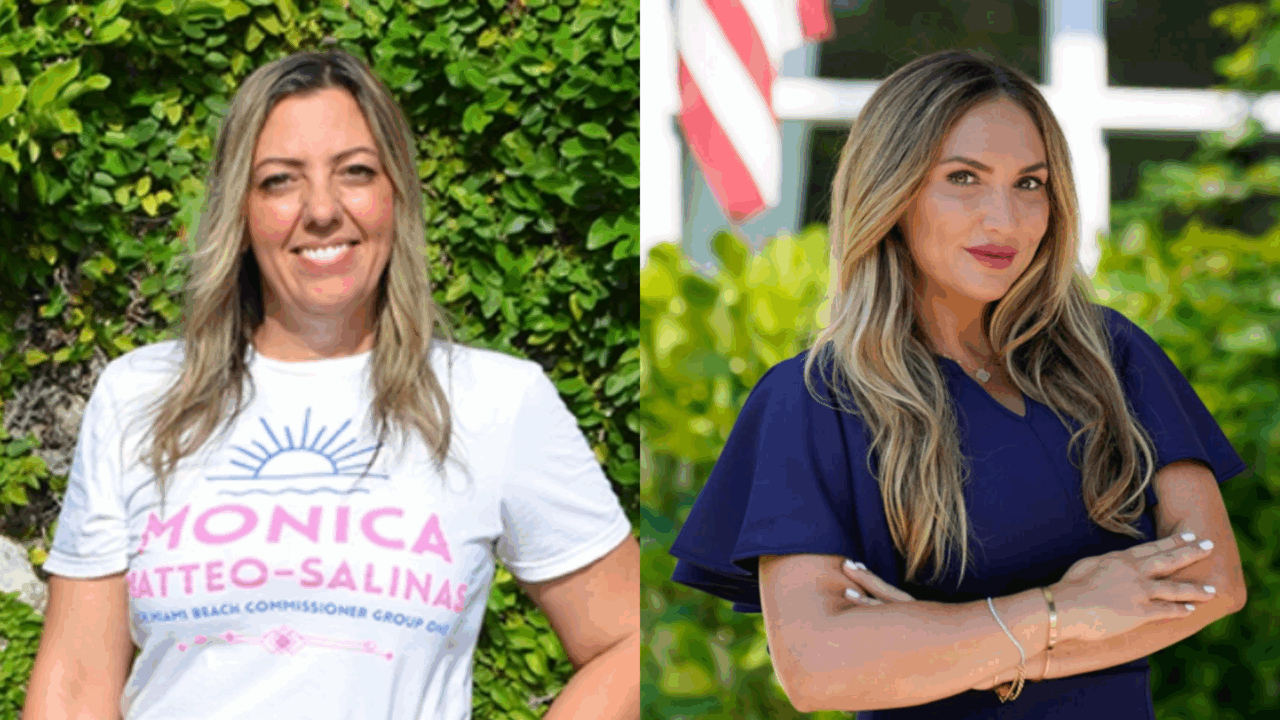
Early voting is underway in Hialeah as two Council runoff contests will decide who rounds out a markedly different dais at City Hall.
The Group 3 and Group 4 races — featuring Jessica Castillo versus Gelien Perez and William “Willy” Marrero versus Javier Morejon, respectively — also stand to determine whether new Mayor Bryan Calvo gains early influence over the Council.
Perez and Castillo advanced to the Group 3 runoff in last month’s General Election with 40.5% and 36% of the vote, respectively, leaving one third-place candidate behind.
In Group 4, Marrero narrowly led the field with 24.8%, followed by Morejon at 23.3%. They outpaced three others in the contest.
To win outright, a candidate had to capture more than half the vote in their respective races.
The runoffs present one of the first real tests of how much sway Calvo, who made history last month as the youngest person ever elected Hialeah Mayor, will have as he prepares to take office.
He has endorsed Perez and Marrero — a strategic pairing that blends rival factions from the mayoral contest into his new governing coalition. Both ran with political slates opposing him. He told the Miami Herald last month that he’s aiming to create “a coalition to approve the agenda,” without an expectation that Perez and Matteo “will vote with (him) 100% of the time.”
If both candidates win, Calvo could enter January with a working majority on the seven-member Council and greater control over the upcoming appointment to fill Jesus Tundidor’s soon-to-be-vacant seat. Tundidor ran unsuccessfully for Mayor.
In Group 3, Perez, 35, a former city Human Resources Director and one-time mayoral aide, has campaigned on supporting first responders and small businesses, improving infrastructure and parks, expanding senior services and rejecting millage rate increases.
But her tenure as HR director drew scrutiny: a two-year Miami-Dade ethics investigation found employees under her influence received sizable raises while she acted as their real estate agent. She has not publicly responded to inquiries about the probe.
Castillo, 37, has run as an independent voice focused on transparency, accountability, traffic relief, infrastructure upgrades and lower taxes. She has kept her campaign largely offline, with no website and minimal social media activity.
In Group 4, Marrero, 23, a Florida International University public administration student and former Council aide, has emphasized affordability, issues facing working families and seniors, and support for first responders.
Earlier this year, three Council members attempted to appoint him to the same seat he now seeks, but opposition from others blocked the move.

Morejon, 34, a land-use specialist with an extensive volunteer résumé, is running on infrastructure repairs, government transparency, beautification and reducing the cost of city services.
Election Day is Monday, Dec. 9. Because Hialeah elects Council members at-large, all voters can cast ballots in both races.


Jamie Dimon on AI: ‘maybe one day we’ll be working less hard but having wonderful lives’

This pastor fills up arenas by not sugarcoating the Bible

Del Rio Appears in Wife’s Family Photo Amid Sex Assault Claims
-

 Politics8 years ago
Congress rolls out ‘Better Deal,’ new economic agenda
-
Entertainment8 years ago
New Season 8 Walking Dead trailer flashes forward in time
-
Politics8 years ago
Poll: Virginia governor’s race in dead heat
-
Entertainment8 years ago
The final 6 ‘Game of Thrones’ episodes might feel like a full season
-
Entertainment8 years ago
Meet Superman’s grandfather in new trailer for Krypton
-
Politics8 years ago
Illinois’ financial crisis could bring the state to a halt
-
Business8 years ago
6 Stunning new co-working spaces around the globe
-
Tech8 years ago
Hulu hires Google marketing veteran Kelly Campbell as CMO