Connect with us

Politics

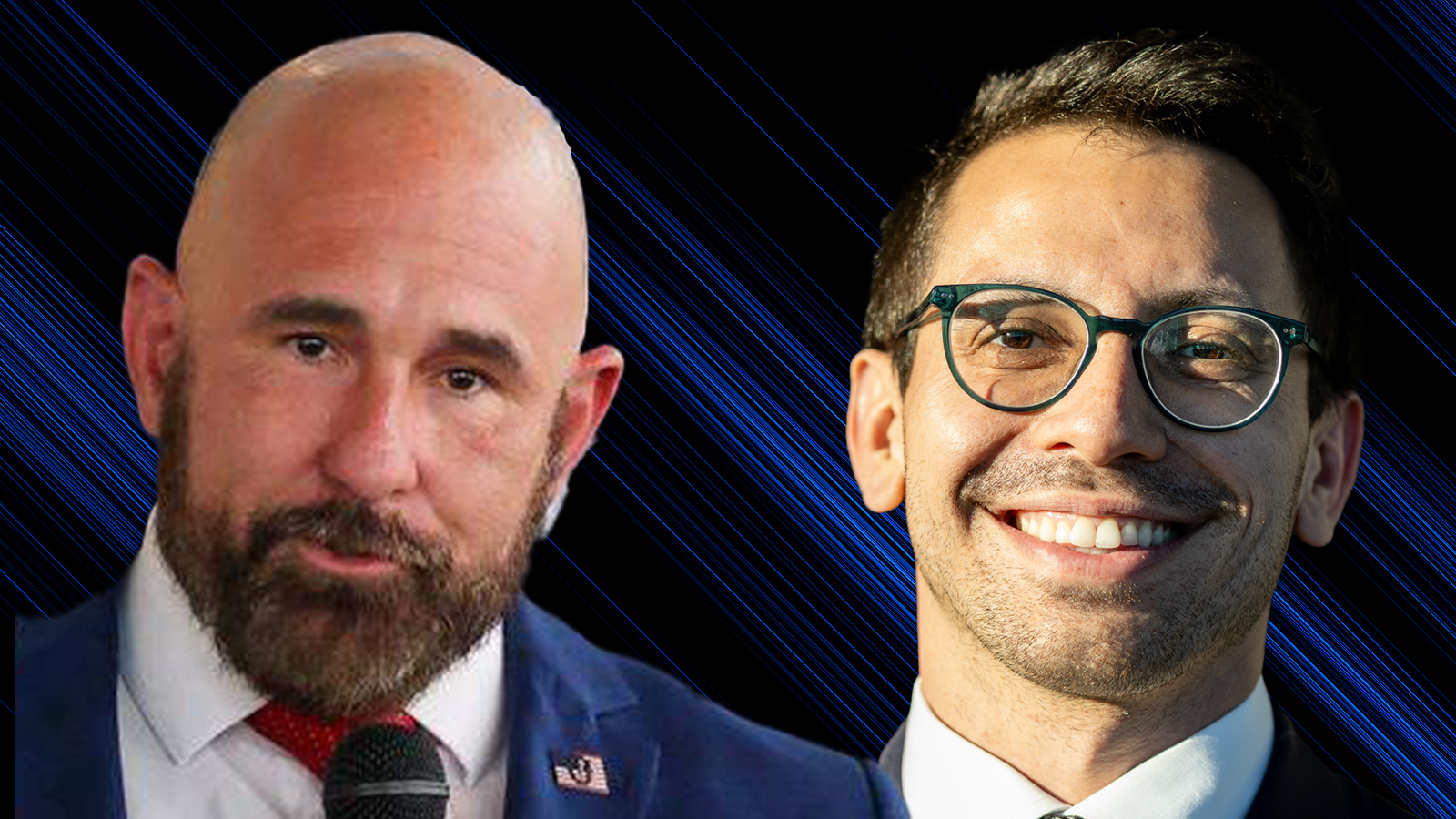
Amid Governor chatter, Jay Collins meets with anti-immigrant contender James Fishback
Published

on


Lt. Gov. Jay Collins held a meeting with James Fishback, an anti-immigration activist who says “the great replacement of American workers is real.”

The get-together comes as both men consider running for Governor, each claiming a desire to continue Gov. Ron DeSantis’ legacy.

Fishback, CEO of Azoria, has been highly critical of legal immigration and U.S. support for Israel. That has prompted critics online to dismiss him as a “groyper,” a term associated with White nationalist Nick Fuentes.

But the Madison Republican continues to make media appearances and discuss a statewide run. He told Florida Politics he continues to seriously consider a statewide campaign if no other candidate reflects his viewpoints.

Fishback has also heavily criticized Republican gubernatorial candidate Byron Donalds, a Congressman currently considered a front-runner among candidates already in the running.

“Unless we see a 180 from Byron Donalds on his immigration, H-1B comments and on overdeveloping and inviting everyone from New York and their dog to move to Florida, I will have no choice but to run,” Fishback said.

But Fishback also revealed in an X Spaces on Tuesday that he was “literally driving right now to have coffee with Lt. Gov. Jay Collins.” He called Collins a “patriot” in the same online conversation, which took place shortly before the two men met in Tampa.

Collins did not respond to a text about the meeting.

Political observers expect Collins, who was appointed Lieutenant Governor in August, to soon announce his own campaign for Governor. Many expect him to run with DeSantis’ support.

The meeting with Fishback raises questions about interactions with the far-right-wing of the party in Florida. Fishback recently praised a controversial Heritage Foundation video defending podcaster Tucker Carlson for platforming Fuentes. That prompted U.S. Rep. Randy Fine at a Republican Jewish Coalition gathering to cancel future appearances with the Heritage Foundation, and Donalds at the same event promised he won’t stand by and allow anyone in politics to “demonize Jewish Americans.”

Fishback in comments to Florida Politics focused his remarks on immigration, including legal immigration. He has called for the deportation of every individual in America on H-1B work visas and those with temporary protected status.

“What we voted for in 2024 was mass deportations, not just of illegals, but full stop,” Fishback said.

He also criticized what he called the “great replacement of American workers with foreign workers,” but stressed that his concern was only foreigners, and said he did not care about race.

“The great replacement is real,” he said. “That’s the truth.”

Fishback heavily praised DeSantis for announcing last week that Florida universities should stop granting H-1B visas to international employees. The Governor said he will call on the Board of Governors for Florida’s university system to “pull the plug” on hirings, which have attracted students from around the globe to Florida schools.

Notably, Collins has made no public statements supporting or opposing DeSantis’ position.

But Fishback’s position on H-1B visas has attracted attention from others in DeSantis’ orbit. DeSantis communications specialist Christina Pushaw, previously the Governor’s Press Secretary, has frequently shared and publicly agreed with content Fishback posted on X. She recently shared his call, for example, to deport all H-1B visa holders.

“If the entire visa category is ended, they would have to be deported because H-1B would no longer be a valid visa category,” Pushaw posted.

Fishback said his focus on any candidate for Governor remains whether any will embrace his worldview.

“The way I think, I wish we had a candidate who was America first,” he said. “The only way I join this race is if no one steps up and acknowledges the great replacement of American workers.”


Source link

Continue Reading

Politics

House panel approves bill to expand James Uthmeier’s power to target physicians

Published

on


A House subcommittee approved a bill to give Attorney General James Uthmeier expanded power to investigate health care professionals for taking care of transgender youth.

The Criminal Justice Subcommittee passed HB 743 with a 12-5 vote as Democrats and LGBTQ+ advocates rallied against it.

Under the bill, Uthmeier would be allowed to investigate and sue health care practitioners who give puberty blockers, hormones or other prescriptions to minors, or perform surgical procedures. Each violation could bring up to a $100,000 fine.

Uthmeier’s amplified authority would come after the state previously banned gender-affirming care for minors in 2023.

But Rep. Kelly Skidmore warned lawmakers that it was dangerous to give Uthmeier more power following the Hope Florida scandal.

“No disrespect to the folks who are here about gender-affirming care, but that’s not what this bill is about,” the Boca Raton Democrat said. “It is about giving one individual and maybe his successors authority that they don’t deserve and they cannot manage. They’ve proven that they cannot be trusted. This is a terrible bill.”

Uthmeier, then Gov. Ron DeSantis’ Chief of Staff, chaired a political committee that was funneled millions of dollars from a $10 million state Medicaid settlement. Critics have accused DeSantis and Uthmeier of misappropriating the money to use for political purposes. Uthmeier has denied wrongdoing.

But at Tuesday’s hearing, Rep. Taylor Yarkowsky argued Uthmeier is doing “unprecedented work” to protect kids. The lawmaker added that he is against minors transitioning until they are 18 years old and can legally decide for themselves.

“I understand this is a tough situation and I know that these feelings and emotions are real,” the Montverde Republican said. “But we have to uphold the principles and standards that made this country great, biblical, constitutional law and order at all costs. And sometimes that stings.”

HB 743 would also update the law to add that a health care practitioner who “aids or abets another health care practitioner” giving gender-affirming prescriptions or doing procedures to minors would now be charged with a third-degree felony. That could mean pharmacists filling prescriptions at Publix or Walgreens could potentially be charged for crimes, said Rep. Lauren Melo, the bill sponsor.

Melo said her bill comes as some minors are trying to skirt state law.

“What we’re seeing is there’s coding that’s actually being used that is becoming the problem, and hundreds of thousands of dollars is spent per child for them to transition and codes are being misrepresented where they are saying that it’s an indoctrination disorder instead of saying it’s a gender identity disorder,” Melo said.

Minors who have been receiving gender-affirming care continuously since May 2023 are exempt from state law, so the bill’s changes would only be applied to minors receiving care for the first time, the Naples Republican added.

Rep. Mike Gottlieb, who also believed the bill was giving Uthmeier too much power, said it could have other unintended consequences. The bill could scare doctors from prescribing medicine that helps women with bad menstruation symptoms — which has nothing to do with gender-affirming care, he said.

“You’re going to see doctors not wanting to prescribe those kinds of medications because they’re now subject to a $100,000 penalty,” the Davie Democrat said. “We really need to be cautious. I get where many of us sit in this battle. … We pass some of these laws, it’s a knee-jerk reaction. … We’re really not considering what we’re doing and some of the collateral harms that it’s having.”

He said he worried the bill would force more physicians to leave Florida.

But Melo argued her legislation was important because “unfortunately, what’s happening is there are physicians that are actually committing fraud.”

“This gives us an avenue to pursue and punish the people that are committing fraud against a minor child,” she said.

Shawna Flager, a mom advocating for her child who is transgender, criticized the bill during Tuesday’s debate.

“I feel like it introduces ambiguity. It also uses the government to create fear and intimidate our health care providers,” said Flager, of St. Augustine.


Source link

Continue Reading

Politics

Florida shouldn’t gamble with patient safety on false promises

Published

on


Florida lawmakers are once again being asked to expand unsupervised anesthesia practice, this time under the familiar banner of “access,” “cost savings,” and “modernization.” We are told this is inevitable — that “48 states already have similar laws,” and Florida is simply behind the curve.

That claim collapses under even minimal scrutiny.

Let’s be clear about what is being proposed: allowing Certified Registered Nurse Anesthetists to practice independently, without physician anesthesiologist supervision, in all settings. This is not a minor regulatory tweak. It is a fundamental change in how anesthesia care — one of the riskiest aspects of modern medicine — is delivered.

If lawmakers want to make policy based on evidence rather than talking points, three facts matter most.

Physician-led anesthesia care is the safest model.

Anesthesia is not just about “putting patients to sleep.” It involves managing complex physiology, responding to sudden, life-threatening emergencies, and caring for patients with multiple comorbidities — often when things go wrong quickly. Physicians who practice anesthesiology complete four years of medical school, four years of residency, and often additional fellowship training. That depth of training matters when seconds count.

The safest anesthesia outcomes consistently occur in physician-led teams, where anesthesiologists work alongside Certified Registered Nurse Anesthetists. Team-based care maximizes patient safety by matching expertise to the complexity of each patient’s care. Eliminating physician oversight does not improve safety; it removes a critical layer of protection.

Florida should be strengthening team-based care — not dismantling it.

Unsupervised anesthesia is not more cost-effective.

Proponents often claim that removing physician supervision lowers costs. The data do not support this. Medicare pays the same for anesthesia services regardless of whether a physician anesthesiologist is involved. Further, having an anesthesiologist present to manage complications helps control costs by reducing hospital stays and downstream medical expenses.

The cheapest anesthesia is the one that goes right the first time — and the safest model is also the most cost-effective in the long run.

These laws do not help rural communities.

This is where rhetoric diverges most sharply from reality. State “opt-out” laws allowing unsupervised anesthesia have been studied for more than a decade. The conclusion is consistent: they do not increase access to anesthesia services in rural or underserved areas.

Certified Registered Nurse Anesthetists, like all health care professionals, tend to practice where hospitals are well-resourced and professionally supportive. Opt-out states did not see a meaningful expansion of anesthesia services in rural hospitals. Workforce shortages remained unchanged.

If unsupervised practice were the solution, rural access problems would already be solved. They are not.

Supporters now claim that nearly every state has “similar” laws — a creative redefinition that lumps together wildly different regulatory frameworks. Supervised practice, delegated authority, limited opt-outs, and emergency exceptions are being counted as “unsupervised care.” Florida should not make major patient-safety decisions based on inflated numbers and fuzzy definitions.

This proposal is not about modernization. It is not about rural access. And it is not about saving money. It is about replacing the safest, most cost-effective anesthesia model with one that offers no proven benefit — and real risk.

Florida’s patients deserve policies grounded in evidence, not exaggeration. Lawmakers should reject unsupervised anesthesia and instead invest in physician-led, team-based care that puts safety first — every time.

___


Rebekah Bernard, M.D., is a family physician in Fort Myers and a Board member of Physicians for Patient Protection.


Source link

Continue Reading

Politics

Adam Anderson’s push for more genetic counselors in Florida clears first hurdle

Published

on


Rep. Adam Anderson has successfully ushered through its first committee stop legislation that would address a shortage of genetic counselors and strengthen the state’s capacity for advanced medical care and genetic research.

Anderson’s bill (HB 1115) cleared the Careers and Workforce Subcommittee. It would establish the Genetic Counseling Education Enhancement Grant Program within Florida’s State University System to support the development of American Board of Genetic Counseling-accredited graduate-level genetic counseling programs to eliminate Florida’s status as a genetic counseling desert.

“The need for health care professionals in the Sunshine State cannot be understated,” Anderson said.

“But specialization is the true hurdle for families praying for the next innovation that will help their child. Genetic counselors guiding difficult diagnoses are in short supply. However, Florida aims to right-set our specialization efforts at the intersection between education and employment. We’re standing by Florida families and those students willing to take the next step.”

With just 179 licensed genetic counselors in the state, patient demand is not being met. Genetic counselors guide families facing complex genetic diagnoses, and they serve as essential partners in research, innovation and precision medicine.

Sen. Danny Burgess is sponsoring an identical measure (SB 1376) in the upper chamber, though it has not yet been heard in committee. Still, he celebrated initial support for the measure in the House.

“This is legislation every Floridian can get behind,” Burgess said. “Developing our workforce is step one, but retaining specialized genetic counselors in the State of Florida to help Floridians is the entire picture. Aid shouldn’t be a state away. This grant program realizes that comfort and care for Florida families should be available within Florida.”

The bill would allow grant funds to be used to recruit and retain qualified faculty, provide financial aid to students, and establish or expand clinical rotations required to obtain a master’s degree in genetic counseling. The funds would be barred from use for general administrative costs, new facility construction and non-program-related activities.

Participating universities under the bill would be required to maintain detailed compliance records and submit annual reports on expenditures and program outcomes. The state Board of Governors would then compile the information from reports into a statewide submission.

“The progress Representative Anderson has ignited is contagious. Florida is on the cusp of developing a genetic counseling workforce that meets a crucial need for families facing uncertainty,” said Dr. Pradeep Bhide, Director of the Florida State University Institute for Pediatric Rare Diseases. “FSU is all for it.”

Under Bhide’s leadership, the Institute is developing a new master’s degree program in genetic counseling.

Currently, the University of South Florida is the only state school with an active genetic counseling program, with FSU’s program awaiting approval.

“New education programs are what drive the innovations and patient care required to address complex genetic issues. Rep. Anderson and the State of Florida have time and time again seen the value in the educational framework that leads to great progress,” said Charles J. Lockwood, executive vice president at USF Health and dean of the USF Health Morsani College of Medicine.

“USF Health has long understood the need for genetic counselors in Florida, and we are excited at the prospect of further collaboration with Florida’s other universities.”

Anderson’s bill heads next to the Higher Education Budget Subcommittee. If approved by the full Legislature and signed by Gov. Ron DeSantis, the measure would take effect July 1.


Source link

Continue Reading

Trending

Copyright © Miami Select.