Connect with us

Business

Americans enjoy one refuge from inflation: The cheapest gas prices in years

Published

on


This holiday season, many U.S. drivers are getting the gift of lower gas prices.

According to data from motor club AAA, December has been the cheapest month for prices at the pump this year. The national average for unleaded gasoline has stayed below the $3 mark since Dec. 2, falling to its lowest level of about $2.85 a gallon on Monday.

That figure has inched up slightly since, sitting at closer to $2.86 a gallon Tuesday — but overall, consumers hitting the road ahead of the Christmas holiday will likely continue to see mild prices.

As always, some states have cheaper averages than others, due to factors ranging from nearby refinery supply to local fuel requirements. Hawaii had the highest average of about $4.44 a gallon on Tuesday, per AAA — followed by $4.30 in California and $3.92 in Washington. Meanwhile, Oklahoma had the lowest average at about $2.30 per gallon, followed by nearly $2.42 in both Arkansas and Iowa.

Still, nationwide, unleaded gasoline is down more than 18 cents than it was at this time last year, and 21 cents from a month ago. So far, AAA says that prices seen this month mark the cheapest December for gas prices since 2020, when the COVID-19 pandemic roiled the economy.

The travel organization notes that this month’s cheaper prices arrive as supply remains strong. Crude oil, the main ingredient in gasoline, has also been at a relatively mild level — with West Texas Intermediate remaining below the $60 per barrel mark for most of December.

Relief at the pump is welcome for consumers who have been feeling higher prices in other parts of their budgets — as worries about the costs of goods ranging from groceries to holiday gifts rise amid ongoing inflation and U.S. President Donald Trump’s tariffs on foreign imports.

Government data actually showed that consumer prices cooled in November, rising at just 2.7% from a year earlier. But year-over-year inflation still remains well above the Federal Reserve’s 2% target — and economists quickly warned that last month’s numbers were suspect because of delays and possible distortions from the 43-day federal shutdown.

Most Americans have continued to express anger and frustration about the high cost of living — as well as an uncertain job market. On Tuesday, the Conference Board said that its consumer confidence index fell in December to its lowest level since April.


Source link

Continue Reading

Business

The University of Oklahoma fired an instructor after she failed a psychology student who cited the Bible in an essay on gender

Published

on


The University of Oklahoma has fired an instructor who was accused by a student of religious discrimination over a failing grade on a psychology paper in which she cited the Bible and argued that promoting a “belief in multiple genders” was “demonic.”

The university said in a statement posted Monday on X that its investigation found the graduate teaching assistant had been “arbitrary” in giving 20-year-old junior Samantha Fulnecky zero points on the assignment. The university declined to comment beyond its statement, which said the instructor had been removed from teaching.

Through her attorney, the instructor, Mel Curth, denied Tuesday that she had “engaged in any arbitrary behavior regarding the student’s work.” The attorney, Brittany Stewart, said in a statement emailed to The Associated Press that Curth is “considering all of her legal remedies.”

Conservative groups, commentators and others quickly made Fulnecky’s failing grade an online cause, highlighting her argument that she’d been punished for expressing conservative Christian views. Her case became a flashpoint in the ongoing debate over academic freedom on college campuses as President Donald Trump pushes to end diversity, equity and inclusion initiatives, and restrict how campuses discuss race, gender and sexuality.

Fulnecky appealed her grade on the assignment, which was worth 3% of the final grade in the class, and the university said the assignment would not count. It also placed Curth on leave, and Oklahoma’s conservative Republican governor, Kevin Stitt, declared the situation “deeply concerning.”

“The University of Oklahoma believes strongly in both its faculty’s rights to teach with academic freedom and integrity and its students’ right to receive an education that is free from a lecturer’s impermissible evaluative standards,” the university’s statement said. “We are committed to teaching students how to think, not what to think.”

Universities under fire

A law approved this year by Oklahoma’s Republican-dominated Legislature and signed by Stitt prohibits state universities from using public funds to finance DEI programs or positions or mandating DEI training. However, the law says it does not apply to scholarly research or “the academic freedom of any individual faculty member.”

Home telephone listings for Fulnecky in the Springfield, Missouri, area had been disconnected, and her mother — an attorney, podcaster and radio host — did not immediately respond Tuesday to a Facebook message seeking comment about the university’s action.

Fulnecky’s failing grade came in an assignment for a psychology class on lifespan development. Curth directed students to write a 650-word response to an academic study that examined whether conformity with gender norms was associated with popularity or bullying among middle school students.

Fulnecky wrote that she was frustrated by the premise of the assignment because she does not believe that there are more than two genders based on her understanding of the Bible, according to a copy of her essay provided to The Oklahoman.

“Society pushing the lie that there are multiple genders and everyone should be whatever they want to be is demonic and severely harms American youth,” she wrote, adding that it would lead society “farther from God’s original plan for humans.”

In feedback obtained by the newspaper, Curth said the paper did “not answer the questions for the assignment,” contradicted itself, relied on “personal ideology” over evidence and “is at times offensive.”

“Please note that I am not deducting points because you have certain beliefs,” Curth wrote.

This story was originally featured on Fortune.com


Source link

Continue Reading

Business

Down Arrow Button Icon

Published

on


The U.S. Justice Department has released tens of thousands more documents related to Jeffrey Epstein, a tranche that included multiple mentions of President Donald Trump but added little new revelatory information to the long-anticipated public file on the late financier and convicted sex offender.

The release is the most voluminous so far and comes after a massive public campaign for transparency into the U.S. government’s Epstein investigations.

Many of the mentions of Trump in the file came from news clippings, though it includes an email from a prosecutor pointing out the flights that Trump took on Epstein’s private jet during the 1990s.

The two men were friends for years before a falling out. Trump has not been accused of wrongdoing in connection with Epstein. The Justice Department issued a statement that some documents contain “untrue and sensationalist claims” about Trump made shortly before the 2020 election.

Here are some takeaways:

Prosecutor flagged Trump’s travel on Epstein’s jet

Among the mentions of Trump in the latest batch of the Epstein files is a note from a federal prosecutor from January 2020 that said Trump had flown on the financier’s private plane more often than had been previously known.

An assistant U.S. attorney from the Southern District of New York said in an email that flight records the office received on Jan. 6, 2020, showed that Trump was on Epstein’s jet “many more times than previously has been reported (or that we were aware).”

The prosecutor who flagged the Trump mentions in the flight logs said they did so because lawyers “didn’t want any of this to be a surprise down the road.”

His travels on Epstein’s plane spanned the time that would likely be covered in any criminal charges against Epstein’s co-conspirator, Ghislaine Maxwell. Trump was listed as a passenger on at least eight flights between 1993 and 1996, and on at least four of those flights, Maxwell was also there, according to the email.

On one of those eight flights, in 1993, Trump and Epstein were the only two passengers listed in the flight logs. On another flight, the three passengers listed in records are Epstein, Trump, and a redacted individual, who was 20 years old at the time. Two other flights included two women — whose names were redacted in follow-up emails — identified as potential witnesses in a Maxwell case.

Several additional Trump trips on Epstein’s plane had been previously disclosed during Maxwell’s criminal proceedings.

Asked for comment about the email, the White House pointed to a Justice Department statement saying Monday’s release contained “unfounded and false” claims against the president submitted to the FBI shortly before the 2020 election, but they were nevertheless being released for full transparency.

The Justice Department specifically raised questions about the validity of a document mentioning Trump that was styled as a letter from Epstein to Larry Nassar, the sports doctor convicted of sexually abusing Olympic athletes. The department pointed out that it was processed three days after Epstein’s death.

Meanwhile, the latest release also shows that Mar-a-Lago, Trump’s southern Florida club, was served with a subpoena in 2021 for its employment records. The disclosure came as part of an email chain in which lawyers for the Southern District of New York and an attorney in touch with representatives for the Trump Organization discussed the employment status of someone whose name was redacted.

Trump calls the files a distraction

Trump complained that the files were a distraction from the work he and other Republicans are doing for the country.

Speaking during an unrelated event at his Mar-a-Lago home in Palm Beach, Florida, on Monday, the president blamed Democrats and some Republicans for the controversy.

“What this whole thing is with Epstein is a way of trying to deflect from the tremendous success that the Republican Party has,” Trump said.

He also expressed frustration about the famous people shown with Epstein in photos released by the Justice Department — people who he said may not have known him but ended up in the shot anyway.

“You probably have pictures being exposed of other people that innocently met Jeffrey Epstein years ago, many years ago. And they’re, you know, highly respected bankers and lawyers and others,” Trump said.

Other high-profile people are showing up in the files

Well-known people shown in the files include former President Bill Clinton, the late pop star Michael Jackson and singer Diana Ross. The mere inclusion of someone’s name or images in files from the investigation does not imply wrongdoing.

The latest release also includes files that put the U.K.’s former Prince Andrew back in the headlines.

Among those documents is correspondence between Maxwell and someone who signs off with the initial “A.”

The email exchange includes other references that suggest Maxwell’s correspondent may be Andrew. He did not immediately respond to a request for comment.

The August 2001 email from someone identified only as “The Invisible Man,” said he is “up here at Balmoral Summer Camp for the Royal Family,” an apparent reference to the Scottish estate where the royal family have traditionally taken their late summer holidays.

“A” writes: “How’s LA? Have you found me some new inappropriate friends?”

The writer says he has left “the RN” and refers to the challenges of looking after “the Girls.” Andrew retired from the Royal Navy in 2001 and has two daughters.

Andrew, one of King Charles III’s younger brothers, was stripped of the right to be called a prince and his other royal titles and honors in October, amid continued publicity about his links to Epstein and concerns about the potential damage to the rest of the royal family. He is now known as Andrew Mountbatten-Windsor.

Andrew has repeatedly denied committing any crimes, including having sex with Virginia Giuffre, who alleged that she was trafficked by Epstein and had sex with Andrew when she was 17.

Biggest information dump yet

Trump tried for months to keep the records sealed before relenting to political pressure, including from some fellow Republicans, though he eventually signed a bill mandating the release of most of the Justice Department’s files on Epstein.

Monday’s release was the biggest dump yet, including nearly 30,000 more pages. The data released by the law’s Friday deadline contained a fraction of that amount, mostly photographs taken during FBI searches of Epstein’s homes.

The new cache includes news clippings, emails and surveillance videos from the New York jail where Epstein was held before taking his own life in 2019, much of which was already in the public domain.

The law called for the files to be released within 30 days, but the Justice Department has instead released them in stages starting Friday. Officials have said they’re going slowly to protect victims, though some women assaulted by Epstein have spoken out publicly to call for greater transparency.

And the administration is facing fierce accusations that it is withholding too much information. Senate Minority Leader Chuck Schumer, D-N.Y., said the tens of thousands of files released still left “more questions than answers.” He pointed to a 2019 FBI email that mentions 10 people under investigation as possible co-conspirators but contains few additional details.


Associated Press writer Darlene Superville in Washington and Danica Kirka in London contributed to this report.




Source link

Continue Reading

Business

Larry Ellison’s $40 billion pledge to son’s Paramount deal shows a shift in billionaire giving

Published

on


Larry Ellison, the 81-year-old Oracle co-founder and longtime mogul of tech and sport, recently sent ripples through the business and philanthropic worlds by revealing plans to devote $40 billion of his own fortune to the Paramount–Skydance merger — a deal that redefines not only Hollywood’s future but Ellison’s own legacy.

Ellison’s $40 billion promise to personally back his son’s Paramount deal is not a charitable donation in the classic sense. It is something more emblematic of this billionaire era: philanthropic capitalism, where vast personal fortunes are deployed through markets rather than around them, and “giving it away” increasingly means reshaping industries instead of writing checks to traditional charities.

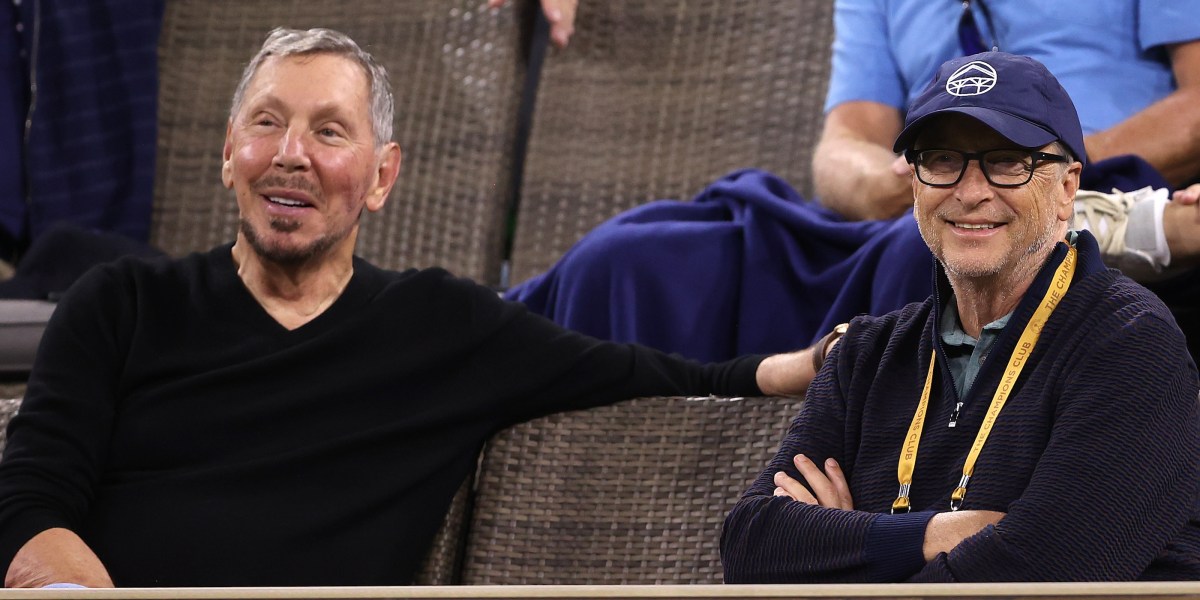
It lands at the exact moment that the older model of billionaire philanthropy—epitomized by Warren Buffett and Bill Gates—is visibly winding down, creating a stark contrast between giving that flows through foundations and giving that rides on deal sheets.

Ellison’s move is as audacious as it is intimate. His son, David Ellison, runs Skydance, the upstart studio that has been circling Paramount and now aims to fuse old‑line Hollywood assets with a tech‑forward, streaming‑native strategy. Ellison’s commitment, structured as a personal guarantee of more than $40 billion in equity and debt support for Paramount’s bid, effectively turns a hostile takeover into a family‑backed capital project. It is a father’s show of confidence, but it is also a data‑era mogul’s attempt to wire his worldview into the next generation of media infrastructure.

This would be notable even if Ellison had never uttered a word about philanthropy. But the Oracle cofounder has publicly pledged to give away at least 95% of his fortune over time, joining the cohort of mega‑donors who say they do not intend to die with most of their wealth. In that context, the Paramount guarantee looks less like a side bet and more like a preview of how he intends to fulfill that promise: not primarily through anonymous grants to charities, but by moving enormous sums into entities he believes can “fix” big systems—medicine, software, and now entertainment.

Growing divide in billionaire giving

That philosophy distinguishes Ellison from someone like MacKenzie Scott, who has become the avatar of a more traditional, community‑centered model of billionaire giving. Scott has directed tens of billions of dollars in largely unrestricted donations to thousands of nonprofits, with a deliberate emphasis on organizations serving marginalized communities—ranging from housing and food security groups to HBCUs and grassroots racial‑justice networks. Her theory of change is straightforward: transfer resources quickly to on‑the‑ground organizations, trust local leaders to allocate them, and avoid the overhead and power concentration of a large foundation.

Ellison, by contrast, has long preferred to seed institutions that look more like extensions of his professional life. His largest publicized gifts have gone into cutting‑edge medical research and institutions that blend science and technology, such as cancer and AI‑driven medicine initiatives. The Paramount commitment extends that pattern into culture. Rather than funding media literacy programs or journalism nonprofits, Ellison is putting his thumb on the scale of who owns the pipes themselves: the studios, libraries, and platforms that produce and distribute stories worldwide.

He is not alone in this shift. Mark Zuckerberg and Priscilla Chan’s Chan Zuckerberg Initiative is following a similar arc. After an early phase that encompassed education reform and policy‑adjacent work, CZI has doubled down on scientific research, AI‑enabled biology, and large‑scale research infrastructure. Structurally, it operates less like a traditional foundation and more like a hybrid of investment fund and lab network, with a focus on building tools and platforms that other scientists and institutions will use. When these donors talk about “impact,” they are usually referring to rewiring how core systems operate, not simply amplifying the budgets of organizations operating within those systems.

Call it the billionaire bifurcation. On one side are philanthropists like Scott, whose giving resembles turbocharged versions of 20th‑century philanthropy: extensive checks to nonprofits, universities, and community groups, often with fewer strings attached and more attention to equity. On the other hand, are Ellison and Zuckerberg, who are pioneering a model in which philanthropy is almost indistinguishable from industrial strategy. The money may technically sit in philanthropic vehicles. Still, it flows into companies, labs, and platforms that donors help control, and that operate squarely inside the markets where their fortunes were made.

The limitations of traditional philanthropy

That raises uncomfortable questions about power and accountability. When $40 billion is pledged to underpin a media merger, framed in part as a long‑term contribution to cultural and technological progress, who gets to decide what counts as a public benefit? Shareholders will certainly have a say. Regulators may weigh in. But unlike a conventional grant to a food bank or a legal‑aid nonprofit, the social returns of a fortified Hollywood empire are diffuse, contested, and mediated through subscription prices, content strategies, and labor negotiations.

Yet philanthropic capitalism also speaks to a real anxiety among today’s richest founders: the sense that traditional philanthropy is too incremental for problems they perceive as structural and technological. For Ellison, building a stronger, AI‑savvy studio system may feel more consequential than funding a scattershot portfolio of media nonprofits. If you believe the future is written in code and distributed through a handful of global platforms, owning a bigger piece of that machinery can look like the most responsible way to spend a fortune you’ve vowed to surrender.

Ellison’s $40 billion bet on Paramount and his son’s vision may ultimately be judged as a savvy business maneuver, a risky act of paternal devotion, or a bold experiment in legacy‑building. But in the emerging playbook of billionaire giving, it already has a clear place. This is what it looks like when “giving it away” means never really letting it leave the ecosystem that created it—when philanthropy moves off the foundation ledger and onto the deal sheet, and capitalism itself becomes the main instrument of charity.

For this story, Fortune journalists used generative AI as a research tool. An editor verified the accuracy of the information before publishing. 


Source link

Continue Reading

Trending

Copyright © Miami Select.