Connect with us

Business

American Airlines pilot’s pay stub shows ‘elite money,’ with $458,000 in year-to-date compensation

Published

on


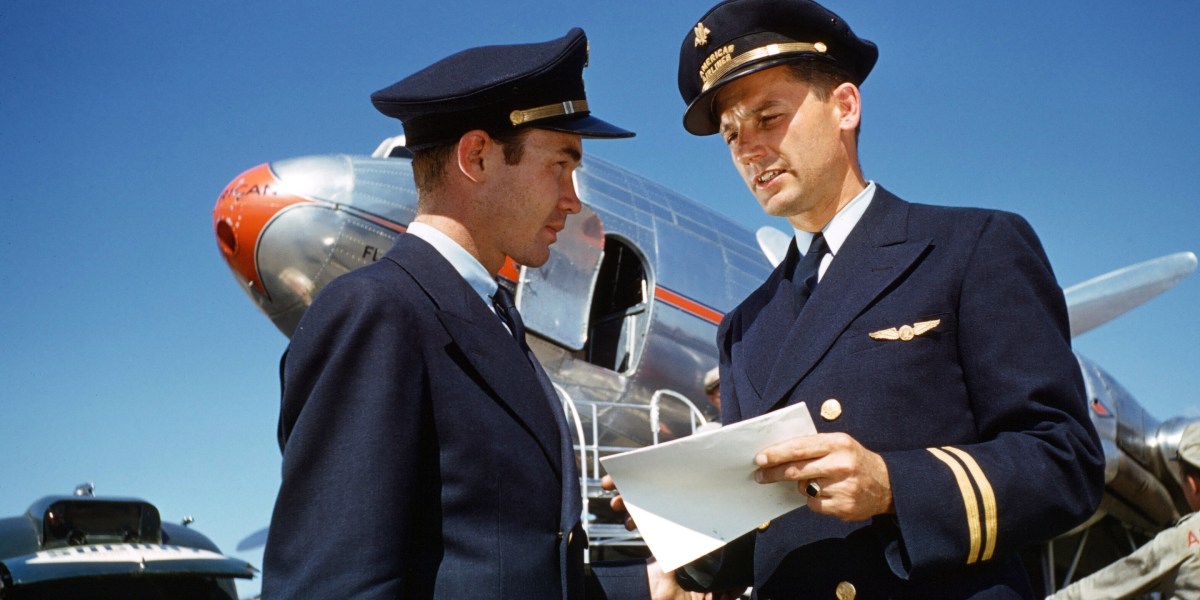
An American Airlines pilot’s pay stub has ignited a fresh flashpoint in the debate over U.S. wages, after a screenshot showing nearly $458,000 in year‑to‑date compensation ricocheted across social media and left many users stunned.

What the viral post showed

A Miami‑based Boeing 737 captain’s pay statement, originally shared on Reddit and then amplified on X by the popular Breaking Aviation News & Videos account, lists year‑to‑date earnings of about $458,000 as of mid‑December. The pay line that grabbed the most attention: an hourly rate just above $360 per flight hour, a figure near the top of American’s narrow‑body captain scale under its latest contract.

For many workers making a fraction of that amount, the idea that a single pilot could earn close to half a million dollars in one year felt like “elite money.” Commenters contrasted the figure with their own salaries, with one viral reaction being “Dude makes what I make in a month in a day.”

As some commenters debated a career change, one Reddit user offered a dose of reality.

“Starting from absolute zero, plan on ~$150k investment into your certifications and 10 years of low-paying entry-level jobs before you break even on that investment. Then another 5-10 years before you’re making this kind of money.”

The case for high pilot pay

Aviation professionals and many passengers pushed back on the outrage, arguing that the number reflects both seniority and the high stakes of the job rather than an easy windfall. They pointed to years of training, six‑figure flight‑school debt, and a responsibility set that includes managing a complex machine and hundreds of lives, along with demanding schedules that can keep pilots away from home for much of the year.

How pilot pay actually works

The headline hourly rate only applies to flight time, not the full duty day, and U.S. regulations cap pilots at 1,000 flight hours in any rolling 365‑day period, limiting how much they can legally fly. Within that framework, a captain at a legacy carrier can still build a mid‑six‑figure income by stacking premium trips, bidding favorable schedules with seniority, and, in some cases, flying right up against contractual and regulatory limits.

A window into broader labor tensions

The reaction to the American Airlines captain’s paycheck arrives amid a post‑pandemic pilot shortage, a wave of record‑setting pilot contracts, and a wider labor market where many workers say their pay has not kept pace with inflation. Online, the viral stub quickly transcended aviation, feeding into a broader debate over which jobs are “worth” six‑figure paydays—and renewing questions about how U.S. compensation is distributed between high‑skill, heavily unionized roles and everyone else.

​Employers’ growing focus on skills over traditional credentials dovetails with how airlines build their pilot pipeline, even as pilots still face some of the most rigid training and licensing requirements in the labor market.

Skills vs. degrees in commercial aviation

​Employers’ growing focus on skills over traditional credentials dovetails with how airlines build their pilot pipeline, even as pilots still face some of the most rigid training and licensing requirements in the labor market.

Recent Fortune reporting has highlighted that employers increasingly treat degrees as just one signal in a broader “portfolio of evidence” that includes certifications, microcredentials, and work samples. In one survey cited by Fortune, 86% of employers said nondegree certificates show real job readiness, while nearly 70% still see degrees as important—suggesting the hottest candidates bring both formal education and verifiable, job‑ready skills.

Commercial aviation sits somewhat apart from the typical corporate skills‑vs‑degrees debate because airline pilots must meet strict regulatory and licensing thresholds, starting with an Airline Transport Pilot (ATP) certificate that demands extensive flight hours and check‑rides. But airlines have been moving on the margins toward a more skills‑centric model: major U.S. carriers including Delta have dropped four‑year degree requirements for pilots, expanded in‑house academies, and leaned harder on simulator assessments, line checks, and recurrent training as proof of competencies rather than relying on a diploma as a proxy for capability.

American Airlines has not commented on the viral conversation.

For this story, Fortune journalists used generative AI as a research tool. An editor verified the accuracy of the information before publishing. 


Source link

Continue Reading

Business

‘Our beautiful Tatiana passed away this morning. She will always be in our hearts’: Kennedy family mourns yet another tragic death

Published

on


Environmental journalist Tatiana Schlossberg, one of three grandchildren of the late President John F. Kennedy, has died after she was diagnosed with leukemia last year. She was 35.

Schlossberg, daughter of Kennedy’s daughter, Caroline Kennedy, and Edwin Schlossberg, revealed she had terminal cancer in a November 2025 essay in The New Yorker. A family statement disclosing her death was posted on social media Tuesday by the John F. Kennedy Library Foundation.

“Our beautiful Tatiana passed away this morning. She will always be in our hearts,” the statement said. It did not disclose a cause of death or say where she had died.

Schlossberg told of being diagnosed with acute myeloid leukemia in May 2024 at 34. While in the hospital for the birth of her second child, her doctor noticed her white blood cell count was high. It turned out to be acute myeloid leukemia with a rare mutation, mostly seen in older people.

In the essay, “A Battle With My Blood,” Schlossberg recounted going through rounds of chemotherapy and two stem cell transplants and participating in clinical trials. During the most recent trial, she wrote, her doctor told her “he could keep me alive for a year, maybe.”

Schlossberg also criticized policies pushed by her mother’s cousin, Health and Human Services Secretary Robert F. Kennedy Jr., in the essay, saying policies he backed could hurt cancer patients like her. Her mother had urged senators to reject his confirmation.

“As I spent more and more of my life under the care of doctors, nurses, and researchers striving to improve the lives of others, I watched as Bobby cut nearly a half billion dollars for research into mRNA vaccines, technology that could be used against certain cancers,” the essay reads.

Schlossberg had worked as a reporter covering climate change and the environment for The New York Times’ Science section. Her 2019 book “Inconspicuous Consumption: The Environmental Impact You Don’t Know You Have” won the Society of Environmental Journalists’ Rachel Carson Environment Book Award in 2020.

Schlossberg wrote in The New Yorker essay that she feared her daughter and son wouldn’t remember her. She felt cheated and sad that she wouldn’t get to keep living “the wonderful life” she had with her husband, George Moran.

While her parents and two siblings tried to hide their pain from her, she said she felt it every day. Her siblings, Rose and Jack Schlossberg, are JFK’s other grandchildren.

“For my whole life, I have tried to be good, to be a good student and a good sister and a good daughter, and to protect my mother and never make her upset or angry,” she said. “Now I have added a new tragedy to her life, to our family’s life, and there’s nothing I can do to stop it.”

Schlossberg’s mother Caroline was 5 years old when her father, President Kennedy, was assassinated in Dallas in 1963. She was 10 when her uncle, Robert F. Kennedy, was assassinated in Los Angeles in 1968 while he was running for president.

Caroline’s brother, John F. Kennedy Jr., died in 1999 when the single-engine plane he was piloting plunged into the Atlantic Ocean, near Martha’s Vineyard, Massachusetts. His wife, Carolyn, and her sister, Lauren Bessette, also died in the crash.

___

Levy reported from Harrisburg, Pennsylvania, and Brumfield from Cockeysville, Maryland.

This story was originally featured on Fortune.com


Source link

Continue Reading

Business

Meta claims ‘no continuing Chinese ownership interests in Manus AI’ after reported $2 billion deal to shore up in AI agent race

Published

on


Meta is buying artificial intelligence startup Manus, as the owner of Facebook and Instagram continues an aggressive push to amp up AI offerings across its platforms.

The California tech giant declined to disclose financial details of the acquisition. But The Wall Street Journal reported that Meta closed the deal at more than $2 billion.

Manus, a Singapore-based platform with some Chinese roots, launched its first “general-purpose” AI agent earlier this year. The platform offers paid subscriptions for customers to use this technology for research, coding and other tasks.

“Manus is already serving the daily needs of millions of users and businesses worldwide,” Meta said in a Monday announcement, adding that it plans to scale this service — as Manus will “deliver general-purpose agents across our consumer and business products, including in Meta AI.”

Xiao Hong, CEO of Manus, added that joining Meta will allow the platform to “build on a stronger, more sustainable foundation without changing how Manus works or how decisions are made.” Manus confirmed that it would continue to sell and operate subscriptions through its own app and website.

The platform has grown rapidly over the past year. Earlier this month, Manus announced that it had crossed the $100 million mark in annual recurring revenue, just eight months after launching.

Some of Manus’ initial financial backers reportedly included China’s Tencent Holdings, ZhenFund and HSG. And the company that first launched the platform — Butterfly Effect, which also operates under the name monica.im, which was founded in China before moving to Singapore.

A Meta spokesperson confirmed on Tuesday that there would be “no continuing Chinese ownership interests in Manus AI” following its transaction, and that the platform would also discontinue its services and operations in China. Manus reiterated that it would continue to operate in Singapore, where most of its employees are based.

Meta CEO Mark Zuckerberg has been pushing to revive its commercial AI efforts as the company faces tough competition from rivals such as Google and OpenAI, maker of ChatGPT. In June, the company made a $14.3 billion investment in AI data company Scale and recruited its CEO Alexandr Wang to help lead a team developing “superintelligence” at the tech giant.

This story was originally featured on Fortune.com


Source link

Continue Reading

Business

‘I opened her door and the wind caught me, and I went flying’: The U.S. Arctic air surge is sweeping northerners off their feet

Published

on


A surge of Arctic air brought strong winds, heavy snow and frigid temperatures to the Great Lakes and Northeast on Tuesday, a day after a bomb cyclone barreling across the Midwest left tens of thousands of customers without power.

Blustery winds were expected to add to the chill, with low temperatures dipping below freezing as far south as the Florida panhandle, the National Weather Service said.

The wild storm hit parts of the Plains and Great Lakes this week with sharply colder air, strong winds and a mix of snow, ice and rain, leading to treacherous travel. Forecasters said it intensified quickly enough to meet the criteria of a bomb cyclone, a system that strengthens rapidly as pressure drops.

Kristen Schultz, who was heading home to Alaska, said it took her four hours to get to the Minneapolis airport on Tuesday.

“Just give yourself plenty of extra time and that way, even if things go smoothly, you don’t have to be stressed out,” she said, “and you’re ready in case things don’t go so smoothly.”

Nationwide, more than 115,000 customers were without power Tuesday morning, around a third of them in Michigan, according to Poweroutage.us.

As the storm moves into Canada, the frigid air trailing behind it will spread across much of the eastern two-thirds of the country, the National Weather Service said, powering the lake-effect “snow machine” in areas downwind of the Great Lakes.

Some areas in western and upstate New York saw a foot or more of snow Monday and their totals could reach up to 3 feet (91 centimeters) this week, forecasters said. Strong winds on Monday, including an 81 mph (130 kph) gust in Buffalo, New York, knocked down trees and wires across the region, the weather service said.

“At this point, the worst does seem to be over, and we are expecting conditions to improve especially by later today,” said Andrew Orrison, a weather service meteorologist.

Videos on social media show people struggling to walk in the windy conditions and a waterway in downtown Buffalo clogged with tree branches and other debris stemming from a windblown surge from Lake Erie.

Just south of Buffalo in Lackawanna, Diane Miller was caught on video being blown off the front steps of her daughter’s house and landing in some bushes. She wasn’t seriously hurt.

“I opened her door and the wind caught me, and I went flying,” Miller told WKBW-TV.

Whiteout conditions were still possible in some areas, forecasters said, and New York Gov. Kathy Hochul warned people in impacted areas to avoid unnecessary travel.

The fierce winds on Lake Erie had sent water surging toward the basin’s eastern end near Buffalo while lowering water on the western side in Michigan to expose normally submerged lakebed — even the wreck of a car and a snowmobile.

Kevin Aldrich, 33, a maintenance worker from Monroe, Michigan, said he has never seen the lake recede so much and was surprised Monday to spot remnants of piers dating back to the 1830s. He posted photos on social media of wooden pilings sticking up several feet from the muck.

“Where those are at would typically be probably 12 feet deep,” or 3.6 meters, he said. “We can usually drive our boat over them.”

Dangerous wind chills across parts of North Dakota and Minnesota plunged as low as minus 30 F (minus 34 C) on Monday. And in northeast West Virginia, rare nearly hurricane-force winds were recorded on a mountain near Dolly Sods, according to the National Weather Service.

On the West Coast, strong Santa Ana winds with isolated gusts topping 70 mph (112 kph) brought down trees in parts of Southern California where recent storms had saturated the soil. Downed powerlines forced the shutdown of a freeway north of Los Angeles for several hours on Monday. Wind advisories had expired by evening, but blustery conditions were expected through Saturday, along with thunderstorms.

Rain on New Year’s Day could potentially soak the Rose Parade in Pasadena for the first time in about two decades.

___

Associated Press writers Julie Walker in New York; Leah Willingham in Concord, New Hampshire; Jeff Martin in Kennesaw, Georgia; and Susan Haigh in Norwich, Connecticut, contributed.


Source link

Continue Reading

Trending

Copyright © Miami Select.