Connect with us

Business

AMD’s Lisa Su and HP’s Enrique Lores describe how they went from ho-hum to high-end

Published

on


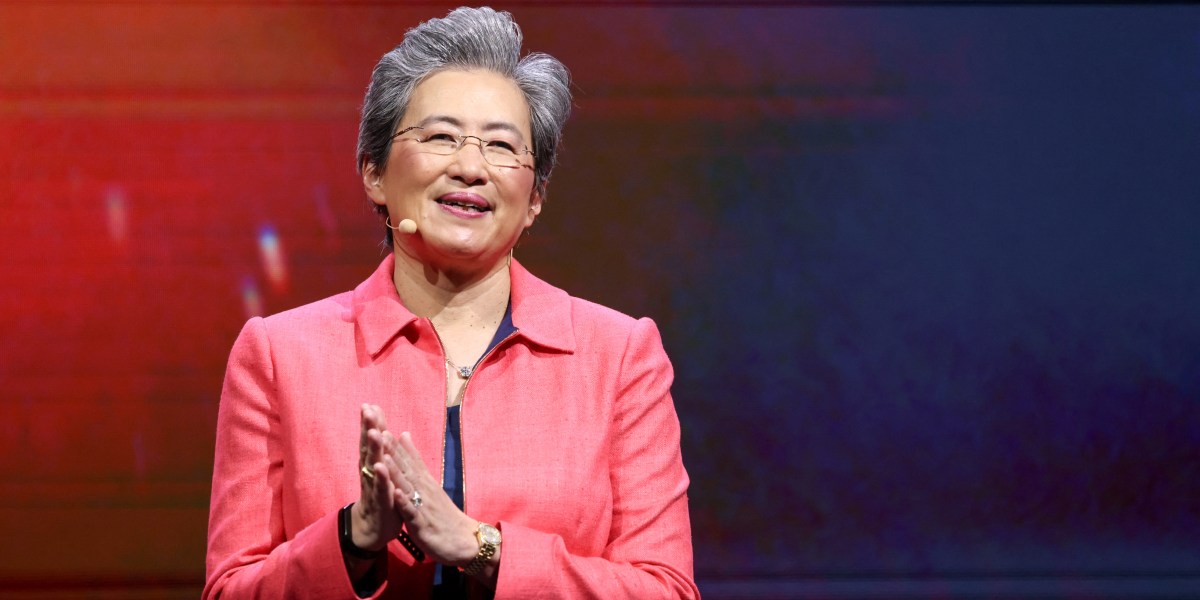
Good morning. AMD’s Lisa Su and Enrique Lores of HP met more than a dozen years ago, before either was CEO of their respective companies. When I had an opportunity to talk to them together this past weekend during the F1 United States Grand Prix in Austin, I asked what qualities they first saw in each other that stood out and cemented their partnership. Lores pointed to Su’s clarity of vision while Su told me that she appreciated Lores’ willingness to take a bold bet on a then-struggling semiconductor company with a ho-hum product line that was losing ground to competitors like Intel and Nvidia.

 “We had used AMD only for the low end of our consumer business and we jointly saw an opportunity to use their technology in more premium products for commercial customers,” said Lores, who notes that he became convinced after seeing what was in the pipeline. “We both had to convince our CEOs that this made sense and develop the economics to show that it made sense.”

As CEOs, they went on to transform their companies and double down on their collaboration, with AMD now supplying the high-performance chips at the heart of HP’s AI-driven PCs, laptops, and workstations. Under Su, AMD has become a powerhouse in the AI revolution and a case study in reinvention. Lores, meanwhile, has been transforming HP from a hardware business to what he calls an “experience solutions company” that brings AI capabilities from the cloud to the device.

The challenge for HP these days is getting customers and software companies to buy into the value proposition at a time when a lot of enterprise dollars continue to flow into investing in large language models. While Lores has revived HP’s fortunes since becoming CEO in 2019 and continues to grow PC sales, concerns about tariffs and weakness in the printing business have cut 15% from the stock price this year. AMD stock has almost doubled.

But that doesn’t change the strength of a partnership that both say is built on mutual trust, as well as bottom-line results, as they co-develop new technologies and a new AI architecture for the workplace. Said Lores: “When you have a friend, you trust your friend, and when you are doing new things, it’s important to have that level of confidence. When you go through problems, which also happens, it’s also good to try to have trust in the other side.”

Contact CEO Daily via Diane Brady at diane.brady@fortune.com

Top news

Trump urged Zelensky to surrender to Russia

The president urged the Ukrainian president to give up the Donbas to Putin or be destroyed. “Trump appeared to have adopted many of Putin’s talking points verbatim, even when they contradicted his own recent statements about Russia’s weaknesses,” the FT reports.

Gaza ceasefire broken by both sides

Hamas fired anti-tank missiles at Israeli positions and Israel responded with air strikes. “We knew this was brewing. And the longer these guys are allowed to attack each other, the more they’re going to attack each other,” a White House official told Axios.

Trump softens on China

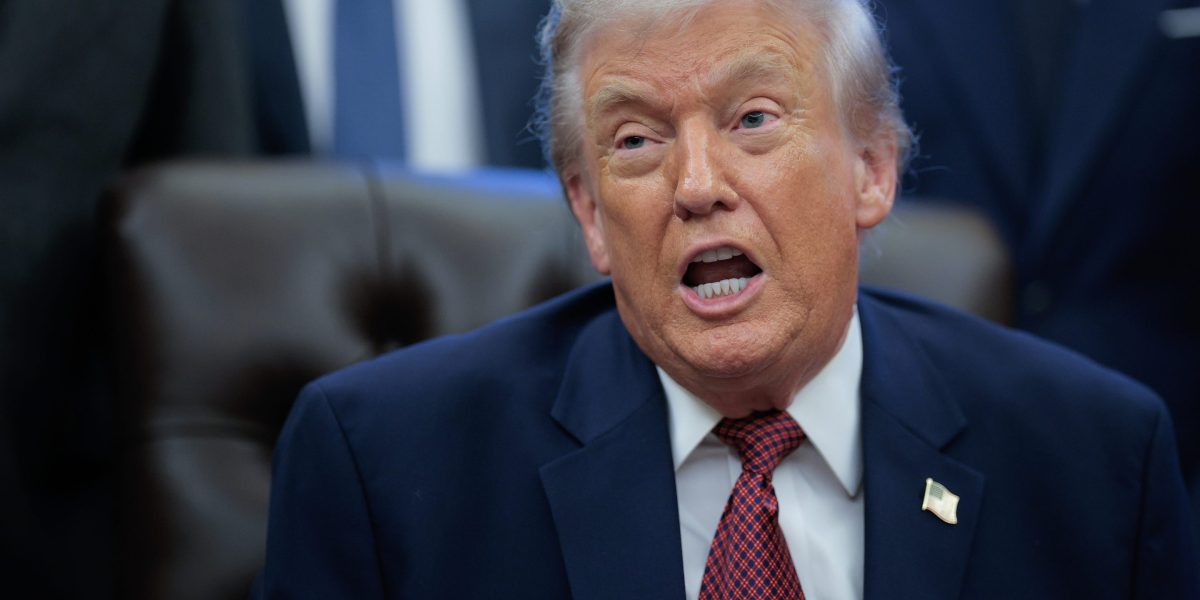
Dow futures rose on Sunday after President Donald Trump softened his tone on the trade war between the U.S. and China during an interview with Fox News on Sunday. “I’m not looking to destroy China,” Trump said. 

China GDP grows 4.8% in Q3

That’s down from 5.2% in Q2 and is regarded as relatively weak for China.

Must-read: The FT’s history of China’s rare earth industry

If you want to understand why China feels no need to back down in the face of Trump’s tariff threats and how China ended up in control of the world’s supply of rare earths, begin here.

Study shows how quickly ‘AI psychosis’ can take hold

For some users, AI is a helpful assistant; for others, a companion. But for a few unlucky people, chatbots powered by the technology have become a gaslighting, delusional menace. Steven Adler published an analysis showing that ChatGPT repeatedly and falsely reinforced one man’s delusions and psychological distress.

S&P Global report finds more loss than expected at companies

A new report from S&P Global of 9,000 companies found that they will lose at least $1.2 trillion more this year than they expected before the year began. The increased loss is attributed to tariffs and other factors including energy prices and growing capital expenditure, according to the firm.

How the CEO of Macy’s wants to turn the retailer around

Macy’s CEO Tony Spring is trying to bring the retailer back to life after years of poor performance by bringing the focus back to customer service and visually appealing layouts. “It’s not rocket science,” Spring told Fortune, “it’s back to the standards of retail.”

The Louvre was robbed

The museum is closed while police investigate. The robbers struck in broad daylight, while the museum was open, and targeted a specific number of antique jewels. France is agog.

The markets

S&P 500 futures were up 0.34% this morning. The index closed up 0.53% in its last session. STOXX Europe 600 was up 0.54% in early trading. The U.K.’s FTSE 100 was up 0.36% in early trading. Japan’s Nikkei 225 was up 3.37%. China’s CSI 300 was up 0.53%. The South Korea KOSPI was up 1.76%. India’s Nifty 50 was up 0.47% before the end of the session. Bitcoin was up to $111.1K.

Around the watercooler

Jensen Huang says Nvidia went from 95% market share in China to 0% — ‘I can’t imagine any policymaker thinking that that’s a good idea’ by Jason Ma

CEO coach to the Fortune 500: The best leaders have developed a surprising talent—they know how to be ‘actively’ lazy by Bill Hoogterp

Even the author of ‘Trumponomics’ admits ‘tariffs are taxes—and taxes are bad’ by Eva Roytburg

Mercedes F1 team CEO Toto Wolff’s experience with two Gen Z drivers made him realize the workplace stereotypes are ‘a bit unfair’ by Sasha Rogelberg

CEO Daily is compiled and edited by Joey Abrams and Jim Edwards.

This is the web version of CEO Daily, a newsletter of must-read global insights from CEOs and industry leaders. Sign up to get it delivered free to your inbox.


Source link

Continue Reading

Business

Macron warns EU may hit China with tariffs over trade surplus

Published

on


French President Emmanuel Macron warned that the European Union may be forced to take “strong measures” against China, including potential tariffs, if Beijing fails to address its widening trade imbalance with the bloc.

“I’m trying to explain to the Chinese that their trade surplus isn’t sustainable because they’re killing their own clients, notably by importing hardly anything from us any more,” Macron told Les Echos newspaper in an interview published on Sunday.

“If they don’t react, in the coming months we Europeans will be obliged to take strong measures and decouple, like the US, like for example tariffs on Chinese products,” he said, adding that he had discussed the matter with European Commission President Ursula von der Leyen.

Macron has just returned from a three-day state visit in China, where he pressed for more investment as Paris seeks to recalibrate its relationship with the world’s second-largest economy. France’s goods trade deficit with China reached around €47 billion ($54.7 billion) last year, according to the French Treasury. Meanwhile, China’s goods trade surplus with the EU swelled to almost $143 billion in the first half of 2025, a record for any six-month period, according to data released by China earlier this year.

Tensions between France and China escalated last year after Paris backed the EU’s decision to impose tariffs on Chinese electric vehicles. Beijing retaliated by imposing minimum price requirements on French cognac, sparking fears among pork and dairy producers that they could be targeted next.

‘Life or Death’

Macron said the US approach to China was “inappropriate” and had worsened Europe’s position by diverting Chinese goods toward the EU market.

“Today, we’re stuck between the two, and it’s a question of life or death for European industry,” Macron said, while noting that Germany — Europe’s biggest economy — doesn’t entirely share France’s stance.

In addition to Europe needing to become more competitive, the European Central Bank too has a role to play in strengthening the EU’s single market, Macron said, arguing that monetary policy should take growth and jobs into account, not just inflation, he said.

He also said the ECB’s decision to continue selling the government bonds it holds risks pushing up long-term interest rates and weighing on economic activity.

“Europe must — and wants to — remain a zone of monetary stability and credible investment,” Macron said.


Source link

Continue Reading

Business

What bubble? Asset managers in risk-on mode stick with stocks

Published

on


There’s a time when investments run their course and the prudent move is to cash out. For global asset managers who’ve ridden double-digit gains in equities for three straight years, that time is not now.

“Our expectation of solid growth and easier monetary and fiscal policies supports a risk-on tilt in our multi-asset portfolios. We remain overweight stocks and credit,” said Sylvia Sheng, global multi-asset strategist at JPMorgan Asset Management.

“We are playing the powerful trends in place and are bullish through the end of next year,” said David Bianco, Americas chief investment officer at DWS. “For now we are not contrarians.”

“Start the year with sufficient exposure, even over-exposure to equities, predominantly in emerging market equities,” said Nannette Hechler-Fayd’herbe, EMEA chief investment officer at Lombard Odier. “We don’t expect a recession in 2026 to unfold.”

Those assessments came from Bloomberg News interviews with 39 investment managers across the US, Asia and Europe, including at BlackRock Inc., Allianz Global Investors, Goldman Sachs Group Inc. and Franklin Templeton.

More than three-quarters of the allocators were positioning portfolios for a risk-on environment through 2026. The thrust of the bet is that resilient global growth, further developments in artificial intelligence, accommodative monetary policy and fiscal stimulus will deliver outsize returns in all fashion of global equity markets. 

The call is not without risks, including simply its pervasiveness among the respondents, along with their overall high degree of assuredness. The view among the institutional investors also aligns with that of sell-side strategists around the globe. 

Should the bullishness play out as expected, it would deliver a stunning fourth straight year of bumper returns for the MSCI All-Country World Index. That would extend a run that’s added $42 trillion in market capitalization since the end of 2022 — the most value created for equity investors in history. 

That’s not to say the optimism is without merit. The artificial intelligence trade has added trillions in market value to dozens of firms plying the industry, but just three years after ChatGPT broke into the public consciousness, AI remains in the early phase of development.

No Tech Panic

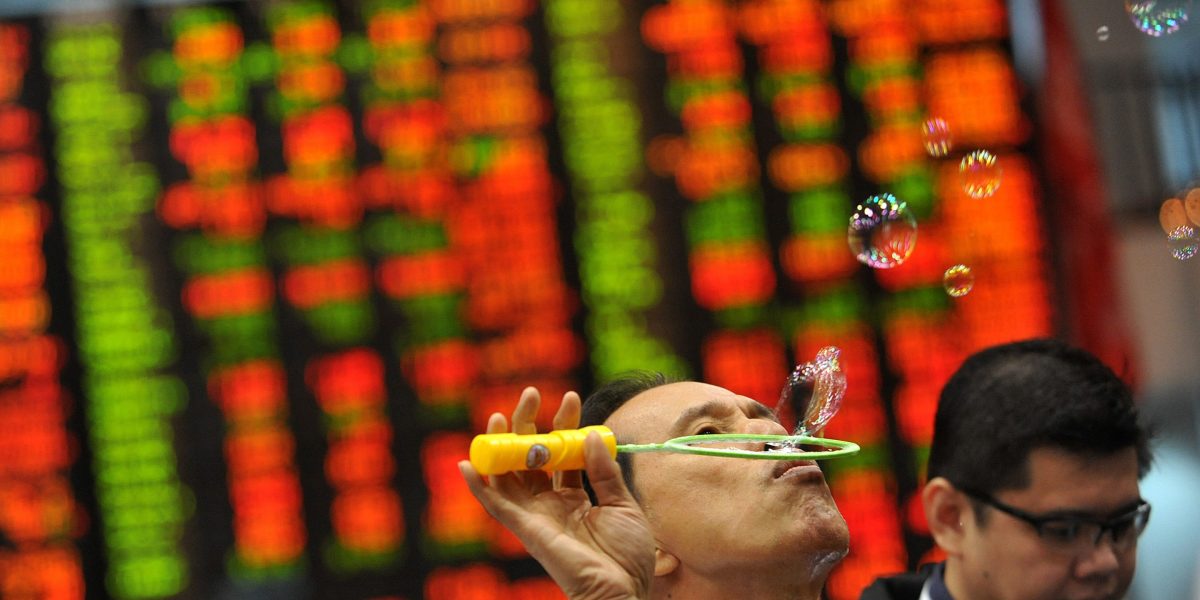
The buy-side managers largely rejected the idea that the technology has blown a bubble in equity markets. While many acknowledged some pockets of froth in unprofitable tech names, 85% of managers said valuations among the Magnificent Seven and other AI heavyweights are not overly inflated. Fundamentals back the trade, they said, which marks the beginning of a new industrial cycle. 

“You can’t call it a bubble when you’re seeing tech companies deliver a massive earnings beat. In fact, earnings from the sector have outstripped all other US stocks,” said Anwiti Bahuguna, global co-chief investment officer at Northern Trust Asset Management.

As such, investors expect the US to remain the engine of the rally. 

“American exceptionalism is far from dead,” said Jose Rasco, chief investment officer at HSBC Americas. “As artificial intelligence continues to spread around the globe, the US will be a key participant.” 

Most investors echoed the sentiment expressed by Helen Jewell, international chief investment officer of fundamental equities at BlackRock, who suggested also searching outside the US for meaningful upside.

“The US is where the high-return high-growth companies are, so we have to be realistic about that. But those are already reflected in valuations, and there are probably more interesting opportunities outside the US,” she said.

International Boom

Profits matter above all else for equity investors, and huge bumps in government spending from Europe to Asia have stoked estimates for strong gains in earnings.

“We have begun to see a meaningful broadening of earnings momentum, both across market capitalizations and across regions, including Japan, Taiwan, and South Korea,” said Wellington Management equity strategist Andrew Heiskell. “Looking into 2026, we see clear potential for a revival of earnings growth in Europe and a wider range of emerging markets.”

India is one of the most compelling opportunities for 2026, according to Goldman Sachs Asset Management’s Alexandra Wilson-Elizondo, global co-head and co-chief investment officer of multi-asset solutions.

“We see real potential for India to become the Korea-like re-rating story of 2026, a market that transitions from tactical allocation to strategic core exposure in global portfolios,” she said. 

Nelson Yu, head of equities at AllianceBernstein, said he sees improvements outside of the US that will mandate allocations. He noted governance reform in Japan, capital discipline in Europe and recovering profitability in some emerging markets.

Small Cap Optimism

At the sector level, the investors are looking for AI proxies, notably among clean energy providers that can help meet the technology’s ravenous demand for power. Smaller stocks are also finding favor.

“The earnings outlook has brightened for small-capitalization stocks, industrials and financials,” said Stephen Dover, chief market strategist and head of Franklin Templeton Institute. “Small-cap stocks and industrials, which are typically more highly leveraged than the rest of the market, will see profitability rise as the Federal Reserve trims interest rates and debt servicing costs fall.”

Over at Santander Asset Management, Francisco Simón sees earnings growth of more than 20% for US small caps after years of underperformance. Reflecting the optimism, the Russell 2000 Index of such equities recently hit a record high.

Meanwhile, the combination of low valuations and strong fundamentals makes health care one of the most compelling contrarian opportunities in a bullish cycle, a preponderance of managers said.  

“Health-care related sectors can surprise to the upside in the US markets,” said Jim Caron, chief investment officer of cross-asset solutions at Morgan Stanley Investment Management. “This is a mid-term election year and policy may at the margin support many companies. Valuations are still attractive and have a lot of catch up to do.”

Virtually every allocator struck at least a note of caution about what lies ahead. The top worry among them was a rekindling of inflation in the US. If the Fed is forced by rising prices to abruptly pause or even end its easing cycle, the potential for turbulence is high.

“A scenario — which is not our base case — whereby US inflation rebounds in 2026 would constitute a double whammy for multi-asset funds as it would penalize both stocks and bonds. In this sense it would be much worse than an economic slowdown,” said Amélie Derambure, senior multi-asset portfolio manager at Amundi SA. 

“The way investors are headed for 2026, they need to have the Fed on their side,” she added.

Trade Caution

Another worry is around President Donald Trump’s capriciousness, particularly when it comes to trade. Any flareup in his trade spats that fuels inflation through heightened tariffs would weigh on risk assets. 

Oil and gas producers remain unloved by the group, though that could change if a major geopolitical event upends supply lines. While such an outcome would bolster those sectors, the overall impact would likely be negative for risk assets, they said.

“Any geopolitical situation that can affect the price of oil is what will have the largest impact on the financial markets. Clearly both the Middle East and the Ukraine/Russia situations can impact oil prices,” said Scott Wren, senior global market strategist at Wells Fargo Investment Institute.

Multiple respondents flagged European autos as a “no-go” area for 2026, citing intense competitive pressure from Chinese carmakers, margin compression and structural challenges in the transition to electric vehicles. 

“Personally I don’t believe for a minute that there will be a rebound in the sector,” said Isabelle de Gavoty at Allianz GI. 

Outside of those worries, most asset managers simply believe that there’s little reason to fret about the upward momentum being interrupted — outside, of course, from the contrarian signal such near-uniform bullishness sends.

“Everyone seems to be risk-on at the moment, and that worries me a bit in the sense that the concentration of positions creates less tolerance for adverse surprises,” said Amundi’s Derambure.  


Source link

Continue Reading

Business

Trump says Netflix-Warner Bros. deal ‘could be a problem’

Published

on


President Donald Trump raised potential antitrust concerns for Netflix Inc.’s planned acquisition of Warner Bros. Discovery Inc., noting that the market share of the combined entity may pose problems. 

“Well, that’s got to go through a process, and we’ll see what happens,” Trump said when asked about the deal as he arrived at the Kennedy Center for an event, confirming that he has met Netflix co-CEO Ted Sarandos last week and complimenting the streaming company. “But it is a big market share. It could be a problem.”

The $72 billion deal would combine the world’s No. 1 streaming player with the No. 4 service HBO Max, which has raised red flags from antitrust regulators. 


Source link

Continue Reading

Trending

Copyright © Miami Select.