Amazon’s self-driving robotaxi subsidiary, Zoox, expects to start charging passengers for rides in Las Vegas in early 2026, with paid rides in the San Francisco Bay Area coming later next year, a company executive said Monday.
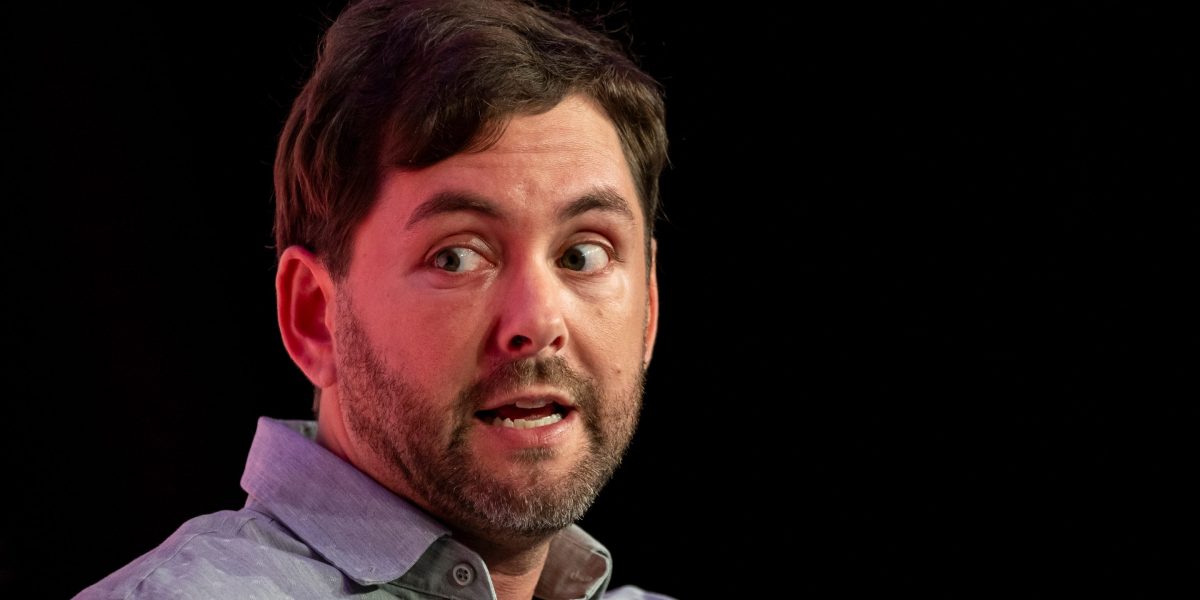
The move, which would represent a key milestone for Zoox as it seeks to catch up with Alphabet’s Waymo, depends on obtaining federal regulatory and state approvals, Zoox Co-founder and chief technology officer Jesse Levinson told the audience at Fortune’s Brainstorm AI event in San Francisco on Monday.
And while robotaxi rival Waymo recently partnered with DoorDash to test food deliveries with driverless cars, Levinson said that Zoox is “laser focused” on moving people around cities, an addressable market he sees as being “just profoundly huge.” That directive has come “all the way from the very top” at Amazon, he added, despite the retailer’s significant interest in driverless package delivery.
“It’s harder to move people around than packages in terms of what you have to do with your vehicle,” Levinson said. On the other hand, automating package delivery is rife with its own challenge because the boxes have to get in and out of the vehicle, which isn’t as straightforward as people who can move themselves, he added.
Zoox crossed the 1 million mile technical threshold for autonomous rides just last week, Levinson said. The company’s distinct, carriage-seated vehicles, which have no steering wheels or manual controls, currently provide rides to passengers free of charge in portions of Las Vegas and Zoox is slowly opening up the waitlist to use the service in San Francisco.
Despite the progress and the plans to start charging fares, Zoox won’t generate revenues that are meaningful to Amazon, its $2.4 trillion parent company, for at least several more years, Levinson said.
“This is pretty expensive,” said Levinson. “Over the next few years, it will start to be a really interesting business because the revenue you can generate from the robotaxi is quite a bit more than the expense to run robotaxi.”
That’s the point at which the business will become more “financially interesting,” he added.
Building cars without human drivers in mind
While creating a driverless robotaxi service comes with various challenge, Levinson believes it will ultimately be a key method for moving people around dense urban areas.
“Our view is that people aren’t doing this, not because it’s not a good idea, but because it’s just really hard,” said Levinson. “It takes a lot of time, it’s very cross functional, and it’s expensive. But I do think over time this is going to be a much more popular way of human transportation”
One of the gaps between a driverless robotaxi service like Zoox and Waymo, said Levinson, is in the way the cars are built. Rather than retrofitted vehicles that were manufactured with a human driver in mind, Zoox cars were built to be driverless. Levinson said the four-passenger cabins have carriage seating, active suspension, individual screens for each seat, and four-zone climate control.
“The cars that have been designed over the last 100 years are for humans,” Levinson said. “All the choices, their shape, their architecture, what components they have in them—they were all designed for human drivers.” Levinson said Zoox offers a more cushy, social rider experience that he thinks will be a differentiator among competitors like Waymo and potentially Tesla’s robotaxi fleet.
Another competitive element for Zoox is its battery, said Levinson. The bigger battery is more environmentally and economically friendly because it requires less charging.
“The economic opportunity and the opportunity for customers [as we] create this whole new category of transportation is actually much more exciting and even more financially compelling than simply taking something they do today and saving a bit of money,” he said.
Glean, last valued at $7.2 billion, has hit $200 million in annual recurring revenue, CEO Arvind Jain revealed at Fortune Brainstorm AI San Francisco.
“What’s driving all of this is the awareness from CEOs and executives that this is the time to invest in AI,” Jain said in an exclusive interview before the conference. “Everybody has been looking for a safe, secure, more appropriate version of ChatGPT for their employees. And we bring the capabilities that ChatGPT brings to consumers to business users, and in the context of their company.”
Jain founded Glean in 2019, and the company has made its name in enterprise search and AI applications. In June, Glean raised its $150 million Series F, sending its valuation over $7 billion, a leap from the $4.6 billion valuation the company fetched in 2024.
“The biggest challenge that customers face with AI is the fact that AI technologies are actually not built for their companies,” said Jain. “Most of the AI technologies are built…on the data on the Internet, public data. And so when you bring those models…inside your company, and you try to actually make them do some work internally, they don’t really have any understanding of how your business works and your context.”
And in an AI landscape with lots of ARR numbers floating around, Jain is clear: This ARR number includes only subscription revenues from their software—no consulting or services revenue. Jain adds that Glean’s contracts range from one to three years, and that there’s “no sub-one-year contract in our model.”
Glean’s rise through the AI boom has been uniquely tied to the challenges that enterprises face when trying to apply AI. The much quoted MIT study from this summer—that 90% of generative AI pilots are failing—reflects the existential question for companies: Where does AI ROI actually come from?
“There are two narratives,” said Jain. “One narrative of AI is that nothing works, and then the other one is that it’s taking off. It’s getting more serious. Companies are able to actually do many, many, many useful things with AI. And we’re definitely generating success and excitement for customers.”
After announcing an almost-$83 billion deal to buy most of Warner Bros. Discovery on Friday, Netflix’s top brass projected calm on Monday as Paramount Skydance lobbed a hostile bid to purchase all of WBD, and investors seemed to recoil at the sheer size of Netflix’s own offer.
“Today’s move was entirely expected,” Co-CEO Ted Sarandos told investors at a UBS conference, brushing off Paramount’s bid just hours earlier. “We have a deal done, and we are incredibly happy with the deal. We think it’s great for our shareholders. It’s great for consumers. We think it’s a great way to create and protect jobs in the entertainment industry.” From Netflix’s perspective, Sarandos added, “We have a deal done, and we’re incredibly happy with the deal.”
Sarandos’s co-CEO, Greg Peters, then walked the audience through Netflix’s three-phase plan to wring value from Warner Bros. and HBO. If the deal goes through, he said, Netflix would turbocharge licensing opportunities, “double down” on the HBO brand, and unlock upsides from Warner Bros’ vast library of IP, which many analysts consider a “crown jewel” in the industry.
The executives’ comments came after investors sent Netflix stock tumbling down 6% in the two trading sessions since its Warner deal was announced, with some analysts blasting the $82.7 billion deal as “exorbitant” and “very risky.” Netflix stock is down more than 20% over the last six months.
Peters acknowledged that Netflix is known as a builder, not a buyer—generally developing its own intellectual property, rather than purchasing other companies’: “We haven’t done this before,” he said. But the company that started out lending DVDs by mail has pivoted several times to become the more than $400-billion behemoth now challenging Hollywood’s order.
And it’s worth noting that Netflix began streaming other companies’ content before it began producing its own programming. Its licensing operations are still vaunted in the industry, with the famous example of the legal drama Suits becoming a smash hit several years after it stopped airing on cable TV. As Peter put it: “Essentially, we are constantly in the business of evaluating various different licensing opportunities for titles and then trying to figure out, how do we maximize the value of that asset on our platform?” The Warner deal will just make official what Netflix already does, day in and day out.”
Sarandos, the executive behind the model that made “Netflix and chill” a byword for the millennial dating practice of and binging shows and movies at home, has largely refused to release movies in theaters, except to qualify for awards. At an event earlier this year, Sarandos dismissed going to the movies as “an outmoded idea for most people” and said Netflix was “saving Hollywood” with its stream-at-home model.
But on Monday he extended an olive branch to theater owners, saying of theatrical releases “We didn’t buy this company to destroy that value.” “What we are going to do with this is we’re deeply committed to releasing those movies exactly the way they’ve released those movies today,” he said at the UBS conference. “When this deal closes, we are in that business, and we’re going to do it.”
Sarandos also discussed his conversations with President Donald Trump—which Bloomberg reported over the weekend began in November.
President Trump “cares deeply about American industry, and he loves the entertainment industry,” Sarandos said. Jobs were the president’s main concern, according to Sarandos, who reeled off statistics showing that Netflix original productions employed 140,000 people between 2020 and 2024, contributing $125 billion to the U.S. economy. “We are producing in all 50 states,” he said. “We’ve used 500 independent production companies to make content for us, about roughly 1,000 original projects.”
Sarandos and Peters pointed out that Paramount’s offer might entail more job cuts, because Paramount and Warner have more overlap in their operations than Netflix and Warner. “In the offer that Paramount was talking about today, they also were talking about $6 billion of synergies,” said Sarandos. “Where do you think synergies come from? Cutting jobs. Yeah, so we’re not cutting jobs, we’re making jobs.”
Sarandos also discussed HBO, the premium cable channel turned streamer—Netflix’s former rival and inspiration. Sarandos has famously said of Netflix that “the goal is to become HBO faster than HBO can become us,” comments he later modified to add he wants “CBS and BBC” too. Now that his company is set to become HBO’s parent, he said it can realize its true destiny as the leading light of prestige TV.
“They’ve been doing gymnastics to make themselves into a general entertainment brand,” Sarandos said of HBO in the HBO Max era overseen by WBD CEO David Zaslav. “Under this transaction, they don’t have to do that anymore.”
Both Netflix co-CEOs also hammered a message clearly aimed at regulators who might take anti-trust action to halt the deal: The combined company would hardly dominate TV. The Netflix deal spins off CNN, TNT, Discovery, HGTV, the Food Network and the company’s other cable channels, while the Paramount offer keeps the cable assets attached. Using Nielsen viewership data that appeared to include linear TV as well as streaming, Peters said Netflix commands just 8% of U.S. TV hours; adding HBO would raise that to 9%.
“We’d still be behind YouTube,” he noted. “And we’d still be behind a combined Paramount–WBD at 14%.”
BofA Research’s Media & Entertainment team used a different metric—total TV streaming—from Nielsen data to calculate that Warner and Netflix combined would be about 21% of the market, whereas Paramount and Netflix would be 8%. Both would still come in behind YouTube at 28%, however.
Trump weighed in on Sunday about his relationship with Sarandos and the pending antitrust question. Saying the Netflix co-CEO is a “fantastic person,” Trump added that the Warner-Netflix market share “could be a problem.” At any rate, Trump added, uncharacteristically for a sitting president, he would be involved in what happens next.
Sarandos finished the UBS panel by reiterating to everyone listening and watching, many of whom have been long-term holders of Netflix stock, that he was “excited” about the deal. (The question of whether Netflix would sweeten its bid for WBD wasn’t raised.)
“We think this deal with Warner Brothers is good for shareholders,” he said. “We think it’s good for consumers. We think it’s good for creators. We think it’s great for the entertainment industry as a whole.”
[Editor’s note: one of the authors worked at Netflix from June 2024 through July 2025.]
Are master’s and doctorates in accounting “professional” degrees? Not anymore, according to the Department of Education.
The department’s Reimagining and Improving Student Education (RISE) committee recently released draft regulations that specified which graduate degrees count as “professional” for purposes of federal student loans—and accounting wasn’t on the list. Neither were many graduate degrees commonly considered “professional,” such as nursing, engineering, education, and architecture, Inside Higher Ed reported.
The education department’s decision isn’t merely semantic: If it’s finalized, it will affect how much federal aid students are able to receive. Students in the 11 degree fields designated “professional” will be able to borrow up to $50,000 a year and no more than $200,000 in total. For students in other programs, federal loans will be capped at $20,500 per year and a total of $100,000.
Now, accounting organizations have followed suit. The AICPA and state societies of accounting, the National Association of State Boards of Accountancy (NASBA), and the American Accounting Association (AAA), a professional organization representing accounting educators, have all released formal statements in opposition to the decision. Both the AICPA and AAA statements requested that the education department reconsider classifying accounting degrees as professional, and NASBA wrote in its statement that it “will engage policymakers to ensure accounting is restored to the professional degree category.”
Concern for accounting’s reputation: Leaders at the accounting organizations have expressed concerns that the decision could weaken public perception of accounting as a learned profession. In a statement, the Department of Education clarified that the term “professional” is an “internal definition” used for student loan purposes. But Daniel Dustin, president and CEO of NASBA, told CFO Brew that he worries people, and especially young people who might be considering accounting as a career, might miss that context.
“Does that have a negative impact on middle school, high school students who are looking for careers?” he asked. “Does it have the same impact on college students who may not have declared a major yet?” He stressed, as NASBA did in its statement, the longevity of accounting’s professional status. “Certified public accountancy has been a licensed profession in the United States since 1896, the third profession after doctors and lawyers,” he observed.
In a video posted to LinkedIn, AICPA president and CEO Mark Koziel reaffirmed accounting’s status. “Accounting is absolutely a profession, full stop,” he said. “It’s built on trust, integrity, and rigorous standards” and requires a “lifelong commitment to an ethical practice and continuing education,” he said, concluding “These are the hallmarks of a true profession.”
The ruling will go into effect in July 2026, following a comment period. The department stated that it “has not prejudged the rulemaking process and may make changes in response to public comments.” But if accounting continues to be left off its list of professional degrees, leaders of accounting organizations worry that fewer students will choose to pursue graduate degrees in accounting.
Grad degrees could be harder to fund: “We don’t want to provide disincentives for people to move toward further education,” Mark Beasley, president of the AAA and an accounting professor at North Carolina State University, told CFO Brew, noting that the department’s decision could “make it more difficult financially” for students to earn advanced degrees. According to US News and World Report, tuition for a master’s in accounting typically ranges from $25,000 to $70,000. Tuition varies based on whether a student opts for a public or private school, or for an online or in-person program, but at some schools, it’s higher than the federal loan cap the Department of Education proposed. The amount “would not cover NC State” tuition, Beasley said.
If the loan cap remains where it is, students who want to pursue graduate degrees would have to find other ways to fund them. Doctoral students might receive assistantships that come with teaching stipends, Beasley said, and there’s a possibility accounting firms might help students fund their education. Private loans are an option, but they come with drawbacks: Interest rates could be higher than on federal loans, Dustin said, and students might not be able to defer them or consolidate them as readily.
And the private student loan industry may not be able to handle an influx of new borrowers. Only 8% of student loans are private, according to Inside Higher Ed. The industry has dwindled since the Great Recession, per the New York Times.
Accounting education could suffer: The proposal could even be harmful to accounting education on a broader scale. If it lowers demand for graduate education, programs might get smaller, Beasley said. And master’s degree completions in accounting have already dropped 38% between 2017–18 and 2023–24, AICPA data shows. It’s possible that fewer students will pursue master’s degrees in the future, given that candidates no longer need to complete 150 credit hours of schoolwork, or 30 more hours than are necessary for a bachelor’s degree, to sit for the CPA exam.
Having fewer doctoral students in accounting could also lead to fewer accounting faculty further down the road. Both Dustin and Beasley pointed out that many accounting educators are growing older. “We might see a shortage in five to 10 years as retirements increase,” Beasley said.
Ultimately, Beasley said, the department’s ruling “work[s] against the public interest.” It could discourage people from pursuing “the kinds of training and education and knowledge development to really be good at making professional judgments that are critical for the capital market system to be reliable here in the US.”