Connect with us

Business

Amazon CEO Andy Jassy announces departure of AI executive Rohit Prasad in leadership shakeup

Published

on


Amazon CEO Andy Jassy dropped an AI bombshell on employees today, announcing that Rohit Prasad—who has led Amazon’s so-called AGI (artificial general intelligence) team since 2023, overseeing the development of the company’s Nova models—will depart at the end of the year.

Prasad previously served as the head scientist behind Amazon’s Alexa voice assistant, a role he held from the product’s earliest days. When he was appointed to lead the new ambitious AGI effort after ChatGPT launched in November 2022, as part of a scramble to develop a competitive LLM that could help reinvigorate the Alexa voice assistant. it was led almost entirely by ex-Alexa executives. 

In a blog post, Jassy announced that longtime Amazon Web Services (AWS) executive Peter DeSantis will lead a new organization that drives the development of its AI models, custom computer chips (which include its Graviton, Trainium and Nitro chips), and quantum computing efforts. DeSantis had overseen the many teams designing AWS’ global infrastructure. 

“With our Nova 2 models just launched at re:Invent, our custom silicon growing rapidly, and the advantages of optimizing across models, chips, and cloud software and infrastructure, we wanted to free Peter up to focus his energy, invention cycles, and leadership on these new areas,” Jassy wrote, adding that DeSantis would report directly to him.

Jassy also said that as part of the organizational change, Pieter Abbeel, an Amazon Distinguished Scientist in robotics who is also an AI and robotics professor at UC Berkeley, will lead the company’s frontier model research team. Abbeel came to Amazon in 2024 along with other cofounders of his robotics startup Covariant, in a deal that also saw Amazon licensing Covariants software, which included AI models that gave robots the ability to quickly adapt to new environments and tasks.

“Pieter is one of the world’s leading AI researchers, and co-founder of Covariant, which pioneered the first commercial foundation model for robotics,” Jassy wrote. “His deep expertise in generative AI and reinforcement learning makes him well-suited to advance Amazon’s AI research as we push the boundaries of what’s possible for customers.” 

The news of Prasad’s departure comes as somewhat of a surprise, given that he was recently at Amazon’s Re:Invent conference discussing the latest Nova models. However, over the past two years there has been significant media coverage suggesting that Amazon’s Alexa AI and AGI-related efforts have struggled and fallen behind competitors. 

A year ago, for example, Fortune’s Jason Del Rey reported exclusively that leaked Amazon documents identified critical flaws in the delayed AI reboot of Alexa. And in June 2024, Fortune reported that Amazon’s had blown Alexa’s shot to dominate AI, according to more than a dozen employees who worked on it—partly due to a lack of adequate data, even though Prasad, pushed the AGI team to work harder and harder, with a message to “get some magic” out of the LLM. 

In addition, last week’s Amazon layoffs fueled concerns about whether Amazon’s was still lagging behind in AI, and whether the cuts reflected slowing growth. That came on the heels of comments in October by analyst Mark Shmulik of Bernstein, who said Amazon’s AWS was in “last place” in the AI cloud race. 

However, The Information as well as Bloomberg reported this week that Amazon was in talks to invest $10 billion in OpenAI. OpenAI, in turn, had agreed to use Amazon’s Tranium AI chips, perhaps helping to counter the narrative that the company is behind in AI. OpenAI had previously agreed to spend $38 billion using AWS for computing.

Amazon also has a deal with AI company Anthropic, in which Amazon has invested $8 billion. Anthropic has agreed to use AWS’s Trainium chips for training and Anthropic’s Claude model is being used to answer some queries in the new Alexa Plus.


Source link

Continue Reading

Business

Kate Winslet blasts nepo baby label—she says her children aren’t able to ‘get jobs or gain respect’ just because of her fame and $65 million fortune

Published

on


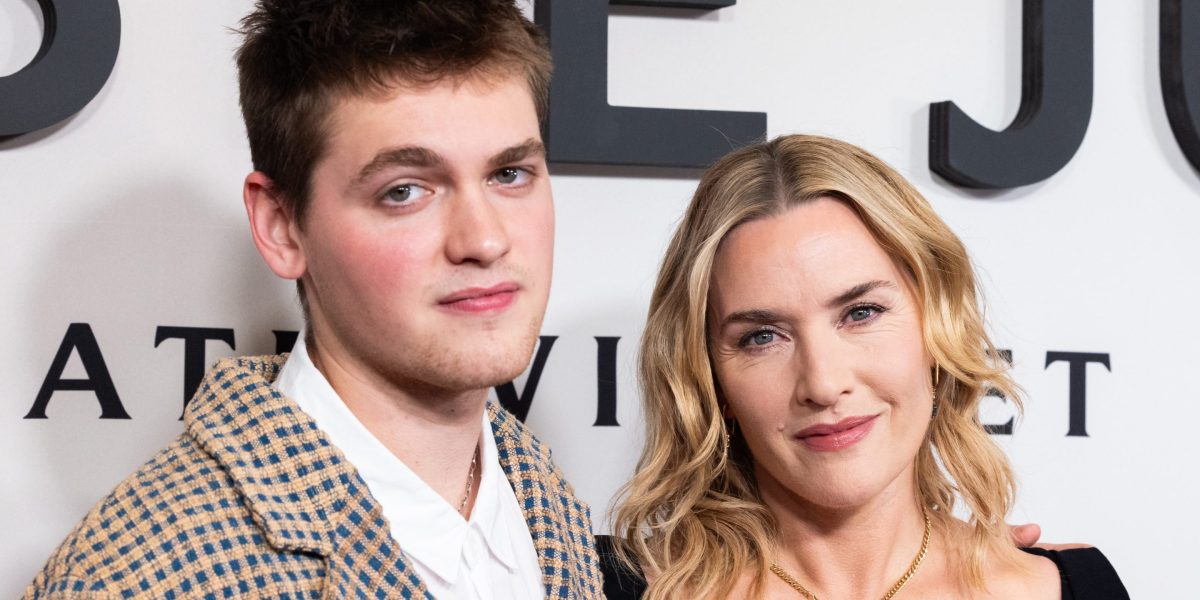
No industry is a stranger to nepotism. Powerful business families have passed down their billion-dollar empires for generations, and the children of tech innovators have launched their own start-ups. Likewise, actress Kate Winslet’s children are now following in her footsteps, with the two Gen Zers pursuing Hollywood careers—but she’s adamant the Winslet name isn’t opening any doors.

“I don’t like the nepo baby term because these kids are not getting a leg up,” Winslet told the BBC in a recent interview while promoting her upcoming movie, Goodbye June

Perhaps ironically, the film’s screenplay which will hit Netflix on December 24, was written by her eldest son, 21-year-old Joe Anders.

And it wasn’t lost on them how their collaboration could be perceived, with Winslet’s son bracing for the nepotism allegations. 

“[Joe] would say to me, ‘I don’t want people to think that this film is just being made because you’re my mom,’” Winslet continued. “The film would have been made with or without me. The script is so, so good.”

The 50-year-old Academy Award-winning actress, estimated to be worth $65 million, slammed the nepo baby label altogether. She pointed out that children are naturally drawn towards what their parents do for work—whether that be taking over a family business, or continuing a multi-generational lineage of doctors.

“But that doesn’t necessarily translate to being able to actually get jobs and actually…gain respect from your peers and people around you,” Winslet added. 

“Both of them have separately carved their own paths and been able to do that, and part of it actually is teaching them to ignore the white noise of silly terms like nepo baby, which you can’t really do anything about.” 

Kate Winslet fans accuse actor of being in denial as her kids land coveted Hollywood jobs

Two of Winslet’s three kids have already made their Hollywood debuts. 

More recently, Anders starred alongside his mother in the 2023 film Lee; but his first major-motion picture role was in the Oscar-nominated movie 1917, directed by his father, Academy Award-winning director Sam Mendes. The Gen Zer has taken on both of his parents’ passions, with credits in both acting and screenwriting at just 21 years old. Writing scripts for Oscar-wielding actresses, and starring in films directed by the mind behind Skyfall and American Beauty, is no easy feat at such a young age. 

Meanwhile, Winslet’s daughter, 25-year-old Mia Threapleton, has made a splash in the indie film scene. Earlier this year she had a starring role in Wes Anderson’s The Pheonician Scheme. And just like Anders, she had the opportunity to act alongside her mother; she fittingly played Winslet’s daughter in the 2022 BAFTA-winning TV show I Am Ruth. Threapleton has also starred in Apple TV drama series The Buccaneers. 

Winslet’s youngest kid, 12-year-old Bear Blaze Winslet, has yet to star in any project. 

In the comments section of the BBC interview posted on social media, many people were quick to point out Winslet’s pull, citing “privilege” and industry connections as being instrumental to her kids’ success. 

“She seems to ignore reality: her children would almost certainly not have been able to become working actors if Kate weren’t their mother,” one commenter wrote. “There are hundreds of thousands of very talented young people out there, but they don’t have wealthy or famous parents who can provide connections. That doesn’t mean nepotism babies don’t have the right to pursue something creative.”

From Eric to Trump to Phoebe Gates, ‘nepo babies’ are everywhere

Family dynasties have cycled through generations of nepotism, from the Carnegies and Vanderbilts, to the Murdochs and Waltons. Even one of President Donald Trump’s sons, Eric Trump, conceded that “Nepotism is kind of a factor of life”—but stipulated that it doesn’t sustain his career running his father’s real estate business.

Phoebe Gates, the 23-year-old daughter of Microsoft cofounder Bill Gates, also recently entered the tech scene. She co-created AI-powered shopping tool Phia while studying at Stanford, drumming up the idea with roommate and cofounder Sophia Kianni. It launched in April 2025, amassing more than 500,000 users and 5,000 direct brand partners by September. The venture raised $8 million in seed funding, drawing celebrity investments from Hailey Bieber, Kris Jenner, Sheryl Sandberg, and Spanx’s Sara Blakely. Despite all her success, she understands the advantages that come with being a Gates—even if it’s an uncomfortable truth.

“I had so much insecurity and such a desire to prove myself,” Gates said during an episode of her podcast, The Burnouts. “I came in, I was like ‘I have so much privilege, I’m a nepo baby.’ I had so much insecurity around that. I feel like it’s so hard when you’re a freshman in college because you have no experience, you have nothing.”

And when it comes to passing down the family business, every successful parent has a different idea of when their kids are ready to take on their life’s work. Earlier this year, real estate tycoon Jorge M. Pérez succeeded his $40 billion business to his sons. However, Pérez didn’t simply hand over the keys to his empire; to sidestep nepotism claims and ensure that his company was in good hands, the entrepreneur made them prove their chops through 18 years of education and work. His kids had to get an MBA, work for a competitor for five years, and spend over a decade rising the ranks.

“When I felt particularly—beginning with Jon Paul—that they could come to work in the company, what I didn’t want is for people in the company to feel that they were entitled, that the reason that I gave them a position is because they were just my sons,” Jorge told Fortune earlier this year.


Source link

Continue Reading

Business

Devin Nunes and Trump Media get in bed with Google-backed nuclear fusion company in surprise $6 billion merger

Published

on


Trump Media & Technology will merge with a fusion power company in an all-stock deal that the companies said Thursday is valued at more than $6 billion.

Devin Nunes, the Republican congressman who resigned in 2021 to become the CEO of Trump Media, will be co-CEO of the new company with TAE Technologies CEO Michl Binderbauer.

The combined company says it plans to find a site and begin construction next year on the “world’s first utility-scale fusion power plant,” with aims to provide the electricity needed for artificial intelligence.

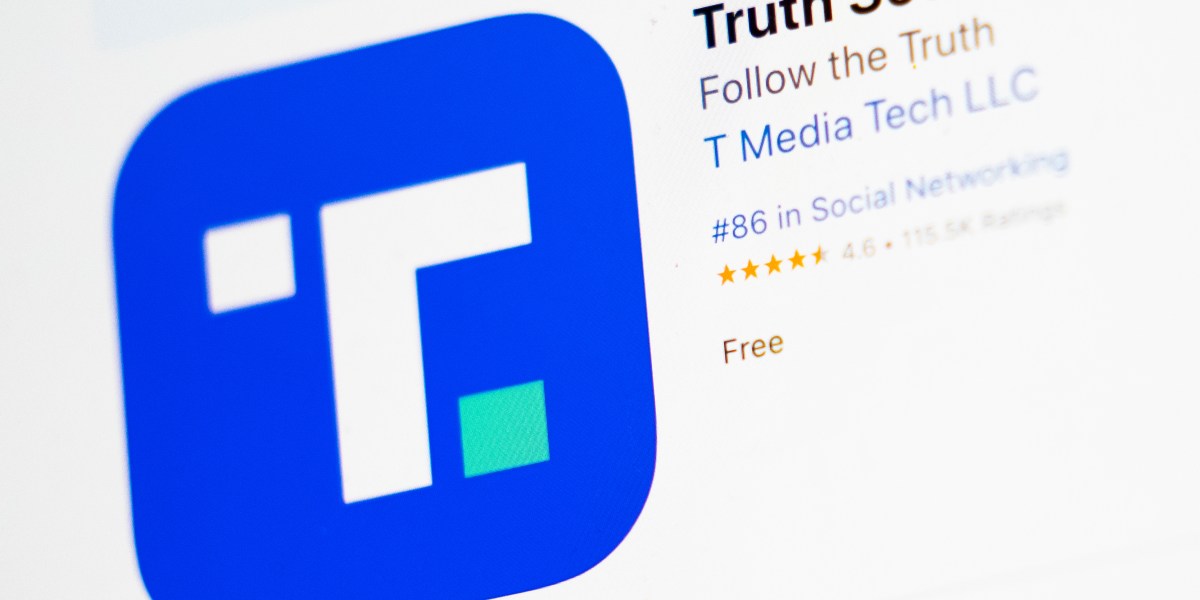
Shares of Trump Media & Technology, the parent company of President Donald Trump’s Truth Social media platform, have tumbled 70% this year but jumped 20% before the opening bell Thursday.

Backed by Google and other investors, TAE is a private company and the merger with Trump Media would create one of the first publicly traded nuclear fusion companies.

“We’re taking a big step forward toward a revolutionary technology that will cement America’s global energy dominance for generations,” Nunes said in a prepared statement.

TAE focuses on nuclear fusion, a technology that combines two light atomic nuclei to form a single heavier one. It releases enormous amount of energy, a process that occurs on the sun and other stars, according to the United Nations’ International Atomic Energy Agency. It’s been seen as a promising solution to climate change caused by burning fossil fuels, but one that is a long way off compared to today’s clean technologies like wind and solar.

TAE and Trump Media shareholders will each own approximately 50% of the combined company.

Trump is by far the largest stakeholder in Trump Media, owning 41% of all outstanding shares.

In October, the U.S. Department of Energy released what it called a “roadmap” for fusion technology, with the aim of fostering “a burgeoning fusion private sector industry in the U.S. toward maturity on the most rapid timeline.” A number of tech companies, including Google, Microsoft and OpenAI CEO Sam Altman, have shown interest in fusion technology as a way of powering the energy-hungry data centers needed to build and run their AI products.

TAE and Trump Media say the transaction values each TAE common stock at $53.89 per share.

At closing, Trump Media & Technology Group will be the holding company for Truth Social and TAE, along with its subsidiaries TAE Power Solutions and TAE Life Sciences.

This story was originally featured on Fortune.com


Source link

Continue Reading

Business

State Department announces massive $10 billion arms sale to Taiwan, infuriating China

Published

on


President Donald Trump’s administration has announced a massive package of arms sales to Taiwan valued at more than $10 billion that includes medium-range missiles, howitzers and drones, drawing an angry response from China.

The State Department announced the sales late Wednesday during a nationally televised address by the Republican president, who made scant mention of foreign policy issues and did not speak about China or Taiwan. U.S.-Chinese tensions have ebbed and flowed during Trump’s second term, largely over trade and tariffs but also over China’s increasing aggressiveness toward Taiwan, which Beijing has said must reunify with the mainland.

If approved by Congress, it would be the largest-ever U.S. weapons package to Taiwan, exceeding the total amount of $8.4 billion in U.S. arms sales to Taiwan during President Joe Biden’s Democratic administration.

The eight arms sales agreements announced Wednesday cover 82 high-mobility artillery rocket systems, or HIMARS, and 420 Army Tactical Missile Systems, or ATACMS — similar to what the U.S. had been providing Ukraine during the Biden administration to defend itself from Russia — worth more than $4 billion. They also include 60 self-propelled howitzer systems and related equipment worth more than $4 billion and drones valued at more than $1 billion.

Other sales in the package include military software valued at more than $1 billion, Javelin and TOW missiles worth more than $700 million, helicopter spare parts worth $96 million and refurbishment kits for Harpoon missiles worth $91 million.

The eight sales agreements amount to $11.15 billion, according to Taiwan’s Defense Ministry.

The State Department said the sales serve “U.S. national, economic, and security interests by supporting the recipient’s continuing efforts to modernize its armed forces and to maintain a credible defensive capability.”

“The proposed sale(s) will help improve the security of the recipient and assist in maintaining political stability, military balance, and economic progress in the region,” the statements said.

China’s Foreign Ministry attacked the move, saying it would violate diplomatic agreements between China and the U.S.; gravely harm China’s sovereignty, security and territorial integrity; and undermine regional stability.

“The ‘Taiwan independence’ forces on the island seek independence through force and resist reunification through force, squandering the hard-earned money of the people to purchase weapons at the cost of turning Taiwan into a powder keg,” said Foreign Ministry spokesperson Guo Jiakun.

“This cannot save the doomed fate of ‘Taiwan independence’ but will only accelerate the push of the Taiwan Strait toward a dangerous situation of military confrontation and war. The U.S. support for ‘Taiwan Independence’ through arms will only end up backfiring. Using Taiwan to contain China will not succeed,” he added.

Under federal law, the U.S. is obligated to assist Taiwan with its self-defense, a point that has become increasingly contentious with China, which has vowed to take Taiwan by force, if necessary.

Taiwan’s Defense Ministry in a statement Thursday expressed gratitude to the U.S. over the arms sale, which it said would help Taiwan maintain “sufficient self-defense capabilities” and bring strong deterrent capabilities. Taiwan’s bolstering of its defense “is the foundation for maintaining regional peace and stability,” the ministry said.

Taiwan’s Foreign Minister Lin Chia-lung similarly thanked the U.S. for its “long-term support for regional security and Taiwan’s self-defense capabilities,” which he said are key for deterring a conflict in the Taiwan Strait, the body of water separating Taiwan from China’s mainland.

The arms sale comes as Taiwan’s government has pledged to raise defense spending to 3.3% of the island’s gross domestic product next year and to reach 5% by 2030. The boost came after Trump and the Pentagon requested that Taiwan spend as much as 10% of its GDP on its defense, a percentage well above what the U.S. or any of its major allies spend on defense. The demand has faced pushback from Taiwan’s opposition KMT party and some of its population.

Taiwanese President Lai Ching-te last month announced a special $40 billion budget for arms purchases, including to build an air defense system with high-level detection and interception capabilities called Taiwan Dome. The budget will be allocated over eight years, from 2026 to 2033.

The U.S. boost in military assistance to Taiwan was previewed in legislation adopted by Congress that Trump is expected to sign shortly.

Last week, the Chinese embassy in Washington denounced the legislation, known as the National Defense Authorization Act, saying it unfairly targeted China as an aggressor. The U.S. Senate passed the bill Wednesday.

___

Mistreanu reported from Beijing. AP video journalists Olivia Zhang in Beijing and Johnson Lai in Taipei, Taiwan, contributed to this report.

This story was originally featured on Fortune.com


Source link

Continue Reading

Trending

Copyright © Miami Select.