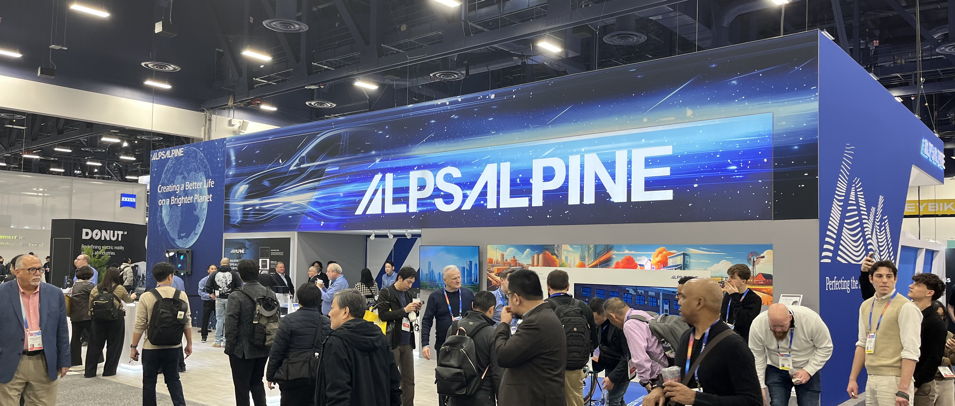
At CES 2026, Alps Alpine is showing off a vehicle interior that behaves less like a collection of screens and sensors and more like a single, coordinated system.
“Today, many interiors are still built from disconnected technologies. Cameras, displays, audio, and controls operate independently. Each system works on its own, but rarely together, creating experiences that feel fragmented and distracting,” the product pitch reads.
“Alps Alpine’s core idea is simple. The best in-car experiences happen when multiple senses work together. Sight, sound, touch, and motion should be coordinated, not competing. When designed as one system, the vehicle feels calmer, more intuitive, and easier to use.”
Instead of highlighting standalone features, the company’s demo places visitors inside a real car environment where multiple technologies respond together as driving situations change.
As scenarios shift — approaching an intersection, changing drive modes, or reacting to surrounding conditions — the cabin adjusts in real time. Displays subtly reconfigure. Audio cues shift in space. Touch and vibration become more noticeable or fade away, depending on what matters most in that moment.
“Nothing competes for attention. Sight, sound, and touch work together to guide the driver calmly and intuitively. Safety information feels supportive rather than distracting. Entertainment and comfort coexist without overwhelming the experience,” Alps Alpine says.
Behind the experience are several systems working in concert.
A single multi-modal camera combines RGB imaging, infrared sensing, and time-of-flight depth measurement; an under-display camera system hides sensing hardware entirely behind the screen, eliminating visible lenses or cutouts and preserving a clean interior aesthetic; soft interior panels with integrated haptics provide vibration-based feedback; and a multi-sensory feedback framework coordinates visual, audio, and tactile cues so they reinforce each other.
“Instead of forcing drivers to manage interfaces, the interior adapts to what is happening. This shifts the experience from manual control to intelligent support, pointing toward a future where the vehicle understands its occupants and responds naturally,” Alps Alpine says.