Connect with us

Politics

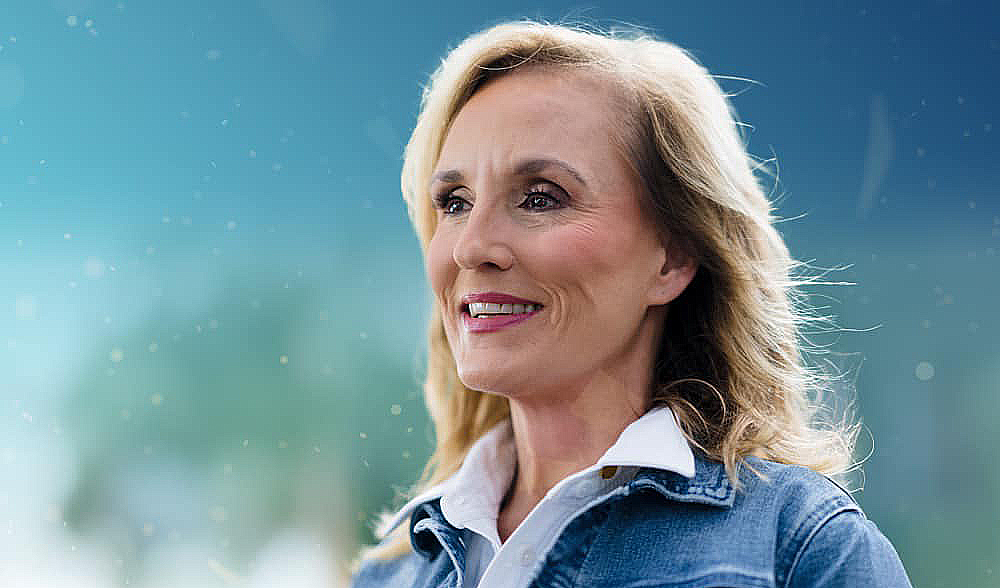
Allison Tant outlines family-focused agenda for 2026
Published

on


Heading into her sixth Legislative Session, Tallahassee Democratic Rep. Allison Tant is prioritizing legislation aimed at helping families, people with disabilities and voters who expect fair play at the ballot box.

All are close to her heart in one way or another.

One proposal (HB 915) would create a new program within the Agency for Health Care Administration allowing certain adults with developmental disabilities to keep Medicaid waiver services while working and earning income. Tant said the change would remove employment disincentives that currently cause people to lose critical home- and community-based services when their earnings increase.

The issue is personal for Tant. One of her sons, who has disabilities and worked part time, was forced to quit his job after being automatically enrolled in the state retirement system — something she was told could jeopardize his Medicaid eligibility.

The lack of clear, codified rules caused panic and confusion for her family, and Tant later learned that many families, lawyers and even state staff were similarly unsure about what income or savings options are available to people with disabilities.

She said she only later learned, through ABLE United Director John Finch, that people with disabilities can hold up to $13,000 in assets without losing Medicaid — a protection authorized through a yearly budget proviso that is not clearly spelled out in statute.

“I’m paying attention, and I didn’t know about this,” Tant said. “I just want to make sure this is codified as a program of Florida and that families know there are protections.”

If passed, HB 915 or its Senate counterpart (SB 1016), sponsored by Fleming Island Republican Sen. Jennifer Bradley, would establish a state “Working People with Disabilities” program. Eligible participants must be at least 18, have a developmental disability, be employed and already enrolled in a qualifying Medicaid waiver program.

The measure would allow participants to earn up to 550% of the federal Supplemental Security Income benefit rate, disregard up to $13,000 in assets for individuals and $24,000 for couples, and exclude retirement accounts from asset limits.

Another bill (HB 969) is a follow-up to legislation Tant passed last year aimed at improving early detection of Type 1 diabetes in grade school students. This year’s proposal, carried in the Senate by Miami Republican Sen. Alexis Calatayud (SB 1046), would focus on developmental disorders.

The measure would require the Department of Health to work with school districts to develop and publish materials helping parents and guardians recognize signs of developmental delays and autism spectrum disorder in young children.

Public schools, charter schools, prekindergarten providers and early learning coalitions would be required to annually notify parents of voluntary prekindergarten through second-grade students about the materials.

Parents and early intervention programs try to identify developmental delays early, but Tant said some children still “slip that net.”

“I’m trying to get them identified, diagnosed and then get them some support,” she said, adding that earlier diagnoses can be both compassionate and cost-effective by allowing resources to be allocated earlier in a child’s education.

Tant is also sponsoring legislation (SB 448, HB 417) with Kissimmee Democratic Sen. Kristen Arrington that would require school districts to provide students and parents with information about available career and technical education programs, beginning by the end of fifth grade and annually thereafter.

The proposal would also mandate career and academic planning meetings for eighth-grade students and their parents before high school course registration, covering career options, scholarships, workforce data and dual enrollment opportunities.

Further, the measure would expand and standardize students’ personalized academic and career plans, requiring annual reviews beginning in ninth grade.

Tant told Florida Politics she will pilot the concept during a scholarship night in Jefferson County on March 4.

“I’m trying to get that information in front of families and students so they can work together to understand what their futures need to look like,” she said.

Tant’s last priority bill (HB 91) is a renewed attempt to strengthen enforcement of Florida’s party-affiliation rules for candidates.

State law already requires candidates to be registered with the political party from which they seek nomination for at least a year before qualifying for a General Election. But candidates have repeatedly skirted those rules, and courts have not consistently intervened.

Tant’s inspiration for the bill was perennial candidate Beulah Farquharson, whom she described as having “bounced around” Florida while frequently switching party affiliations shortly before qualifying deadlines.

Most recently, Farquharson filed in 2024 to run against Madison County Clerk Billy Washington. According to an August 2024 report by the Madison Enterprise Reporter, Farquharson filed as a Democrat the same day she switched parties, after previously being registered with no party affiliation in Osceola County.

Washington sued to remove Farquharson from the ballot and ultimately prevailed, but Tant said the challenge took months and cost thousands of dollars.

“Our courts were put through a ridiculous exercise on this,” she told members of the Government Operations Subcommittee last month. The panel voted unanimously to advance HB 91 — already making it more successful this Session than in last year’s.

HB 91 and its Senate counterpart (SB 62), also sponsored by Arrington, would require candidates to swear under oath that they have been registered with their political party for at least 365 consecutive days before qualifying.

The measure would also require no-party candidates to affirm they have not been affiliated with a political party during that same period and would limit who can file eligibility challenges and where those cases may be heard.

The 2026 Legislative Session begins Tuesday.


Source link

Continue Reading

Politics

Randy Fine seeks to annex Greenland and make it a state

Published

on


The Atlantic Coast Republican wants the administration to inform Congress any steps needed to expedite the process.

U.S. Rep. Randy Fine introduced legislation to annex Greenland and admit it as a state.

The Atlantic Coast Republican introduced the Greenland Annexation and Statehood Act as President Donald Trump’s administration increasingly demands that the Arctic island nation, a Danish territory, be ceded to the United States.

Fine, who was endorsed by Trump before winning his seat in Congress last year, said the security interests of the United States in the Arctic made the annexation of the territory necessary.

“Greenland is not a distant outpost we can afford to ignore — it is a vital national security asset,” Fine said. “Whoever controls Greenland controls key Arctic shipping lanes and the security architecture protecting the United States. America cannot leave that future in the hands of regimes that despise our values and seek to undermine our security.”

Secretary of State Marco Rubio informed Congress this month that he intends to meet with Denmark about acquiring the land, according to CBS News.

Fine said now would be an important moment to acquire Greenland, in the wake of the U.S. deposing Venezuelan President Nicolás Maduro. The communist leader and the regime still in place there maintained economic relationships with Russia and China.

His bill would authorize Trump to take steps to acquire Greenland, including negotiating a deal with Denmark. It also calls for the administration to report to Congress on any ways needed to expedite congressional approval of the arrangement.

The bill foresees going beyond just making the island a territory like Puerto Rico or Guam. It seeks to grant Greenland statehood, similar to Alaska, the only state that borders the Arctic Circle.

“For too long, American leadership stood by while our adversaries chipped away at our geopolitical dominance,” Fine said. “My bill will protect our homeland, secure our economic future, and ensure that America — not China or Russia — sets the rules in the Arctic. That is what American leadership and strength look like.”


Source link

Continue Reading

Politics

JJ Grow seeks road concurrency for small counties

Published

on


Rep. JJ Grow has a plan for Session:

Concentrate on the job at hand.

“My approach is to keep my head down and work hard on my bills,” Grow, an Inverness Republican, said.

Grow is starting his second Regular Session after being elected to the open House District 23 seat in 2024.

In his freshman year, Grow helped pass a Citrus County local bill to clarify the sheriff’s oversight of agency employees.

Another bill that would have allowed transportation concurrency for counties with populations under 200,000 passed the House unanimously but never reached the Senate floor for a vote.

That bill is back, and Grow is confident of its success.

“Get it so these developments will share in the cost of transportation,” he said.

Concurrency is designed to ensure roads have sufficient capacity to accommodate the additional traffic from new development.

HB 97 allows small counties to set road levels of service in capital improvement plans, providing a baseline for new developments.

Ocala Republican Sen. Stan McClain, who sponsored the Senate companion last year, is doing the same this year in S 324.

Grow has also joined the chorus calling for property tax reform. He sponsored HJR 903, which would place a constitutional amendment on the November ballot to limit the annual increase in taxable value of non-homestead property to 3%. It’s currently set at 10%.

Grow said he believes some changes are needed.

“I totally understand why people are anxious right now. Affordable has become almost unaffordable,” he said. “Between property tax, home insurance, car insurance, and inflation, it’s gotten to a point where it’s hard to cover your expenses and have a little money to live on.”

Grow’s other bills include HB 95, which allows a pathway for trained volunteers to provide armed security at houses of worship.

“Faith communities across Florida have repeatedly expressed concerns about safety during worship,” he said. “Many congregations — especially small and rural ones — lack the resources to hire licensed security professionals but still face credible risks.”


Source link

Continue Reading

Politics

Ron DeSantis draws attention to cheaper property insurance ahead of Legislative Session

Published

on


Florida Peninsula Insurance, one of the largest property insurers in Florida, is decreasing rates by 8%, Gov. Ron DeSantis said.

Speaking at a Davie press conference, DeSantis said 83 other companies filed for rate decreases and 100 others are keeping their rates flat.

“As of January, the 30-day average request by companies for home rates are down 2.3%,” DeSantis said. “We’re one of the probably the only states in the country where you’re seeing a decrease.”

DeSantis and state administrators held a presser to highlight progress that Florida has made lowering property insurance. DeSantis’ remarks come just before the start of the 2026 Legislative Session, where DeSantis is pushing lawmakers to put a constitutional amendment on the ballot to repeal property taxes — which he says hurts Floridians worse in the pocketbook than property insurance.

A study by the Florida League of Cities warned that eliminating property taxes would hurt local governments’ essential services.

Insurance Commissioner Michael Yaworsky and DeSantis both credited recent state reforms in helping stabilize Florida’s property insurance costs. Some of the changes put in place make it more difficult for homeowners to sue property insurance carriers to get coverage. 

“We had 8% of homeowners’ claims nationwide, but that accounted for almost 80% of litigation expenses nationwide right here in Florida,” DeSantis said.

Yaworsky said he is hopeful lawmakers won’t repeal some of the tort reforms in the 2026 Legislative Session.

DeSantis said as carriers save money from fewer lawsuits to fight, they are passing the savings back to consumers. 

In addition to Peninsula, Security First Insurance, which covers 62,000 homes, also posted an 8% average decrease, the Governor said.

Meanwhile, the top five auto insurers averaged 6.5% premium decreases, DeSantis said.

Over 12 months, 42 auto insurance companies signaled rate decreases, with 32 of those companies filing the decrease notice within the past six months, DeSantis said.

Progressive Insurance previously agreed to give $1 billion in rebates to customers that are expected to go through by Thursday, DeSantis added.

“You talk to every single one of these companies, the only reason this is happening is because of the market reforms,” DeSantis. “And honestly. they’re kind of forced to do this, right? Because it’s a competitive market.”


Source link

Continue Reading

Trending

Copyright © Miami Select.