Connect with us

Politics

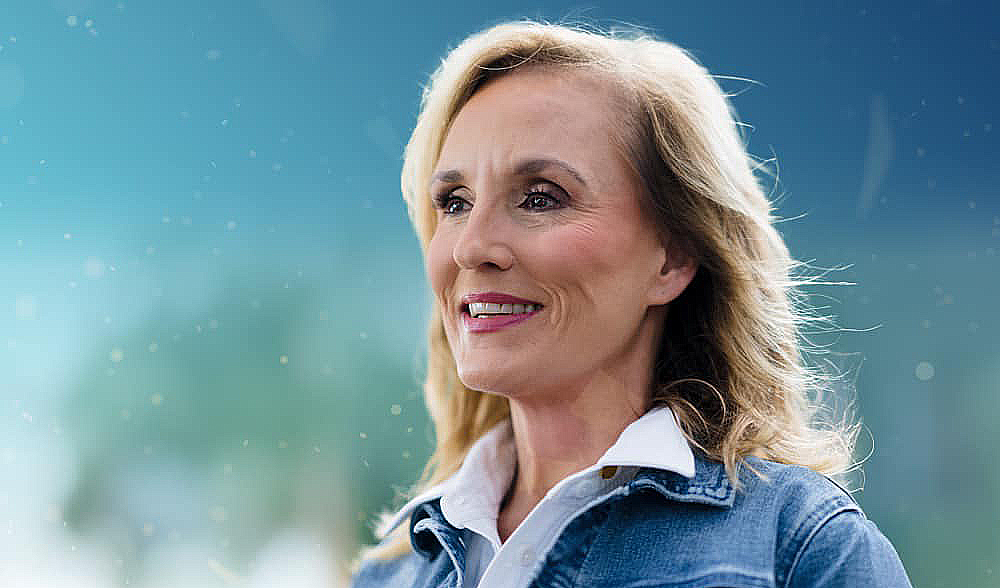
Allison Tant outlines family-focused agenda for 2026
Published

on


Heading into her sixth Legislative Session, Tallahassee Democratic Rep. Allison Tant is prioritizing legislation aimed at helping families, people with disabilities and voters who expect fair play at the ballot box.

All are close to her heart in one way or another.

One proposal (HB 915) would create a new program within the Agency for Health Care Administration allowing certain adults with developmental disabilities to keep Medicaid waiver services while working and earning income. Tant said the change would remove employment disincentives that currently cause people to lose critical home- and community-based services when their earnings increase.

The issue is personal for Tant. One of her sons, who has disabilities and worked part time, was forced to quit his job after being automatically enrolled in the state retirement system — something she was told could jeopardize his Medicaid eligibility.

The lack of clear, codified rules caused panic and confusion for her family, and Tant later learned that many families, lawyers and even state staff were similarly unsure about what income or savings options are available to people with disabilities.

She said she only later learned, through ABLE United Director John Finch, that people with disabilities can hold up to $13,000 in assets without losing Medicaid — a protection authorized through a yearly budget proviso that is not clearly spelled out in statute.

“I’m paying attention, and I didn’t know about this,” Tant said. “I just want to make sure this is codified as a program of Florida and that families know there are protections.”

If passed, HB 915 or its Senate counterpart (SB 1016), sponsored by Fleming Island Republican Sen. Jennifer Bradley, would establish a state “Working People with Disabilities” program. Eligible participants must be at least 18, have a developmental disability, be employed and already enrolled in a qualifying Medicaid waiver program.

The measure would allow participants to earn up to 550% of the federal Supplemental Security Income benefit rate, disregard up to $13,000 in assets for individuals and $24,000 for couples, and exclude retirement accounts from asset limits.

Another bill (HB 969) is a follow-up to legislation Tant passed last year aimed at improving early detection of Type 1 diabetes in grade school students. This year’s proposal, carried in the Senate by Miami Republican Sen. Alexis Calatayud (SB 1046), would focus on developmental disorders.

The measure would require the Department of Health to work with school districts to develop and publish materials helping parents and guardians recognize signs of developmental delays and autism spectrum disorder in young children.

Public schools, charter schools, prekindergarten providers and early learning coalitions would be required to annually notify parents of voluntary prekindergarten through second-grade students about the materials.

Parents and early intervention programs try to identify developmental delays early, but Tant said some children still “slip that net.”

“I’m trying to get them identified, diagnosed and then get them some support,” she said, adding that earlier diagnoses can be both compassionate and cost-effective by allowing resources to be allocated earlier in a child’s education.

Tant is also sponsoring legislation (SB 448, HB 417) with Kissimmee Democratic Sen. Kristen Arrington that would require school districts to provide students and parents with information about available career and technical education programs, beginning by the end of fifth grade and annually thereafter.

The proposal would also mandate career and academic planning meetings for eighth-grade students and their parents before high school course registration, covering career options, scholarships, workforce data and dual enrollment opportunities.

Further, the measure would expand and standardize students’ personalized academic and career plans, requiring annual reviews beginning in ninth grade.

Tant told Florida Politics she will pilot the concept during a scholarship night in Jefferson County on March 4.

“I’m trying to get that information in front of families and students so they can work together to understand what their futures need to look like,” she said.

Tant’s last priority bill (HB 91) is a renewed attempt to strengthen enforcement of Florida’s party-affiliation rules for candidates.

State law already requires candidates to be registered with the political party from which they seek nomination for at least a year before qualifying for a General Election. But candidates have repeatedly skirted those rules, and courts have not consistently intervened.

Tant’s inspiration for the bill was perennial candidate Beulah Farquharson, whom she described as having “bounced around” Florida while frequently switching party affiliations shortly before qualifying deadlines.

Most recently, Farquharson filed in 2024 to run against Madison County Clerk Billy Washington. According to an August 2024 report by the Madison Enterprise Reporter, Farquharson filed as a Democrat the same day she switched parties, after previously being registered with no party affiliation in Osceola County.

Washington sued to remove Farquharson from the ballot and ultimately prevailed, but Tant said the challenge took months and cost thousands of dollars.

“Our courts were put through a ridiculous exercise on this,” she told members of the Government Operations Subcommittee last month. The panel voted unanimously to advance HB 91 — already making it more successful this Session than in last year’s.

HB 91 and its Senate counterpart (SB 62), also sponsored by Arrington, would require candidates to swear under oath that they have been registered with their political party for at least 365 consecutive days before qualifying.

The measure would also require no-party candidates to affirm they have not been affiliated with a political party during that same period and would limit who can file eligibility challenges and where those cases may be heard.

The 2026 Legislative Session begins Tuesday.


Source link

Continue Reading

Politics

Marie Woodson homes in on health care, safeguarding Floridians

Published

on


Rep. Marie Woodson is entering the 2026 Legislative Session on a mission to pass meaningful legislation, from ensuring Floridians have access to safe medical treatment to safeguarding children during police interactions.

Those aims, Woodson said, are consistent with the promise she made before and after her election to the House; her 2020 platform was full of people-first policies she continues to pursue today.

“When I took the vow of office, I vowed to protect the people of the state of Florida,” she told Florida Politics.

“That’s what I do every day. I look out for them, protect them and make sure they have a better quality of life, a way to become more self-sufficient and successful.”

Several of the bills that Woodson, a Hollywood Democrat, is carrying this year center on health care safety and continuity.

There’s HB 93, which is meant to protect patients from airborne contaminants during surgeries. The measure, to which Jacksonville Democratic Sen. Tracie Davis is carrying an identical companion (SB 162), would require hospitals and ambulatory surgical centers to mandate the use of smoke evacuation systems during procedures likely to generate surgical smoke.

It’s a change Woodson and Davis have sought for years and came close to getting across the proverbial finish line last year. And the risks are real; according to the Centers for Disease Control and Prevention, repeated exposure to surgical smoke has been known since 1996 to cause, among other things, respiratory irritation, visual problems and potential cancer-causing gene mutation.

As of last year, 18 states had laws to prevent the health hazard. Woodson wants Florida to join them. But she said there’s been some industry pushback — an assertion backed by dozens of lobbyist registrations on the bill.

“Some people are against it. I don’t see why,” she said. “Hospitals are supposed to use small equipment to capture that smoke, and some aren’t using it. They might be thinking they could get sued. I don’t care about that. By 2035, we’re expected to have a nursing shortage in Florida. We have a shortage of doctors. Let’s do right by those people.”

Another health care-focused proposal (SB 114, HB 577) that Woodson is running with Miami Gardens Democratic Sen. Shevrin Jones would ensure people aren’t left without coverage or care due to corporate disagreements outside their control.

The legislation is a response to difficulties tens of thousands of Broward County patients encountered late last year after Florida Blue removed Memorial Healthcare System from its in-network provider list.

At the time, Jones had just been released from a Memorial hospital following treatment for a serious health condition and found himself suddenly without coverage.

“I’m in limbo,” Jones told Florida Politics. “I have to find another doctor, and I’m paying out-of-pocket right now.”

Woodson and Jones’ proposal, which already cleared one House committee with uniform support, would require insurers and health care providers to give affected patients at least 60 days’ advance notice.

The notice would have to explain, in plain language, each patient’s rights, transition timeline and where to direct questions or complaints, with regulators authorized to impose fines for violations. The bill would allow patients already in active treatment to continue seeing their current provider under the same contract terms for up to six months or through postpartum care, whichever applies.

“I’ve been getting a lot of calls from people about this,” Woodson said. “I want to put certain things in place to make sure people are covered, that there’s a grace period before they can tell you, ‘Hey, your insurance is not taking this.’ Because by the time they do the negotiations, you don’t even have time to look for a different hospital or doctor; you’re just being dropped.”

Woodson is also sponsoring a bill (HB 83) to better protect children whose parents are being taken into custody by law enforcement.

In some arrest situations, she said, a mother or father may not inform police that they have kids in the house who will be left alone. And even though the Department of Children and Families will ultimately intervene to pick up and care for those children if no other suitable option exists, there is still a span of time between those actions that can prove dangerous for a child.

HB 83, which awaits a Senate analog, would require law enforcement officers to ask standardized questions about minor children when arresting a person and to verify that any children are safe and in the care of a responsible guardian.

If an officer determines that a child may be unsafe or unaccounted for, the bill would authorize contact with the state’s central abuse hotline and, if necessary, protective intervention. It also directs the Criminal Justice Standards and Training Commission to develop statewide policies and training on handling the special needs of children present during a parent’s arrest.

“This bill is extremely important to me,” she said, adding that she is working with several organizations and agencies to improve the bill before it hopefully passes.

Lastly, Woodson is working on a cross-aisle measure (SB 562, HB 533) with Miami Republican Sen. Ileana Garcia to help people with disabilities interact with government entities and staff in the way they best can.

The measure would create a new bill of rights for such individuals, guaranteeing that they can communicate using their preferred alternative communication methods in educational, health care and public settings.

It would prohibit state agencies, schools and health care providers from restricting those methods, mandate statewide training for relevant staff and establish a temporary advisory board to oversee implementation and compliance.

Violations could result in administrative action and civil penalties.

Woodson said a woman and her mother brought her the issue on the last day of the 2025 Session, imploring her to file legislation to help them.

“They were in tears,” she said. “People with disabilities like autism, sometimes others act like they are not even there. I want to make sure that whatever they use to speak is allowed either in school or through the state of Florida, that they have the right to communicate in whatever preferred manner they have.”

The 2026 Legislative Session begins Tuesday.


Source link

Continue Reading

Politics

Nick DiCeglie eyes SB 180 fixes, affordability and efficiency ahead of 2026 Session

Published

on


As lawmakers prepare for what could be a complex 2026 Legislative Session, Pinellas County Republican Sen. Nick DiCeglie is championing storm recovery policy, infrastructure, affordability and efforts to tighten government processes.

DiCeglie is carrying a bill (SB 840) closely watched by local governments across the state. The legislation looks to address unintended consequences created by SB 180, a bill approved last year to prevent local governments from impeding post-storm recovery. SB 180 has been used to block local governments from making comprehensive plan changes or establishing environmental protection policies unrelated to storm response.

SB 180 is currently being challenged in court, but DiCeglie said he hopes to resolve the issue legislatively this year. SB 840 narrows SB 180 to apply only to storm-damaged properties and policies that would delay rebuilding, while allowing local governments to move forward with unrelated planning decisions.

“We’ve had a lot of constructive feedback from local governments, from stakeholders and constituents,” DiCeglie said. “There’s a broad agreement that most of the provisions in SB 180 go far in maintaining our emergency preparedness, but there were a couple of provisions that really just handcuffed local governments. … We want to come in and address that.” 

DiCeglie, who chairs the Appropriations Committee on Transportation, Tourism, and Economic Development, said investment in transportation and infrastructure will also be essential as Florida continues to absorb population growth and address long-term vulnerabilities exposed by hurricanes

“When those storms came through in 2024, I think it was pretty obvious for many of us, if not all of us, that we’ve got some infrastructure challenges in Pinellas County,” DiCeglie said. “I think just because we had an uneventful hurricane season last year it doesn’t mean we’re not going to continue to focus on the needs of our community.”

Beyond storm policy, DiCeglie has filed a slate of bills that include a proposal to eliminate documentary stamp taxes for first-time homebuyers, changes to how school bus and school zone camera citations are issued and contested, and legislation meant to encourage consolidation of 911 call centers to reduce emergency response delays. 

DiCeglie also pointed to ongoing efforts to streamline permitting processes, which he said are long-term challenges driven by population growth and uneven local procedures, with bills such as SB 1234 and SB 1260. He said proposals this year and during take small steps forward, but he’d like to see more comprehensive reforms during a future Session.

“When it comes to when it comes to permitting in general, I think that in many cases we have jurisdictions that tend to not necessarily do things differently, but they have these different processes that they’re able to, in many cases, slow, slow things down to a crawl — which I just don’t think is good governance,” DiCeglie said. 

“We’ve really just taken small bites of the apple when it comes to taking a look at the permitting process across the state, whether that’s commercial or whether that’s residential,” he added. “I truly think that we need a large comprehensive look at what we’re doing across the state, not prepared to do that yet this year, but looking forward. I think that leaders in the house, certainly in the Senate, whoever the new Governor might be, I think we’re going to have to really come together and identify some significant reforms.” 

Beyond his own proposals, DiCeglie said lawmakers will face major policy questions during the Regular Session, a Special Session on redistricting already scheduled for April, and potentially another Special Session for property tax reform teased by Gov. Ron DeSantis. DiCeglie said property taxes could still be the talk of the town in Tallahassee this week even if a Special Session is indeed scheduled for the near future.

“Everybody is aware that the Legislature is going to have a conversation about property taxes, and the Governor made it very clear that he wants to see a Special Session on the topic,” DiCeglie said. “It’s going to be an incredibly important decision that the voters are going to have to make because this is going to be a constitutional amendment on the ballot in November.”

DiCeglie said strictly eliminating property taxes could create a lot of questions for local governments that will need to make up lost revenue.

“In my district alone, I’ve got a couple of municipalities where a complete elimination of homestead property taxes would equate to 70% to 75% of their annual revenue,” he said. “That’s significant. I’m looking forward to that conversation, whether it’s in Regular Session or Special Session.”

DiCeglie is up for re-election in 2026, but he said his immediate focus remains on the Legislative Session ahead.

“For the past 3 years I’ve been laser-focused on identifying what’s important for our Pinellas County community; I’ve worked day and night to make sure that my constituents are well-represented,” DiCeglie said.

“Once we get through the Legislation Session it’ll be time to get on the campaign trail and speak directly with residents to identify other ways we can be helpful in the Legislature. That seems a long way away, which it’s not, but right now I’m really just gearing up to make sure that I have a successful Legislative Session and that my community is well-represented in Tallahassee.”


Source link

Continue Reading

Politics

Bryan Ávila tackles property taxes, data centers, illegal drivers

Published

on


When you look at his past, and ongoing, efforts in the Legislature, Miami Springs Republican Sen. Bryan Ávila believes there’s a clear through-line: affordability.

He’s worked for years on the issue, whether through measures focused on insurance, property taxes or giving homeowners in his district added protections against damage to their properties from nearby limestone mining.

That focus continues into 2026. Ávila has several proposals on deck he hopes will help residents financially while staying consistent with his conservative aims.

“It’s trying to make our residents’ quality of life better, while at the same time making it more affordable,” he told Florida Politics. “That’s the common theme, certainly, that I’ve had throughout my years in the Legislature. And this Session is no different.”

One potentially major bill Ávila is developing with the Senate Finance and Tax Committee, which he chairs, will tackle the hot matter of property taxes.

House lawmakers are advancing numerous proposals of varying impact, some of which strongly resemble bills Ávila filed years ago. Ávila said his idea is more in line with what Gov. Ron DeSantis has called for: producing a strong, single ballot proposal that voters are likely to approve in November.

As for what that will look like, Ávila said that depends on the feedback the panel receives. Like Senate President Ben Albritton, he said he doesn’t want to rush things.

“We’re looking at one bill that will really have a significant impact in reducing property taxes for the residents of Florida,” he said.

“We’re running through every one of the analyses we have to get it right. Because this is obviously a significant initiative that deals with a lot of stakeholders — over 400 municipalities in the state, 67 counties, 67 school districts, fire districts, hospital districts — and we certainly don’t want to come back in subsequent Sessions to fix something we could have addressed now through a thorough and detailed approach.”

Another affordability-minded measure Ávila is carrying (SB 484) focuses on data centers — specifically, safeguarding Florida consumers from spikes in their utility bills due to the rising power and cooling demands of those centers.

Data centers are large facilities that house servers and networking equipment used to store, process and deliver digital data. They’re spreading across the U.S. as demand grows for cloud services, artificial intelligence, streaming and remote work.

They use a lot of energy and water to cool their systems down. And they’re contributing to rising utility bills, studies have found.

Ávila pointed to states like Virginia and New Jersey, where utility customers are seeing some of the nation’s largest year-over-year electricity bill increases. A recent Bloomberg News analysis found that some U.S. consumers have seen their monthly electricity bills skyrocket by up to 267% over the past five years.

“That’s something that really puts a strain on a lot of families who are just trying to make it through, save for retirement, our kids’ education and to put food on the table,” he said.

The fix SB 484 proposes, Ávila said, would call on the Public Service Commission to set new rules separating the cost of meeting data center power and water demands from those of residential customers and other local businesses.

The bill will also include a provision, he said, to enable those residents and businesses to have input on whether a data center can set up shop in their community.

“It’s going to shield our consumers,” he said.

A third priority bill (SB 584) would address illegal commercial driving, an issue that drew ample coverage last year after investigators said an undocumented immigrant driving a tractor trailer caused an accident that killed three people in St. Lucie County.

Ávila said his bill wasn’t inspired by that tragedy, but rather a rise Miami-Dade County Tax Collector Dariel Fernandez has seen in people fraudulently claiming to be licensed to drive commercial vehicles.

“We’ve had some individuals come in to get their license, and they’ve said they’ve gone through this course. But when you start asking them questions, they absolutely don’t have any idea of what any of that entails with regard to the license they’re applying for,” he said. “There’s been a whole host of irregularities, and (Fernandez) has been very active in trying to hold bad actors accountable.”

SB 584 and its House twin (HB 953) by Miami Republican Rep. Omar Blanco would authorize the Department of Highway Safety and Motor Vehicles to formally delegate enforcement authority over commercial driving schools to county Tax Collectors through interagency agreements.

Under those agreements, Tax Collectors could bar driving school operators from Tax Collector Offices, investigate fraud or practices undermining license integrity, require license verification and inspect driving school premises for legal compliance

“We want to make sure that when they’re out on the road, they’re not going to be a menace to society,” he said. “We want everyone that is driving any truck or vehicle on our roadways to be absolutely qualified and licensed to be driving.”

As usual, Ávila is also filing a host of local appropriation requests to benefit seniors, law enforcement, infrastructure and other demanding matters.

“We’ve seen how, more and more, local governments’ budgets are being stretched thin,” he said. “I plan on delivering for my community.”

The 2026 Legislative Session begins Tuesday.


Source link

Continue Reading

Trending

Copyright © Miami Select.