Connect with us

Business

Allegiant Air to acquire Sun Country Airlines for $1.5 billion

Published

on


Allegiant Air said it will acquire Sun Country Airlines in a cash-and-stock deal valued at about $1.5 billion, including debt, in a move combining two low-cost U.S. carriers focused on leisure travel.

Executives at both carriers said their route networks complement each other and that the larger airline would increase affordable travel options for passengers. The merged airline will serve about 175 cities with more than 650 routes and a fleet of roughly 195 aircraft, the companies told investors Monday.

“Allegiant and Sun Country have both shown that our leisure-focused, flexible capacity models are strong, thriving and consistently profitable, which gives me great confidence in the potential benefits of combining our organizations,” Allegiant CEO Gregory Anderson said.

The deal still needs approval from regulators and Sun Country shareholders. It is expected to close in the second half of 2026.

The airlines said travelers shouldn’t expect any immediate changes and can continue booking and flying with either carrier as they normally do. Ticketing, flight schedules, the overall travel experience and the Sun Country brand will remain the same for now.

The merged airline will operate under the Allegiant name and will be headquartered in Las Vegas. It will also maintain a significant presence in the Minneapolis–St. Paul area, where Sun Country is based, while also continuing to operate Sun Country’s charter and cargo businesses, the companies said.

Anderson will lead the combined airline as CEO, and Sun Country CEO Jude Bricker will join the company’s board of directors.

“I’ve had the privilege of working at both companies and can say that based on those experiences, this is a tremendous fit across the board,” said Bricker, who previously served as Allegiant’s chief operating officer in 2016 and 2017.

Join us at the Fortune Workplace Innovation Summit May 19–20, 2026, in Atlanta. The next era of workplace innovation is here—and the old playbook is being rewritten. At this exclusive, high-energy event, the world’s most innovative leaders will convene to explore how AI, humanity, and strategy converge to redefine, again, the future of work. Register now.


Source link

Continue Reading

Business

Down Arrow Button Icon

Published

on


The alphabet soup of interpretations for today’s economy has lately landed on the letter “K” to describe the diverging ways inflation has impacted Americans: boom times for the asset-wealthy at the top, and a much more painful moment for those struggling to stay afloat amid rising prices for groceries and electricity.

The logic of the K-shaped economy has been used to explain why consumption has yet to dip towards recession levels. While low-income shoppers are cutting back on spending, high earners keep infusing the economy with their cash, fueled by stock and real estate gains. One estimate by Moody’s Analytics calculated last year that the top 10% of earners made up nearly half of all consumer spending.

Economists as well as Fed Chair Jerome Powell have said that model will be unsustainable in the long run, risking widening wealth inequality or a broader economic downturn if the wealthy are unable to maintain their spending habits.

But what if they can? Analysts have warned that a stock market slump could force high rollers to tighten their belts too, but some economists say there is reason to believe lavish spending will persevere. Many of the economy’s highest spenders fall relatively neatly into demographic age groups with predictable consumption habits. For them, there could yet be good times ahead.

Instead of K-shaped, a more useful way to break down the current economy would be by age groups, according to Ed Yardeni, president of Yardeni Research, who in a blog post last week described how he might interpret today’s divergence in spending.

“We believe that a better way to understand consumer resilience is to focus on what we call the ‘gen-shaped’ economy,”  the market veteran wrote.

The highest spenders today are the 76 million baby boomers who made out the best from appreciating asset prices over the past few years. Meanwhile, Gen Zers and millennials are relatively new to the labor force. A high youth unemployment rate, tight labor market for junior roles, and mounting student loan and credit card debt mean many younger Americans are struggling financially, Yardeni explained, and likely account for much of the spending slowdown at the bottom end of the K.

Baby boomers might be leaving their healthy paychecks behind as they retire in greater numbers, but they depart the workforce as the wealthiest generation in history, with a net worth of around $85.4 trillion, he added. While younger Americans struggle to buy their first home or break into the stock market, boomers retain their tight grip on assets. Because of their deep pockets in savings, Yardeni expects boomers to keep up their spending well into retirement.

Gen Z and millennials will have to wait until later in their career to dream of having similar net worths. In the meantime, Yardeni wrote, many are likely to continue receiving financial support from their well-off parents. 

Younger Americans do eventually stand to inherit much of the wealth baby boomers have accumulated. The so-called “Great Wealth Transfer” could be worth as much as $124 trillion, with nearly $300 billion inherited last year alone. But this mass inheritance will take time to play out in its entirety, with some analysts estimating Gen Z and millennials will continue receiving these funds until 2048. 

To be sure, the wealth transfer will be contested between widows and charities as well as children, and not all younger Americans are likely to receive enough financial support from their parents to compete in today’s economy with many struggling to afford a home. 

But for now, there are few signs of sunsetting for baby boomers’ amassed wealth. In 2023, more than half of corporate equities and mutual fund shares were in the generation’s hands. 

“Baby boomers can’t possibly spend all this, so some of this is going to flow down,” Yardeni said in a video last week discussing the gen-shaped economy.


Source link

Continue Reading

Business

5 daily tasks that can double as exercise

Published

on


Send this to someone who hates the gym but loves home improvement: Research shows that you can get some of the key benefits of a workout just by putting some extra oomph into your chores.

It’s like doing daily activities on hard mode. Raising your heart rate for just one to two minutes, three to four times per day, can lower your risks of cardiovascular disease and early death, compared to people with sedentary lifestyles, according to recent studies. To accrue those minutes, some researchers recommend working it into your daily routine, whether that means playing with your dog, power walking between household tasks, or taking multiple trips up and down the stairs to purge your closet.

Have a fireplace? Try swinging an axe

Fans of the so-called lumberjack workout swear that there’s no better way to engage all your muscles than by chopping timber. Chris Hemsworth, who typically wields a magical hammer, got in on the trend in recent years, Instagramming a video of himself splitting wood in his backyard that’s now one of his most-liked posts.

Meanwhile, TikTok’s favorite log cutter is a Californian named Thoren “Thor” Bradley, who has amassed more than 10 million followers by splitting enormous pieces of wood and sometimes taking his shirt off. He also sells conventional fitness coaching.

British actress Elizabeth Hurley was early on the trend. She told Extra in 2019 that, at the age of 54, she got her exercise from “gardening…cutting down a hedge, using my chainsaw to cut down a tree, logging.” Proceed with caution, y’all.—ML

This report was originally published by Morning Brew.

Join us at the Fortune Workplace Innovation Summit May 19–20, 2026, in Atlanta. The next era of workplace innovation is here—and the old playbook is being rewritten. At this exclusive, high-energy event, the world’s most innovative leaders will convene to explore how AI, humanity, and strategy converge to redefine, again, the future of work. Register now.


Source link

Continue Reading

Business

Down Arrow Button Icon

Published

on


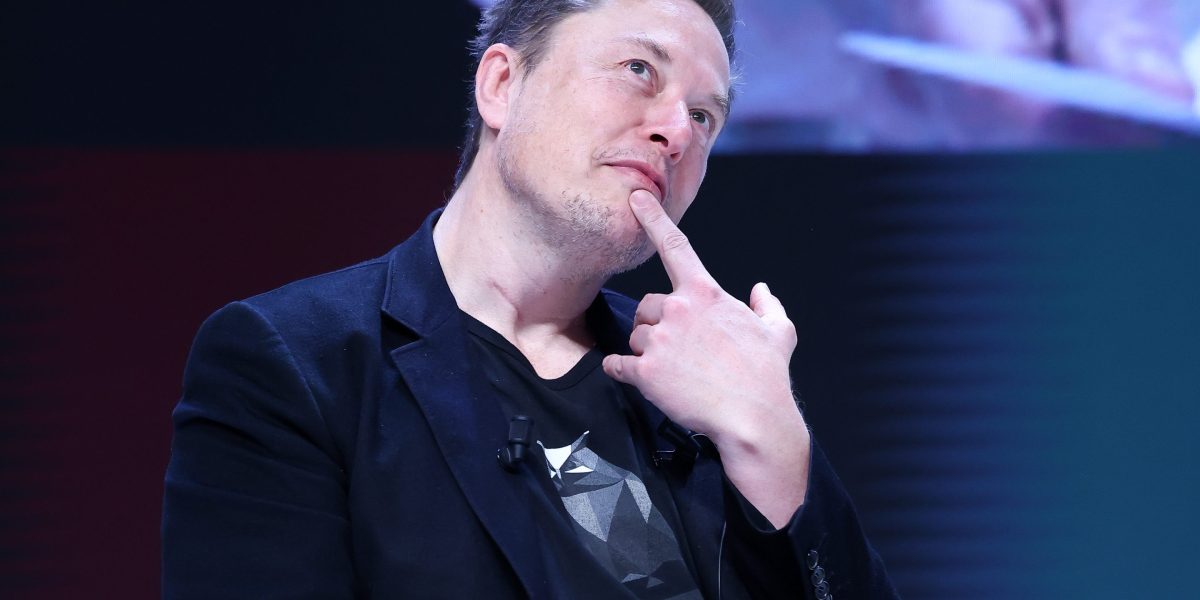
Saving for retirement is pointless thanks to the impending “supersonic tsunami” of AI and robotics, which will bring about a world of zero scarcity, according to Elon Musk.

While the Tesla and SpaceX CEO admitted he’s “more optimistic” than most, he insisted people shouldn’t stress over building a nest egg for the distant future, contrary to the staid advice of nearly all other financial professionals.

“Don’t worry about squirreling money away for retirement in 10 or 20 years,” said the world’s richest man on the Moonshots with Peter Diamandis podcast last week. “It won’t matter.”

Part of Musk’s controversial take lies in his vision of a world transformed by rapidly improving AI, robotics, and energy technology.

Musk’s hot take

By 2030, AI will surpass “the intelligence of all humans combined,” Musk predicted. He also claimed eventually there will be more humanoid robots than humans on Earth. Slowly, the traditional job will be replaced as well, with white collar positions first on the list.

“Anything short of shaping atoms, AI can do probably half or more of those jobs right now,” he said.

The advances could lead to such big productivity increases, he said, that they will surpass “what people possibly could think of as abundance.” 

Rather than a universal income, everyone will enjoy a “universal ‘you can have whatever you want’ income” in the future, he claimed. In this world, the link between individual wages, savings, and living standards no longer makes sense.

Even without savings, AI will help people obtain better medical care than currently available within five years, as well as remove any limit on the availability of goods, services, or educational opportunities.

​Musk’s comments build on his earlier claims that AI and humanoid robots will make work “optional” within 10 to 20 years and render money itself irrelevant. Musk previously compared the future of work to leisure activities like playing sports or video games rather than a survival necessity.

“If you want to work, [it’s] the same way you can go to the store and just buy some vegetables, or you can grow vegetables in your backyard. It’s much harder to grow vegetables in your backyard, and some people still do it because they like growing vegetables,” Musk said during the U.S.-Saudi Investment Forum in November.

Post-work’s downsides

​To be sure, Musk’s predictions about the future come at a time where many Americans are struggling to save. In part due to persistent inflation and weak wage growth, only 55% of American adults said they had a “rainy day” fund of three months expenses saved up for an emergency, down from a high of 59% in 2021, according to a survey by the Federal Reserve. Fewer than half of those surveyed said they could cover an expense of $2,000 or more with their savings. 

​Surveys also consistently show a large share of Americans are behind on retirement savings or have little to nothing set aside for their post-work life.

Musk is also not blind to the potential downsides of a society without the need to earn a living. A high universal income could come hand-in-hand with social unrest, as people may face a deeper crisis of meaning, he warned. 

“If you actually get all the stuff you want, is that actually the future you want? Because it means that your job won’t matter,” Musk said.




Source link

Continue Reading

Trending

Copyright © Miami Select.