Connect with us

Politics

All 4 candidates qualify for Special Election to replace Joe Casello in HD 90
Published

on


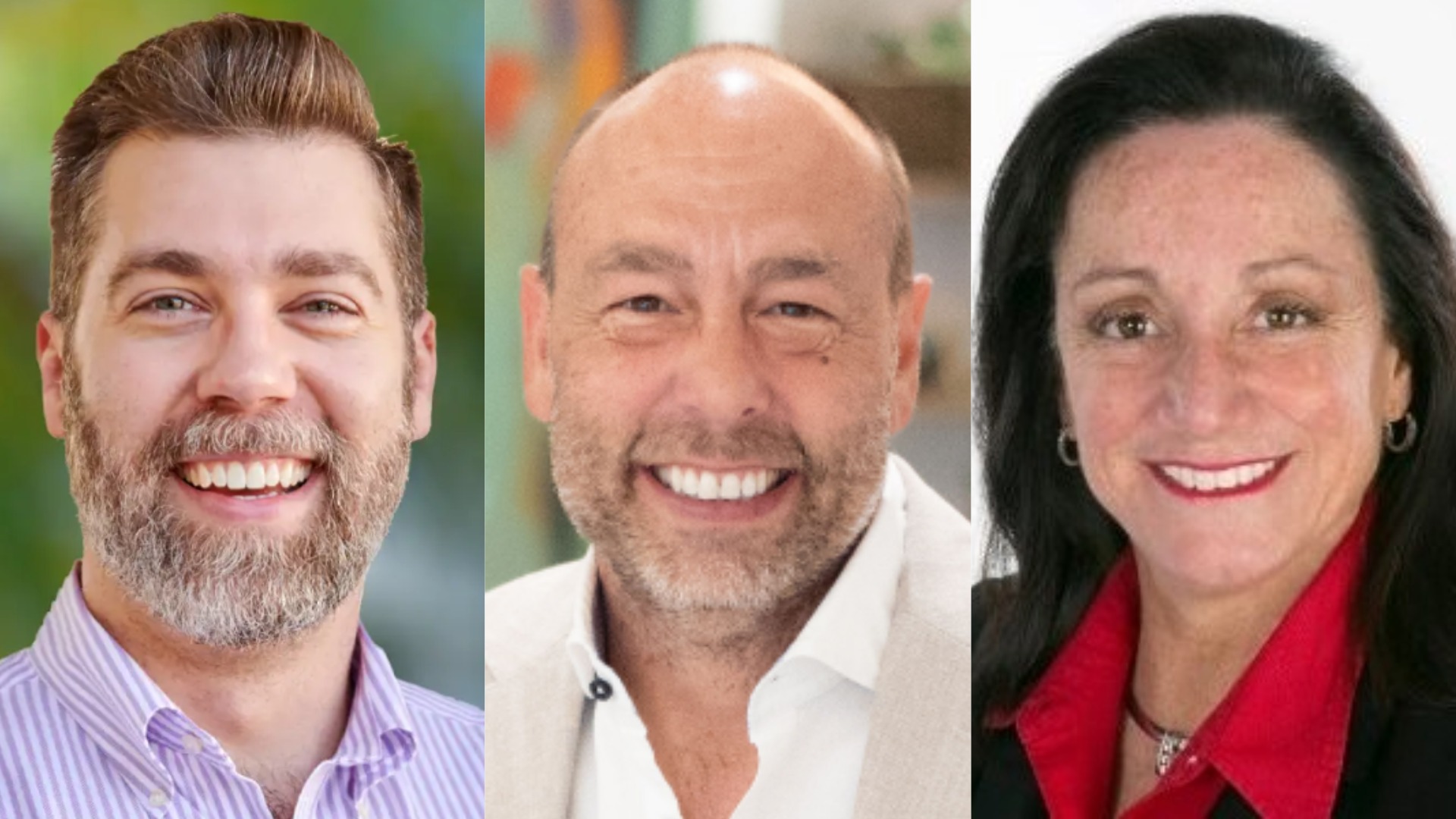
All four candidates running to replace the late Rep. Joe Casello in House District 90 have qualified for the contest.

HD 90 is a Democratic-leaning district that spans a coastal portion of Palm Beach County including Boynton Beach, Delray Beach and part of Highland Beach.

The qualifying period for the Special Election closed at noon Tuesday, but candidates weren’t confirmed to have qualified on the Division of Elections website until after 4 p.m.

Each candidate qualified by paying a qualifying fee.

The race — which includes a City Commissioner, a nonprofit founder and community activist, a political operative who has spurred conspiracy theories, and a serial litigant who has sued several governments and banks — will include a Republican Primary culminating Sept. 30 between two GOP members.

A Democrat and a no-party candidate are also running.

The General Election is Dec. 9.

Here’s a look at each candidate.

Rob Long — Democrat

Atop the list, alphabetically, is Delray Beach Commissioner Rob Long, who was campaigning to take the House District 90 seat in 2026 with Casello’s blessing before the lawmaker’s passing July 18.

Long, 40, also carries nods from Senate Democratic Leader Lori Berman, Boca Raton state Sen. Tina Scott Polsky, state Reps. Tae Edmonds, Kelly Skidmore and Debra Tendrich, and former Palm Beach State Attorney Dave Aronberg.

A political consultant, author and loss prevention expert, Long won his City Hall seat in March 2023.
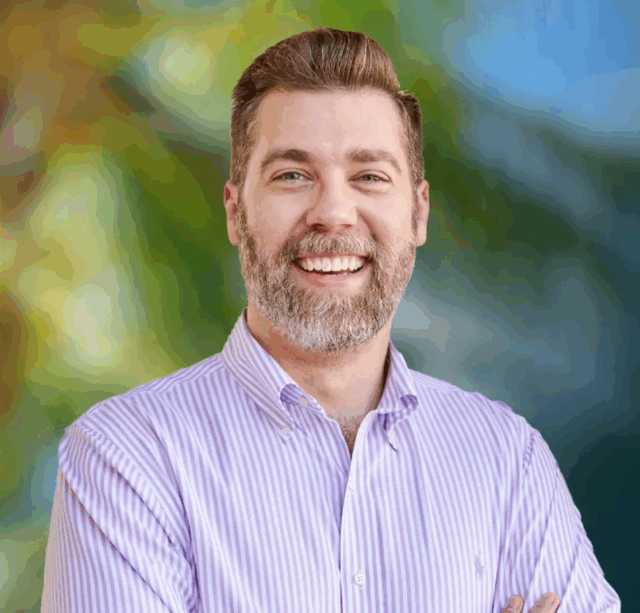
Delray Beach Commissioner Rob Long entered the race for HD 90 in February, before state Rep. Joe Casello’s death prompted a Special Election, and he’s the only candidate so far to report fundraising and spending. Image via Rob Long campaign.

Long has served on numerous government, advisory and advocacy boards, including those of the Palm Beach Transportation Planning Agency, Greater Delray Beach Chamber of Commerce, Friends of the Arthur R. Mitchell Loxahatchee National Wildlife Refuge and the Palm Beach Soil and Water Conservation District, where he helped build the Ambassadors to the Everglades program for high schoolers.

According to Long’s campaign website, he wants to advance at the state level many of the priorities he pushed for locally, from boosting the economy, supporting small businesses and protecting the environment to promoting sustainable development.

Addressing Florida’s property insurance crisis and supporting abortion rights are also high on his list.

Between February and June 30, the most recent quarterly deadline for campaign finance reporting, Long raised nearly $69,000 between his campaign account and political committee, Long Lasting Progress PC.

Bill Reicherter — Republican

Repeat candidate Bill Reicherter has again thrown his hat into the political ring, rerouting his short-lived candidacy for Governor to instead try to flip HD 90 red in December.

Reicherter, 56, has long owned and operated a signage company. He is also a licensed Realtor, runs a local nonprofit and offers court expertise as a witness for construction-related cases, according to his LinkedIn profile.

He serves on the Palm Beach County Zoning Commission, Palm Beach County Construction Board of Adjustment and Appeals, the Board of Directors for foster parent organization ChildNet and is Board Chair of Inspiring My Generation, a suicide prevention and mental health foundation.

Other involvements include previously serving as Chair of the YMCA of Broward County — where state records show he’s long lived, outside of HD 90. His campaign also lists Parkland, which sits in Broward in House District 95, as its address.
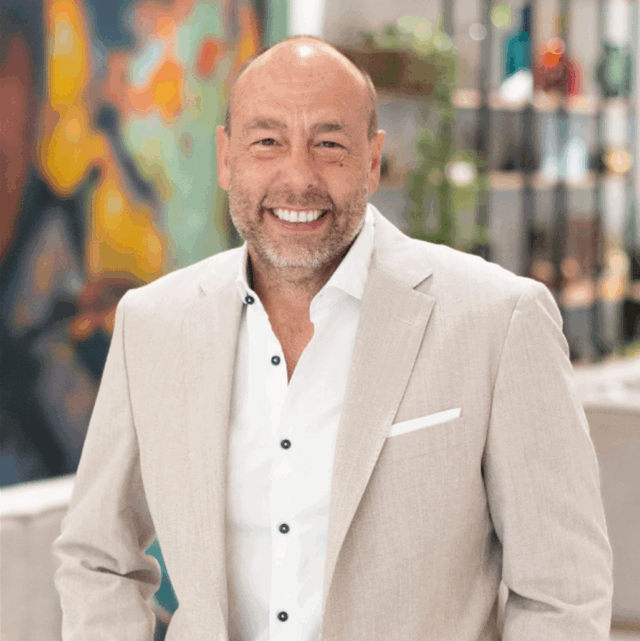
Long active in the South Florida community, Bill Reicherter hopes to serve the area in Tallahassee with a win this year. Image via Bill Reicherter campaign.

Reicherter challenged Casello last year and lost by 12 percentage points. He ran unsuccessfully against Polsky in 2022.

His campaign website says that, if elected, he’ll support legislation benefiting small businesses and trades, expand mental health resources with an emphasis on first responders and veterans, allocate state appropriations to the district, and provide aid to seniors.

He also vows to support more skilled worker training, clean water initiatives and legislation to protect the environment and boost local resiliency.

Supporters his site cites include Palm Beach County Commissioner Marci Woodward, Delray Beach Mayor Tom Carney, Boynton Beach Commissioner Thomas Turkin, former state Rep. Rick Roth, former Palm Beach City Commissioner Mack McCray, BLU-PAC of Boca Raton and the Association of Builders and Contractors’ Florida East Coast chapter.

His campaign account reported no activity between when he filed to run June 12 and the end of the month.

Maria Zack — Republican

Longtime Georgia lobbyist and conspiracy theorist Maria Zack, who raised hundreds of thousands of dollars to support U.S. Sen. Ted Cruz’s 2016 presidential campaign, is hoping to make the jump from political operative to elected official this year.

It’s not clear whether she still wields the same fundraising might; she filed to run July 30 and, as such, has not yet reported any campaign finance activities.

Zack, who turns 61 on Aug. 21, owns and operates Quantum Solutions Software Inc., which her LinkedIn page describes as a company that assists “productivity in business, non-profits, and clubs while propelling value driven success and enhancing people’s lives.”

State records show she was registered to vote in Broward County between 2018 and 2021, when she moved from Pompano Beach to Palm Beach.
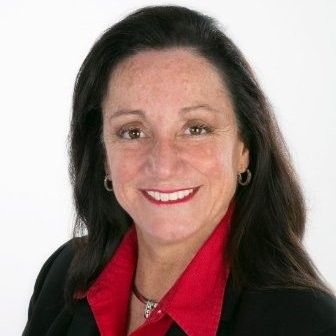
Lobbyist and political operative Maria Zack has supported high-profile presidential campaigns. She’s also pushed unfounded pandemic and election conspiracies. Image via LinkedIn.

In 2014, while still living in Georgia, Zack founded the federal-level political action committee Stand for Principle PAC, which through 2017 raised and spent nearly $420,000 backing Cruz’s failed presidential bid. She also ran former House Speaker Newt Gingrich’s Atlanta campaign office during the 2012 presidential race.

In 2017, Zack launched Nations in Action, a Lantana-headquartered nonprofit that claims to have uncovered evidence of “shadow government” conspiracies to “depopulate countries a COVID attack” and rig the 2020 election by beaming software hacks from foreign satellites over Italy into voting machines.

Her pinned post on X references that second, QAnon-affiliated claim, known in conspiracy circles as “#ItalyGate.”

Zack, who does not yet appear to have created a campaign website or published platform, appeared in the 2024 film, “Stopping the Steal,” about Trump’s disproven assertion that the 2020 election was fraudulent. IMDB credits her in the film as a “conspiracy theorist.”

Karen Yeh — no party affiliation

Also running is Karen Ching Hsien Yeh Ho, also known as “Karen Yeh,” who has no party affiliation.

Yeh Ho, 63, has filed multiple, mostly property-related lawsuits in Florida, including a challenge to the loss of her homestead tax exemption and allegations of unconstitutional property tax assessments.

In one case, she sued several Palm Beach County government officials and agencies over how her property tax was valued. In another filed in February, she sued a Florida subsidiary of Northland Investment Corp. over what she contended was a fraudulent property transfer.

She has also sued multiple banks.

Like Zack, Yeh Ho filed to run July 30, so her fundraising and campaign spending numbers aren’t yet available.


Post Views: 0


Source link

Continue Reading

Politics

Carlos G. Smith files bill to allow medical pot patients to grow their own plants

Published

on


Home cultivation of marijuana plants could be legal under certain conditions.

Medical marijuana patients may not have to go to the dispensary for their medicine if new legislation in the Senate passes.

Sen. Carlos G. Smith’s SB 776 would permit patients aged 21 and older to grow up to six pot plants.

They could use the homegrown product, but just like the dispensary weed, they would not be able to re-sell.

Medical marijuana treatment centers would be the only acceptable sourcing for plants and seeds, a move that would protect the cannabis’ custody.

Those growing the plants would be obliged to keep them secured from “unauthorized persons.”

Chances this becomes law may be slight.

A House companion for the legislation has yet to be filed. And legislators have demonstrated little appetite for homegrow in the past.


Source link

Continue Reading

Politics

Rolando Escalona aims to deny Frank Carollo a return to the Miami Commission

Published

on


Early voting is now underway in Miami for a Dec. 9 runoff that will decide whether political newcomer Rolando Escalona can block former Commissioner Frank Carollo from reclaiming the District 3 seat long held by the Carollo family.

The contest has already been marked by unusual turbulence: both candidates faced eligibility challenges that threatened — but ultimately failed — to knock them off the ballot.

Escalona survived a dramatic residency challenge in October after a rival candidate accused him of faking his address. A Miami-Dade Judge rejected the claim following a detailed, three-hour trial that examined everything from his lease records to his Amazon orders.

After the Nov. 4 General Election — when Carollo took about 38% of the vote and Escalona took 17% to outpace six other candidates — Carollo cleared his own legal hurdle when another Judge ruled he could remain in the race despite the city’s new lifetime term limits that, according to three residents who sued, should have barred him from running again.

Those rulings leave voters with a stark choice in District 3, which spans Little Havana, East Shenandoah, West Brickell and parts of Silver Bluff and the Roads.

The runoff pits a self-described political outsider against a veteran official with deep institutional experience and marks a last chance to extend the Carollo dynasty to a twentieth straight year on the dais or block that potentiality.

Escalona, 34, insists voters are ready to move on from the chaos and litigation that have surrounded outgoing Commissioner Joe Carollo, whose tenure included a $63.5 million judgment against him for violating the First Amendment rights of local business owners and the cringe-inducing firing of a Miami Police Chief, among other controversies.

A former busboy who rose through the hospitality industry to manage high-profile Brickell restaurant Sexy Fish while also holding a real estate broker’s license, Escalona is running on a promise to bring transparency, better basic services, lower taxes for seniors and improved permitting systems to the city.

He wants to improve public safety, support economic development, enhance communities, provide more affordable housing, lower taxes and advocate for better fiscal responsibility in government.

He told the Miami Herald that if elected, he’d fight to restore public trust by addressing public corruption while re-engaging residents who feel unheard by current officials.

Carollo, 55, a CPA who served two terms on the dais from 2009 to 2017, has argued that the district needs an experienced leader. He’s pointed to his record balancing budgets and pledges a residents-first agenda focused on safer streets, cleaner neighborhoods and responsive government.

Carollo was the top fundraiser in the District 3 race this cycle, amassing about $501,000 between his campaign account and political committee, Residents First, and spending about $389,500 by the last reporting dates.

Escalona, meanwhile, reported raising close to $109,000 through his campaign account and spending all but 6,000 by Dec. 4.

The winner will secure a four-year term.


Source link

Continue Reading

Politics

Florida kicks off first black bear hunt in a decade, despite pushback

Published

on


For the first time in a decade, hunters armed with rifles and crossbows are fanning out across Florida’s swamps and flatwoods to legally hunt the Florida black bear, over the vocal opposition of critics.

The state-sanctioned hunt began Saturday, after drawing more than 160,000 applications for a far more limited number of hunting permits, including from opponents who are trying to reduce the number of bears killed in this year’s hunt, the state’s first since 2015.

The Florida Fish and Wildlife Conservation Commission awarded 172 bear hunt permits by random lottery for this year’s season, allowing hunters to kill one bear each in areas where the population is deemed large enough. At least 43 of the permits went to opponents of the hunt who never intend to use them, according to the Florida chapter of the Sierra Club, which encouraged critics to apply in the hopes of saving bears.

The Florida black bear population is considered one of the state’s conservation success stories, having grown from just several hundred bears in the 1970s to an estimated more than 4,000 today.

The 172 people who were awarded a permit through a random lottery will be able to kill one bear each during the 2025 season, which runs from Dec. 6 to Dec. 28. The permits are specific to one of the state’s four designated bear hunting zones, each of which have a hunting quota set by state officials based on the bear population in each region.

In order to participate, hunters must hold a valid hunting license and a bear harvest permit, which costs $100 for residents and $300 for nonresidents, plus fees. Applications for the permits cost $5 each.

The regulated hunt will help incentivize maintaining healthy bear populations, and help fund the work that is needed, according to Mark Barton of the Florida chapter of Backcountry Hunters and Anglers, an advocacy group that supported the hunt.

Having an annual hunt will help guarantee funding to “keep moving conservation for bears forward,” Barton said.

According to state wildlife officials, the bear population has grown enough to support a regulated hunt and warrant population management. The state agency sees hunting as an effective tool that is used to manage wildlife populations around the world, and allows the state to monetize conservation efforts through permit and application fees.

“While we have enough suitable bear habitat to support our current bear population levels, if the four largest subpopulations continue to grow at current rates, we will not have enough habitat at some point in the future,” reads a bear hunting guide published by the state wildlife commission.

___

Republished with permission of the Associated Press.


Source link

Continue Reading

Trending

Copyright © Miami Select.