Connect with us

Business

AI megadeals, IPO green shoots, and a middle-market squeeze: The new M&A reality for CFOs

Published

on


Good morning. M&A made a comeback this year, but growth is lagging in the middle market.

PwC’s U.S. Deals 2026 Outlook, released this morning, credits the AI boom and a revitalized private equity (PE) activity for the market achieving 10,333 deals worth $1.6 trillion through Nov. 30, 2025. Total deal value rose about 45% from last year and was the second-highest ever recorded, even amid major shifts in economic policy, such as tariffs.

Courtesy of PwC

Big bets on AI helped drive activity among tech companies—especially in megadeals. There were 74 megadeals (valued at $5 billion or more), the highest number since 2021, of which more than 20% were driven by AI.

Fortune has reported on several megadeals this year, including Alphabet agreeing to acquire cloud security and AI company Wiz for about $32 billion; Meta buying a 49% stake in Scale AI for roughly $14.8 billion; and CoreWeave acquiring Core Scientific for about $9 billion.

Another finding of PwC’s report is that PE activity rose, with financial-buyer deal volume increasing by 4% to 1,484 transactions, while M&A value increased 54% to $536 billion. Meanwhile, IPO activity rebounded in the second half of 2025 as investors eagerly embraced new offerings. Pent-up demand, easing rates, and steadier trade policy should bode well for 2026 IPOs, according to PwC.

However, when it comes to the middle market, M&A slumped to a decade low, with just 496 projected deals, hindered by macroeconomic factors. Stabilization in trade policy and interest rates could improve conditions, according to PwC. PE firms are increasingly looking to the middle market for opportunities, although valuation gaps remain a challenge for exits.

Looking ahead to 2026, a finance chief at an industrial manufacturing company told PwC that “2026 brings a rare mix of pressure and momentum.” Although cost and supply-chain challenges persist, “interest rates, AI buildout, and energy infrastructure development are creating real opportunities,” the CFO said.

Finance chiefs typically approach M&A by evaluating both risks and strategic opportunities. I recently talked with Zane Rowe, CFO of Workday, about the company’s definitive agreement to acquire Swedish AI startup Sana for around $1.1 billion. The deal, expected to close in the fourth quarter of Workday’s fiscal 2026, follows two other strategic acquisitions, Paradox and Flowise. The acquisitions reflect the company’s disciplined approach to M&A, Rowe said. “We keep a very high hurdle on talent, team, technology, and cultural fit, and it’s really a paradigm that has to fit perfectly; and that’s how we think about our M&A strategy,” he noted.

PwC projects that despite several potential challenges, the current M&A uptick rests on solid ground. If trade policy stabilizes, interest rates drop, and AI enthusiasm continues, the firm expects the market to build on the significant gains it made in 2025, especially if macroeconomic drivers and renewed confidence help push both middle-market corporates and PE firms back into the M&A arena. You can read the complete report here.

SherylEstrada
sheryl.estrada@fortune.com

Leaderboard

Christy Schwartz was promoted to CFO of Opendoor Technologies Inc. (Nasdaq: OPEN), a real estate technology company, effective Jan. 1, 2026. Schwartz, who has served as interim CFO, was selected after an extensive CFO search. On September 30, she became interim CFO, replacing Selim Freiha. Schwartz also previously served as Opendoor’s interim CFO from December 2022 to November 2024, and as chief accounting officer from March 2021 to May 2025. She also held the role of VP, corporate controller from August 2016 to March 2021.

Todd Saypoff was appointed CFO of Moore, a data-driven constituent experience management (CXM) company. Saypoff brings experience scaling financial operations across organizations ranging from startups to global enterprises. His background includes CFO roles at Lucid Holdings, Shazam, which was acquired by Apple, and NBCUniversal Owned Television Stations.

Big Deal

CFOs are the strategic partners to CEOs, and Teneo’s annual “Vision CEO and Investor Survey” provides some insight into what chief executives are expecting in 2026.

Seventy-three percent of CEOs and 82% of investors expect the global economy to improve in 2026. The U.S. remains the most attractive market in the world for investment. Meanwhile, AI spending will continue to rise in 2026, with 68% of CEOs increasing investment.

More than half (53%) of investors expect ROI from AI in six months or less, while only 16% of large-cap CEOs believe they can deliver on that timeline. Another finding is that regulatory streamlining is expected to boost business. More than 80% of both CEOs and investors cite recent policy changes related to technological advancement and regulatory streamlining as being helpful to their business.

The findings are based on insights from over 750 global CEOs and institutional investors, representing nearly $19 trillion in company and portfolio value.

Going deeper

“Meet the 25 most powerful rising executives reshaping corporate America” is a new article by Fortune‘s Ruth Umoh that highlights the Fortune Next to Lead list, now in its second year.  The list spotlights a group of 25 influential executives inside the Fortune 500. 

Overheard

“History shows that breakthrough technologies don’t just slot into existing systems, they make us rethink those systems entirely.”

Charles Lamanna, Microsoft corporate president, writes in a Fortune opinion piece titled, “I lead Microsoft’s enterprise AI agent strategy. Here’s what every company should know about how agents will rewrite work.”


Source link

Continue Reading

Business

Sweetgreen co-founder is stepping down from executive role

Published

on


Sweetgreen Inc. co-founder Nathaniel Ru is leaving the struggling salad chain following a string of disappointing results and a precipitous decline in the company’s stock price. 

Ru, who has served as chief brand officer and been with the company for 20 years, is planning to retire on Jan. 1, according to a statement. He will continue to serve on the board. 

Sweetgreen’s share price has dropped nearly 80% since the start of 2025, while consumers have bristled at perceived high costs of the company’s food. Fast-casual chains have also broadly struggled in recent quarters. Operational stumbles, such as removing fries only months after they were introduced, have contributed to the market losing faith in Sweetgreen’s current management team.

Ru, who started the company alongside current Chief Executive Officer Jonathan Neman and Chief Concept Officer Nicolas Jammet, has overseen the company’s marketing and restaurant design. While Sweetgreen’s concept has been touted as innovative in the restaurant world, that creativity has sometimes hindered efficient operations.

The company has yet to turn a profit since going public in late 2021 and has amassed net losses totaling more than $500 million in the period. Despite this, the chain has continued to aggressively expand, with its store count growing 90% over the past four years.

The growth hasn’t led to better financial performance. Cava Group Inc., which sells Mediterranean-style bowls, has expanded more quickly than Sweetgreen while posting consistent quarterly profits.

Prioritizing branding and restaurant development has led to higher operating costs and hasn’t translated into increased foot traffic. Sales from existing restaurants has contracted three consecutive quarters, including a 9.4% drop most recently, the most since 2021. Analyst expect that trend to continue, and worsen, in the fourth period this year after the company warned weak traffic trends have continued.

In August, Neman said only one-third of locations were “consistently operating at or above standard,” while the remainder fell short on sourcing, cooking and uniformity.

This year, the company sold off its kitchen automation unit to Wonder Group Inc., generating $100 million in cash. That technology was supposed to help get restaurant unit economics under control and speed up service but was sacrificed to help shore up company finances. Sweetgreen will maintain a licensing agreement to use the tool.

In 2014, Ru told the business journal from the Wharton School of Business at the University of Pennsylvania that he and his partners started Sweetgreen with a single location in Washington DC. He said that the landlord initially hung up on him but eventually relented after months of pestering. He said the group came up with five business principles, including “win, win, win” and “keeping it real.”

In 2022, he told Marketing Brew that Sweetgreen seeks “intimacy at scale” as it expands while talking about the company’s collaborations with tennis player Naomi Osaka and NBA player Devin Booker.


Source link

Continue Reading

Business

$1 billion fraud revealed with guilty pleas from subprime auto lender Tricolor

Published

on


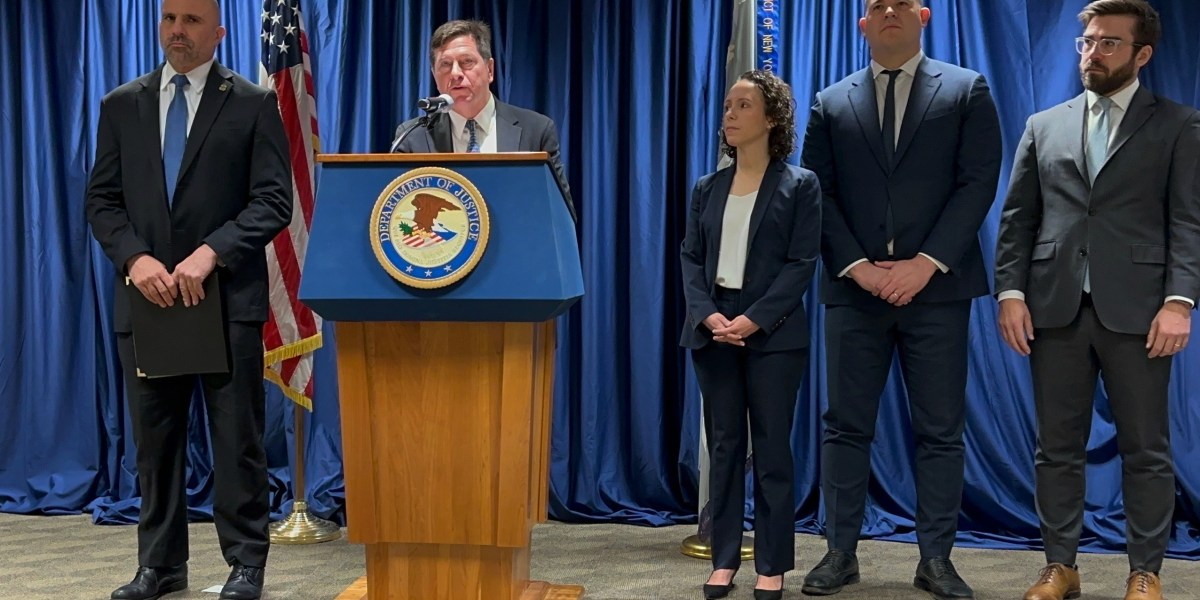
The founder of Tricolor Holdings led other top executives of the subprime auto lender on a seven-year campaign to defraud its largest lenders out of nearly $1 billion, authorities said Wednesday, as they announced two arrests and guilty pleas by two former executives.

Daniel Chu, the company’s founder and chief executive, was charged in an indictment unsealed in Manhattan federal court with directing multiple executives since 2018 to defraud investors and lending institutions. The fraudulent schemes included fabricating data and making false statements, according to the indictment.

A defense lawyer for Chu did not immediately return a message seeking comment.

Chu, 62, of Miami, was arrested in Florida, while David Goodgame, 49, of Waxahachie, Texas, the company’s former chief operating officer, was arrested in Texas. It was not immediately clear who will represent Goodgame at an initial court appearance.

U.S. Attorney Jay Clayton told a news conference that Chu repeatedly lied to banks and other credit providers as he turned fraud “into an integral component of Tricolor’s business strategy.”

He said the collapse of the company dealt a blow to car-buying customers who needed the services of a lending business that catered to people with troubled credit histories.

“Of course, if you have something like this happen, if you have fraud in that area, it becomes harder for those people to get auto loans,” Clayton said.

According to the indictment, the scope of the fraud was revealed in late August when lenders confronted Chu and other executives about Tricolor’s collateral.

Chu and others accused of carrying out the fraud initially tried to conceal it, saying the collateral issues were due to an administrative error, the indictment said. After those efforts failed, Chu extracted over $6 million from the company, spending some of it on the August purchase of a multimillion dollar property in Beverly Hills, California, the indictment said.

On Sept. 10, Tricolor filed for Chapter 7 bankruptcy because it owed over $900 million to the company’s largest lenders, the indictment said.

Chu could face a mandatory minimum sentence of 10 years in prison and a maximum of life behind bars if he is convicted on the top charge of running a continuing financial crimes enterprise. Other charges include conspiracy, bank fraud and wire fraud. Goodgame was charged with conspiracy, bank fraud and wire fraud.

Authorities also announced that a former chief financial officer and a former finance executive at Tricolor had pleaded guilty to charges on Tuesday in Manhattan and were cooperating with the government.


Source link

Continue Reading

Business

‘Trump Accounts’ for kids get funding boost from Dalio and BlackRock

Published

on


A new savings vehicle, dubbed “Trump accounts,” is designed to help the rising generation of American children build wealth into adulthood. 

Under the multitrillion-dollar tax and spending bill signed by President Donald Trump in July, the federal government will contribute $1,000 to accounts set up for every American baby born in the next few years. 

The initiative got a boost on Dec. 2 when billionaires Michael and Susan Dell announced a $6.25 billion gift to seed accounts for millions of older children as well. Other big names in business and finance, including Bridgewater Associates founder Ray Dalio and BlackRock Inc., soon followed with smaller pledges of their own.

Lawmakers significantly scaled back the flexibility and tax benefits of the program since the initial proposal. While the accounts could serve as a springboard for long-term savings, there are other investment vehicles, especially 529 plans, that offer greater tax advantages.

Here’s how the accounts are supposed to work and how the new infusion of money might affect the program.

How will Trump accounts work?

For each account, annual contributions would be capped at $5,000, an amount that would be adjusted for inflation. The idea is for parents, relatives and even the employers of caregivers to pitch in money over time. The federal government, as well as state, local or tribal governments, could also contribute and aren’t subject to the cap.

The accounts would be locked up until the child turns 18. At that point, Trump accounts essentially become individual retirement accounts, which can be used penalty-free for certain expenses such as higher education or first-time home purchases. 

Only one account is allowed per person. The US Treasury will issue regulations requiring the funds be invested in mutual or exchange-traded index funds (ETFs) that “primarily” hold US stocks. Funds must charge low fees and not use leverage, according to the law signed in July.

Another exception to the contribution limit applies to nonprofits, including 501(c)(3) and 501(c)(4) organizations, which could give to recipients based on where they live. 

Parents, relatives, employers or philanthropists can contribute to a designated recipient’s Trump account through the year they turn 17. The Internal Revenue Service has said parents will be allowed to start contributing on behalf of children starting on July 4, 2026. 

Also, through a pilot program, the US government would contribute $1,000 to accounts for babies born from the beginning of 2025 through the end of 2028. Caregivers will be able to sign up children for an account through an online portal administered by the IRS.

What’s the significance of the contributions by business leaders? 

The commitments from corporations and well-heeled donors demonstrate how companies and business leaders are eager to demonstrate public support for a program that Trump views as part of his presidential legacy.

Dalio said his foundation would donate $250 each to roughly 300,000 “Trump accounts” for children in Connecticut. BlackRock said it would match the federal government’s contributions to the accounts for employees’ children, seeding them with $1,000 each.

Those pledges follow the Dells’ announcement in early December of a $6.25 billion gift aimed at seeding accounts for 25 million American children age 10 and under who were too old to be eligible for the initial government funding. The donation targets kids living in ZIP Codes with median incomes below $150,000.

Each eligible account would receive $250 from the Dells. While that amount is unlikely to grow into a significant nest egg even over a couple decades, Michael Dell, founder of Dell Technologies Inc., said when he disclosed the gift that he hoped to inspire others to give as well. 

What will beneficiaries be able to do with their money? 

Trump accounts can’t be touched until age 18. At that point, they’re essentially treated like traditional individual retirement accounts. As with IRAs, money can be withdrawn early for certain qualified expenses, including higher education, up to $10,000 toward first-time home purchases and $5,000 per child for birth or adoption expenses. Other distributions trigger a 10% penalty.

What are the tax advantages of Trump accounts?  

The accounts grow tax-free, and wouldn’t be taxed until money is withdrawn. Those taxes are complicated, and the US Treasury hasn’t yet issued rules on how exactly they will work. The law says recipients don’t pay taxes on any post-tax contributions to their accounts, such as those from parents and relatives. But any gains or tax-free contributions from government, philanthropists or employers will be taxed like ordinary income upon withdrawal. On top of that, beneficiaries would also face the 10% IRA withdrawal penalty if money is used for non-qualifying expenses. 

What changed about the proposal before it became law in July? 

Lawmakers tweaked the Trump accounts so that distributions will be taxed as ordinary income. Early versions of the bill said distributions would be taxed at long-term capital gains rates, which are much lower than those on ordinary income. The accounts also were changed so that they follow IRA withdrawal rules, meaning a recipient’s small business startup costs no longer qualify for penalty-free distributions.

How would Trump accounts compare with 529 college savings plans?

Trump accounts have far fewer tax benefits than 529 college savings plans, which also have far higher contribution limits. 

With a 529 plan, withdrawals are tax-free for qualified educational expenses, and contributions are often eligible for state income tax deductions. Trump account holders would still pay taxes on withdrawals. 

How much would the plan cost the federal government?  

The Trump accounts program will cost about $15 billion over the next decade, according to the Congressional Budget Office, a tiny fraction of the overall tax and spending package approved in July.

Where did the idea come from? What do supporters and skeptics say?

An idea for government-funded “baby bonds” was first proposed by economist Darrick Hamilton, a professor at the New School for Social Research in New York, as a way to help poor Americans build assets and narrow the racial wealth gap. Several states, including Connecticut, have set up baby bond programs or are in the process of doing so. Hamilton has been skeptical of Trump accounts, calling them an idea to “address wealth inequality on the cheap.” 

One impetus for the overall approach appears to have come from Kevin Hassett, director of the White House National Economic Council, who along with economist Robert Shapiro last year began promoting the idea of accounts seeded with $1,000 for newborns. It’s a “simple solution to help people be connected to financial markets so everybody in the country shares in the wealth,” Hassett said at a presentation to the Aspen Institute in 2024.

Greg Leiserson, an economist who served in the Biden and Obama administrations, warned “tax-preferred accounts primarily benefit families that already have spare time and money, not the families that need the most help.”



Source link

Continue Reading

Trending

Copyright © Miami Select.