Connect with us

Business

After Venezuela raid, Trump says ‘We do need Greenland, absolutely’

Published

on


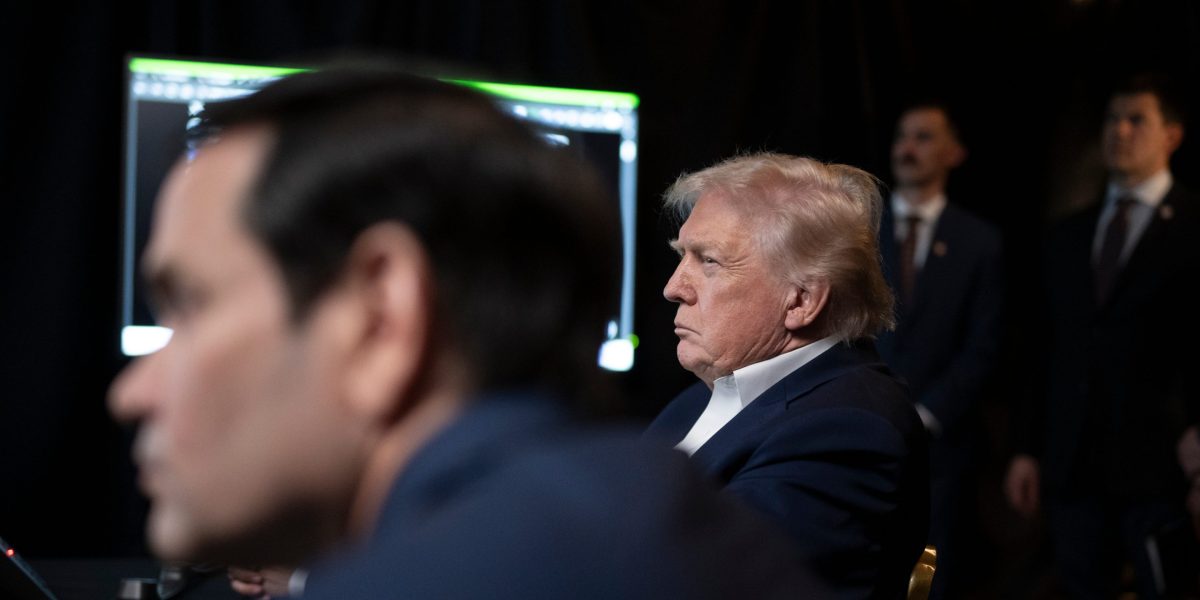
A day after the audacious U.S. military operationin Venezuela, President Donald Trump on Sunday renewed his calls for an American takeover of the Danish territory of Greenland for the sake of U.S. security interests, while his top diplomat declared the communist government in Cuba is “in a lot of trouble.”

The comments from Trump and Secretary of State Marco Rubio after the ouster of Venezuela’s Nicolás Maduro underscore that the U.S. administration is serious about taking a more expansive role in the Western Hemisphere.

With thinly veiled threats, Trump is rattling hemispheric friends and foes alike, spurring a pointed question around the globe: Who’s next?

“We do need Greenland, absolutely,” Trump said in an interview with The Atlantic in which he described the strategically located Arctic island as “surrounded by Russian and Chinese ships.”

Asked what the U.S.-military action in Venezuela could portend for Greenland, Trump replied: “They are going to have to view it themselves. I really don’t know.” The White House did not respond to a request for comment.

Trump, in his administration’s National Security Strategy published last month, laid out restoring “American preeminence in the Western Hemisphere” as a central guidepost for his second go-around in the White House.

Trump has also pointed to the 19th century Monroe Doctrine, which rejects European colonialism, as well as the Roosevelt Corollary — a justification invoked by the U.S. in supporting Panama’s secession from Colombia, which helped secure the Panama Canal Zone for the U.S. — as he’s made his case for an assertive approach to American neighbors and beyond.

Trump has even quipped that some now refer to the fifth U.S. president’s foundational document as the “Don-roe Doctrine.”

Saturday’s dead-of-night operation by U.S. forces in Caracas and Trump’s Atlantic interview heightened concerns in Denmark, which has jurisdiction over the vast mineral-rich island of Greenland.

Danish Prime Minister Mette Frederiksen in a statement following Trump’s latest comments on Greenland said he has “no right to annex” the territory. She also reminded Trump that Denmark already provides the United States, a fellow member of NATO, broad access to Greenland through existing security agreements.

“I would therefore strongly urge the U.S. to stop threatening a historically close ally and another country and people who have made it very clear that they are not for sale,” Frederiksen said.

Denmark on Sunday also signed onto a European Union statement underscoring that “the right of the Venezuelan people to determine their future must be respected” as Trump has vowed to “run” Venezuela and pressed the acting president, Delcy Rodriguez, to get in line.

Greenlanders and Danes were further rankled by a social media post following the raid by a former Trump administration official turned podcaster, Katie Miller. The post shows an illustrated map of Greenland in the colors of the Stars and Stripes accompanied by the caption: “SOON.”

“And yes, we expect full respect for the territorial integrity of the Kingdom of Denmark,” Amb. Jesper Møller Sørensen, Denmark’s chief envoy to Washington, said in a post responding to Miller, who is married to Trump’s influential deputy chief of staff Stephen Miller.

During his presidential transition and in the early months of his return to the White House, Trump repeatedly called for U.S. jurisdiction over Greenland, and has pointedly not ruled out military force to take control of the mineral-rich, strategically located Arctic island that belongs to an ally.

The issue had largely drifted out of the headlines in recent months. Then Trump put the spotlight back on Greenland less than two weeks ago when he said he would appoint Republican Gov. Jeff Landry as his special envoy to Greenland.

The Louisiana governor said in his volunteer position he would help Trump “make Greenland a part of the U.S.”

A stern warning to Cuba

Meanwhile, concern simmered in Cuba, one of Venezuela’s most important allies and trading partners, as Rubio issued a new stern warning to the Cuban government. U.S.-Cuba relations have been hostile since the 1959 Cuban revolution.

Rubio, in an appearance on NBC’s “Meet the Press,” said Cuban officials were with Maduro in Venezuela ahead of his capture.

“It was Cubans that guarded Maduro,” Rubio said. “He was not guarded by Venezuelan bodyguards. He had Cuban bodyguards.” The secretary of state added that Cuban bodyguards were also in charge of “internal intelligence” in Maduro’s government, including “who spies on who inside to make sure there are no traitors.”

Trump on Saturday told reporters that he viewed the Cuban government as “very similar” to Venezuela.

“I think Cuba is going to be something we’ll end up talking about, because Cuba is a failing nation right now, a very badly failing nation, and we want to help the people,” Trump said.

Cuban authorities called a rally in support of Venezuela’s government and railed against the U.S. military operation, writing in a statement: “All the nations of the region must remain alert, because the threat hangs over all of us.”

Rubio, a former Florida senator and son of Cuban immigrants, has long maintained Cuba is a dictatorship repressing its people.

“This is the Western Hemisphere. This is where we live — and we’re not going to allow the Western Hemisphere to be a base of operation for adversaries, competitors, and rivals of the United States,” Rubio said.

Cubans like 55-year-old biochemical laboratory worker Bárbara Rodríguez were following developments in Venezuela. She said she worried about what she described as an “aggression against a sovereign state.”

“It can happen in any country, it can happen right here. We have always been in the crosshairs,” Rodríguez said.


Source link

Continue Reading

Business

Employees can’t coast after graduation anymore thanks to the rise of AI, says VC CEO

Published

on


Top consulting and venture capital leaders say the idea learning ends after college is outdated in today’s AI-driven economy.

While many assume formal learning is limited to a bachelor’s or master’s degree, both the CEO of VC firm General Catalyst, Hemant Taneja, and McKinsey’s top executive, Bob Sternfels, say that’s not the case anymore.

Employees must skill and re-skill constantly to stay afloat, said Taneja, whose VC firm has invested in companies such as Anduril and Anthropic. Taneja discussed this during  a live taping of the All-In podcast, hosted by entrepreneur and investor Jason Calacanis Tuesday at CES 2026, a massive annual tech trade show in Las Vegas.

“This idea that we spend 22 years learning and then 40 years working is broken,” Taneja said.

Yet, in a workplace where AI agents can be trained quicker than employees, workers don’t only need knowledge, they must find ways to stay relevant, said host Calacanis, who himself made early investments in trading app Robinhood and Uber.

“You’re going to have to show chutzpah, drive, passion,” he said.

McKinsey’s global managing partner, Sternfels, said he’s seen first-hand how AI is transforming the workplace. McKinsey has used the tech to grow client-facing consultant roles by 25%, simultaneously cut the same number of jobs in non-client-facing roles, all the while increasing its output 10% overall.

McKinsey will have just as many AI agents as it has human employees by the end of the year, Sternfels said. Currently, its human employees outnumber AI agents 40,000 to 25,000.

“Our model has always been synonymous that growth only occurs with total head count growth. Now it’s actually splitting,” Sternfels said. “We can grow in this part, the client-facing side, and we can shrink in this part and have aggregate growth in total.” 

AI job anxiety

McKinsey’s stark results from incorporating AI agents play to the heart of workers’ fear about how AI will disrupt their jobs as adoption increases. Some could argue young workers have a right to worry. 

A study by the Stanford University Digital Economy Lab in November found early career workers between the ages of 22 to 25 in occupations at most risk of disruption have experienced a 13% relative decline in employment levels since 2022, when OpenAI released ChatGPT. Another study by Gallup from last year found 37% of workers claimed their workplace had implemented AI.

As Sternfels and Taneja said, the added pressure of AI means learning and evolving is more essential than ever. Yet, some have pushed back on the idea that more AI means entry-level workers don’t matter.

Despite the increased push by Amazon CEO Andy Jassy to implement AI at the company, Matt Garman, the CEO of subsidiary Amazon Web Services, has repeatedly said entry-level workers are essential to a healthy organization. Without entry-level workers, “you have no talent pipeline,” Garman told Wired.

Thus, replacing entry-level workers with AI is “one of the dumbest things I’ve ever heard,” Garman said on the Matthew Berman podcast last year.


Source link

Continue Reading

Business

OpenAI launches ChatGPT Health in a push to become a hub for personal health data

Published

on


Millions of people already use ChatGPT to ask questions about their health. In fact, OpenAI has previously said it is one of the most common use cases for its popular chatbot. Some upload blood test results, medical scans, and other deeply personal data.

Now OpenAI is leaning into this trend as it seeks to build out more products to keep users engaged and establish itself as the new digital interface that will mediate interactions between different industry sectors—from e-commerce to finance to, yes, wellness and healthcare—and their customers.

Today OpenAI announced the debut of ChatGPT Health — a dedicated experience inside ChatGPT where it says users can securely connect medical records and wellness apps such as Apple Health, Function, and MyFitnessPal to further personalize conversations. OpenAI said it would not train its models on personal medical data.

During a press preview, Fidji Simo, OpenAI’s CEO of applications, introduced ChatGPT Health by sharing a personal story about how ChatGPT helped her after she was hospitalized for a kidney stone last year and developed an infection. A resident had prescribed a standard antibiotic, but she checked it against her medical history in ChatGPT, which flagged that the medication could reactivate a serious life-threatening infection she had suffered years before.

“The resident was relieved I spoke up, she told me she only has a few minutes per patient during rounds, and that health records aren’t organized in a way that makes it easy to see,” she said. “I’ve heard many stories like this from people who are using AI to help connect the dots in their healthcare system that really wasn’t built to see the full picture.”

Five months ago, OpenAI signalled its push into healthcare with two high-profile hires: Nate Gross, the cofounder and former chief strategy officer of Doximity, a leading digital platform for medical professionals, leads OpenAI’s healthcare strategy. Ashley Alexander, former co-head of product at Instagram, leads healthcare product. But Karan Singhal, who leads health AI at OpenAI, said during the press preview that the company had been laying the groundwork for ChatGPT Health for about two years.

According to an OpenAI blog post, the company analyzed deidentified ChatGPT conversations and found that more than 230 million people globally ask health- and wellness-related questions on ChatGPT every week. Even with that massive user base, however, that doesn’t mean the company has an easy road ahead: They are joining a fast-moving race among Big Tech and startups to become the AI front door for consumer healthcare. 

For example, for ChatGPT Health OpenAI has partnered with b.well, a health management platform which combines patients’ health records, financial information, and wearable and other healthcare data. But Google also announced a partnership with b.well in October 2025 – potentially setting the stage for future AI-driven consumer health tools, though the internet giant has not yet announced a health-specific feature set for its AI chatbot product Gemini. 

ChatGPT Health will not be widely available immediately. There is a waitlist for access to a small group of early users, but the company said it will make Health available to all users on web and iOS in the coming weeks. Electronic Health Records (EHR) integrations and some apps are available in the U.S. only. 

OpenAI does not describe ChatGPT Health as HIPAA compliant (consumer health apps are not covered by HIPAA) but says it adds layered protections for sensitive health data and excludes health conversations from model training by default. It also says users can enable multi-factor authentication (MFA) to add an extra layer of protection to help prevent unauthorized access, and that access to medical records can be removed at any time in the “Apps” section of Settings.”

ChatGPT Health also fits a broader pattern at OpenAI: building vertical-specific experiences on top of its core models, rather than relying solely on general-purpose chat. In education, the company launched Study Mode, a ChatGPT spinoff for students, in July to compete with Google’s Gemini for Education. It has also rolled out agentic shopping and shopping research features. There are also reports that a finance-specific experience is also in the works.

OpenAI also clarified that ChatGPT Health was not part of the company’s eight-week long “code red,” announced in early December by Sam Altman in an internal memo. “[ChatGPT Health is] actually sitting outside of Code Red,” said Simo. “We have been working on health for a very long time…we know this is a core use case of ChatGPT, we’ve known that we wanted to make that use case even better and serve even more of people’s needs with the changes that we’ve made.”


Source link

Continue Reading

Business

Jensen Huang might be fine with a billionaires tax, but Google cofounder Larry Page is already dumping California

Published

on


Google cofounder Larry Page appears ready to bid farewell to the state where he established his tech giant and much of his wealth.

Page is converting several of his assets out of California, according to filings reviewed by Fortune, cutting ties with the state following the proposal of a wealth tax that would impact California’s roughly 200 billionaires. While some billionaires have started fleeing the Golden State, others appear unbothered, like Nvidia CEO Jensen Huang, who says he doesn’t care about the tax.

Koop, Page’s family office, was converted out of California and incorporated in Delaware on Dec. 23, filings in the respective states show. Flu Lab LLC, a health care testing services company linked with Page, as well as One Aero, reportedly Page’s shell company that has funded his ventures to develop a flying car, were likewise moved from California to Delaware. Ocean science nonprofit Oceankind, founded by Page’s wife Lucy Southworth in 2018, was also incorporated in Delaware last month, having previously been in California.

These assets were converted out of California ahead of a de facto end-of-year deadline. If the ballot initiative wins approval after the November election, it will retroactively apply to California residents as of Jan. 1, 2026.

The proposed tax calls for California residents with more than a $1 billion net worth to pay a one-time tax equivalent to 5% of their assets. The tax can be paid over five years, and 90% of the payments would be allocated to health care spending. 

By that math, Page, who is worth about $270 billion, according to the Bloomberg Billionaire Index, would owe the state roughly $13 billion in taxes, should the proposal pass.

Though the fate of the proposal won’t be decided by voters for months, Page is seemingly not taking any chances. The Google co-founder has reportedly already left the state, an anonymous source told Business Insider, which also first reported Page converting his businesses out of California. The New York Times reported last month that Page, as well as billionaire venture capitalist Peter Thiel, were considering leaving California by the end of 2025.

Fortune could not reach Page for comment.

Billionaires’ great escape from California

Many tech leaders have made their opinions about California’s proposed wealth tax clear, arguing the initiative would exacerbate the trend of the ultra-wealthy leaving the state for destinations with fewer taxes and regulations, ultimately leaving California with fewer resources. Garry Tan, CEO of tech startup accelerator Y Combinator, warned additional levies would scare off the state’s billionaires, driving capital out of California—and eventually threaten innovation and support for health care services the tax is meant to support.

Indeed, California’s high levies, including corporate, sales and use, and franchise taxes, as well as a stricter regulatory environment, is the oft-considered reason why once-residents of Silicon Valley have shifted their business operations to other states. Elon Musk’s 2020 move from California to the income-tax free Texas—now the headquarters of Tesla, SpaceX, X, and the Boring Company—may have saved him an estimated $18 billion in capital gains taxes. Oracle, Hewlett Packard Enterprise, and Charles Schwab are among other major companies that have relocated from California to the Lone Star State. Delaware, where Page has incorporated several entities, does not require limited liability companies (LLC) owners to publicly disclose their names.

But not every billionaire is in such strong opposition to the proposal. Nvidia CEO Huang, the world’s ninth richest man worth $155 billion, appears to be unbothered by it.

“I haven’t thought about it even once,” Huang told Bloomberg Television in an interview on Tuesday. “We chose to live in Silicon Valley, and whatever taxes I guess they would like to apply, so be it. I’m perfectly fine with it.”

In fact, Nvidia is likely increasing its Silicon Valley footprint, having reportedly finalized its first office lease in San Francisco in November 2025, defying concerns of widespread divestment or talent loss in California.

“We work in Silicon Valley because that’s where the talent pool is, and we have offices all over the world, wherever there’s talent,” Huang said.

This story was originally featured on Fortune.com


Source link

Continue Reading

Trending

Copyright © Miami Select.