Connect with us

Business

After Charlie Kirk’s assassination, private-sector employees discover there’s no free speech at work

Published

on


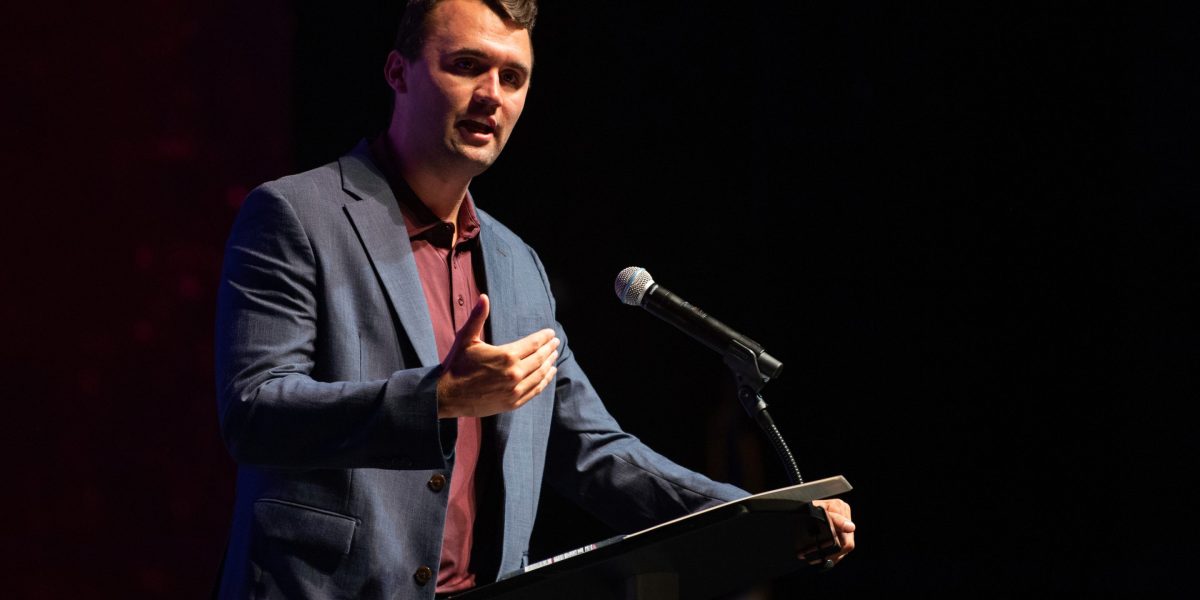
In the days following the fatal shooting of conservative activist Charlie Kirk, numerous workers have been fired for their comments on his death, among them MSNBC political analyst Matthew Dowd.

It’s far from the first time workers have lost their jobs over things they say publicly — including in social media posts. In the U.S., laws can vary across states, but overall, there’s very little legal protections for employees who are punished for speech made both in and out of private workplaces.

“Most people think they have a right to free speech…but that doesn’t necessarily apply in the workplace,” said Vanessa Matsis-McCready, associate general counsel and vice president of HR Services for Engage PEO. “Most employees in the private sector do not have any protections for that type of speech at work.”

Add to that the prevalence of social media, which has made it increasingly common to track employees’ conduct outside of work and to dox people, or publish information about them online with the intent of harming or harassing them.

Employers have a lot of leeway

Protections for workers vary from one state to the next. For example, in New York, if an employee is participating in a weekend political protest, but not associating themselves with the organization that employs them, their employer cannot fire them for that activity when they return to work. But if that same employee is at a company event on a weekend and talks about their political viewpoints in a way that makes others feel unsafe or the target of discrimination or harassment, then they could face consequences at work, Matsis-McCready said.

Most of the U.S. defaults to “at-will” employment law — which essentially means employers can choose to hire and fire as they see fit, including over employees’ speech.

“The First Amendment does not apply in private workplaces to protect employees’ speech,” said Andrew Kragie, an attorney who specializes in employment and labor law at Maynard Nexsen. “It actually does protect employers’ right to make decisions about employees, based on employees’ speech.”

Kragie said there are “pockets of protection” around the U.S. under various state laws, such as statues that forbid punishing workers for their political views. But the interpretation of how that gets enforced changes, he notes, making the waters murky.

Steven T. Collis, a law professor at the University of Texas at Austin and faculty director of the school’s Bech-Loughlin First Amendment Center, also points to some state laws that say employers can’t fire their workers for “legal off duty conduct.” But there’s often an exception for conduct seen as disruptive to an employer’s business or reputation, which could be grounds to fire someone over public comments or social media posts.

“In this scenario, if somebody feels like one of their employees has done something that suggests they are glorifying or celebrating a murder, an employer might still be able to fire them even with one of those laws on the books,” Collis said.

For public employees, which can range from school teachers and postal workers to elected officials, the process is a bit different. That’s because the First Amendment plays a unique role when the government is the employer, Collis explains — and the Supreme Court has ruled that if an employee is acting in a private capacity but speaking on a matter of public concern, they’re protected.

However, that has yet to stop the public sector from restricting speech in the aftermath of Kirk’s death. For instance, leaders at the Pentagon unveiled a “zero tolerance” policy for any posts or comments from troops that make light of or celebrate the killing of Kirk.

The policy, announced by the Pentagon’s top spokesman Sean Parnell on social media Thursday, came hours after numerous conservative military influencers and activists began forwarding posts they considered problematic to Parnell and his boss, defense secretary Pete Hegseth.

“It is unacceptable for military personnel and Department of War civilians to celebrate or mock the assassination of a fellow American,” Parnell wrote Thursday.

A surge of political debate

The ubiquity of social media is making it easier than ever to share opinions about politics and major news events as they’re unfolding. But posting on social media leaves a record, and in times of escalating political polarization, those declarations can be seen as damaging to the reputation of an individual or their employer.

“People don’t realize when they’re on social media, it is the town square,” said Amy Dufrane, CEO of the Human Resource Certification Institute. “They’re not having a private conversation with the neighbor over the fence. They’re really broadcasting their views.”

Political debates are certainly not limited to social media and are increasingly making their way into the workplace as well.

“The gamification of the way we communicate in the workplace, Slack and Teams, chat and all these things, they’re very similar to how you might interact on Instagram or other social media, so I do think that makes it feel a little less formal and somebody might be more inclined to take to take a step and say, ‘Oh, I can’t believe this happened,’” Matsis-McCready said.

Employers are not ready

In the tense, divided climate of the U.S., many human resource professionals have expressed that they’re unprepared to address politically charged discussions in the workplace, according to the Human Resource Certification Institute. But those conversations are going to happen, so employers need to set policies about what is acceptable or unacceptable workplace conduct, Dufrane said.

“HR has got to really drill down and make sure that they’re super clear on their policies and practices and communicating to their employees on what are their responsibilities as an employee of the organization,” Dufrane said.

Many employers are reviewing their policies on political speech and providing training about what appropriate conduct looks like, both inside and outside the organization, she said. And the brutal nature of Kirk’s killing may have led some of them to react more strongly in the days that followed his death.

“Because of the violent nature of what some political discussion is now about, I think there is a real concern from employers that they want to keep the workplace safe and that they’re being extra vigilant about anything that could be viewed as a threat, which is their duty,” Matsis-McCreedy said.

Employees can also be seen as ambassadors of a company’s brand, and their political speech can dilute that brand and hurt its reputation, depending on what is being said and how it is being received. That is leading more companies to act on what employees are saying online, she said.

“Some of the individuals that had posted and their posts went viral, all of a sudden the phone lines of their employers were just nonstop calls complaining,” Matsis-McCready said.

Still, experts like Collis don’t anticipate a significant change in how employers monitor their workers speech — noting that online activity has come under the spotlight for at least the last 15 years.

“Employers are already and have been for a very long time, vetting employees based on what they’re posting on social media,” he said.



Source link

Continue Reading

Business

Coupang CEO resigns over historic South Korean data breach

Published

on


Coupang chief executive officer Park Dae-jun resigned over his failure to prevent South Korea’s largest-ever data breach, which set off a regulatory and political backlash against the country’s dominant online retailer.

The company said in a statement on Wednesday that Park had stepped down over his role in the breach. It appointed Harold Rogers, chief administrative officer for the retailer’s U.S.-based parent company Coupang Inc., as interim head.

Park becomes the highest-profile casualty of a crisis that’s prompted a government investigation and disrupted the lives of millions across Korea. Nearly two-thirds of people in the country were affected by the breach, which granted unauthorized access to their shipping addresses and phone numbers.

Police raided Coupang’s headquarters this week in search of evidence that could help them determine how the breach took place as well as the identity of the hacker, Yonhap News reported, citing officials.

Officials have said the breach was carried out over five months in which the company’s cybersecurity systems were bypassed. Last week President Lee Jae Myung said it was “truly astonishing” that Coupang had failed to detect unauthorized access of its systems for such a long time.

Park squared off with lawmakers this month during an hours-long grilling. Responding to questions about media reports that claimed the attack had been carried out by a former employee who had since returned to China, he said a Chinese national who left the company and had been a “developer working on the authentication system” was involved.

The company faces a potential fine of up to 1 trillion won ($681 million) over the incident, lawmakers said.

Coupang founder Bom Kim has been summoned to appear before a parliamentary hearing on Dec. 17, with lawmakers warning of consequences if the billionaire fails to show.

Park’s departure adds fresh uncertainty to Coupang’s leadership less than seven months after the company revamped its internal structure to make him sole CEO of its Korean operations. In his new role, Rogers will focus on addressing customer concerns and stabilizing the company, Coupang said.

Join us at the Fortune Workplace Innovation Summit May 19–20, 2026, in Atlanta. The next era of workplace innovation is here—and the old playbook is being rewritten. At this exclusive, high-energy event, the world’s most innovative leaders will convene to explore how AI, humanity, and strategy converge to redefine, again, the future of work. Register now.


Source link

Continue Reading

Business

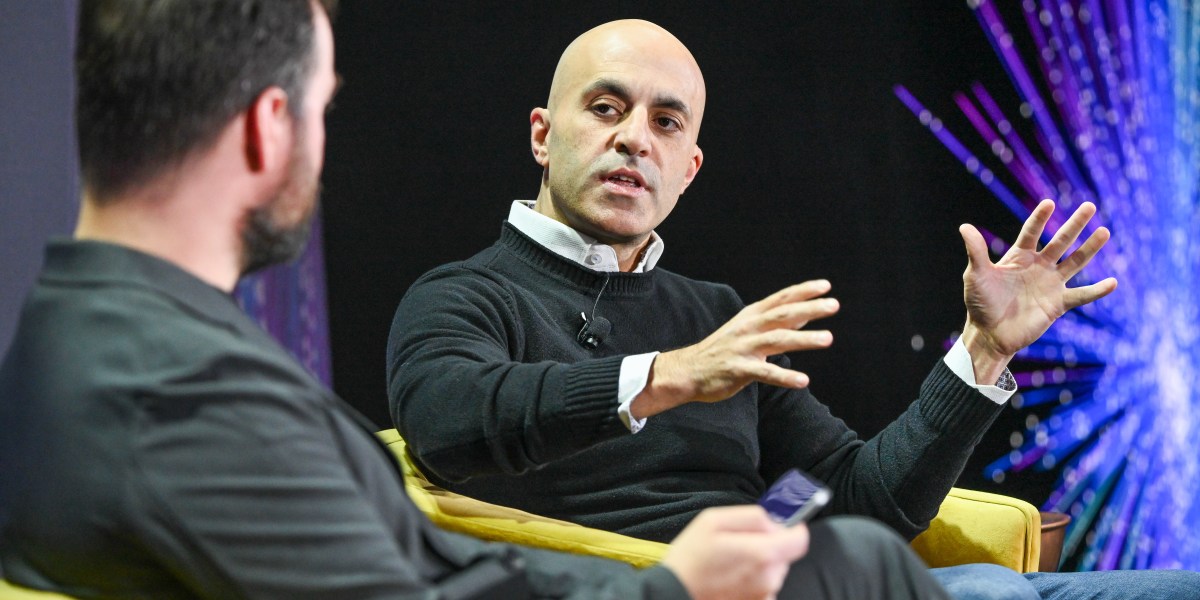
Databricks CEO Ali Ghodsi says company will be worth $1 trillion by doing these three things

Published

on


Ali Ghodsi, the CEO and cofounder of data intelligence company Databricks, is betting his privately held startup can be the latest addition to the trillion-dollar valuation club.

In August, Ghodsi told the Wall Street Journalthat he believed Databricks, which is reportedly in talks toraise funding at a $134 billion valuation, had “a shot to be a trillion-dollar company.” At Fortune’s Brainstorm AI conference in San Francisco on Tuesday, he explained how it would happen, laying out a “trifecta” of growth areas to ignite the company’s next leg of growth.

The first is entering the transactional database market, the traditional territory of large enterprise players like Oracle, which Ghodsi said has remained largely “the same for 40 years.” Earlier this year, Databricks launched a link-based offering called Lakehouse, which aims to combine the capabilities of traditional databases with modern data lake storage, in an attempt to capture some of this market.

The company is also seeing growth driven by the rise of AI-powered coding. “Over 80% of the databases that are being launched on Databricks are not being launched by humans, but by AI agents,” Ghodsi said. As developers use AI tools for “vibe coding”—rapidly building software with natural language commands—those applications automatically need databases, and Ghodsi they’re defaulting to Databricks’ platform.

“That’s just a huge growth factor for us. I think if we just did that, we could maybe get all the way to a trillion,” he said.

The second growth area is Agentbricks, Databricks’ platform for building AI agents that work with proprietary enterprise data.

“It’s a commodity now to have AI that has general knowledge,” Ghodsi said, but “it’s very elusive to get AI that really works and understands that proprietary data that’s inside enterprise.” He pointed to the Royal Bank of Canada, which built AI agents for equity research analysts, as an example. Ghodsi said these agents were able to automatically gather earnings calls and company information to assemble research reports, reducing “many days’ worth of work down to minutes.”

And finally, the third piece to Ghodsi’s puzzle involves building applications on top of this infrastructure, with developers using AI tools to quickly build applications that run on Lakehouse and which are then powered by AI agents. “To get the trifecta is also to have apps on top of this. Now you have apps that are vibe coded with the database, Lakehouse, and with agents,” Ghodsi said. “Those are three new vectors for us.”

Ghodsi did not provide a timeframe for attaining the trillion-dollar goal. Currently, only a handful of companies have achieved the milestone, all of them as publicly traded companies. In the tech industry, only big tech giants like Apple, Microsoft, Nvidia, Alphabet, Amazon, and Meta have managed to cross the trillion-dollar threshold.

To reach this level would require Databricks, which is widely expected to go public sometime in early 2026, to grow its valuation roughly sevenfold from its current reported level. Part of this journey will likely also include the expected IPO, Ghodsi said.

“There are huge advantages and pros and cons. That’s why we’re not super religious about it,” Ghodsi said when asked about a potential IPO. “We will go public at some point. But to us, it’s not a really big deal.”

Could the company IPO next year? Maybe, replied Ghodsi.


Source link

Continue Reading

Business

New contract shows Palantir working on tech platform for another federal agency that works with ICE

Published

on


Palantir, the artificial intelligence and data analytics company, has quietly started working on a tech platform for a federal immigration agency that has referred dozens of individuals to U.S. Immigration and Customs Enforcement for potential enforcement since September.

The U.S. Citizenship and Immigration Services agency—which handles services including citizenship applications, family immigration, adoptions, and work permits for non-citizens—started the contract with Palantir at the end of October, and is paying the data analytics company to implement “Phase 0” of a “vetting of wedding-based schemes,” or “VOWS” platform, according to the federal contract, which was posted to the U.S. government website and reviewed by Fortune.

The contract is small—less than $100,000—and details of what exactly the new platform entails are thin. The contract itself offers few details, apart from the general description of the platform (“vetting of wedding-based schemes”) and an estimate that the completion of the contract would be Dec. 9.Palantir declined to comment on the contract or nature of the work, and USCIS did not respond to requests for comment for this story.

But the contract is notable, nonetheless, as it marks the beginning of a new relationship between USCIS and Palantir, which has had longstanding contracts with ICE, another agency of the Department of Homeland Security, since at least 2011. The description of the contract suggests that the “VOWS” platform may very well be focused on marriage fraud and related to USCIS’ recent stated effort to drill down on duplicity in applications for marriage and family-based petitions, employment authorizations, and parole-related requests.

USCIS has been outspoken about its recent collaboration with ICE. Over nine days in September, USCIS announced that it worked with ICE and the Federal Bureau of Investigation to conduct what it called “Operation Twin Shield” in the Minneapolis-St. Paul area, where immigration officials investigated potential cases of fraud in immigration benefit applications the agency had received. The agency reported that its officers referred 42 cases to ICE over the period. In a statement published to the USCIS website shortly after the operation, USCIS director Joseph Edlow said his agency was “declaring an all-out war on immigration fraud” and that it would “relentlessly pursue everyone involved in undermining the integrity of our immigration system and laws.” 

“Under President Trump, we will leave no stone unturned,” he said.

Earlier this year, USCIS rolled out updates to its policy requirements for marriage-based green cards, which have included more details of relationship evidence and stricter interview requirements.

While Palantir has always been a controversial company—and one that tends to lean into that reputation no less—the new contract with USCIS is likely to lead to more public scrutiny. Backlash over Palantir’s contracts with ICE have intensified this year amid the Trump Administration’s crackdown on immigration and aggressive tactics used by ICE to detain immigrants that have gone viral on social media. Not to mention, Palantir inked a $30 million contract with ICE earlier this year to pilot a system that will track individuals who have elected to self-deport and help ICE with targeting and enforcement prioritization. There has been pushback from current and former employees of the company alike over contracts the company has with ICE and Israel.

In a recent interview at the New York Times DealBook Summit, Karp was asked on stage about Palantir’s work with ICE and later what Karp thought, from a moral standpoint, about families getting separated by ICE. “Of course I don’t like that, right? No one likes that. No American. This is the fairest, least bigoted, most open-minded culture in the world,” Karp said. But he said he cared about two issues politically: immigration and “re-establishing the deterrent capacity of America without being a colonialist neocon view. On those two issues, this president has performed.”


Source link

Continue Reading

Trending

Copyright © Miami Select.