Connect with us

Business

After adding Trump administration statements, ’60 Minutes’ to air report on deportations

Published

on


“60 Minutes” on Sunday plans to air a story about Trump administration deportations that was abruptly pulled from the newsmagazine’s lineup a month ago, sparking an internal battle about political pressure that spilled out into the open.

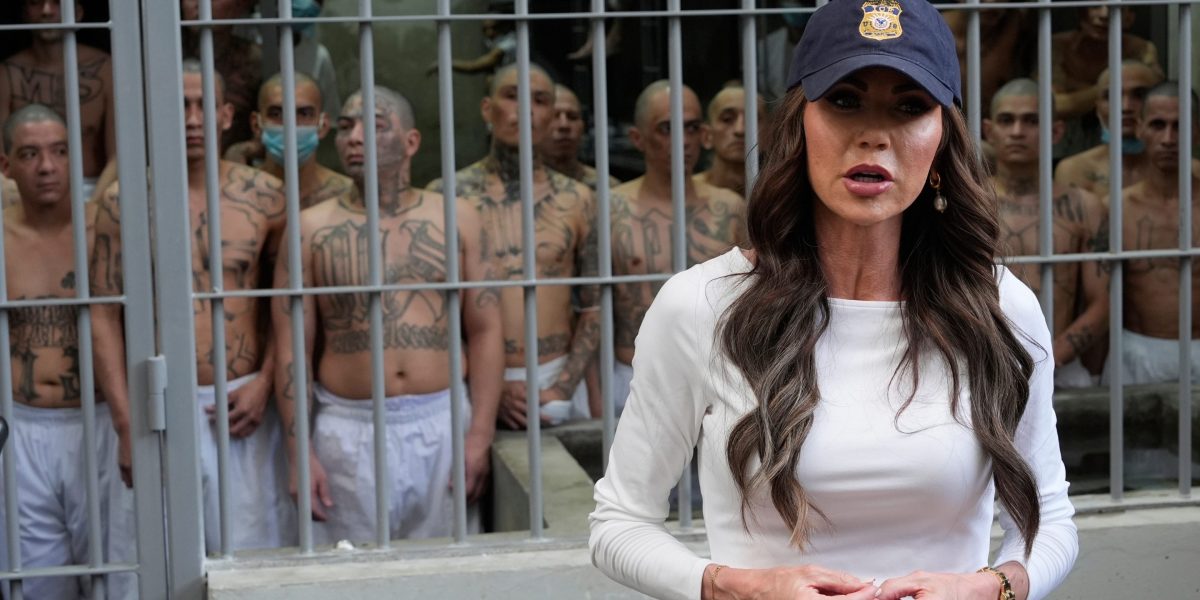
In the story, correspondent Sharyn Alfonsi spoke to deportees who had been sent to El Salvador’s notoriously harsh CECOT prison. When the segment critical of the administration was struck from the Dec. 21 episode on order of new CBS News editor-in-chief Bari Weiss, Alfonsi told her “60 Minutes” colleagues that it “was not an editorial decision, it was a political one.”

Weiss argued that the story did not sufficiently reflect the administration’s viewpoint or advance reporting that had been done by other news organizations earlier.

The story was updated to include Trump administration statements, although it has no new on-camera interviews. Alfonsi was also set to give more details about the two migrants that she interviewed about their experiences in the prison, according to someone familiar with the broadcast who spoke under condition of anonymity because the person was not allowed to give details in advance.

“CBS News leadership has always been committed to airing the ’60 Minutes’ CECOT piece as soon as it was ready,” the news division said in a statement. “Tonight, viewers get to see it, along with other important stories, all of which speak to CBS News’ independence and the power of our storytelling.”

The decision became a flashpoint for critics who said the appointment of Weiss, founder of the Free Press website who had no previous experience in television news, represented an attempt by the network’s new corporate leadership to curry favor with Trump.

Alfonsi said in her email that administration officials had declined to make anyone available for an on-camera interview, calling that a tactical maneuver designed to kill the story.

While pulled from the broadcast in December, Alfonsi’s original story mistakenly became available online. CBS News had fed a version of the newsmagazine to Global Television, a network that airs “60 Minutes” in Canada, which posted it on its website before the last-minute switch removing the piece.

That enabled sharp-eyed viewers to see what Weiss had rejected, offering the opportunity to compare it to what “60 Minutes” eventually put on the air.

In the version shown in Canada, Alfonsi said the administration declined requests for interviews and referred questions about the prison’s operation to the government of El Salvador, which did not respond to “60 Minutes.” The story included a brief clip of President Donald Trump saying the prison operators “don’t play games,” and one from White House press secretary Karoline Leavitt saying that “heinous monsters, rapists, murderers, sexual assaulters, predators who have no right to be in this country” were sent there.

Since Weiss’ appointment, Trump administration officials have been more visible on CBS News, in interviews that she sometimes helped arrange. The president himself was interviewed by Norah O’Donnell on “60 Minutes” on Nov. 2.

The New York Times reported Saturday that after Trump was interviewed last week by new “CBS Evening News” anchor Tony Dokoupil, Leavitt told the network that “we’ll sue your ass off” if the exchange wasn’t aired in full.

All of the 13-minute interview was shown Tuesday, an unusual step for one of the broadcast networks’ evening newscasts, a half hour summary of the day’s big stories. CBS told The Times that it had decided to run the interview unedited at the time it was booked.


Source link

Continue Reading

Business

Trump is charging world leaders $1 billion each for their countries to permanently join Gaza ‘Board of Peace’

Published

on


At least eight more countries say the United States has invited them to join President Donald Trump’s Board of Peace, a new body of world leaders meant to oversee next steps in Gaza that shows ambitions for a broader mandate in global affairs. Two of the countries, Hungary and Vietnam, said they have accepted.

A $1 billion contribution secures permanent membership on the Trump-led board instead of a three-year appointment, which has no contribution requirement, according to a U.S. official who spoke on condition of anonymity about the charter, which hasn’t been made public. The official said the money raised would go to rebuilding Gaza.

Hungarian Prime Minister Viktor Orbán has accepted an invitation to join the board, Foreign Minister Péter Szijjártó told state radio Sunday. Orbán is one of Trump’s most ardent supporters in Europe.

Vietnam’s Communist Party chief, To Lam, also has accepted, a foreign ministry statement said.

India has received an invitation, a senior government official with knowledge of the matter said, speaking on condition of anonymity as the information hadn’t been made public by authorities.

Australia has been invited and will talk it through with the U.S. “to properly understand what this means and what’s involved,” Deputy Prime Minister Richard Marles told Australian Broadcasting Corp. on Monday.

Jordan, Greece, Cyprus and Pakistan said Sunday they had received invitations. Canada, Turkey, Egypt, Paraguay, Argentina and Albania have already said they were invited. It was not clear how many have been invited in all.

The U.S. is expected to announce its official list of members in the coming days, likely during the World Economic Forum meeting in Davos, Switzerland.

Those on the board will oversee next steps in Gaza as the ceasefire that took effect on Oct. 10 moves into its challenging second phase. It includes a new Palestinian committee in Gaza, the deployment of an international security force, disarmament of Hamas and reconstruction of the war-battered territory.

In letters sent Friday to world leaders inviting them to be “founding members,” Trump said the Board of Peace would “embark on a bold new approach to resolving global conflict.”

That could become a potential rival to the U.N. Security Council, the most powerful body of the global entity created in the wake of World War II. The 15-seat council has been blocked by U.S. vetoes from taking action to end the war in Gaza, while the U.N.’s clout has been diminished by major funding cuts by the Trump administration and other donors.

Trump’s invitation letters for the Board of Peace noted that the Security Council had endorsed the U.S. 20-point Gaza ceasefire plan, which includes the board’s creation. The letters were posted on social media by some invitees.

The White House last week also announced an executive committee of leaders who will carry out the Board of Peace’s vision, but Israel on Saturday objected that the committee “was not coordinated with Israel and is contrary to its policy,” without details. The statement by Prime Minister Benjamin Netanyahu’s office was rare criticism of its close ally in Washington.

The executive committee’s members include U.S. Secretary of State Rubio, Trump envoy Steve Witkoff, Trump’s son-in-law Jared Kushner, former British Prime Minister Tony Blair, World Bank President Ajay Banga and Trump’s deputy national security adviser Robert Gabriel, along with an Israeli business owner, billionaire Yakir Gabay.

Members also include representatives of ceasefire monitors Qatar, Egypt and Turkey. Turkey has a strained relationship with Israel but good relations with Hamas and could play an important role in persuading the group to yield power in Gaza and disarm.

___

Boak reported from West Palm Beach, Florida. Associated Press writers Justin Spike in Budapest, Hungary, Rajesh Roy in New Delhi and Rod McGuirk in Canberra, Australia, contributed to this report.


Source link

Continue Reading

Business

Dollar sinks as Trump’s new tariffs raise fears about U.S. debt and reserve currency status

Published

on


The greenback dropped while precious metals rallied Sunday as financial markets started reacting to President Donald Trump’s new tariff threats.

The dollar sank 0.31% against the euro to $1.16 and tumbled 0.32% against the yen to 157.58. Meanwhile, gold rose 1.95% to a fresh record of $4,684.30 per ounce. Silver jumped 5.66% to $93.53, also a new high.

Due to the Martin Luther King Jr. Day holiday on Monday, U.S. stock and bond futures were inactive.

On Saturday, Trump said Denmark, Norway, Sweden, France, Germany, the United Kingdom, the Netherlands, and Finland will be hit with a 10% tariff starting on Feb. 1 that will rise to 25% on June 1, until a “Deal is reached for the Complete and Total purchase of Greenland.”

The announcement came after those countries sent troops to Greenland this past week, ostensibly for training purposes, at the request of Denmark.

Trump has refused to back down from taking over Greenland, even keeping military options on the table, while the administration has also left open the possibility of buying the island.

At the same time, the European Union is weighing options for retaliation, including the bloc’s anti-coercion instrument that has been described as a “trade bazooka” for its scope and severity.

Not only do Trump’s latest tariffs pose an existential threat to the trans-Atlantic alliance, the fallout could threaten the dollar’s dominance and so-called exorbitant privilege.

“The dollar’s reserve-currency status allows us to live beyond our means. Soaring debt, tariffs, and military threats jeopardize that status,” Peter Schiff, chief economist and global strategist at Euro Pacific Asset Management, warned on X. “When it’s lost, economic collapse will follow.”

And the EU holds significant leverage over Trump as European countries own $8 trillion of U.S. bonds and equities, almost twice as much as the rest of the world combined, according to George Saravelos, head of FX research at Deutsche Bank.

America’s vulnerability in global financial markets was not lost on Rep. Thomas Massie, R-Ky., who reacted to Schiff’s post.

“As the dollar’s reserve currency status diminishes, so does our ability to tax the world by creating more money,” he wrote. “When reserve status is lost, maintaining current spending levels and servicing the debt will be even more painful for Americans who will bear the full inflation tax.”


Source link

Continue Reading

Business

An AI-generated version of Trump’s voice is used an ad that promises an ‘all new Fannie Mae’

Published

on


What sounds like President Donald Trump narrating a new Fannie Mae ad actually is an AI-cloned voice reading text, according to a disclaimer in the video.

The voice in the ad, created with permission from the Trump administration, promises an “all new Fannie Mae” and calls the institution the “protector of the American Dream.” The ad comes as the administration is making a big push to show voters it is responding to their concerns about affordability, including in the housing market.

Trump plans to talk about housing at his appearance at the World Economic Forum in Davos, Switzerland, where world leaders and corporate executives meet this week.

This isn’t the first time a member of the Trump family has used AI to replicate their voice, First Lady Melania Trump recently employed AI technology firm Eleven Labs to help voice the audio version of her memoir. It’s not known who cloned President Trump’s voice for the Fannie Mae ad.

The White House did not respond to a request for comment.

Last month, Trump pledged in a prime-time address that he would roll out “some of the most aggressive housing reform plans in American history.”

“For generations, home ownership meant security, independence, and stability,” Trump’s digitized voice says in the one-minute ad aired Sunday. “But today, that dream feels out of reach for too many Americans not because they stopped working hard but because the system stopped working for them.”

Fannie Mae and its counterpart Freddie Mac, which have been under government control since the Great Recession, buy mortgages that meet their risk criteria from banks, which helps provide liquidity for the housing market. The two firms guarantee roughly half of the $13 trillion U.S. home loan market and are a bedrock of the U.S. economy.

The ad says Fannie Mae will work with the banking industry to approve more would-be homebuyers for mortgages.

Trump, Bill Pulte, who leads the Federal Housing Finance Agency, and others have said they want to sell shares of Fannie Mae and Freddie Mac on a major stock exchange but no concrete plans have been set.

Trump and Pulte have also floated extending the 30-year mortgage to 50 years in order to lower monthly payments. Trump appeared to back off the proposal after critics said a longer-term loan would reduce people’s ability to create housing equity and increase their own wealth.

Trump also said on social media earlier this month that he was directing the federal government to buy $200 billion in mortgage bonds, a move he said would help reduce mortgage rates at a time when Americans are anxious about home prices. Trump said Fannie Mae and Freddie Mac have $200 billion in cash that will be used to make the purchase.

Earlier this month, Trump also said he wants to block large institutional investors f rom buying houses, saying that a ban would make it easier for younger families to buy their first homes.

Trump’s permission for the use of AI is interesting given that he has complained about aides in the Biden administration using autopen to apply the former president’s signature to laws, pardons or executive orders. An autopen is a mechanical device that is used to replicate a person’s authentic signature.

However, a report issued by House Republicans does not include any concrete evidence that autopen was used to sign Biden’s name without his knowledge.


Source link

Continue Reading

Trending

Copyright © Miami Select.