Connect with us

Business

A year after the killing of UnitedHealthcare’s CEO, Luigi Mangione fights to suppress key evidence

Published

on


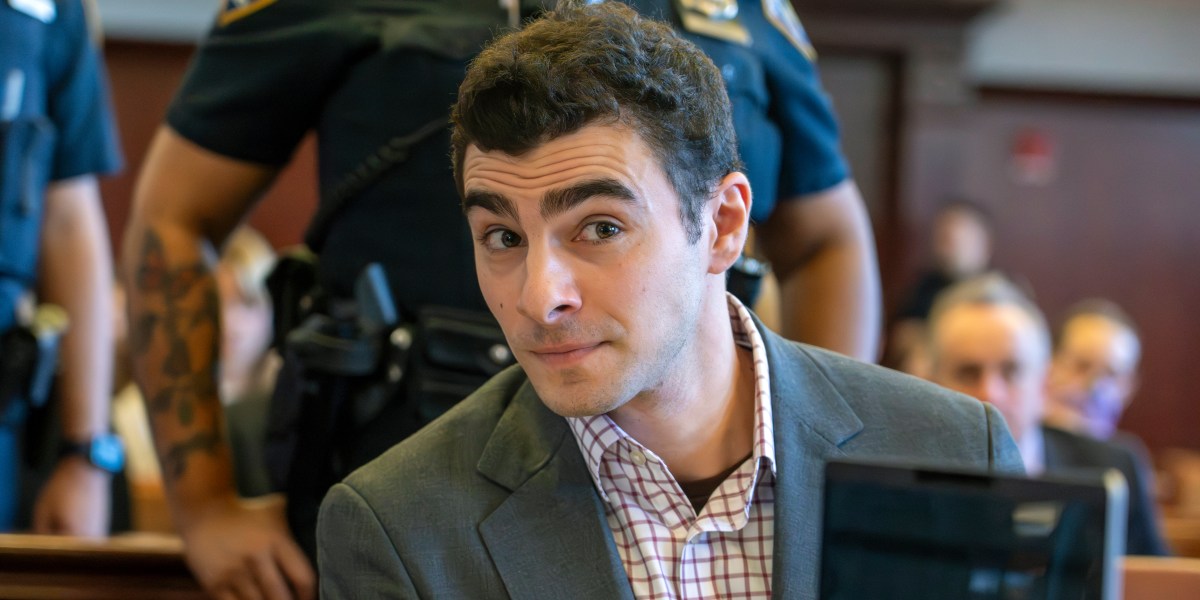
 A high-stakes hearing in the New York murder case against Luigi Mangione continues Thursday, a year to the day after prosecutors say he gunned down UnitedHealthcare CEO Brian Thompson.

Mangione, 27, has pleaded not guilty to both state and federal charges. Before any trials get scheduled, his lawyers are trying to preclude the eventual jurors from hearing about his alleged statements to law enforcement officers and items — including a gun and a notebook — allegedly seized from his backpack.

The evidence is key to prosecutors’ case. They have said that the 9 mm handgun matches the firearm used in the killing, that writings in the notebook laid out Mangione’s disdain for health insurers and ideas about killing a CEO at an investor conference, and that he gave Pennsylvania police the same fake name that the alleged gunman used at a New York hostel days before the shooting.

Thompson, 50, was shot from behind as he walked to an investor conference on Dec. 4, 2024. He became UnitedHealthcare’s CEO in 2021 and had worked within parent UnitedHealth Group Inc. for 20 years.

The hearing, which started Monday and could extend to next week, applies only to the state case. But it is giving the public an extensive preview of some testimony, video, 911 audio and other records relevant to both cases.

It’s not immediately clear what witnesses or evidence are expected Thursday.

Tuesday’s court session displayed police body-camera video of officers confronting Mangione at a McDonald’s in Altoona, Pennsylvania, and concluding — to their amazement — that he was the much-publicized suspect in Thompson’s killing five days earlier.

They interacted with Mangione for roughly 20 minutes before telling him he had the right to remain silent. The officers asked his name, whether he’d been in New York recently and other questions, including: “Why are you nervous?”

Officers tried to play it cool and buy time by intimating that they were simply responding to a loitering complaint and chatting about his steak sandwich. Still, they patted Mangione down and pushed his backpack away from him. About 15 minutes in, they warned him that he was being investigated and would be arrested if he repeated what they’d determined was a fake name.

After he gave his real one, he was read his rights, handcuffed, frisked again and ultimately arrested on a forgery charge related to his fake ID.

The video also provided glimpses of officers searching his backpack, a matter that will likely be explored further as the hearing goes on.

Mangione’s lawyers argue that his statements shouldn’t be allowed as trial evidence because officers started questioning him before reading his rights. The defense contends the backpack items should be excluded because police didn’t get a warrant before searching his bag.

Manhattan prosecutors haven’t yet detailed their arguments for allowing the disputed evidence. Federal prosecutors have maintained that police were justified in searching the backpack to ensure there was nothing dangerous inside and that Mangione’s statements to officers were voluntary and made before he was under arrest.

Many criminal cases see disputes over evidence and the complicated legal standards governing police searches and interactions with potential suspects.


Source link

Continue Reading

Business

Netflix’s bombshell deal to buy Warner Bros. brings Batman and Harry Potter to the streamer, infuriates theater owners and the Ellisons

Published

on


Netflix’s agreement to buy Warner Bros. in a $72 billion deal marks a seismic shift in Hollywood, handing the streaming giant control of iconic franchises such as Batman and Harry Potter and triggering an immediate backlash from theater owners and the jilted Ellison family behind Paramount. The bombshell transaction, struck after a bidding war that ensued after David Ellison’sunsolicited bids several months ago, positions Netflix ever more at the center of the Southern California entertainment business that the Northern California company disrupted so famously decades ago.

The deal will see Netflix acquire Warner Bros. Discovery’s film and TV studios and its streaming operations, including HBO Max, in a deal with an equity value of roughly $72 billion, or about $27.75 per share in cash and stock, valuing Warner Bros. at $82.7 billion. The agreement followed a heated auction in which Netflix’s bid edged out offers from Paramount Skydance and Comcast, both of which had pushed to keep the storied Warner assets in more traditional hands.

Two days before Netflix won the bidding, Paramount hinted at its fury with a strongly worded letter to WBD CEO David Zaslav, arguing the process was “tainted” and Warner Bros. was favoring a single bidder: Netflix. Paramount called it a “myopic process with a predetermined outcome that favors a single bidder,” Bloomberg reported, although Netflix’s bid is understood to be the highest of the three.

Another angry group is theater owners, who have famously warred with Netflix for years over the big red streamer’s reluctance, even refusal to follow traditional theatrical-release practices. Netflix Co-CEO Ted Sarandos has adamantly defended Netflix’s streaming-forward distribution, saying it’s what consumers really want. At the Time 100 event in April of this year, Sarandos called theatrical release “an outmoded idea for most people” and said Netflix was “saving Hollywood” by giving people what they want: streaming at home.

Cinema United, the trade association which represents over 30,000 movie screens in the U.S. and 26,000 internationally, immediately announced its opposition to Netflix acquiring a legacy Hollywood studio. The organization’s chief, Michael O’Leary, said it “poses an unprecedented threat to the global exhibition business” as Netflix’s states business model simply does not support theatrical exhibition. He urged regulators to look closely at the acquisition.

Deadline reported that other producers are warning of “the death of Hollywood” as a result of this deal. Several days earlier, Bank of America Research’s analysts had surveyed the landscape and concluded that as a defensive move, Netflix would be “killing three birds with one stone,” as its ownership of Warner Bros’ would be a daunting blow to Paramount and Comcast, while taking the Warner legacy studio out of the running. The bank calculated that a combined Netflix and Warner Bros. would comprise roughly 21% of total streaming time—still shy of YouTube’s 28% hold on the market, but far greater than Paramount’s 5% and Comcast’s 4%.

What’s known and what’s still at play

As part of the deal, Netflix will retain the studio that controls the superheroes of DC, the Wizarding World of Harry Potter, and HBO’s prestige brands. Other details on what will happen to the standalone streaming service HBO Max were scant, with the companies saying only that Netflix will “maintain” Warner Bros. current operations. The companies expect the transaction to close after regulatory review, with Netflix projecting billions in annual cost savings by the third year after completion.

​The deal will not include all of Warner Bros. Discovery, according to the press release announcing the acquisition, which said the previously announced plans to separate WBD’s cable operations will be completed before the Netflix deal, in the third quarter of 2026. The newly separated publicly traded company holding the Global Networks division will be called Discovery Global, and will include CNN, TNT Sports in the U.S., as well as Discovery, free-to-air channels across Europe, plus digital products such as Discovery+ and Bleacher Report.  

On a conference call with reporters Friday morning, Sarandos said Netflix is “highly confident in the regulatory process,” calling the deal pro-consumer, pro-innovation, pro-worker, pro-creator and pro-growth. He said Netflix planned to work closely with regulators and was running “full speed” ahead toward getting all regulatory approvals. He added that Netflix executives were “tired” after “an incredibly rigorous and competitive process.” Alluding to Netflix’s traditional resistance to big M&A, Sarandos added that “we don’t do many of these, but we were deep in this one.”

Influential entertainment journalist Matt Belloni of Puck previewed the likely deal on Bill Simmons’ podcast on Spotify’s Ringer network (which recently struck a deal to bring some video podcasts to Netflix), and they speculated about potential problems inside Netflix that brought the deal to a head. In conversation about how defensive the move is, Belloni said Netflix is “doing this for a reason” and may have reached a “stress point” because it hasn’t been getting traction with its own moviemaking efforts after 10 years of trying. (Netflix has also been agonizingly close to an elusive Best Picture Oscar, with close calls on Roma and Emilia Perez, the latter of which was derailed in a bizarre social-media controversy.) Belloni also acknowledged the criticism that Netflix has struggled to create its own franchises, also after years of trying.

Sarandos highlighted Netflix’s homegrown franchises while announcing the deal, arguing that Netflix’s ” culture-defining titles like Stranger Things, KPop Demon Hunters and Squid Game” will now combine with Warner’s deep library including classics Casablanca and Citizen Kane, even Friends.

The biggest losers in the bidding war may be David Ellison and his father, Oracle co‑founder (and long-time Republican donor)Larry Ellison, whose Paramount‑Skydance empire had been widely seen as a front‑runner to acquire Warner Bros. Discovery. David Ellison, has since reportedly been pleading his case around Washington, meeting Trump administration officials as allies float antitrust and national‑interest concerns about giving Netflix control of such a critical studio.

While Netflix has tried to calm regulators by arguing that a combined Netflix–HBO Max bundle would increase competition with Disney and others, the Ellisons and their supporters are signaling they will continue to press for tougher scrutiny or even intervention. Large M&A has made a big comeback in 2025 as the Trump administration has been notably friendlier to big deals than the deep freeze of the Biden administration, making this deal an acid test for just how true that is when a company with deep ties to the White House gets jilted.​

[Disclosure: The author worked internally at Netflix from June 2024 through July 2025.]


Source link

Continue Reading

Business

Elon Musk and Bill Gates are wrong about AI imminently replacing all jobs. ‘That’s not what we’re seeing,’ LinkedIn exec slams

Published

on


The future of work as we know it is hanging by a thread—at least, that’s what many tech leaders consistently say. Elon Musk predicts AI will replace all jobs in less than 20 years. Bill Gates says even those who train to use AI tools may not be safe from its claws. And then there’s Klarna’s CEO, Sebastian Siemiatkowski, who is even warning workers that “tech bros” are sugarcoating just how badly it’s about to impact jobs.

But according to one LinkedIn exec, that’s simply not what the data is showing. 

With hundreds of millions of workers hunting for jobs and employers posting open roles in real time, LinkedIn acts as one of the clearest barometers of what’s actually happening on the ground—and its managing director for EMEA, Sue Duke, is not buying the AI apocalypse narrative.

“That’s not what we’re seeing,” Duke revealed at the Fortune CEO Forum in The Shard in London. When asked about an AI-induced hiring slowdown she insisted that the opposite is actually true. 

“What we’re seeing is that organizations who are adopting and integrating this technology, they’re actually going out and hiring more people to really take advantage of this technology,” Duke explained. 

“They’re going out and looking for more business development people, more technologically savvy people, and more sales people as they realize the business opportunities, the innovation possibilities, and ultimately the growth possibilities of this technology.”

For the millions of job seeking Gen Zers—who keep being told that entry-level jobs are about the get swallowed by AI and that a youth unemployment crisis is well underway—the news will be a welcome surprise.

LinkedIn exec breaks down exactly what employers are looking for from new hires in 2026

For those looking to make the most of the job market’s shift, Duke says there are two key areas to upskill in.

The first, no surprise one, is AI skills. Whether that’s literacy, tooling, prompt-writing, or more technical capabilities, “we continue to see those AI skills being red, red hot in the labor market,” she said. 

With companies racing to integrate automation into products and workflows, that demand isn’t cooling anytime soon—no matter what industry you’re looking to work in. “We see a huge demand for those skills across the board, economy-wide, across all sectors, and tons of companies looking for those,” Duke added.

As AI takes over many administrative tasks, it’s putting the spotlight on job functions that bots can’t do. “Those unique human skills,” Duke said, is the second area of focus for employers. “They remain rock solid, constant at the heart of hiring desires and demands out there. They’re not going away either.”

She called out communication, team building, and problem solving, as some of those human skills that will stand the test of time: “They’re the ones to invest in.”

And ultimately, the skill employers are zeroing in on most isn’t technical at all—it’s adaptability. Bosses know the tools will change faster than job titles. What they want is someone who can change with them.

“The most important thing for job seekers to think about is the mindset that you’re also bringing to the table,” Duke concluded. 

“What employers are really looking for is that growth mindset and understanding that this technology is moving very, very quickly, and we need adaptability. Adaptability is right at the top of those most in-demand skills, so making sure you’re bringing that mindset, bringing that agility with you, that’s going to be hugely important.”


Source link

Continue Reading

Business

Trump wants more health savings accounts. A catch: they can’t pay insurance premiums

Published

on


With the tax-free money in a health savings account, a person can pay for eyeglasses or medical exams, as well as a $1,700 baby bassinet or a $300 online parenting workshop.

Those same dollars can’t be used, though, to pay for most baby formulas, toothbrushes — or insurance premiums.

President Donald Trump and some Republicans are pitching the accounts as an alternative to expiring enhanced federal subsidies that have lowered insurance premium payments for most Americans with Affordable Care Act coverage. But legal limits on how HSAs can and can’t be used are prompting doubts that expanding their use would benefit the predominantly low-income people who rely on ACA plans.

The Republican proposals come on the heels of a White House-led change to extend HSA eligibility to more ACA enrollees. One group that would almost certainly benefit: a slew of companies selling expensive wellness items that can be purchased with tax-free dollars from the accounts.

There is also deep skepticism, even among conservatives who support the proposals, that the federal government can pull off such a major policy shift in just a few weeks. The enhanced ACA subsidies expire at the end of the year, and Republicans are still debating among themselves whether to simply extend them.

“The plans have been designed. The premiums have been set. Many people have already enrolled and made their selections,” Douglas Holtz-Eakin, the president of the American Action Forum, a conservative think tank, warned senators on Nov. 19. “There’s very little that this Congress can do to change the outlook.”

Cassidy’s Plan

With health savings accounts, people who pay high out-of-pocket costs for health insurance are able to set aside money, without paying taxes, for medical expenses.

For decades, Republicans have promoted these accounts as a way for people to save money for major or emergent medical expenses without spending more federal tax dollars on health care.

The latest GOP proposals would build on a change included in Republicans’ One Big Beautiful Bill Act, which makes millions more ACA enrollees eligible for health savings accounts. Starting Jan. 1, those enrolled in Obamacare’s cheapest coverage may open and contribute to HSAs.

Now Republicans are making the case that, in lieu of the pandemic-era enhanced ACA subsidies, patients would be better off being given money to cover some health costs — specifically through deposits to HSAs.

The White House has yet to release a formal proposal, though early reports suggested it could include HSA contributions as well as temporary, more restrictive premium subsidies.

Sen. Bill Cassidy — a Louisiana Republican who chairs the Senate Health, Education, Labor, and Pensions Committee and is facing a potentially tough reelection fight next year — has proposed loading HSAs with federal dollars sent directly to some ACA enrollees.

“The American people want something to pass, so let’s find something to pass,” Cassidy said on Dec. 3, pitching his plan for HSAs again. “Let’s give power to the patient, not profit to the insurance company.”

He has promised a deal can be struck in time for 2026 coverage.

Democrats, whose support Republicans will likely need to pass any health care measure, have widely panned the GOP’s ideas. They are calling instead for an extension of the enhanced subsidies to control premium costs for most of the nearly 24 million Americans enrolled in the ACA marketplace, a larger pool than the 7.3 million people the Trump administration estimates soon will be eligible for HSAs.

HSAs “can be a useful tool for very wealthy people,” said Sen. Ron Wyden of Oregon, the top Democrat on the Senate Finance Committee. “But I don’t see it as a comprehensive health insurance opportunity.”

Who Can Use HSAs?

The IRS sets restrictions on the use of HSAs, which are typically managed by banks or health insurance companies. For starters, on the ACA marketplace, they are available only to those with the highest-deductible health insurance plans — the bronze and catastrophic plans.

There are limits on how much can be deposited into an account each year. In 2026 it will be $4,400 for a single person and $8,750 for a family.

Flexible spending accounts, or FSAs — which are typically offered through employer coverage — work similarly but have lower savings limits and cannot be rolled over from year to year.

The law that established HSAs prohibits the accounts from being used to pay insurance premiums, meaning that without an overhaul, the GOP’s proposals are unlikely to alleviate the problem at hand: skyrocketing premium payments. Obamacare enrollees who receive subsidies are projected to pay 114% more out-of-pocket for their premiums next year on average, absent congressional action.

Even with the promise of the government depositing cash into an HSA, people may still opt to go without coverage next year once they see those premium costs, said Tom Buchmueller, an economics professor at the University of Michigan who worked in the Biden administration.

“For people who stay in the marketplace, they’re going to be paying a lot more money every month,” he said. “It doesn’t help them pay that monthly premium.”

Others, Buchmueller noted, might be pushed into skimpier insurance coverage. Obamacare bronze plans come with the highest out-of-pocket costs.

An HHS Official’s Interest

Health savings accounts can be used to pay for many routine medical supplies and services, such as medical and dental exams, as well as emergency room visits. In recent years, the government has expanded the list of applicable purchases to include over-the-counter products such as Tylenol and tampons.

Purchases for “general health” are not permissible, such as fees for dance or swim lessons. Food, gym memberships, or supplements are not allowed unless prescribed by a doctor for a medical condition or need.

Americans are investing more into these accounts as their insurance deductibles rise, according to Morningstar. The investment research firm found that assets in HSAs grew from $5 billion 20 years ago to $146 billion last year. President George W. Bush signed the law establishing health savings accounts in 2003, with the White House promising at the time that they would “help more American families get the health care they need at a price they can afford.”

Since then, the accounts have become most common for wealthier, white Americans who are healthy and have employer-sponsored health insurance, according to a report released by the nonpartisan Government Accountability Office in September.

Now, even more money is expected to flow into these accounts, because of the One Big Beautiful Bill Act. Companies are taking notice of the growing market for HSA-approved products, with major retailers such as Amazon, Walmart, and Target developing online storefronts dedicated to devices, medications, and supplies eligible to be purchased with money in the accounts.

Startups have popped up in recent years dedicated to helping people get quick approval from medical providers for various — and sometimes expensive — items, memberships, or fitness or health services.

Truemed — a company co-founded in 2022 by Calley Means, a close ally of Health and Human Services Secretary Robert F. Kennedy Jr. — has emerged as one of the biggest players in this niche space.

A $9,000 red cedar ice bath and a $2,000 hemlock sauna, for example, are available for purchase with HSA funds through Truemed. So, too, is the $1,700 bassinet, designed to automatically respond to the cries of a newborn by gently rocking the baby back to sleep.

Truemed’s executives say its most popular products are its smaller-dollar fitness offerings, which include kettlebells, supplements, treadmills, and gym memberships.

“What we’ve seen at Truemed is that, when given the choice, Americans choose to invest their health care dollars in these kinds of proven lifestyle interventions,” Truemed CEO Justin Mares told KFF Health News.

Means joined the Department of Health and Human Services in November after a stint earlier this year at the White House, where he worked when Trump signed the One Big Beautiful Bill Act into law in July. Truemed’s general counsel, Joe Vladeck, said Means left the company in August.

Asked about Means’ potential to benefit from the law’s expansion of HSAs, HHS spokeswoman Emily Hilliard said in a statement that “Calley Means will not personally benefit financially from this proposal as he will be divesting from his company since he has been hired at HHS as a senior advisor supporting food and nutrition policy.”

Truemed is privately held, not publicly traded, and details of how Means will go about divesting have not been disclosed.

KFF Health News is a national newsroom that produces in-depth journalism about health issues and is one of the core operating programs at KFF — the independent source for health policy research, polling, and journalism.


Source link

Continue Reading

Trending

Copyright © Miami Select.