Connect with us

Business

A trade deal 25 years in the making between Europe and South America is nearly over the finish line

Published

on


Talks on a landmark free trade deal between the European Union and four South American countries started so long ago that the euro wasn’t even in circulation, China hadn’t yet joined the World Trade Organization and Venezuela was still America’s top oil provider.

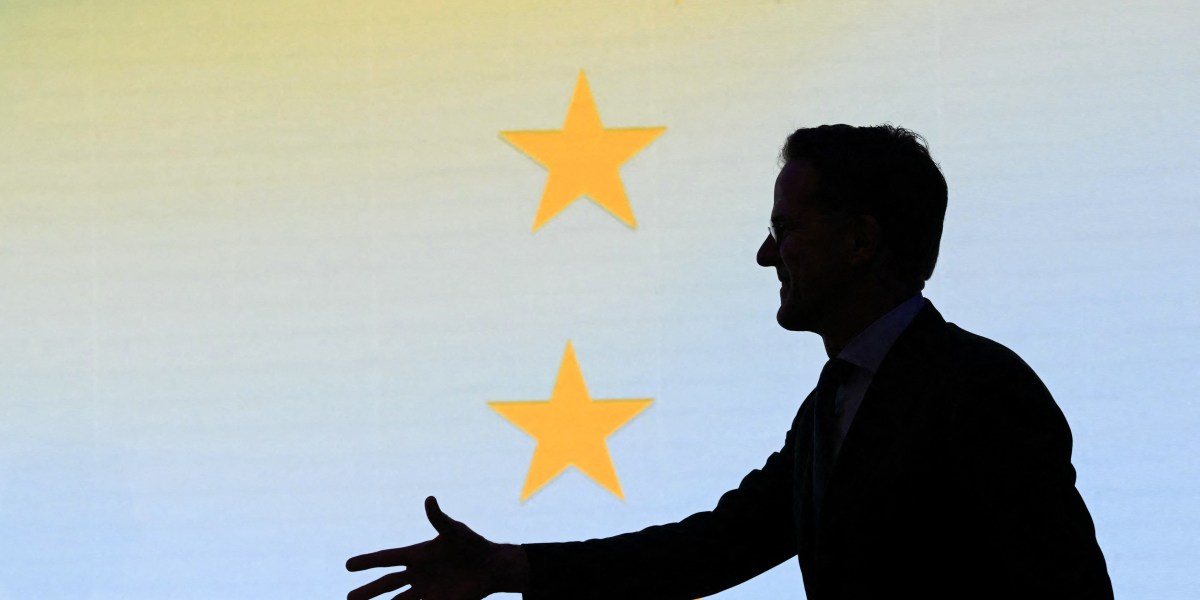
But against a starkly different geopolitical background and tough odds — including backlash from powerful protectionist lobbies — the EU and the South American alliance known as Mercosur are expected to formally sign their quarter-century-in-the-making trade pact this Saturday at a ceremony in Paraguay.

This is the first major trade agreement for Mercosur, which includes the region’s two biggest economies, Brazil and Argentina, along with Paraguay and Uruguay. Bolivia, the newest member, was not involved in negotiations but can join the agreement in the coming years.

The trans-Atlantic trade deal — lifting tariffs on products ranging from Argentine steaks and Brazilian copper to German cars and Italian wine — still has to be ratified by the European Parliament.

The significance of creating one of the world’s largest free-trade zones — home to more than 700 million people and accounting for a quarter of global gross domestic product — while President Donald Trump yanks the United States out of the international economy is not lost on the signatories.

For once, it’s not about Trump vs. China

European Commission President Ursula von der Leyen hailed the deal last week as a powerful endorsement of multilateralism “in the face of an increasingly hostile and transactional world.” Brazilian President Luiz Inácio Lula da Silva, 80, called it a rare “victory for dialogue, negotiation and the bet on cooperation.”

That victory comes at the expense of the U.S. and China, experts say, as Trump aggressively asserts American authority in the resource-rich region and Beijing uses its massive trade and loans to build influence.

“It’s a signal that South American economies are seeking to hedge away from this great power competition between the U.S. and China,” said Lee Schlenker, a research associate with the Global South program at the Quincy Institute for Responsible Statecraft, a Washington think tank.

“It shows that South America can continue to flex its muscles in the international sphere, to diversify its trade partners and exert a certain level of autonomy it’s often denied.”

South American ranchers rejoice

The accord grants South American nations, renowned for their fertile land and skilled farmers, increased access at a preferential tax rate to Europe’s vast market for agricultural goods.

Here in Argentina, exporters reckon they’ll save tens of millions of dollars a year thanks to the deal’s immediate elimination of a 20% tariff on the EU’s long-standing quota scheme for high-quality meat imports.

It’s a breakthrough for Argentina, a nation dominated for decades by left-leaning populist governments that kept the economy closed to the outside world and prioritized the domestic market to the extent of imposing taxes on farm exports to keep food prices down.

“We’re in the midst of a paradigm shift here,” said Carlos Colombo, the president of Cañuelas Cattle Market in Buenos Aires province where over 12,000 cattle are sold daily, many destined for Europe and China. “Argentina has reopened itself to the world.”

Argentine President Javier Milei may be Trump’s strongest ideological ally in Latin America — sharing his disdain for the United Nations and the Paris climate accord — but no one can call the radical libertarian a protectionist.

At first he derided the notoriously slow-moving Mercosur as irrelevant and threatened to ditch it. But he changed his tune since realizing the bloc’s potential to sweep away tariffs and slash customs red tape.

“He sees this agreement as a way to revitalize and re-signify Mercosur,” said Marcelo Elizondo, an Argentine economic analyst specializing in international trade.

The free-trade fever has also infected Brazil’s long-closed economy. Apex, a Brazilian government investment agency, estimates that EU-bound agricultural exports like instant coffee, poultry and orange juice will rake in $7 billion in coming years.

Europe’s farmer lobby wins concessions

Squeezed by environmental regulations and fearing a flood of cheap food products from across the Atlantic, farmers have blocked highways and descended on the streets of European capitals in an explosion of outrage against the agreement.

The EU has scrambled to soothe their concerns over decades of negotiations, adding environmental and animal welfare safeguards to the accord and imposing strict quotas for South American exports of meat and sugar to ensure homegrown produce stays competitive.

Even so, the angry farmers ultimately persuaded France, Poland and a few other states to oppose the deal in last week’s internal EU vote, depriving the accord’s supporters of what they hoped would be a show of unity. Italy and other agricultural powerhouses only came around after the EU offered farmers generous subsidies to the tune of $52 billion.

“It’s a sizable bribe,” said Jacob Funk Kirkegaard, nonresident senior fellow at the Peterson Institute for International Economics. “EU leaders decided that the deal is so important at this moment, it’s worth it.”

‘Cows for cars’

Some have dubbed the deal “cows for cars,” reflecting the perception that Europe’s auto industry will also win big.

Clobbered by growing competition with China and sky-high U.S. tariffs, vaunted German auto giants like Volkswagen and BMW are glad for the boost, as are producers in Europe’s pharmaceutical, construction and machinery sectors gaining access to hundreds of millions more consumers.

Experts say that the elimination of 35% tariffs on auto parts and cars gives European industrial exporters a rare chance to claw back their South American market share from cheaper Chinese rivals.

“Failing to sign the EU-Mercosur free trade agreement risked pushing Latin American economies closer to Beijing’s orbit,” said Agathe Demarais, a senior policy fellow with the European Council on Foreign Relations.

But many are still are holding their breath, having watched negotiations lumber along for years only to trip up at the last minute.

“There are still several steps that have to be taken … and Europe continues to be very careful,” Colombo said, straining to be heard over the hollers of cowboys prodding hundreds of bellowing cattle into trucks.

“Let’s not forget, this is historic. We’ve never reached an agreement like this before.”

____

Associated Press writer Mauricio Savarese in Sao Paulo contributed to this report.


Source link

Continue Reading

Business

Trump’s visa crackdown hits SEA’s Cambodia and Thailand, a decision experts find ‘puzzling’

Published

on


Several Asian countries are hit by the Trump Administration’s decision to pause immigrant processing for 75 countries, including the Southeast Asian nations of Cambodia, Thailand, Myanmar and Laos. 

The suspension, which will take effect on Jan. 21, is the first time the U.S. is restricting applicants from Cambodia and Thailand, just months after U.S. President Donald Trump inked trade deals with both nations on the sidelines of the 2025 ASEAN Summit. He had assured Southeast Asian leaders at the event that they could view the U.S. as a “strong partner and friend” in the years to come. 

The suspension covers several other countries elsewhere in Asia, including the South Asian nations of Bangladesh and Pakistan, as well as countries in Central Asia and the Middle East. The suspension only covers immigrant visas; non-immigrant visas, like tourist and business visas, are not affected. (The U.S. is set to host the FIFA World Cup this year).

“President Trump has made clear that immigrants must be financially self-sufficient and not be a financial burden to Americans,” the U.S. State Department wrote in a post on Jan. 14. It continued that it was starting a “full review of all policies, regulations, and guidance to ensure that immigrants from these high-risk countries do not utilize welfare in the United States or become a public charge.” The post made clear that while nationals in the affected countries could submit applications, no visas would be issued during the suspension. 

“Given the transactional nature of the U.S. dealings with other countries, these pauses can be seen as another way for the U.S. to coerce countries to strike deals that they otherwise would not be keen to do,” suggests Nona Pepito, an associate professor of economics at Singapore Management University. 

Trump’s engagement with Southeast Asia has remained mostly focused on trade, though the U.S. President also tried to negotiate a ceasefire to the violent border conflict between Cambodia and Thailand last year. 

The ceasefire ultimately fell apart, and the two countries began fighting again in late December; both now operate under another, China-facilitated, ceasefire. Last week, the U.S. offered $45 million in aid to both countries to help maintain the truce. 

Laos is already subject to a full travel ban. Cambodia has also previously been in the Trump Administration’s cross-hairs, appearing in a leaked State Department memo last July that noted “concerns” with the Southeast Asian country’s migration policies, though it wasn’t included in later travel restrictions.

Before this suspension, Thailand had yet to be targeted by U.S. immigration policies. A ban could risk “pushing the Thai government and its people closer to China,” Pepito warns. “If the U.S. is seen as an unreliable partner, Thailand, a key treaty ally, may look elsewhere for security and economic cooperation.”

Thailand’s addition is “puzzling,” says Tan Sook Rei, a senior lecturer at Singapore’s James Cook University (JCU), who points out that both the Philippines and Vietnam—which rank among the top sources of U.S. immigrant visas—are “notably absent” from the visa suspension list. “The policy appears less focused on managing migration volumes than on political signaling.”

Jacob Wood, an associate professor of economics at JCU, points to allegations by U.S. officials that Thai businesses have been issuing fake certificates of origin to support China’s “tariff-washing” practices as a source of tension between Washington and Bangkok.

Trump has launched a sweeping crackdown on immigration since taking office a year ago. Last month, the U.S. Department of Homeland Security, in what it called “historic progress in securing the homeland,” claimed that over 2.5 million “illegal aliens” had left the U.S. 

The U.S. is also tightening pathways for legal migration to the country. Trump suspended the U.S. Refugee Admissions Program (USRAP), which provided a safe haven for individuals overseas of “special humanitarian concern.” 

Moreover, the president has increased vetting for international students trying to attend the U.S. The number of new international students starting at a U.S. college or university in fall 2025 fell by 17%, according to the Institute of International Education.

The U.S. has also hiked fees for H-1B employment visas, often used by high-skilled labor in sectors like tech, to $100,000.


Source link

Continue Reading

Business

Oregon QB Dante Moore turns down $50 million in NFL to stay in school amid growing NIL appeal

Published

on


Dante Moore, the quarterback for the University of Oregon Ducks, plans to play another year of college football—turning down an eight-figure salary as a result. 

The 20-year-old college athlete announced on Wednesday he would remain on the Oregon Ducks for the 2026 season, delaying the draft, where he was expected to be a top-two pick. Last year’s No. 2 draft pick Travis Hunter signed a four-year, $46.65 million deal, and this year’s projected earnings are expected to increase.

“This year, I’ve had many great throws, many great plays, but at the end of the day I feel I can still learn so much more,” Moore said in an interview with ESPN on Wednesday. “As a kid, since I was 4 years old, I’ve dreamed about being in the NFL—but this team, we’ve been through a lot, a lot of people are returning, so we’ve got some exciting things to come this year. I’m excited to keep pushing my team.”

Moore, who threw for threw for 3,565 yards and had 30 touchdowns in the 2025 season, is part of only a small fraction of college football players who have taken more time before going pro: Stanford quarterback Andrew Luck announced in 2011 he would delay NFL entry to finish his architectural design degree, allowing the Carolina Panthers to select Cam Newton as its No. 1 draft pick instead. USC quarterback Matt Leinart made a similar decision in 2005.

But Moore’s choice may mark the beginning of a new pattern among college athletes: Beyond an extra opportunity to notch a national championship, college athletes also have a shot at making real money while enrolled at school thanks to expanding name, image, and likeness (NIL) rules, taking away pressure to go pro before getting a degree or maturing as a player.

A June 2021 Supreme Court ruling made it possible for the NCAA to adopt a policy for college athletes to benefit from their own name, image, and likeness. A House settlement last summer allows for colleges to now directly pay their athletes for the first time, creating a revenue-sharing model where athletic departments could distribute about $20.5 million in NIL revenue to their athletes during the 2025-2026 season.

Cashing in on the NIL boom

Moore has already been a beneficiary of the NIL boom for college athletes, cashing in on his own deals with Nike, Beats by Dr. Dre, and Raising Cane’s. He has a net worth of $2.3 million, according to On3, making him the 12th wealthiest college football player, and the highest-earning Oregon Duck. 

Moore, via a University of Oregon spokesperson, did not immediately respond to Fortune’s request for comment.

The University of Oregon has also become a dominant force in NIL, thanks to Nike founder Phil Knight—known as “Uncle Phil” to the college’s football stars—who has donated more than $1 billion to his alma mater as of 2023. Knight founded Division Street, a sports venture whose Ducks of a Feather program effectively serves as a premium marketing agency for University of Oregon’s athletes, ultimately a bid for Knight, 87, to assist in his hope of the Ducks winning another championship.

“Phil Knight is bankrolling that whole thing and wants to see them win a national title,” one unnamed NIL agent told CBS Sports. “They are really, really aggressive with money.”

NIL deals are already beginning to change the landscape of professional league drafts. The 2025 NBA draft  saw the lowest number of early-entrant candidates in about ten years, with more than a dozen other high-potential candidates withdrawing at the draft deadline. Basketball analysts attributed the dip in part to the growing appeal of NIL.

Basketball insider Jeff Borzello told ESPN in May 2025 NIL has transformed how student athletes think about going pro, particularly in the NBA, where the minimum salary for rookies is $1.2 million, a number many college athletes can surpass with brand deals and revenue-sharing models. Meanwhile, students can theoretically improve their game and still maintain relationships with the NBA teams scouting them.

“With salaries for the final handful of picks in this year’s first round clocking in at below $3 million per season for the next two seasons, per the rookie scale, players projected in that range can now make just as much money by opting to stay in college while theoretically improving their draft stock,” Borzello said.


Source link

Continue Reading

Business

Children of property-rich parents get offered the best jobs—and new research has revealed why

Published

on


It’s no secret that the children of wealthy families have an upper hand in success—money and connections have historically helped them break into Hollywood, and even the C-suite. Now, new research shows that U.K. parents who reaped the rewards of the country’s housing boom three decades ago set their kids up for success down the line.

Around the turn of the 21st century, the U.K. witnessed a dramatic surge in housing prices: the costs rose from four times peoples’ annual earnings in 1995, to eight times by 2010. Homeowners subsequently enjoyed a wealth windfall, and it resulted in their kids receiving more housing wealth and higher-paying jobs, according to recent research from the Institute for Fiscal Studies. Lower-income renters, on the other hand, were faced with new affordability challenges. 

“This property boom meant enormous wealth gains for some households but not others,” the report notes. “Our results show that housing wealth, independent of other factors such as parents’ skills, substantially affects inequality in the subsequent generation.”

To put the wealth divide into perspective, the study found that for every £100,000 ($133,800) of extra property the wealthy parents had, the children were £15,000 ($20,000) better off in household assets when they reached their late 20s. It catapulted the social mobility of rich kids—who had enough funds to move to high-paying jobs in London—while the children of renters were blocked from generational wealth opportunities. 

Likewise, in the U.S. higher house prices provide parents with additional funding to invest in their children, resulting in higher salaries than the children of renters.

Why the children of property-boom parents have an upperhand 

It didn’t matter what wealthy parents did for work, or what degrees they had—the study found the kids of rich homeowners benefited regardless. And a key reason why they were able to secure tens of thousands of dollars in wealth gains is because of location; those who benefitted most from the housing boom owned property in London, or were able to move to the capital city brimming with better job opportunities. 

“An important explanation for this finding is that the children of parents more exposed to the house price boom were more likely to own in London—the most expensive property market in the country,” the report explains. 

“This is partly explained by an increased tendency of people whose parents did relatively well out of the house price boom, but who grew up outside of London, to move to the capital.”

The children of parents who fared better in the housing boom were less likely to take on middle-paying jobs outside of the U.K.’s capital, the study found. Instead, they were inclined to funnel into higher-paying occupations in the city compared to their family renter counterparts. 

However, the benefits have not been equally distributed among the children of these housing-rich families. Their sons were the most likely to secure jobs at the top of the earnings distribution—meanwhile, there was “no significant effect” with the daughters. The study found that “wealth from parents may help male children in particular access better labour market opportunities.”

U.K.’s housing affordability and stagnating wages 

While rich kids are reaping wealth and career gains from their parents’ housing boom success, many in the U.K. have given up on buying a home with their abysmal salaries.

U.K. property offers the worst value for money in the developed world, according to a 2024 analysis from The Resolution Foundation. Not only are U.K. housing costs more expensive relative to general prices than in any OECD country, the study found, but homes in England are even more cramped than those in New York City. The average house price in the U.K. currently rests at about £270,000 ($361,100). And those who rent are also up against an affordability crisis: rent in England is set to skyrocket by 25% in the next four years, real estate group Hamptons International predicted in 2023.

“Britain’s housing crisis is decades in the making, with successive governments failing to build enough new homes and modernize our existing stock,” Adam Corlett, principal economist at the Resolution Foundation, told Bloomberg. “That now has to change.”

But as housing costs increase every year, U.K.’s workers aren’t seeing the same bumps in their annual salaries—especially young people at the bottom of the totem pole. The average salary for working-age U.K. graduates is 30% lower than it was 15 years ago, according to government data analyzed by Bloomberg

Gen Zers are only getting around two-thirds of the pay their millennial counterparts received at the same career stage, and it’s causing many to reconsider if they can even succeed in the U.K. One in four Britons between the ages of 18 and 30 said they might leave, with many pointing fingers at the lack of affordable housing and high cost of living, according to a 2025 study from the Adam Smith Institute.


Source link

Continue Reading

Trending

Copyright © Miami Select.