Connect with us

Business

A millennial father-of-six turned homelessness into a six-figure trades business—and it’s a blueprint for America’s reskilling revolution

Published

on


Arkeem Sturgis is only 33 years old, but he speaks with the wisdom of someone who has lived many lives. Midway through a recent interview, as he was changing the diaper of his one-year-old daughter, he stopped this Fortune reporter’s question to offer a gentle correction:
“Breathe,” he said. “Slow down. You’re gonna get everything that you need to get done. You’re not in a rush.”

That instinct—to steady, to teach, to pull others up with him—has become Sturgis’ hallmark. A father of six and founder of a Jacksonville, Florida-based handyman and HVAC business, he’s spent the past five years rebuilding from homelessness to his first $100,000 year. And he’s done it, he says, through faith, mentorship, and the conviction that success in the trades can still offer the kind of freedom millennials and Gen Z Americans are chasing elsewhere. He’s also had to overcome what he sees as unnecessary cultural barriers to success for someone like him.

“We as a country have done a poor job equipping our children for life,” he said. “We used to have [wood]shop in schools.” In his view, he had to struggle to reach this point in his career because of a lack of hands-on training in public education.

“We expect children at the age of 18 to graduate high school and make a permanent decision in our lives by going to college,” he said. “An 18-year-old does not have the mental capacity to make a permanent decision for the rest of their lives.”

Sturgis’ struggle was not just an emotional one. In 2020, like many Americans during the pandemic, he was laid off from his job as a TMJ fabricator at Zimmer-Biomet and his economic situation spiraled. He became homeless, shuttling his wife and five children between hotels, Airbnbs, and friends’ homes.

“It was a really, really, really rough year … keeping my family together and smiling through that entire process was a lot,” Sturgis said.

He had never considered the trades, but he was always good at his hands. He found the Home Builders Institute (HBI), which provided a special program for children of veterans (his father served in the Navy) and enrolled in its carpentry program and later in HVAC. It started small but led to mentorship and now a business where Sturgis is his own boss and on track to make $100,000 in revenue this year.

From homelessness to entrepreneurship

Sturgis started small at HBI, assembling furniture and fixing leaky faucets, while working 10-hour night shifts at a warehouse. “At one point I was working 10 hours overnight, getting off at seven in the morning, clocking into my business at eight o’clock, and working another eight to 10 hours,” he said. “Then going to sleep and doing it again.”

Within months, he was earning steady work through Home Depot’s Path to Pro program, a trades skills and job matching program, and using the skills he learned at HBI to expand beyond handyman repairs.

The real turning point, however, came in 2024, when he returned to complete HBI’s HVAC course and met his instructor, Steven “Papa Steve” Everitt. “He literally bought me a truck,” Sturgis recalled. “The truck was $800 … and he cared more about me succeeding than he cared about the money he paid for that truck.” 

The mentorship, he said, was life-changing. “He helped me change everything from the way I looked—I cut my hair, I started dressing better. He pulled something out of me that I didn’t see in myself.”

That year, Sturgis won HBI’s Chairman’s Award and an all-expenses-paid trip to Las Vegas. His business is now on track for its first $100,000 year, a milestone that once felt unimaginable.

Sturgis tells Fortune that he’s frustrated by how the system fails to prepare people for the realities of the economy, and doesn’t advertise the opportunities out there for workers like him. “Everybody’s not going to be a historian, everybody’s not going to be a doctor, everybody’s not going to be a lawyer,” he said. Working in the trades shouldn’t have a stigma, he said, because it’s full of people with high IQs, they’re just using a different part of their brain than a white-collar job. “Some people,” he added, “want to work with their hands.”

Sturgis said he believes the U.S. could help fix the shortage with more vocational funding and targeted incentives. He also said he wants to see more grants and forgivable loans for small-business owners in the trades, funding that could help them scale, train apprentices, and fill the hundreds of thousands of open jobs left vacant each year.

”That’s how we fill the gap,” he said. “By giving people the tools to build something of their own.”

But many young people, he argued, are trapped in the belief that a four-year degree is the only path to success: taking on mountains of debt for credentials that a stalled labor market spits out. Others, he said, chase “get-rich-quick” schemes: the softer versions through sports betting or frothy startup fads, and the darker ones through the black market.

“Our generation is 100% focused on wealth building,” Sturgis said. “Our generation likes nice things.” He argued that you can still have these things through a life in the trades.

The trades—HVAC, plumbing, electrical work—sit “at the bottom of the totem pole” in how Gen Z thinks about wealth, Sturgis said. Yet, the U.S. faces a deepening labor shortage in skilled work, made worse by aggressive deportation efforts and a surge in demand from the AI boom.

“Robots can’t build houses,” Sturgis said, aligning with comments from some of the top leaders in the Fortune 500. For instance, Nvidia CEO Jensen Huang has also said he believes we’ll soon need hundreds of thousands of electricians to man the explosive data center boom, while Ford CEO Jim Farley recently revealed that his son worked as a mechanic last summer and is openly questioning whether he needs to go to college.

Sturgis said he believes that if schools could empower Gen Z to see the trades as a path to independence—rather than a fallback for “old men”—more would pursue it. When you explain to the younger generation that one can make close to six figures in just a few years of work in the trades, it “piques their interest,” he explained.

“And they’re like, ‘Wait a minute. So you mean to tell me, I can get my hands dirty and I can make that much money?’ Yes, you can,” Sturgis said.

“It’s been a lot of trial and error, a lot of long days, a lot of blood, sweat, and tears,” he said. “But if you can manage to push past your feelings and the valleys, it gets easier. You look back down the mountain and realize how far you’ve come.”



Source link

Continue Reading

Business

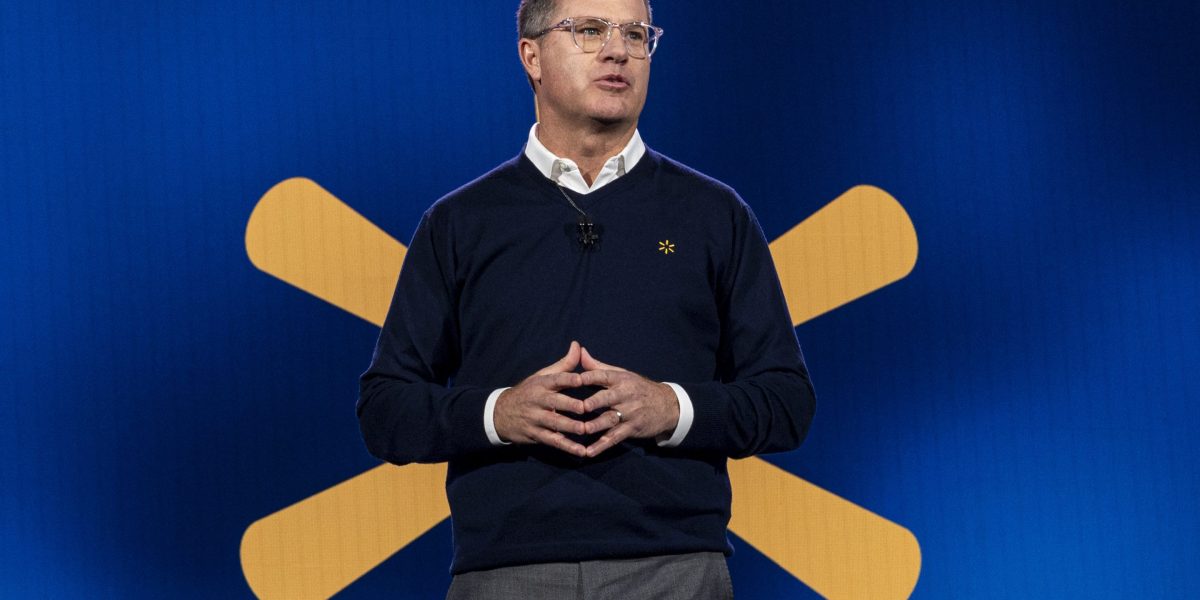
What it’s like to be mentored by Walmart CEO Doug McMillon

Published

on


Good morning. I’m always fascinated by who CEOs turn to for feedback, and who they choose to mentor outside their companies. Some relationships develop organically through working with people who become friends after you move on. (I feel fortunate to remain connected to former bosses like Norman Pearlstine, as well as numerous colleagues over the years.)

Then there are the leaders whose names come up because they offered advice or made a gesture that was meaningful to another CEO. One of those names is Walmart’s Doug McMillion, who is retiring as CEO next month after 12 years at the helm. A lot will be written about his legacy in transforming the world’s largest retailer into a daunting competitor in the digital realm. But Carla Vernón, CEO of the Honest Company, recently recounted a story about him that stuck with me.

About a year ago, Vernón said, she had an opportunity to meet McMillion for about 30 seconds at an event. Instead of talking about the business that her $383 million-a-year company does with the $704 billion-a-year Walmart, she took a different tack: “I said, ‘I want to be an extraordinary CEO. You are, in my view, one of the best of our time. So, if I could borrow a bit more time from you, I would love to ask you a question or two.”

McMillion shared his email with Vernón, who’d been CEO since 2023, and told her to get in touch. “I thought it would be like a Zoom call, but he invited me to come to Bentonville with one of my leaders and set up an entire day of one-on-ones for us,” she said. “He connected us with everybody who we needed to know strategically, everybody on his executive team who he thought might be able to help me build a strong executive team in the C-Suite. There was no agenda and this was Q4, which is the season for retailers that’s super busy.”

She compares her experience in Bentonville to being in a regional dance company and getting invited to go backstage and watch the New York City Ballet rehearse The Nutcracker. “If I can, for one day, watch what the very best at what they do do, then I’m going to forever realize what’s possible from myself as a leader,” said Vernón, who brought her VP of Sales. “When you meet somebody who you think of as some kind of iconic business brilliant mind, and realize they are just human, trying to have a good life, trying to be good to others, it’s helpful to put in perspective what is possible for you.”

It’s clear she was moved by McMillon’s desire to help her in a meaningful way. “I’m Afro-Latina. I’m female … In these companies that we get to run, the people are changing. They are changing in their generational values. They’re changing in what they look like. The companies that we love will be run by different kinds of people in the next 20 or 30 years,” she said. “I wish that, in our sector of CEOs, we took more time to help coach, grow and build each other, so that maybe we could be a stronger body doing right by businesses, employees, culture and society. We’re in such units of one and we don’t have to be.”

Contact CEO Daily via Diane Brady at diane.brady@fortune.com

Top news

Do Kwon given 15 years in prison

The founder of Terraform Labs and its algorithmic stablecoin TerraUSD, which collapsed in 2022, costing investors $40 billion and triggering a “crypto winter,” was sentenced on fraud charges.

Lululemon CEO ousted for not being cool enough

Despite tripling sales at the athletic-wear company since 2018, Calvin McDonald will leave the company in January. Founder Chip Wilson blamed him for the company’s “loss of cool.” Although the company most recently reported a 7% increase in revenues, its sales in the americas were down 2%.  Finance chief Meghan Frank and chief commercial officer André Maestrini will serve as interim co-CEOs.

Why Trump is targeting Venezuelan oil ships

Ninety percent of Venezuelan exports are oil, the WSJ says, and by threatening Maduro’s ability to export the fuel it forces Maduro to discount its sales and drain the country’s reserves. It could ultimately destabilize the regime.

HSBC ends 160-year-old management track

HSBC has closed its historic “International Manager” program, founded at the company in the 1800s, which rotated an elite group of generalist executives from country to country. “HSBC employees don’t need this special status,” a source told the FT. “There is this snooty attitude and haughty air attached to being an IM.”

OpenAI releases new model

OpenAI released its new AI model GPT-5.2 on Thursday, less than a month after its predecessor, as competition from rivals like Google and Anthropic heats up. The company claims that the model is particularly apt at coding, mathematical reasoning, and “knowledge work.”

Disney announces partnership with OpenAI

Disney announced a $1 billion investment and three-year licensing deal with OpenAI that allows users on Sora, OpenAI’s video generation platform, to create content featuring Disney’s copyrighted characters. In a statement announcing the agreement, Disney CEO Bob Iger stated that the partnership will allow the company to “thoughtfully and responsibly extend the reach of our storytelling through generative AI.”

Powell fears K-shaped economy

U.S. Federal Reserve Chair Jerome Powell confirmed that a “K-shaped economy” appeared to be developing in the U.S. and questioned whether it was “sustainable.”

The markets

S&P 500 futures were flat this morning. The last session closed up 0.21% to hit a new reofrd high of 6,901. STOXX Europe 600 was up 0.37% in early trading. The U.K.’s FTSE 100 was up 0.38% in early trading. Japan’s Nikkei 225 was up 1.37%. China’s CSI 300 was up 0.63%. The South Korea KOSPI was up 1.38%. India’s NIFTY 50 was up 0.51%. Bitcoin went to $92K.

Around the watercooler

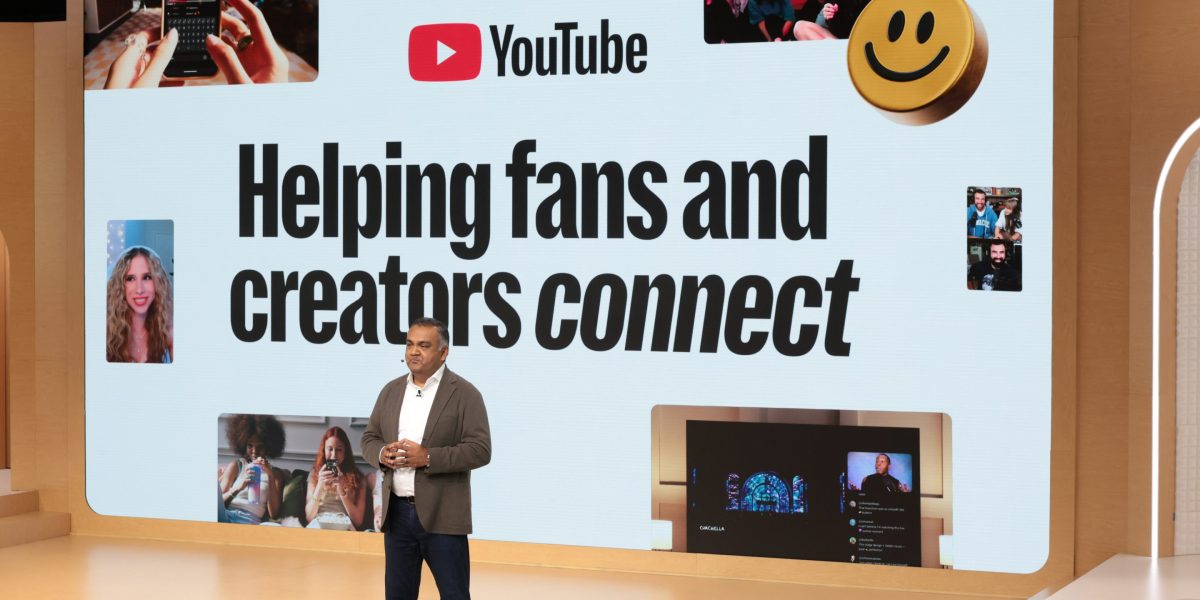
Exclusive: YouTube launches option for U.S. creators to receive stablecoin payouts through PayPal by Ben Weiss

Apple’s Steve Jobs told students to never ‘settle’ in their careers: ‘If you haven’t found it yet, keep looking’ by Emma Burleigh

Why Jerome Powell’s latest rate cut still won’t help you get a lower mortgage rate by Sydney Lake

‘We have not seen this rosy picture’: ADP’s chief economist warns the real economy is pretty different from Wall Street’s bullish outlook by Eleanor Pringle

‘We’re not just going to want to be fed AI slop for 16 hours a day’: Analyst sees Disney/OpenAI deal as a dividing line in entertainment history by Nick Lichtenberg

CEO Daily is compiled and edited by Joey Abrams, Jim Edwards, and Lee Clifford.


Source link

Continue Reading

Business

YouTube launches option for U.S. creators to receive stablecoin payouts through PayPal

Published

on


Big Tech continues to tiptoe into crypto. The latest example is a move by YouTube to let creators on the video platform choose to receive payouts in PayPal’s stablecoin. The head of crypto at PayPal, May Zabaneh, confirmed the arrangement to Fortune, adding that the feature is live and, as of now, only applies to users in the U.S. 

A spokesperson for Google, which owns YouTube, confirmed the video site has added payouts for creators in PayPal’s stablecoin but declined to comment further.

YouTube is already an existing customer of PayPal’s and uses the fintech giant’s payouts service, which helps large enterprises pay gig workers and contractors. 

Early in the third quarter, PayPal added the capability for payment recipients to receive their checks in PayPal’s stablecoin, PYUSD. Afterwards, YouTube decided to give that option to creators, who receive a share of earnings from the content they post on the platform, said Zabaneh.

“The beauty of what we’ve built is that YouTube doesn’t have to touch crypto and so we can help take away that complexity,” she added.

Big Tech eyes stablecoins

YouTube’s interest in stablecoins comes as Google and other Big Tech companies have shown interest in the cryptocurrencies amid a wave of hype in Silicon Valley and beyond. 

The tokens, which are pegged to underlying assets like the U.S. dollar, are longtime features of the crypto industry. But over the past year, they’ve exploded into the mainstream, especially after President Donald Trump signed into law a new bill regulating the crypto assets. Proponents say they are an upgrade over existing financial infrastructure, and big fintechs have taken notice, including Stripe. In February, the payments giant closed a blockbuster $1.1 billion purchase of the stablecoin startup Bridge.

PayPal has long been an earlier mover in crypto among large tech firms. In 2020, it let users buy and sell Bitcoin, Ethereum, and a handful of other cryptocurrencies. And, in 2023, it launched the PYSUD stablecoin, which now has a market capitalization of nearly $4 billion, according to CoinGecko.

PayPal has slowly integrated PYUSD throughout its stable of products. Users can hold it in its digital wallet as well as Venmo, another financial app that PayPal also owns. They can use it to pay merchants. And, in February, a PayPal executive said small-to-medium sized merchants will be able to use it to pay vendors.

YouTube’s addition of payouts in PYUSD isn’t the first time Google has experimented with PayPal’s stablecoin. An executive at Google Cloud, the tech giant’s cloud computing arm, previously toldFortune that it had received payments from two of its customers in PYUSD. 


Source link

Continue Reading

Business

Oracle slides by most since January on mounting AI spending

Published

on


Oracle Corp. shares plunged the most in almost 11 months after the company escalated its spending on AI data centers and other equipment, rising outlays that are taking longer to translate into cloud revenue than investors want.

Capital expenditures, a metric of data center spending, were about $12 billion in the quarter, an increase from $8.5 billion in the preceding period, the company said Wednesday in a statement. Analysts anticipated $8.25 billion in capital spending in the quarter, according to data compiled by Bloomberg. 

Oracle now expects capital expenditures will reach about $50 billion in the fiscal year ending in May 2026 — a $15 billion increase from its September forecast — executives said on a conference call after the results were released.

The shares fell 11% to $198.85 at the close Thursday in New York, the biggest single-day decline since Jan. 27. Oracle’s stock had already lost about a third of its value through Wednesday’s close since a record high on Sept. 10. Meanwhile, a measure of Oracle’s credit risk reached a fresh 16-year high.

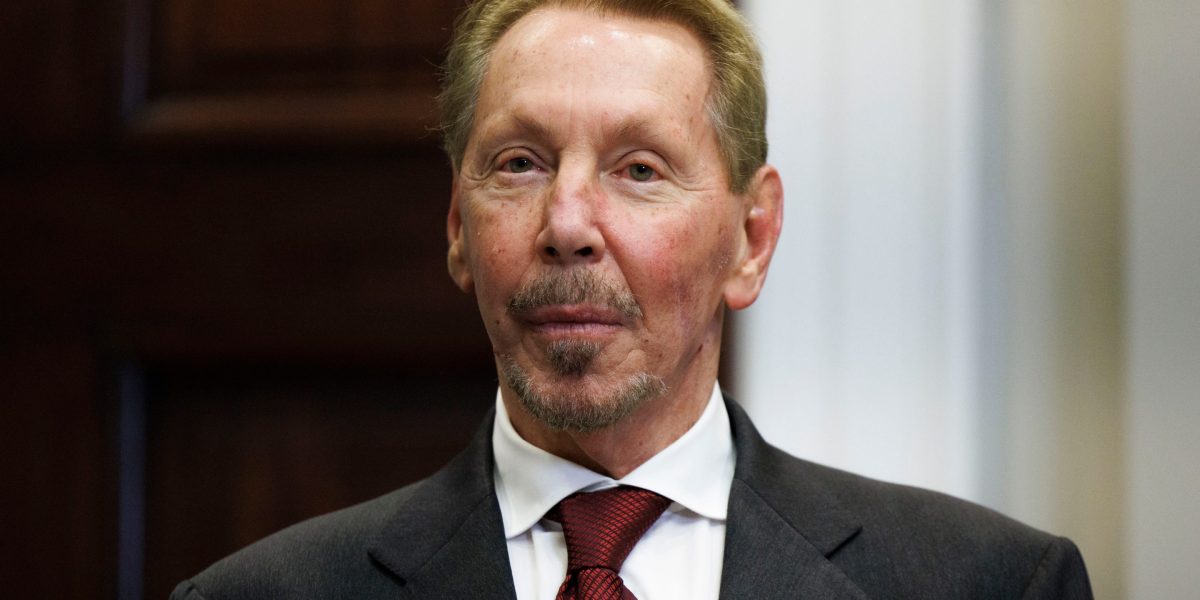
The latest earning report and share slide marks a reversal of fortunes for a company that just a few months ago was enjoying a blistering rally and clinching multibillion-dollar data center deals with the likes of OpenAI. The gains temporarily turned co-founder Larry Ellison into the world’s richest person, with the tech magnate passing Elon Musk for a few hours.

Known for its database software, Oracle has recently found success in the competitive cloud computing market. It’s engaging in a massive data center build-out to power AI work for OpenAI and also counts companies such as ByteDance Ltd.’s TikTok and Meta Platforms Inc. as major cloud customers. 

Fiscal second-quarter cloud sales increased 34% to $7.98 billion, while revenue in the company’s closely watched infrastructure business gained 68% to $4.08 billion. Both numbers fell just short of analysts’ estimates.Play Video

Still, Wall Street has raised doubts about the costs and time required to develop AI infrastructure at such a massive scale. Oracle has taken out significant sums of debt and committed to leasing multiple data center sites. 

The cost of protecting the company’s debt against default for five years rose as much as 0.17 percentage point to around 1.41 percentage point a year, the highest intraday level since April 2009, according to ICE Data Services. The gauge rises as investor confidence in the company’s credit quality falls. Oracle credit derivatives have become a credit market barometer for AI risk.

“Oracle faces its own mounting scrutiny over a debt-fueled data center build-out and concentration risk amid questions over the outcome of AI spending uncertainty,” said Jacob Bourne, an analyst at Emarketer. “This revenue miss will likely exacerbate concerns among already cautious investors about its OpenAI deal and its aggressive AI spending.”

Remaining performance obligation, a measure of bookings, jumped more than fivefold to $523 billion in the quarter, which ended Nov. 30. Analysts, on average, estimated $519 billion.

Investors want to see Oracle turn its higher spending on infrastructure into revenue as quickly as it has promised. 

“The vast majority of our cap ex investments are for revenue generating equipment that is going into our data centers and not for land, buildings or power that collectively are covered via leases,” Principal Financial Officer Doug Kehring said on the call. “Oracle does not pay for these leases until the completed data centers and accompanying utilities are delivered to us.”

“As a foundational principle, we expect and are committed to maintaining our investment grade debt rating,” Kehring added.

Oracle’s cash burn increased in the quarter and its free cash flow reached a negative $10 billion. Overall, the company has about $106 billion in debt, according to data compiled by Bloomberg. “Investors continually seem to expect incremental cap ex to drive incremental revenue faster than the current reality,” wrote Mark Murphy, an analyst at JP Morgan.Play Video

“Oracle is very good at building and running high-performance and cost-efficient cloud data centers,” Clay Magouyrk, one of Oracle’s two chief executive officers, said in the statement. “Because our data centers are highly automated, we can build and run more of them.”

This is Oracle’s first earnings report since longtime Chief Executive Officer Safra Catz was succeeded by Magouyrk and Mike Sicilia, who are sharing the CEO post.

Part of the negative sentiment from investors in recent weeks is tied to increased skepticism about the business prospects of OpenAI, which is seeing more competition from companies like Alphabet Inc.’s Google, wrote Kirk Materne, an analyst at Evercore ISI, in a note ahead of earnings. Investors would like to see Oracle management explain how they could adjust spending plans if demand from OpenAI changes, he added.

In the quarter, total revenue expanded 14% to $16.1 billion. The company’s cloud software application business rose 11% to $3.9 billion. This is the first quarter that Oracle’s cloud infrastructure unit generated more sales than the applications business.

Earnings, excluding some items, were $2.26 a share. The profit was helped by the sale of Oracle’s holdings in chipmaker Ampere Computing, the company said. That generated a pretax gain of $2.7 billion in the period. Ampere, which was backed early in its life by Oracle, was bought by Japan’s SoftBank Group Corp. in a transaction that closed last month.

In the current period, which ends in February, total revenue will increase 19% to 22%, while cloud sales will increase 40% to 44%, Kehring said on the call. Both forecasts were in line with analysts’ estimates.

Annual revenue will be $67 billion, affirming an outlook the company gave in October.


Source link

Continue Reading

Trending

Copyright © Miami Select.