In early 2021, an army of retail traders made massive bets on meme stocks and briefly melted down the market. Trading volume swelled to such a huge extent that popular brokerage Robinhood had to halt buy orders for stocks like GameStop for a few days in order to escape a liquidity crisis. At the time, the situation led to claims of a conspiracy, but the reason for the meltdown was more mundane: Wall Street’s creaky infrastructure could not settle trades fast enough.
Robinhood CEO Vlad Tenev and others called for an overhaul, and since then there has already been progress, as stock trades now settle a day sooner than in 2021. But the financial industry is also pushing ahead with a more radical solution: turning stocks into digital assets that can be traded and settled instantly on a blockchain.
It is not just crypto firms and fintech players leading this charge for “tokenization.” Big banks like J.P. Morgan are also using blockchains to facilitate trades in certain assets and, in doing so, transforming the financial ecosystem more broadly. Already, tokenization—which Tenev has described as a “freight train” poised to eat Wall Street—has brought fundamental changes to how stocks and other assets are traded.
The potential upsides to tokenization are huge, but significant questions remain over how to implement it. Meanwhile, some fear the coming train could undermine some protections for individual “retail” investors and destabilize a U.S. equities market whose reliability has for decades been the envy of the world.
The tokenization wave isn’t the first push to overhaul Wall Street’s under-the-hood operations. In the 1970s, traders confronted what became known as the “paperwork crisis,” which saw stock markets, drowning in orders, shut down mid-week simply to keep up with recordkeeping. Repeated work stoppages finally led to a computer-based solution.
“Once upon a time there were leather-bound journals that said who owns all the stock,” explains Robert Leshner, a former economist who now runs the tokenization firm Superstate. “Then, people said, ‘This is too hard, let’s not update anymore,’ so they decided to create a legal fiction that assigned ownership of all the stock to the Depository Trust & Clearing Corporation,” or DTCC.
The DTCC regime, which has been in place for decades, means it’s no longer necessary to record every single share transfer. Instead, the clearinghouse keeps track of the stock held by different brokerages on behalf of their customers and settles up transactions between those brokerages the next business day.
Under this system, the brokerages nominally own the stock, but all the rights that attach to it—dividends, voting privileges, and so on—remain with the customers. The system has worked pretty well over the decades, and for those who insist on doing things the old-fashioned way, DTCC means they can still demand physical copies of their shares. (This option is popular with “GameStop truthers,” who believe reverting to paper will thwart a Wall Street conspiracy against retail investors.)
Now, though, the current DTCC system of “T+1”—in which the clearinghouse closes out trades the next business day by reconciling accounts among brokerages—has come to feel outdated in an age when so much business is conducted instantly and around the clock. This has prompted companies like Leshner’s Superstate to offer a faster alternative. The startup is working with companies to issue versions of their shares that trade on a blockchain, an arrangement under which the firms don’t have to rely on intermediaries to hold or track their stock. It also means stock trades can be settled instantly, while allowing firms to interact with their shareholders more directly.
Outside the U.S., tokenized assets are already helping investors avoid big trading commissions and invest in private companies like SpaceX
Other firms are approaching tokenization in a different fashion. Robinhood, for example, doesn’t help firms tokenize their stocks, but instead takes stocks available on the open market and offers them in a blockchain “wrapper” as a sort of derivative. These offerings are currently available only in Europe, where stock owners can buy and sell the “Stock Tokens” alongside assets like Bitcoin.
Retail investors unfamiliar with tokenization may be surprised, and possibly alarmed, to discover that a company they own is trading in the crypto-verse. For now, at least, it’s not something to worry about. Currently, even tokenization boosters say the new blockchain system will exist alongside the old one rather than replace it. So why do all this in the first place?
For the average investor who trades only from time to time, the arrival of tokenized assets won’t mean much. Active traders, though, will appreciate the move to blockchain, since it opens the door for more trading after hours and on weekends. The new regime will also be appealing to institutional investors, since it will free up collateral that might otherwise be tied up waiting for settlement.
“Imagine you’re a hedge fund and want to buy $1 million of Tesla stock,” says Johann Kerbrat, SVP of Robinhood Crypto. “You buy it on Friday, so you don’t have the money anymore, but you don’t get the shares in your account until Monday. So for three days, you can’t do anything.” It’s not just stocks being tokenized. BlackRock’s BUIDL fund, working with Superstate’s tokenization rival Securitize, offers access to money-market funds and U.S. Treasuries via blockchain, and has already grown to $2 billion in assets under management. Meanwhile,J.P. Morgan is offering tokenized versions of private equity assets on its in-house Kinexys blockchain, in part because the process makes capital calls easier to track and manage.
This is likely just the beginning. Rob Hadick, a partner at venture capital firm Dragonfly Capital, notes that other realms of finance like credit and fixed income are still conducted primarily in pre-digital fashion, with some transactions still made official by means of a fax. A switch to tokenization could enable such transactions to settle faster and more reliably. Hadick says it will also produce savings for banks and brokerages since it will reduce the ranks of back-office staff and disrupt specialized middlemen who handle tasks like loan origination and servicing fees. Meanwhile, for traders of all sorts, tokenized assets will be easier to move across brokerages or post as collateral.
It is still early days, especially in the U.S., where the Securities and Exchange Commission has yet to give the green light to tokenized equities. As of mid-November, the total value of such assets worldwide was about $660 million, according to research site RWA.xyz; the most popular ones include tokenized versions of index-tracking ETFs and Big Tech stocks such as Tesla, Nvidia, and Alphabet.
But that nascent state hasn’t stopped brokerages from pushing forward, including crypto shop Kraken, whose tokenized versions of select U.S. stocks are doing a brisk trade in markets like Brazil and South Africa, where traders still pay hefty commissions that can amount to 10% or more, even as such fees have largely been eliminated in the U.S. Robinhood, meanwhile, got its hands on shares of privately held OpenAI and SpaceX, and has given away tokenized versions of them to European customers.
As for the DTCC, it would be easy to assume the clearinghouse opposes the tokenization wave. Quite the opposite: According to two sources familiar with the company, the outfit is eager to move into blockchain, partly because it offers a potential way to expand into private markets. Asked for comment, the DTCC did not provide details but did suggest it is embracing the technology.
“DTCC believes in the power and potential of tokenization to evolve and modernize market infrastructure. We are actively working to enable capabilities that further our products and services,” said Brian Steele, DTCC’s president of clearing and securities services.
Not everyone is convinced a rush to tokenization is a good thing. Those urging caution include Citadel Securities, which has asked the SEC to adopt a go-slow approach. According to a source close to the firm, the trading giant fears that some crypto-aligned firms want to use the rulemaking process around tokenization to gain exemptions from long-standing consumer protection obligations. The person also expressed concern that a rapid shift could undermine trust in a U.S. equities market that is the biggest in the world and has been fine-tuned for decades.
This concern may not be unfounded. Already, there have been notable discrepancies between the prices of traditional shares of a company’s stock and the prices of tokenized versions offered by the likes of Kraken. Meanwhile, it’s unclear if every firm offering tokenized equities has put in place adequate guardrails when it comes to custody and fiduciary obligations to the customer. What happens, for instance, in the event of a crypto firm going bankrupt while holding tokenized shares of a customer’s stock?
And while every financial institution appears to view blockchain as the technology of the future, they may not agree as to which blockchain. Robinhood, among others, is relying on the open-source Ethereum chain to build out its tokenization business, while J.P. Morgan appears wedded to its own proprietary chain. According to Hadick, the venture capitalist, this situation could slow adoption, since, he says, other big firms like Goldman Sachs will be reluctant to rely on a blockchain controlled by a rival.
Hadick adds, though, that any impasse is unlikely to last long, since “one thing blockchains do well is coordinate trust.”
This article appears in the December 2025/January 2026 issue of Fortune with the headline: “Get ready to own a tokenized portfolio.”
Good morning. As audit committees confront a rapidly expanding risk landscape, their role in corporate governance is being reshaped. Boards have often turned to current and former CFOs as independent directors, particularly for audit committees, because of their ability to translate complex operational and financial realities into effective oversight.
For example, this month, J. Michael Hansen, former EVP and CFO of Cintas Corporation, was appointed to the audit committee at Paychex. In July, Britt Vitalone, EVP and CFO of McKesson Corporation, was appointed to the audit committee of Align Technology’s board of directors. And in November, Catherine Birkett, CFO of GoCardless, was named chair of the audit and risk committee at Twinkl.
I attended the launch event of the Institute of Internal Auditors’ (IIA) Global Audit Committee Center last week in Washington, D.C., which addressed the challenges and opportunities facing audit committees. The center is designed to be a resource to strengthen the alliance between audit committees of boards and internal audit in a fast-changing risk environment. It offers research, webinars, and events and will ultimately add formal training programs.
“The center has a very strong core belief—well-informed, engaged, and well-supported audit committees are essential to corporate governance,” said Anthony Pugliese, president and CEO of the IIA.
Pugliese emphasized that board audit committees need to turn to internal audit to truly understand what is happening inside an organization. The event drew members from across the U.S. and around the world, including Canada, Europe, Africa, Latin America, and the Middle East, with Abdullah Alshebeili, CEO of the Saudi Authority of Internal Auditors, in attendance.
CFOs, in particular, work with internal audit on risk assessment, internal controls, and audit readiness, and they share information on financial processes and control issues. Finance chiefs also communicate regularly with the board’s audit committee.
AI and analytics reshape how audit committees see risk
During a panel discussion at the event, Ann Cohen, CFO of the IIA, said audit committees are increasingly using AI and advanced technology to connect different types of risk—third-party, financial, operational, cyber, and regulatory. They are using analytics to surface anomalies and emerging risks earlier, support proactive oversight, and run “what if” analyses before risks materialize. “It allows us to be more responsive to risks and provide more robust assurance to stakeholders,” she said.
A major focus is “everyday AI,” said Sarah Francis of the EY Center for Board Effectiveness. “I think audit committees are really also looking at, ‘How do we start to touch, feel, smell, and get used to the products that are out there?’” Directors, many of whom are active executives, are also thinking about how to deploy these tools effectively. “There have to be clear governance frameworks for AI and analytics,” she said, noting that prompts—and the people who craft them—matter. She highlighted the need for experts who can help frame broader questions around ethics within responsible AI frameworks.
Audit committees can and should engage with technology as they work toward a fully defined plan, commented Luke Whorton, executive search and leadership consultant at Spencer Stuart in the firm’s Financial Officer Practice. “How do you create a foundation, but one that’s agile and responsive, because it’s going to continue to change rapidly?” he asked.
“Audit committees need to be curious,” Cohen said. “They need to challenge management on their inputs, on their assumptions and their judgment, and on what they’ve embedded into their AI outputs.”
The committees that challenge assumptions and lean into technology, alongside strong partnerships with internal audit, could be well-positioned to safeguard trust in an uncertain world.
Linda LaGorga will step down as CFO of Entegris, Inc. (NASDAQ: ENTG), an advanced materials science provider, effective Feb. 28. Effective March 1. Mike Sauer, Entegris’ VP, controller and chief accounting officer, will assume the role of interim CFO, in addition to maintaining the responsibilities of his current role. LaGorga will serve as a senior advisor to Entegris through May 15. Entegris has initiated a search process for a permanent CFO with an executive search firm. Sauer has 37 years of experience in finance and accounting roles at Entegris.
Hugo Doetsch was appointed CFO of AuditBoard, a governance, risk, and compliance platform. Doetsch brings over two decades of financial leadership and strategic operating experience to AuditBoard. Most recently, he served as CFO at symplr, an enterprise health care operations software provider. Before that, he was CFO at NetDocuments, a cloud-based content management platform. Doetsch also held senior leadership roles at Ping Identity, where he assisted the company in a 2019 initial public offering.
Big Deal
The 2026 Fortune World’s Most Admired Companies list was released this morning. The annual ranking of corporate reputation is based on a poll of some 3,000 executives, directors, and analysts.
Apple has been No. 1 for 19 consecutive years. Amazon and Microsoft have filled out the top three for seven years in a row. Berkshire Hathaway (No. 6) and Alphabet (No. 8) have each been in the top 10 for well over a decade. Berkshire, the conglomerate nurtured by Warren Buffett, holds the distinction of having been on the All-Star list every single year since it launched in 1998; it shares that honor with Microsoft, Coca-Cola, Toyota Motor, and Johnson & Johnson.
Going deeper
“Who Gets Replaced by AI and Why?” is a report in Wharton’s business journal. New research from Wharton’s Pinar Yildirim explores how AI can impact employee motivation when it is implemented in the wrong part of a team’s workflow. The research addresses topics such as how managers should deploy AI capacity in teams and which positions are most vulnerable to being displaced by AI.
Overheard
“Working closely with David Ellison and this exceptional management team made the decision to resign from the board and jump in fully as CFO an easy one.”
—Dennis K. Cinelli wrote in a LinkedIn post on Tuesday regarding his appointment, effective Jan. 15, as CFO of Paramount, and his resignation from the company’s board. Most recently, Cinelli served as CFO of Scale AI, and he previously held senior finance and operational roles at Uber.
I love watching “Next Man Up” basketball, where the spotlight rotates unpredictably. One night it’s the bench guard dropping 30, the next it’s the role player posting a triple-double.
CapitalG’s Jill Chase—who captained her college basketball team at Williams College—says this logic actually applies to Alphabet’s growth firm. When I ask her what basketball team is most like CapitalG, she lists the WNBA’s Golden State Valkyries.
“Everybody has a different skill set, and everybody is willing to drop anything to help each other win,” said Chase. “It’s a different person every night who wins the game. And I think that’s really consistent with the way CapitalG is building its culture.”
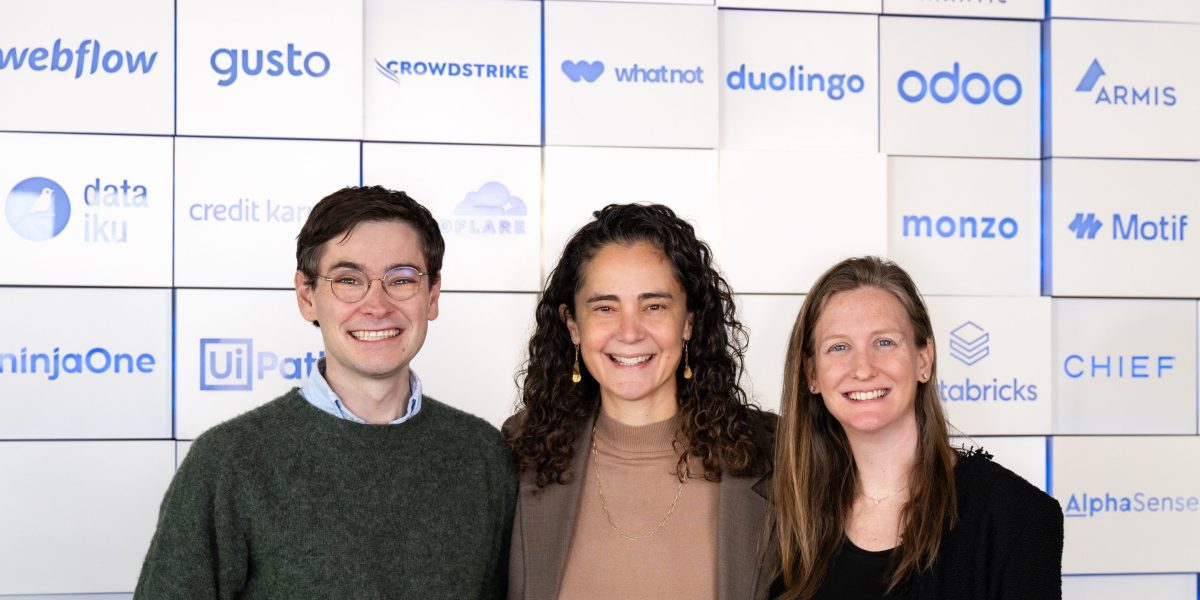
For the first time since the firm was started in 2013, it’s promoting two general partners, Chase and Alex Nichols, Fortune has exclusively learned. Chase, who joined CapitalG in 2020 specifically with a thesis around AI, has backed Abridge, Baseten, Canva, LangChain, Physical Intelligence, and Rippling.
Nichols, meanwhile, joined CapitalG in 2018 as an associate and was promoted to partner just two years ago. He previously worked with managing partner Laela Sturdy on the firm’s investments in Duolingo, Stripe, and Whatnot, and recently led CapitalG’s investment in Zach Dell’s energy startup BasePower. At a moment where there’s mounting angst around data centers and what it will take to power them, Nichols has a surprising take on how AI will affect energy—that both batteries and solar are getting cheaper and better at something like Moore’s Law speed. Those twin cost curves, over time, should actually drive energy prices down.
“I’m actually very optimistic about the future of energy prices,” he said. “You look at the history of energy consumption versus GDP. And cheap energy means more production, more income, and means a higher standard of living.”
At a moment when venture is perhaps more competitive than ever—and there are certainly some solo GPs out there making their mark—there’s an argument that as lines blur between disciplines in an AI-ified world, venture is by necessity a team sport.
Sturdy—who’s been CapitalG’s managing partner since 2023 (and also captained her college basketball team)—and Chase both have clearly taken some learnings from their time on the court. Chase sees venture overall as becoming more team-oriented: “Historically, it used to be like ‘you made general partner, go out and win your deal.’ To me, that’s not the right way to be successful in venture ever.”
Sturdy adds that in basketball, like venture, “We have to look at the scoreboard every once in a while, and you have to get back up when you get crushed… And, of course, coming together is better than playing alone.”
Term Sheet Podcast…This week, I spoke with Exelon CEO Calvin Butler. As resource-hungry data centers continue to sprout across the country, many are questioning whether the nation’s utility network can keep pace with such large-scale demand. Butler says it can. Listen and watch here.
Joey Abrams curated the deals section of today’s newsletter.Subscribe here.
VENTURE CAPITAL
– humans&, a San Francisco-based AI lab, raised $480 million in seed funding. SVAngel and GeorgesHarik led the round and were joined by NVIDIA and others.
– Emergent, a San Francisco-based platform designed for AI software creation, raised $70 million in Series B funding. Khosla Ventures and SoftBank led the round and were joined by Prosus, Lightspeed, Together, and Y Combinator.
– Exciva, a Heidelberg, Germany-based developer of therapeutics designed for neuropsychiatric conditions, raised €51 million ($59 million) in Series B funding. Gimv and EQTLifeSciences led the round and were joined by FountainHealthcarePartners, LifeArcVentures, and others.
– Pomelo, a Buenos Aires, Argentina-based payments infrastructure company, raised $55 million in Series C funding. Kaszek and InsightPartners led the round and were joined by IndexVentures, AdamsStreetPartners, S32, and others.
– Cloover, a Berlin, Germany-based operating system designed for energy independence, raised $22 million in Series A funding. MMCVentures and QEDInvestors led the round and were joined by LowercarbonCapital, BNVTCapital, BoschVentures, and others.
– Statusphere, a Winter Park, Fla.-based influencer marketing technology platform, raised $18 million in Series A funding. VolitionCapital led the round and was joined by HearstLab, 1984Ventures, and HowWomenInvest.
– DominionDynamics, an Ottawa, Canada-based defense technology company, raised $21M CAD ($15.2M USD) in seed funding. Georgian led the round and was joined by BessemerVenturePartners and BritishColumbiaInvestmentManagementCorporation.
– Cosmos, a New York City-based image collection and discovery platform, raised $15 million in Series A funding. ShineCapital led the round and was joined by Matrix and others.
– Mave, a Toronto, Canada-based real estate AI company, raised $5 million in seed funding from StaircaseVentures, RelayVentures, N49P, and AlatePartners.
– Stilla, a Stockholm, Sweden-based developer of an AI designed to accommodate entire teams, raised $5 million in pre-seed funding. GeneralCatalyst led the round and was joined by others.
– AsymmetricSecurity, a London, U.K. and San Francisco-based cyber forensics company, raised $4.2 million in pre-seed funding. SusaVentures led the round and was joined by HalcyonVentures, OverlookVentures, and angel investors.
PRIVATE EQUITY
– ConnectWise, backed by ThomaBravo, acquired zofiQ, a Toronto, Ontario-based agentic AI technology company designed to automate high-service desk operations. Financial terms were not disclosed.
– GrantAvenueCapital acquired 21stCenturyHealthcare, a Tempe, Ariz.-based vitamins, minerals, and supplements company. Financial terms were not disclosed.
– HighlanderPartners acquired Tapatio, a Vernon, Calif.-based hot sauce brand. Financial terms were not disclosed.
– PlatinumEquity acquired CzarnowskiCollective, a Chicago, Ill.-based exhibit and events company. Financial terms were not disclosed.
– UnitedBuildingSolutions, backed by AEIndustrial, acquired DFWMechanicalGroup, a Wylie, Texas-based HVAC solutions company. Financial terms were not disclosed.
IPOS
– PicPay, a Sao Paolo, Brazil-based digital bank, now plans to raise up to $435.1 million in an offering of 22.9 million shares priced between $16 and $19 on the Nasdaq. The company posted $1.7 billion in revenue for the year ended September 30. J&F International and BancoOriginal back the company.
– EthosTechnologies, a San Francisco-based online life insurance provider, plans to raise up to $210 million in an offering of 10.5 million shares priced between $18 and $20. The company posted $344 million in revenue for the year ended Sept. 30. GeneralCatalyst, HeroicVentures, EricLantz, and others back the company.
FUNDS + FUNDS OF FUNDS
– BlueprintEquity, a La Jolla, Calif.-based growth equity firm, raised $333 million for its third fund focused on enterprise software, business-to-business, and tech-enabled services companies.
PEOPLE
– Area 15 Ventures, a Castle Pine, Colo.-based venture capital firm, promoted AdamContos to managing partner.
– BullCityVenturePartners, a Durham, N.C.-based venture capital firm, hired CarlyConnell as a principal.
– HarvestPartners, a New York City-based private equity firm, promoted LucasRodgers to partner, MatthewBruckmann and IanSingleton to principal, and ConnorScro to vice president on the private equity team.
– Wingman Growth Partners, a Greenwich, Conn.-based private equity firm, hired CheriReeve as CFO. She previously served as principal and CFO at AtlasHoldings.
Davos 2026: reading the signals, not the headlines | Fortune
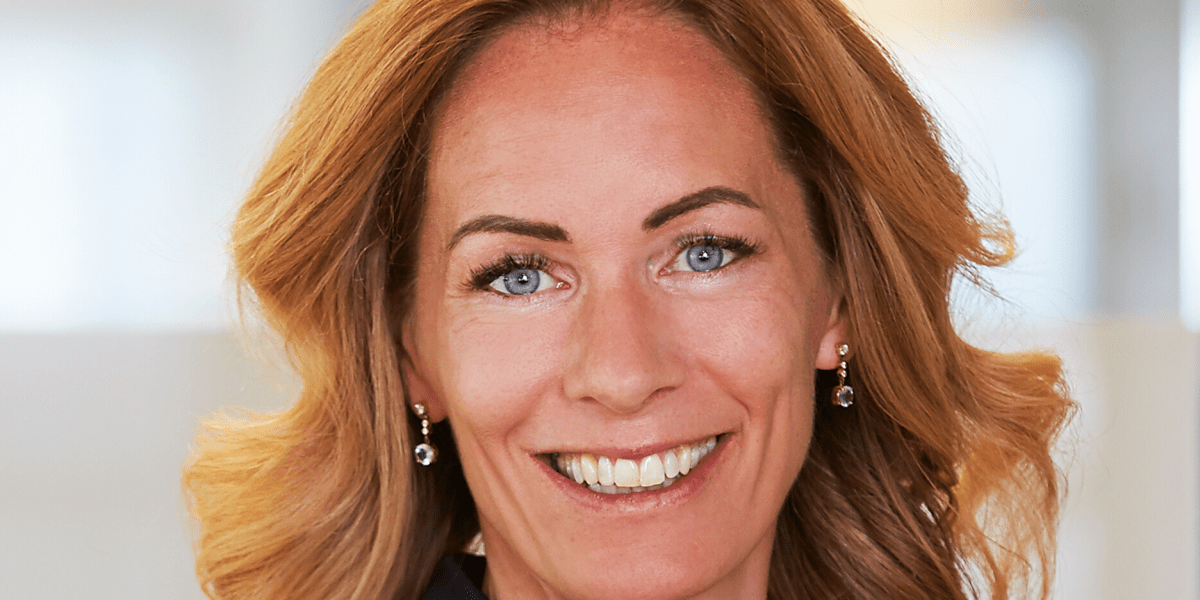
Louisa Loran advises boards and leadership teams on transformation and long-term value creation and currently serves on the boards of Copenhagen Business School and CataCap Private Equity.At Google, Louisa launched a billion-dollar supply chain solutions business, doubled growth in a global industry vertical, and led strategic business transformation for the company’s largest customers in EMEA—working at the forefront of AI, data, and platform innovation. At Maersk, she co-authored the strategy that redefined the brand globally and doubled its share price, helping pivot the company from traditional shipping to integrated logistics. Her career began in the luxury and FMCG space with Moët Hennessy and Diageo, where she built iconic brands and led innovation at the intersection of heritage and digital transformation.







 2 days ago
 22 hours ago
 14 hours ago
 19 hours ago
 2 days ago
 2 days ago


 Politics8 years ago