
Politics
A final Session to secure Florida’s education future


Florida policymakers are convening for the final Legislative Session of Gov. Ron DeSantis’ tenure, as well as the last for House Speaker Danny Perez and Senate President Ben Albritton. As always, education policy sits at the top of the agenda, and the Foundation for Florida’s Future is urging lawmakers to act on priorities that will shape student outcomes for years to come.
Reading: Invest in literacy
Florida’s reading scores on the National Assessment of Educational Progress (NAEP) have fallen to their lowest levels since before 1999. Meanwhile, states such as Mississippi — drawing inspiration from reforms that originated in Florida — are now outperforming us.
While a broad recommitment to literacy is necessary, lawmakers can make an immediate, high-impact investment by ensuring every elementary school has a dedicated reading coach. These highly trained instructional leaders work directly with teachers to improve reading instruction schoolwide.
Today, nearly 800 elementary schools report having no active reading coach. Because not all districts prioritize funding for proven literacy strategies, policymakers should establish a dedicated literacy coach fund and require participating districts to better align reading plans with state priorities. This approach would give students a much-needed boost while providing the state greater accountability over literacy outcomes.

School choice: Protect Florida’s progress
Florida has been the gold standard for school choice for two decades, distinguished by its scale and responsiveness to families. That progress, however, is not guaranteed.
Current concerns about tracking and funding students stem from technological limitations, not bureaucratic failures. Adding new administrative requirements for parents and schools would be a mistake. The solution to a technology problem should be technological.
Florida can look to other states with education scholarship account programs that have successfully addressed these challenges. Investing in modern student tracking systems and adopting a common data governance standard such as EdFi — already used in Texas, Indiana, and Arizona — would strengthen accountability without discouraging participation.
Additional bureaucracy would stifle innovation, deter families, and risk turning a life-changing scholarship program into a difficult-to-navigate government system. Lawmakers should proceed with caution.

Generative AI: Implement reasonable guardrails
Florida has led the nation in protecting students from the harms of social media and cell phone use in schools. The next step is establishing reasonable guardrails for Generative Artificial Intelligence.
Policymakers should focus on two priorities. First, protecting student data by requiring transparency, auditing of interactions, and robust parental notice and controls.
Second, the state must prevent minors from accessing Generative AI products that use addictive, human-like deception to form relationships. These interactions pose serious emotional risks, tragically illustrated by the experience of Florida’s Megan Garcia and the loss of her son, Sewell. These powerful technologies should not be allowed to reach children unchecked.
Higher education accountability: Capture return on investment
The One Big Beautiful Bill requires colleges and universities receiving federal student aid to report annual wage outcomes for graduates. Programs whose graduates consistently earn less than high school diploma-only workers will no longer qualify for federal aid.
Florida can reinforce this accountability by ensuring the same data reported federally is also shared with the state, giving students and policymakers clearer insight when choosing degree programs.
Florida already boasts one of the nation’s strongest higher education systems, but transparency and incentive alignment remain essential to keeping student outcomes front and center.
Policy changes lives. While this is a lame-duck year for many state leaders, Florida has an opportunity — and a responsibility — to deliver meaningful reforms that keep the state at the forefront of education policy.
To view the full policy agenda, click here.
___
Patricia Levesque is executive director of the Foundation for Florida’s Future.
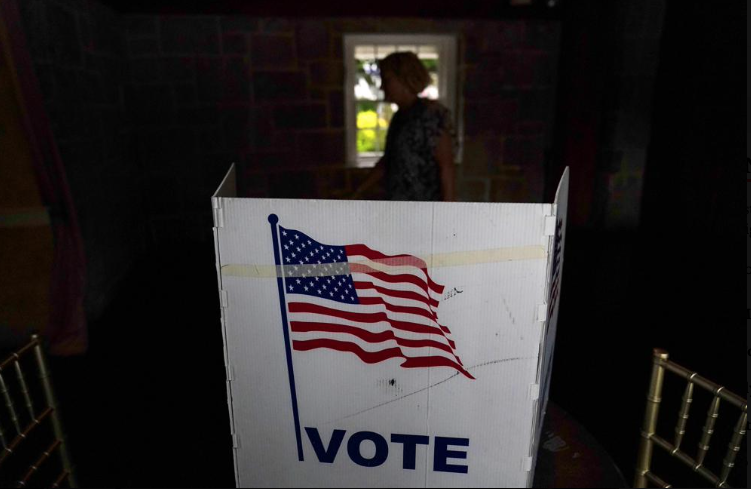
Voters in House District 87 head to the polls on Tuesday to choose Democratic and Republican nominees in a Special Primary Election that has been in the works for many months.
The coastal Palm Beach County district has been without representation since August, when Republican Rep. Mike Caruso resigned to assume the role of Palm Beach County Clerk and Comptroller. The prolonged vacancy — and Gov. Ron DeSantis’ delay in calling a Special Election — became a central issue in the race itself.
DeSantis ultimately set a Jan. 13 Primary and a March 24 Special General Election, meaning the District will not hold a vote in Tallahassee during the 2026 Legislative Session. That reality has loomed over the contest, particularly on the Democratic side, where one candidate sought to force the Governor’s hand through the courts.
Two Democrats and two Republicans are competing Tuesday for their respective party nominations in a district that has leaned Republican in recent cycles but that Democrats view as competitive, particularly under Special Election conditions.
On the Democratic side, the Primary pits Emily Gregory against Laura Levites.
Gregory, a Jupiter-based small-business owner and public health professional, has been the most visible Democrat in the race since the vacancy occurred. She drew attention in October when she filed a lawsuit seeking to compel DeSantis to call a Special Election, arguing that HD 87 voters were being denied representation as lawmakers prepared to convene in Tallahassee.
The lawsuit was ultimately rendered moot by the Governor’s executive order setting election dates.
Gregory has focused on public education funding, health care access and property insurance costs. She entered the final stretch of the Primary with a clear fundraising advantage on the Democratic side. Gregory raised more than $101,000 through Jan. 8 and spent nearly $49,000, both outpacing her opponent.
Levites, a Lake Worth Beach resident and first-time candidate, has pitched herself as a community advocate and political outsider. Her campaign has focused heavily on cost-of-living pressures, such as property insurance premiums and housing affordability. Levites has also leaned into environmental issues and local infrastructure concerns, including flooding and traffic congestion.
Levites has run a lower-dollar campaign, adding no campaign contributions and loaning her campaign just $450.

The Republican Primary has arguably drawn more attention, with Jon Maples facing Gretchen Miller Feng.
Maples, a Palm Beach Gardens financial planner, entered the race early and quickly consolidated support from Republican leadership. He secured backing from the Florida House Republican Campaign Committee and a slate of GOP lawmakers, and later landed an endorsement from former President Donald Trump — a significant asset in a Republican Primary, even in a coastal district with a more moderate reputation.
Maples has run as a reliable conservative aligned with Trump-era priorities, emphasizing fiscal restraint, opposition to tax increases, and a pro-business climate.
With party support behind him, Maples has built the largest war chest in the Republican field, raising more than $278,000 between his campaign account and his political committee, Friends of Jon Maples, plus adding another $14,000 in candidate loans. He has spent nearly $157,00 as of Jan. 8.
Feng, a paralegal and regulatory consultant from West Palm Beach, has cast herself as an outsider running against party insiders. She has focused her campaign on affordability, opposition to unchecked growth and outrage over the district being unrepresented during the 2026 Session. Feng has not matched Maples’ fundraising, raising just over $12,000 in total and spending nearly $11,000.
HD 87 runs up the coast of Palm Beach County, spanning Palm Beach Gardens, Jupiter, Juno Beach and Hypoluxo.



Andrew Fay joins Greenberg Traurig’s Tallahassee office

Why Trump’s plan to shut out institutional investors could raise housing costs

After monthslong vacancy, HD 87 voters to choose nominees in Special Primary
-

 Politics8 years ago
Congress rolls out ‘Better Deal,’ new economic agenda
-
Entertainment8 years ago
New Season 8 Walking Dead trailer flashes forward in time
-
Politics8 years ago
Poll: Virginia governor’s race in dead heat
-
Politics8 years ago
Illinois’ financial crisis could bring the state to a halt
-
Entertainment8 years ago
The final 6 ‘Game of Thrones’ episodes might feel like a full season
-
Entertainment8 years ago
Meet Superman’s grandfather in new trailer for Krypton
-
Business8 years ago
6 Stunning new co-working spaces around the globe
-
Tech8 years ago
Hulu hires Google marketing veteran Kelly Campbell as CMO