Connect with us

Business

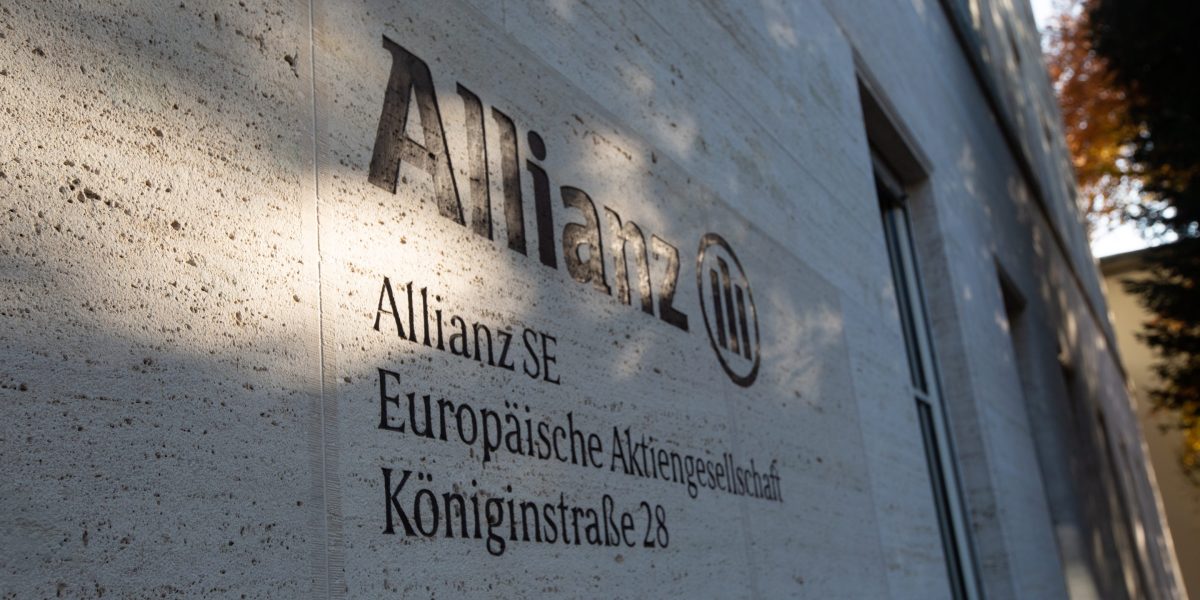
A failed takeover bid by Global 500 insurer Allianz is now a political hot potato in Singapore’s election

Published

on


Around 2.75 million Singaporeans are eligible to vote in the Southeast Asian country’s general election on May 3, and choose a prime minister to lead the city for the next half decade.

And in the nine days of the election campaigning, one of the world’s shortest, a failed deal between Allianz, the Global 500 insurance giant, and local insurer Income Insurance from last year is getting dragged back into the spotlight.

Allianz offered to take over Income Insurance for $1.7 billion last July. The deal was controversial: Singaporeans worried that a new corporate owner might push Income away from its social mission of providing affordable insurance to Singaporeans. 

A few months later, in October, Singaporean officials blocked the deal. Allianz abandoned its takeover bid in December. 

Now, politicians from the ruling People’s Action Party and its main opposition, the Workers’ Party, are bringing up the now-defunct deal to score political points in hotly-contested constituencies. The main topic of debate: Why Singaporean officials were first fine with the deal before later changing their minds, and who failed to ask questions at the time.

Speaking at a rally on Sunday, Ng Chee Meng, chief of the National Trades Union Congress, argued that the labor movement initially felt the takeover bid was reasonable and would have strengthened Income Insurance. Ng, who is running for a seat in Singapore’s parliament as part of the ruling PAP party, was responding to arguments that the union should have spoken up against the deal. 

Income Insurance used to be part of the NTUC umbrella. Even after Income’s privatization, NTUC Enterprise remains a majority shareholder, holding about 72.8% of shares.

Still, Ng promised to “do better” during Sunday’s rally. “We will do our best, and sometimes I’m sorry that it is not good enough.”

Former Prime Minister Lee Hsien Loong argued that the Workers’ Party would have approved the Income Insurance deal if the opposition party had held power. He noted that only one opposition member of parliament had inquired about the takeover, and that the Workers’ Party abstained from a measure to block the merger. 

Pritam Singh, leader of the Workers’ Party, has in turn accused the PAP’s labor MPs for not asking questions about the deal last year. 

Another member of the WP, Harpreet Singh, demanded that Deputy Prime Minister Gan Kim Yong explain his role in the scuppered deal, and respond to an open letter by the former CEO of Income Insurance Tan Suee Chieh. 

The letter, addressed to Gan and published on April 27, posed questions on regulatory oversight, the changing role of NTUC, and accountability.

On Tuesday afternoon, Gan asked why the opposition never questioned the Income deal at the time. But the deputy prime minister also tried to explain why the Singapore government ultimately changed its mind over Allianz’s bid. “We want[ed] to support the deal, because it will help Income. But when more details were furnished, we decided [we had] to stop the deal,” he explained.

Saturday’s election will be the first political test for the PAP’s leader, Prime Minister Lawrence Wong, who took over the party last year. The PAP, which has governed Singapore since its independence in 1965, is expected to remain in power following the election. 

This story was originally featured on Fortune.com


Source link

Continue Reading

Business

Four key questions about OpenAI vs Google—the high-stakes tech matchup of 2026

Published

on


Hello, Tech Editor Alexei Oreskovic, pitching in for Allie. We’ve been enjoying some crisp blue-sky days here in San Francisco in true December fashion. For the folks at OpenAI however, the days have been red — Code Red. 

In case you haven’t been following, OpenAI CEO Sam Altman on Monday declared a “Code Red” alert in a memo to employees, according to the Information and the Wall Street Journal. The alert, the highest level on OpenAI’s three-point scale, is essentially an all-hands-on-deck call to mobilize and defend against an imminent threat. That threat is Google and its latest version of the Gemini AI model, which competes with OpenAI’s GPT family of models, particularly its flagship ChatGPT product.

It’s a remarkable turn of events, almost exactly three years to the day that OpenAI released ChatGPT and put Google and the rest of the tech industry on the back foot. Now Google is on the ascent, hoping to turn OpenAI into MySpace. Of course, with its $500 billion valuation, OpenAI and its investors are not about to surrender. 

So, as the two AI superpowers roll up their sleeves for what’s sure to be a 2026 slugfest, we thought it would be interesting to tap into the wisdom of Term Sheet readers and ask for your perspectives on some of the key questions of this critical moment in tech history. Send your thoughts directly to me or to Allie G.

How can a company like OpenAI turn a first-mover advantage into a sustainable and long-lasting business that doesn’t get bulldozed by giants with more resources and capital? 

Is there a lesson—good or bad—from a first mover of the past (e.g. Netscape vs Microsoft; Blackberry vs iPhone) that OpenAI should heed?

What is the Google Achilles heel that OpenAI should exploit? 

What is the single most important thing that OpenAI needs to execute on right now – and what is the best metric to measure its success?

And of course, what other important parts of this story should we be thinking about?

Fire away!

Alexei Oreskovic
X:
@lexnfx
Email:alexei.oreskovic@fortune.com
Submit a deal for the Term Sheet newsletter here.

Joey Abrams curated the deals section of today’s newsletter.Subscribe here.

Venture Deals

7AI, a Boston-based agentic cybersecurity platform, raised $130 million in Series A funding. Index Ventures led the round and was joined by Blackstone Innovations Investments, as well as existing seed investors Greylock, CRV, and Spark

Fact Base, a Tokyo-based manufacturing SaaS startup and maker of drawing management system ZUMEN, raised $28.5 million in Series C funding from Insight Partners.

imper.ai, a New York City-based startup that prevents AI and cyber impersonation, emerged from stealth after raising $28 million in funding. Redpoint Ventures and Battery Ventures led the investment round and were joined by Maple VC, Vessy VC, and Cerca Partners.

pH7 Technologies, a Vancouver, British Columbia-based metal extraction company, raised $25.6 million in initial Series B funding. Fine Structure Ventures led the round with strategic investment from BHP Ventures and was joined Energy & Environment Investment, Siteground, Gaingels Fund, and Calm Ventures, along with existing investors including TDK Ventures, Pangaea Ventures, Rhapsody Venture Partners, and BASF Venture Capital.

Pine AI, a Palo Alto, Calif.-based startup that specializes in agentic AI for customer service applications, raised $25 million in Series A funding. Investors included Fortwest Capital

Lumia, an agentic AI security and governance platform, raised $18 million in seed funding. Team8 led the round and was joined by New Era.

Multifactor, a San Francisco-based agentic AI security platform, raised $15 million in seed funding. Nexus Venture Partners led the round and was joined by Y Combinator, Taurus Ventures, Honeystone Ventures, Flex Capital, Pioneer Fund, Ritual Capital, and Liquid2 Ventures.

Laigo Bio, a Utrecht, Netherlands-based biotech company specializing in novel membrane protein degradation, raised €11.5 million ($13.4 million) in seed funding. Kurma Partners and Curie Capital co-led the round and were joined by Argobio Studio, Angelini Ventures, Eurazeo, the Oncode Bridge Fund, ROM Utrecht Region, and Cancer Research Horizons.

Helmet Security, a Washington, D.C.-based agentic AI communication security startup, emerged from stealth after raising $9 million from SYN Ventures and WhiteRabbit Ventures.

Addis Energy, a Somerville, Mass.-based ammonia production technology developer, raised $8.3 million in seed funding. At One Ventures led the round and was joined by existing investors Engine Ventures and Pillar VC.  

Alinia AI, a Barcelona, Spain- and New York City-based startup that builds compliance tools for AI systems, raised $7.5 million in seed funding. Mouro Capital led the round and was joined by Speedinvest, Raise Ventures, and Precursor.

BuiltAI, a London, U.K.-based financial modeling platform for commercial real estate investment, raised $6 million in seed funding. Work-Bench led the round and was joined by Lerer Hippeau, Timber Grove Ventures, Emerald Pine, and angel investors.

Curvestone AI, a London, U.K.-based platform that reduces compound errors in automated workflows, raised $4 million seed funding. MTech Capital led the round and was joined by Boost Capital Partners, D2 Fund, and Portfolio Ventures.

Govstream.ai, a Seattle-based startup building AI-native permitting tools for local governments, raised $3.6 million in seed funding. 47th Street Partners led the round and was joined by Nellore Capital, Ascend, Kevin Merritt, and Andreas Huber.

Private Equity

Ares Management Corporation recapitalized MGT, a Tampa-based national technology and advisory solutions company serving state and local education institutions and governments, with a $350 million investment that values MGT at $1.25 billion. Existing investors include the Vistria Group, JPMorgan, and WhiteHorse Capital.

TRP Infrastructure Services, an Arlington Capital Partners portfolio company, completed its acquisition of Corpus Christi, Texas-based Highway Barricades & Services, a provider of pavement marking and traffic control services. Financial terms were not disclosed.

The Care Team, a Revelstoke Capital Partners portfolio company, acquired select hospice and palliative care operations from Traditions Health, a Tennessee-based hospice, palliative, and home health provider with operations in 16 states. Financial terms were not disclosed.

Inovara Group, an Ambienta portfolio company, acquired Guildford, U.K.-based IBL Lighting Limited, an LED engine design and architectural lighting provider. Financial terms were not disclosed.

People

Hunter Point Capital, a New York City-based investment firm, hired Jonathan Coslet as a senior partner. Previously, he was at TPG


Source link

Continue Reading

Business

Treasury Secretary Bessent insists Trump’s tariff agenda is ‘permanent,’ saying the White House can recreate it even with a Supreme Court loss

Published

on


The Supreme Court is in the process of deciding the fate of President Trump’s tariffs, but even if the administration loses, it might not matter, said Treasury Secretary Scott Bessent.

At issue is the Trump administration’s use of the International Emergency Economic Powers Act (IEEPA) to justify some of its tariffs, including its baseline 10% duty on almost all nations. IEEPA, passed by Congress in 1977, gives the President “broad authority” on economic issues like tariffs after declaring a “national emergency,” for which the White House has pointed to elevated fentanyl imports from abroad.

Although not guaranteed, it’s possible the Supreme Court will decide the fentanyl crisis can’t be used as an emergency to justify broad tariffs on U.S. trading partners, which would make many of the administration’s tariffs invalid. In that case, the White House will just pivot to another justification to make tariffs permanent, said Bessent during the New York Times DealBook Summit this week. 

“We can recreate the exact tariff structure with 301’s, with 232’s, with the, I think they’re called 122’s,” he said, referring to several sections of various trade acts that could serve as alternatives to the administration’s current justification for its tariffs.

When interviewer and DealBook editor Andrew Ross Sorkin questioned whether these measures could exist permanently, Bessent replied “permanently.” He later clarified that tariffs under Section 122 of the Trade Act of 1974 would not be permanent.

In sum, the Constitution gives Congress purview over tariffs, but over the years it has given the executive branch more leeway to levy them through the trade acts mentioned by Bessent. 

Each of the sections Trump’s team may consider comes with its own set of pros and cons. Section 122 would be the quickest method to restore tariffs in the case of a Supreme Court loss because it doesn’t require an investigation on a trading partners’ practices. Using this justification would let the government levy tariffs up to 15%, with certain limits, but only for 150 days before congressional action is required.

The other two sections, as Bessent pointed out, have no time limit or limit on the tariff rate that can be levied, although they have other caveats. To justify tariffs under Section 301 of the Trade Act of 1974, the administration would need to conduct an investigation into practices by its trading partners it sees as “unjustifiable” or “unreasonable.” Trump did this successfully during his first administration to justify tariffs on China in 2017.

Alternatively, the administration could turn to Section 232 of the Trade of the Trade Expansion Act of 1962 and try to justify tariffs as an issue of national security. The White House is already using this justification to underpin its tariffs on steel, aluminum, and autos and those are not being scrutinized by the Supreme Court. 

Finally, experts have previously told Fortune, Trump could also ask Congress to pass a bill giving the president explicit authority to levy tariffs. Although it would require some caveats in terms of scope, and possibly duration of the tariffs, it would likely receive bipartisan support, international trade law expert and University of Kansas Law School professor Raj Bhala told Fortune

Despite the options in the administration’s back pocket, Bessent said he was optimistic about the White House’s chances at the Supreme Court. 

He also said a loss in court would be “a loss for the American people,” and pointed to the fact that China agreed to tighten control over exports of precursor chemicals used to make fentanyl earlier this year—a decision which he attributes to pressure created by the administration’s tariffs.

“I have been very consistent on this, that tariffs are a shrinking ice cube. The ultimate goal is to rebalance trade and to bring back domestic production,” Bessent said.


Source link

Continue Reading

Business

Before running the world’s most valuable company, Jensen Huang was a 9-year-old janitor in Kentucky

Published

on


The CEO of the world’s most valuable company didn’t learn about America through elite universities or tech incubators. His education started in a rural Kentucky boarding school where the students smoked, carried knives, and the youngest student on campus, at 9 years old, was assigned to clean the toilets.

That student was Jensen Huang.

In a recent podcast appearance with Joe Rogan, the Nvidia CEO traced that improbable starting point back to his parents, who had sent him and his brother to the United States in the mid-1970s with almost nothing. The family had been living in Bangkok during one of Thailand’s periodic coups, and his parents decided it was no longer safe to keep the children there. They contacted an uncle they had never visited in Tacoma, Wash., and asked him to find a school in America that would accept two foreign boys with almost no savings.

He found one: Oneida Baptist Institute in Clay County, Ken., one of the poorest counties in the country then and now. The dorms had no closet doors, no locks, and a population of kids who smoked constantly–Huang said he also tried smoking for a week, at 9 —and settled disputes with knives. Huang’s roommate was a 17-year-old wrapped in tape from a recent fight; the “toughest kid in school,” he said. Every student had a job. His brother, was sent to the tobacco fields the school ran to fund the school—“kind of like a penitentiary”—while Huang became the janitor, cleaning the bathrooms for a hundred teenaged boys (“I just wished they would be a bit more careful” in the bathroom, he joked.)

That indefatigable cheerfulness, even when describing scenes that sound brutal to almost anyone else, ran through the entire interview. 

Huang said most of his memories from that period were good, and remembers the time he told his parents his amazement after eating at a restaurant: “Mom and dad, we went to the most amazing restaurant today. This whole place is lit up. It’s like the future. And the food comes in a box and the food is incredible. The hamburger is incredible.”

“It was McDonald’s,” Huang laughed. 

Indeed, these memories were relayed to his parents late; the boys were navigating all of this alone. International phone calls were too expensive, so his parents bought them a cheap tape deck. Once a month, they recorded an audio letter describing their lives in coal country and mailed it back to Bangkok. Their parents taped over the same cassette and mailed it back.

Two years later, Huang’s parents finally made it to America, with just suitcases and only a bit of money. His mother worked as a maid. His father, a trained engineer, looked for work by circling openings in the newspaper classifieds and calling whoever picked up. He eventually found a job at a consulting engineering firm designing factories and refineries.

“They left everything behind,” Huang said. “They started over in their late thirties.”

He still carries one memory from those early years that he said “breaks my heart.” Not long after his parents arrived in the U.S., the family was living in a rented, furnished apartment when he and his brother accidentally broke a flimsy particle-board coffee table. 

“I just still remember the look on my mom’s face,” he said. “They didn’t have any money, and she didn’t know how she was going to pay it back.”

For Huang, moments like that define the stakes his parents accepted when they came to the U.S. “with almost no money”.

“My parents are incredible,” he said. “It’s hard not to love this country. It’s hard not to be romantic about this country.”

Jensen Huang’s humble beginnings inspired Nvidia principles

That way of seeing America—as a place where people will give you a chance if you’re willing to take one—is how Huang explains Nvidia’s early, unlikely bets. 

Huang came up with the idea for Nvidia while sitting in a booth at a Denny’s, where he had worked first as a dishwasher and then a busboy. He wanted to build a chip that could power 3D graphics on a personal computer, and it was at that Denny’s booth that he met two friends to sketch out what would become the company.

Long before the company became synonymous with the AI boom, Huang kept steering it toward ideas that few people understood and even fewer believed in. CUDA was one of them. When Nvidia introduced it in 2006, the cost of the chip roughly doubled, revenue did not move, and the company’s valuation fell from about $12 billion to between $2 and $3 billion.

“When I launched CUDA, the audience was complete silence,” he said. “Nobody wanted it. Nobody asked for it. Nobody understood it.”

CUDA is the software layer that turns the graphics chips into general purpose compute engines, making them capable of large neural networks. Now, of course, nearly every major AI model today runs on hardware that depends on CUDA. 

The same thing happened when he introduced Nvidia’s first AI supercomputer, the DGX1. The launch drew “complete silence,” he said, and there were no purchase orders. The only person who reached out was none other than Tesla CEO Elon Musk, who told him he had “a nonprofit AI lab” that needed a system like this.

Huang assumed that meant the deal was impossible.

“All the blood drained out of my face,” he told Rogan. “A nonprofit is not buying a $300,000 computer.”

But Musk, the world’s richest man, insisted. So Huang boxed up one of the first units, loaded it into his car, and drove it to San Francisco himself.

In 2016, he walked into a small upstairs room filled with researchers— Berkeley robotics pioneer Pieter Abbeel, OpenAI cofounder Ilya Sutskever, and others—working in a cramped little office. That room turned out to be OpenAI, long before it became the most discussed AI organization in the world. Huang left the DGX1 with them and drove home.

Looking back, even as the CEO of a $4.5 trillion company who now draws crowds and autograph-seekers wherever he goes, he doesn’t describe any of this as foresight or heroism. To him, it’s simply the continuation of the risks his parents took when they sent two boys across the world with almost nothing.

“We really believed it, and so if you believe in that future, and you don’t do anything about it you’re going to regret it for your life,” Huang said.


Source link

Continue Reading

Trending

Copyright © Miami Select.