
Fashion
A distinctly eclectic Paris Fashion Week featuring Leonard, Giambattista Valli, and Vetements

Published
October 4, 2025
Paris Fashion Week entered its fifth day with an especially intense programme. In particular, the womenswear ready-to-wear shows for Spring/Summer 2026 revealed designers’ pursuit of freshness and lightness. Leonard Paris and Giambattista Valli were prime examples. Vetements, for its part, opted for provocation.
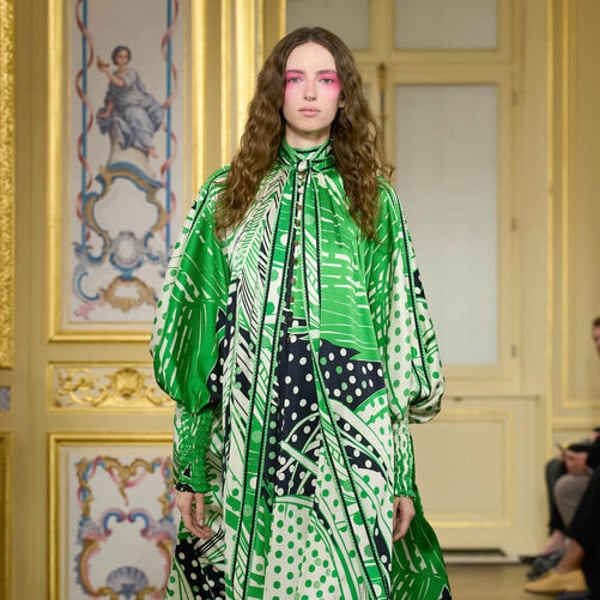
Leonard Paris jetted off to California, channelling Hollywood and Beverly Hills, for a festive summer that promises to be scorching. The wardrobe conceived by German designer Georg Lux leaned into evening and cocktail dressing, with fluid minidresses and long, diaphanous gowns cut from airy silks. The pieces floated, at times seeming suspended, rippling with each step in a whisper of intangible fabrics.
“I was inspired this season by muses such as Faye Dunaway and Jerry Hall, but also by the drawings of Puerto Rican fashion illustrator Antonio Lopez,” confided the creative director backstage, who welcomed guests to the elegant private mansion in the 16th arrondissement, where the house has been based since 2018. Clearly, his collection looked as much to the seventies jet set as to Hollywood’s golden age, with draped, diva-worthy, sequinned gowns.
More than ever, prints took centre stage, from Californian palms lifted from the house’s 1980s archives to the Art Deco floral theme developed by Leonard during the 1970s, along with a new red-and-orange poppy motif found on cotton-poplin dresses, but also painted onto a jacket and a transparent recycled-plastic bag, or worked into enamelled metal earrings. And flowers of every shape and in every shade ran through this richly varied collection.
Next summer’s wardrobe is all about volume, with draping, generous balloon sleeves, puffed silhouettes and flared dresses. A few “cricket club”-style striped looks and masculine blazers and suits provide contrast, though they remained thoroughly glamorous, crafted in greige twill embroidered with gold sequins and rhinestones.

Giambattista Valli welcomed guests into the salons of his house, a stone’s throw from the Opéra on Boulevard des Capucines. Baskets brimming with fruit and wildflowers lined the catwalk. The tone was set, as the Italian couturier celebrated nature in all its splendour, infusing his collection with an ingenuous candour.
With their colourful headscarves, blouses and ample petticoats or culottes, or their white lace apron dresses, the models evoked peasant women returning from the fields, or shepherdesses from old tales in search of Prince Charming. Some outfits were strewn with bucolic motifs: flowers, bouquets, fruit, clovers and butterflies.
Natural materials such as linen and cotton dominated, bringing a touch of authentic simplicity to the whole via little dresses, jackets and shorts suits decorated with hand-painted flowers in the manner of Dutch masters such as Vermeer, whose still lifes inspired Giambattista Valli this season.
Ruffles multiplied like petals in delicate dresses with billowing, airy volumes. They come in the colours of summer fruits: peach, raspberry, lemon, cherry, strawberry and plum. Lightness prevailed with shot taffeta and, above all, organza—whether embroidered cotton organza, ruched silk organza or crinkled iterations.

After taking over a McDonald’s on the Champs-Elysées in June 2019, Vetements returned to show on the world’s most beautiful avenue, this time taking over a concrete basement formerly occupied by an Adidas store. In the dim light, a silhouette descended the stairs to cross what looked like a squalid garage, its ceiling interlaced with neon tubes. Face masked by a nylon stocking, the first model appeared in leather trousers and boots, wearing a white T-shirt with a swastika crossed out by a prohibition sign.
For its return to the catwalks after sitting out last season, the brand is looking to make an impact. But its message was, to say the least, muddled. After this opening manifesto look, what followed was a sexist show in which all the women who stepped onto the catwalk were systematically undressed at the back, while the men were not subjected to the same treatment—save for one model whose jeans turned into transparent plastic at the rear, revealing a very chaste pair of white boxer shorts.
Fashion has often explored front/back construction in clothing, but here the experimentation left observers unconvinced. Whether in slip dresses or a tight skirt with a T-shirt, a suit, a printed dress, a severe straight grey skirt, or even a candy-pink ballgown, seen from behind the women were reduced to mere sex bombs, buttocks and legs on full display, covered only in couture tights and sometimes tight shorts or thigh-high boots.
At the back, in fact, garments morphed into high-cut bodysuits, while long dresses were shortened and skirts were either merely tacked at the front without being properly worn, or systematically unbuttoned at the back. Even the classic tweed suit was subverted, the skirt replaced by a pair of tweed briefs—also, of course, high-cut. Elsewhere, trench coats and overcoats open at the back or are stripped of fabric, revealing the lining, as with certain jackets worn by the men.
Two looks, strapped with an enormous cushion—airbag-style—fixed to the front at pelvis level, prompted questions. At the end of the show, coup de théâtre. A final model, dressed in an elegant black crinoline gown entirely open at the back, crossed the catwalk in tears, seeming to buckle under the pain. What was the message here? That this was, in fact, a denunciation of women as objects and of their hypersexualised image? Of the excesses of social media?
By trying too hard to conceptualise, Guram Gvasalia, who took over as the brand’s creative director in 2021 (he succeeded his brother Demna, who left for Balenciaga and is now at the helm of Gucci), risks losing his way.
This article is an automatic translation.
Click here to read the original article.
Copyright © 2025 FashionNetwork.com All rights reserved.
Published
January 21, 2026
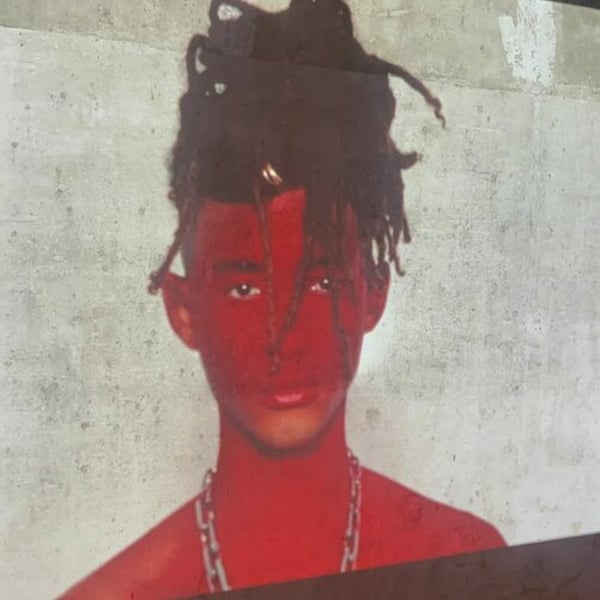
Add designer to Jaden Smith’s considerable list of professions- along with actor, singer, and rapper- after the Californian creator dreamed up an impressive Dadaist display for his debut at Christian Louboutin.
Evoking a whole plethora of influences from Greek mythology and the Great Paris Exhibitions to Dadaism and the great movement for Civil Rights, in an elaborate set in a disused warehouse in Montparnasse. Mount Parnassus, you will recall, was the home to nine muses in arts and sciences.
Two fine works of footwear even had Greek names: The Plato Loafer, a 2017 model with Swisscheese like holes, which Smith updates with the new Neo CL signature on a steel silver coin. And the Asclepius Sling- named after the ancient god of medicine- with the same emblematic coin detail and metallic hardware on the backstrap.
“I brought my personal interest on Greek mythology in as I thought it would resonate with people, as humans at the end of the day are all very similar. I’m combining my perspective of being an African American designer, linked to my more Dadaist thinking into the heritage of a French maison,” explained courteous 27-year-old.

Close by stood a Nam June Paik worthy mound of TVs, with video showing images of Martin Luther King’s 1963 March on Washington, The Sphinx, and clips from Dadaist filmmaker Hans Richter.
“That art piece is about the overdose of information we experience. This revolution that we are in the midst of right now. And the fact that information is being thrown at us all the time. And the psychological effects of looking at 10 screens at the one time. While also drawing correlations between my ancestry and Christian’s ancestry, and the history of art,” said Smith, attired in a giant gangster jeans, an oversized parka and pearl encrusted beanie.
Another installation was a broken temple with fluted columns on which were perched Jaden’s new bags. Notably a series of humungous backpacks and biker satchels, some with a dozen exterior zippered pockets with gold lettering reading- coins, pills, keys, tools, phone, documents, phones, and chargers. Alongside a surrealist tote finished like a bucket of overflowing paint and a Dadaist style back made in a black and white photo of an urban madding crowd.

The whole space was dubbed Christian Louboutin Men’s Exhibition, as a small group of models bathed, inevitably, in red light, circulated wearing the new footwear and bags. Large red fabric rolls made into benches allowed one to enjoy a large video montage, including Jaden as a Wagnerian hero posed in front of gothic castles. Which is where we spotted founder Christian Louboutin, in a video stirring a large vat of red paint, before symbolically handing over a paintbrush to Jaden.
“It’s about craftmanship, extreme luxury, and highest level of design. That’s what Christian Louboutin is all about,” said Smith, describing the brand’s DNA.
Eyebrows were raised when Christian appointed Jaden to the position of creative director, as Parisian designers with two decades long CVs gritted their teeth that an untrained talent got such a coveted position. However, judging by this display, Jaden Smith has the chops, talent, and grace to be very effective in this role.
One suspects the gods of style and time are probably rather pleased.
Copyright © 2026 FashionNetwork.com All rights reserved.
Published
January 21, 2026
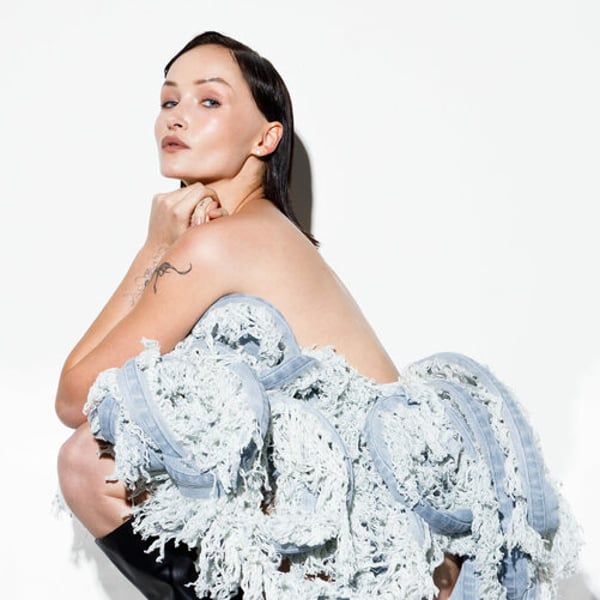
To coincide with Milan Fashion Week, the S|STYLE 2025- Denim Lab is setting up at Fondazione Sozzani for an edition devoted to the future of sustainable denim and water management in the textile industry. Led by the S|STYLE Sustainable Style platform, founded in 2020 by independent journalist and curator Giorgia Cantarini, this initiative forms part of an ongoing programme of research and experimentation into responsible innovations applied to contemporary fashion.
The exhibition, open to the public on September 27 and 28, features a site-specific art installation by Mariano Franzetti, crafted from recycled and regenerative denim. Conceived as an immersive experience, it brings fashion design, technological innovation and artistic expression into dialogue.
Water: a central issue in fashion sustainability
Developed in collaboration with Kering‘s Material Innovation Lab (MIL), the Denim Lab brings together a selection of young international designers invited to create a denim look using low-impact materials and processes. They benefit from technical support and access to textiles developed with innovative technologies aimed at significantly reducing water consumption, chemical use, and the carbon footprint of denim production.
This edition places water at its core, an essential issue for a fabric whose production has traditionally demanded substantial volumes of water, from cotton cultivation through to dyeing and finishing. Denim therefore serves as an emblematic testing ground, both familiar and closely associated with the environmental challenges facing the fashion industry.

The fabrics were developed by PureDenim Srl, a specialist in low-impact dyeing techniques, while treatments and finishes were applied by Tonello Srl, a recognised leader in sustainable washing and finishing technologies. The selected designers, from Europe, Asia, and Africa, each offer a distinctive interpretation of denim, blending formal exploration, textile innovation and reflection on the contemporary uses of clothing.
This article is an automatic translation.
Copyright © 2026 FashionNetwork.com All rights reserved.


Match Group says a ‘readiness paradox’ is crippling Gen Z in dating

Jaden Smith dreams up a Dadaist debut at Christian Louboutin

As risk skyrockets, current and former CFOs are in demand for audit committees
-

 Politics8 years ago
Congress rolls out ‘Better Deal,’ new economic agenda
-
Entertainment9 years ago
New Season 8 Walking Dead trailer flashes forward in time
-
Politics9 years ago
Poll: Virginia governor’s race in dead heat
-
Politics8 years ago
Illinois’ financial crisis could bring the state to a halt
-
Entertainment9 years ago
The final 6 ‘Game of Thrones’ episodes might feel like a full season
-
Entertainment9 years ago
Meet Superman’s grandfather in new trailer for Krypton
-
Business9 years ago
6 Stunning new co-working spaces around the globe
-
Tech8 years ago
Hulu hires Google marketing veteran Kelly Campbell as CMO