Connect with us

Business

A cautionary Hollywood tale: the Ellisons’ lose-lose Paramount positioning

Published

on


A cautionary Hollywood tale: the Ellisons’ lose-lose Paramount positioning | Fortune

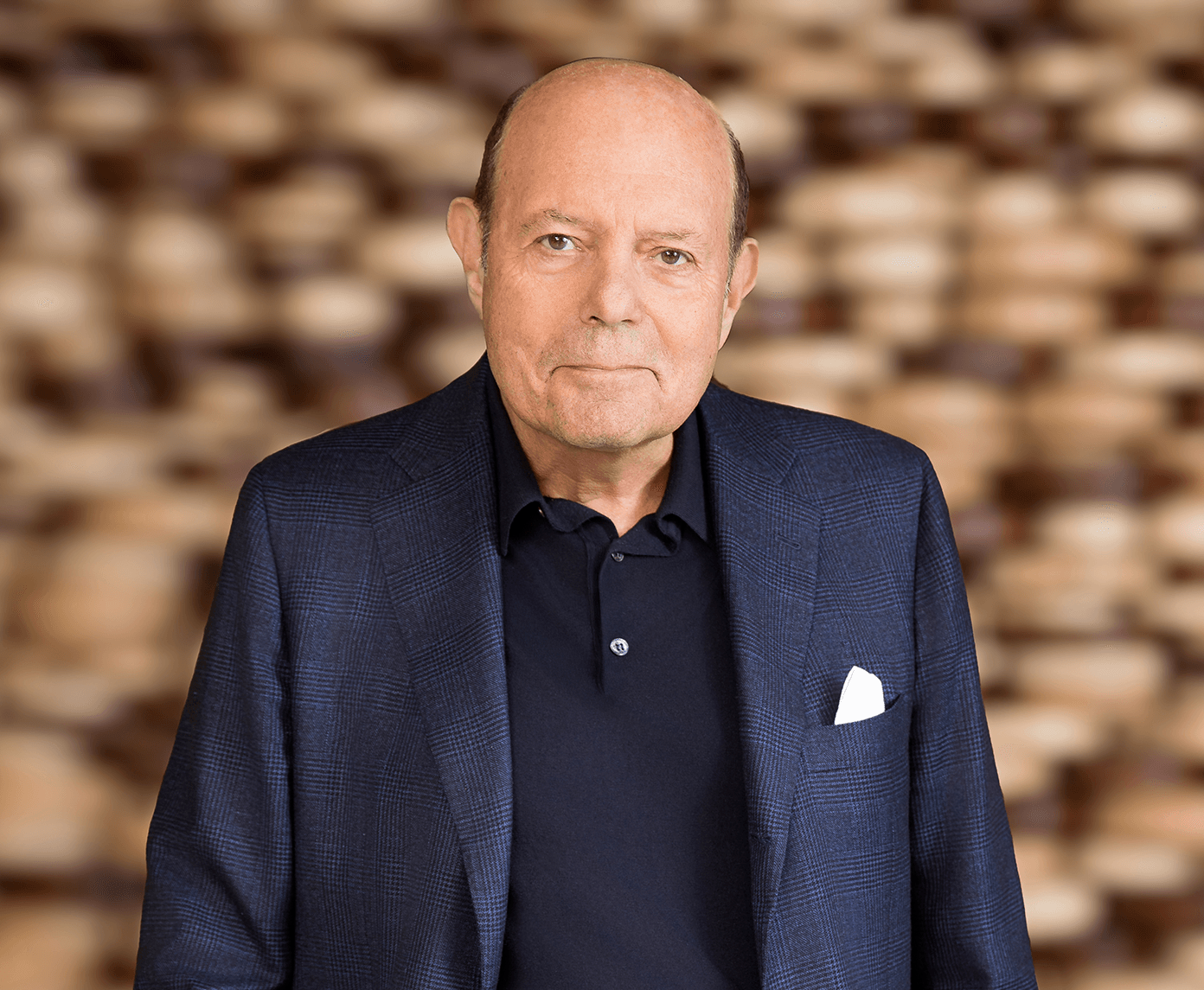
Jeffrey Sonnenfeld is Lester Crown Professor of Leadership Practice at the Yale School of Management and founder of the Yale Chief Executive Leadership Institute. A leadership and governance scholar, he created the world’s first school for incumbent CEOs and he has advised five U.S. presidents across political parties. His latest book, Trump’s Ten Commandments, will be published by Simon & Schuster in March 2026.
Stephen Henriques is a senior research fellow of the Yale Chief Executive Leadership Institute. He was a consultant at McKinsey & Company and a policy analyst for the governor of Connecticut.


Source link

Continue Reading

Business

Billionaire philanthropist MacKenzie Scott donates $45 million to LGBTQ+ youth hotline organization, The Trevor Project

Published

on


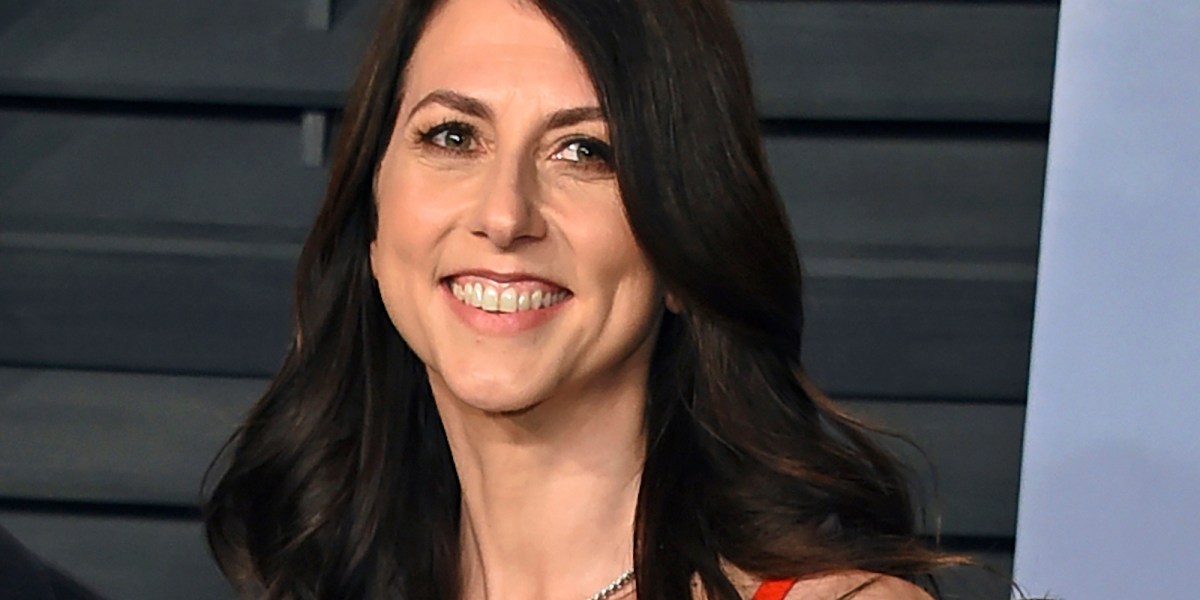
The Trevor Project, known for its hotline for LGBTQ+ youth, received $45 million from billionaire and author MacKenzie Scott at the end of 2025, the organization said Monday.

The gift is the largest in the organization’s history but also a major boon following years of management turmoil, layoffs and the loss of significant federal funding over the summer.

“I literally could not believe it and it took some time. I actually gasped,” said Jaymes Black, CEO of The Trevor Project, when they were notified of Scott’s gift.

Scott, whose fortune largely comes from her ex-husband Amazon founder Jeff Bezos, gave more than $7 billion to nonprofits in 2025, but this gift to The Trevor Project was not included among the donations she disclosed on her website in December. Scott previously gave The Trevor Project $6 million in 2020.

In July, the Trump administration stopped providing specific support for gay, trans and gender nonconforming young people who called the 988 National Suicide & Crisis Lifeline. The Trevor Project was one of the organizations staffing that option and lost $25 million in funding, the nonprofit said.

The Trevor Project continues to run an independent hotline for LGBTQ+ young people that Black said reaches about 250,000 young people annually, but they served another 250,000 callers through the 988 Press 3 option, which was tailored for LGBTQ+ young people.

U.S. Department of Health and Human Services’ Substance Abuse and Mental Health Services Administration (SAMHSA) reported more than 1.5 million contacts were routed through the service between Sept. 2022 and July 2025.

The Trevor Project has gone through years of internal turmoil after exploding in size from an organization with an annual budget around $4 million in 2016 to over $83 million in 2023, according to its public tax returns. The nonprofit’s board removed its CEO in 2022 and has gone through a series of layoffs, including in July. Black said the project’s 2026 budget was $47 million.

“We are a smaller organization than we were before,” Black said. “And we will continue to be really intentional and really mindful around growth and what growth really means for the organization.”

After it lost the 988 funding, The Trevor Project launched an emergency fundraiser that brought in $20 million to date, Black said, which they also hope Scott saw as proof that the organization was determined to stick around and make it through this period.

“MacKenzie Scott’s folks were clear, like this gift was made for long-term impact,” Black said, adding that they would take their time deciding how to use the funds.

Thad Calabrese, a professor at New York University who researches nonprofit financial management, said it’s not at all uncommon for nonprofits that grow very quickly to run into financial problems. But he also said the cuts and general instability in especially federal funding for nonprofits has upended many organizations’ business models.

“Academic research has often viewed public funding as very stable, as a signal to donors that you’ve arrived as an organization, but the reality is you are now also open to changing political fortunes,” he said.

He said research is also unclear whether diversifying an organization’s revenue streams is always a better financial strategy.

“You’re less dependent upon a few funders, but on the other hand, if you have a lot of different revenue streams, do you have the management capacity for that?” Calabrese asked, speaking generally and not commenting specifically on The Trevor Project.

Scott has distinguished herself among the biggest individual donors by giving large, unrestricted gifts to nonprofits, often with a focus on equity or social justice. With the exception of an open call in 2023, she does not ask for project proposals nor accept applications.

Despite the size of her gifts, which now often exceed the recipient organization’s annual budget, research from the Center for Effective Philanthropy has found that concerns about nonprofits misusing Scott’s funds or growing unsustainably have largely not been born out. That may be because Scott’s team, the members of which are largely unknown, conducts extensive research on organizations before making grants.

In an essay announcing her 2025 gifts, Scott said, “The potential of peaceful, non-transactional contribution has long been underestimated, often on the basis that it is not financially self-sustaining, or that some of its benefits are hard to track. But what if these imagined liabilities are actually assets? … What if the fact that some of our organizations are vulnerable can itself be a powerful engine for our generosity?”

Black called Scott’s second gift “a powerful validation,” of The Trevor Project’s mission and impact, saying, “We’re calling this our turnaround story.”

___

Associated Press coverage of philanthropy and nonprofits receives support through the AP’s collaboration with The Conversation US, with funding from Lilly Endowment Inc. The AP is solely responsible for this content. For all of AP’s philanthropy coverage, visit https://apnews.com/hub/philanthropy.


Source link

Continue Reading

Business

Muhammad Ali once joked he should be on a stamp because ‘that’s the only way I’ll ever get licked.’ Wish granted

Published

on


Muhammad Ali once joked that he should be a postage stamp because “that’s the only way I’ll ever get licked.”

Now, the three-time heavyweight champion’s quip is becoming reality.

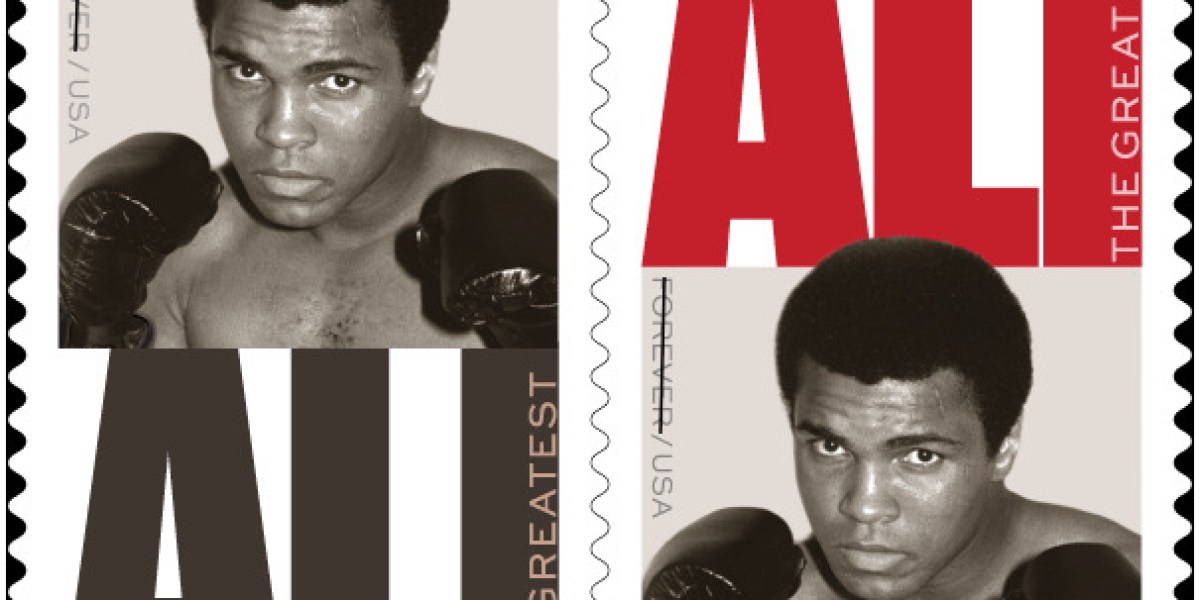
Widely regarded as the most famous and influential boxer of all time, and a cultural force who fused athletic brilliance with political conviction and showmanship, Ali is being honored for the first time with a commemorative U.S. postage stamp.

“As sort of the guardian of his legacy, I’m thrilled. I’m excited. I’m ecstatic,” Lonnie Ali, the champ’s wife of nearly 30 years, told The Associated Press. “Because people, every time they look at that stamp, they will remember him. And he will be in the forefront of their consciousness. And, for me, that’s a thrill.”

A fighter in the ring and compassionate in life

Muhammad Ali died in 2016 at the age of 74 after living with Parkinson’s disease for more than three decades. During his lifetime and posthumously, the man known as The Greatest has received numerous awards, including an Olympic gold medal in 1960, the United Nations Messenger of Peace award in 1998 and the Presidential Medal of Freedom in 2005.

Having his face on a stamp, Lonnie Ali said, has a particular significance because it’s a chance to highlight his mission of spreading compassion and his ability to connect with people.

“He did it one person at a time,” she said. “And that’s such a lovely way to connect with people, to send them a letter and to use this stamp to reinforce the messaging in that life of connection.”

Stamp to be publicly unveiled

A first-day-of-issue ceremony for the Muhammad Ali Forever Stamp is planned for Thursday in Louisville, Kentucky, the birthplace of the famed boxer and home to the Muhammad Ali Center, which showcases his life and legacy. That’s when people can buy Muhammad Ali Forever Stamps featuring a black-and-white Associated Press photo from 1974 of Ali in his famous boxing pose.

Each sheet of 20 stamps also features a photo of Ali posing in a pinstripe suit, a recognition of his work as an activist and humanitarian. Twenty-two million stamps have been printed. Once they sell out, they won’t be reprinted, U.S. Postal Service officials said. The stamps are expected to generate a lot of interest from collectors and noncollectors.

Because they’re Forever Stamps, the First-Class Mail postage will always remain valid, which Lonnie Ali calls an “ultimate” tribute.

“This is going to be a Forever Stamp from the post office,” she said. “It’s just one of those things that will be part of his legacy, and it will be one of the shining stars of his legacy, getting this stamp.”

Creating a historic stamp

Lisa Bobb-Semple, the USPS director of stamp services, said the idea for a Muhammad Ali stamp first came about shortly after his death almost a decade ago. But the process of developing a stamp is a long one. The USPS requires people who appear on stamps to be dead for at least three years, with the exception of presidents.

As the USPS was working behind the scenes on a stamp, a friend of Ali helped to launch the #GetTheChampAStamp campaign, which sparked public interest in the idea.

“We are really excited that the stars were able to align that allowed us to bring the stamp to fruition,” said Bobb-Semple, who initially had to keep the planned Ali stamp secret until it was official. “It’s one that we’ve always wanted to bring to the market.”

Members of the Citizen Stamps Advisory Committee, appointed by the postmaster general, are responsible for selecting who and what appears on stamps. Each quarter, they meet with Bobb-Semple and her team to review suggestions submitted by the public. There are usually about 20 to 25 commemorative stamp issues each year.

Once a stamp idea is selected, Bobb-Semple and her team work with one of several art directors to design the postage. It then goes through a lengthy final approval process, including a rigorous review by the USPS legal staff, before it can be issued to the public.

Antonio Alcalá, art director and designer of the Muhammad Ali stamp, said hundreds of images were reviewed before the final choices were narrowed to a few. Finally, the AP image, taken by an unnamed photographer, was chosen. It shows Ali in his prime, posing with boxing gloves and looking straight into the camera.

Alcalá said there’s a story behind every USPS stamp.

“Postage stamps are miniature works of art designed to reflect the American experience, highlight heroes, history, milestones, achievements and natural wonders of America,” he said. “The Muhammad Ali stamps are a great example of that.”

A candid figure on war, civil rights and religion

Beyond the boxing ring, Ali was outspoken about his beliefs when many Black Americans were still fighting to be heard. Born Cassius Clay Jr., Ali changed his name after converting to Islam in the 1960s and spoke openly about race, religion and war. In 1967, he refused to be inducted into the U.S. Army, citing his religious beliefs and opposition to the Vietnam War.

That stance cost Ali his heavyweight championship title and barred him from boxing for more than three years. Convicted of draft evasion, he was sentenced to five years in prison but remained free while appealing the case. The conviction was overturned by the U.S. Supreme Court in 1971, further cementing his prominence as a worldwide figure.

Later in life, Ali emerged as a global humanitarian and used his fame to promote peace, religious understanding and charitable causes, even as Parkinson’s disease limited his speech and movement.

Ali’s message during a time of strife

The commemorative postage stamp comes at a time of political division in the U.S. and the world. Lonnie Ali said if her husband were alive today, he’d probably “block a lot of this out” and continue to be a compassionate person who connects with people every day.

That approach, she said, is especially important now.

“We have to mobilize Muhammad’s life and sort of engage in the same kinds of acts of kindness and compassion that he did every day,” she said.


Source link

Continue Reading

Business

Former NYC Mayor Eric Adams has a new act as a crypto entrepreneur—though details are vague

Published

on


During his final days in office, embattled New York City Mayor Eric Adams teased his future after politics, pledging to use cryptocurrency to “go after violence, educate our children, and deal with antisemitism.” 

It didn’t take long for Adams to unveil his plans. On Monday morning, about a dozen reporters and camera operators huddled in the heart of Times Square as Adams detailed the “NYC Token,” his yet-to-be launched cryptocurrency designed to raise funds that will be used to address antisemitism and anti-Americanism, as well as to teach children how to embrace blockchain technology. 

“We want to make sure everyday New Yorkers can invest and create an atmosphere they want to see in their city,” Adams said.

The former mayor of the U.S.’s largest city didn’t say how his cryptocurrency will fight antisemitism. And he didn’t disclose who he was partnering with to launch the token, when it will be released, and how funds will be used. In a brief question-and-answer portion, Adams directed reporters to a website that he said would contain more information about the team behind the initiative. 

The website, however, includes no such details, with buttons advertising “buy NYC token” and “read whitepaper” not working as of publication. Still, it claims that the token already has a $2.5 million market cap with one billion tokens in supply and 10,000 holders. The website does not list any other figures associated with the project except for Adams, who said that he would not be taking a salary at this time for the initiative though would re-evaluate the decision in the future.

The blockchain mayor

Even before being sworn into office in January 2022, Adams was a crypto booster and promised to take his first three mayoral checks in Bitcoin. He touted that New York was “going to be the center of the cryptocurrency industry.” 

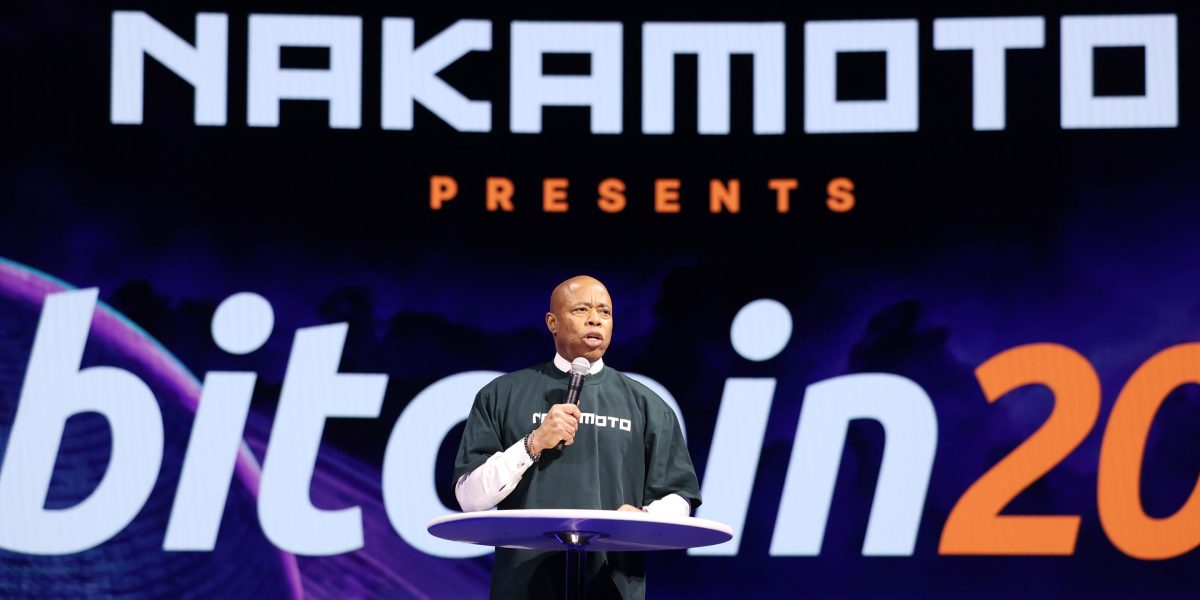
His enthusiasm was dampened by the downturn in the crypto industry in late 2022 spurred by the collapse of the exchange FTX, staying largely silent on the sector until hosting a crypto summit at the mayoral residence of Gracie Mansion in May 2025. Later that month, Adams spoke at the crypto conference Bitcoin 2025, where he promised to create Bitcoin-backed bonds for New York City.

He never made good on that promise, but, in October 2025, he established the Office of Digital Assets and Blockchain Technology in an executive order. It remains unclear whether newly elected Mayor Zohran Mamdani will advance the initiative’s nebulous objectives, which include encouraging investment in New York City by the blockchain industry and evaluating initiatives that educate the public. (Mamdani said at a separate press conference on Monday that he would not be buying Adams’s new coin.)

During his tenure as mayor, Adams faced widespread criticism for ethics and conflicts of interest violations, including a Department of Justice indictment for bribery and illegal campaign donations that was later dropped under the Trump administration. 

Government ethics groups have raised alarm bells over Adams’s involvement with crypto, including the leader of a super PAC assisting in setting up the Gracie Mansion summit while helping Adams raise upwards of $5 million for his re-election bid, according to Politico

Now out of office, Adams said the crypto coin is just one of several initiatives he plans to pursue as he embarks on trips to Dallas and Senegal. Still, he made clear in Times Square on Monday that New York remains his home: “I’m not going anywhere.”


Source link

Continue Reading

Trending

Copyright © Miami Select.