
Business
‘A bit of a shock’: Even community colleges, largely nonpartisan commuter schools, are feeling the Trump education crackdown
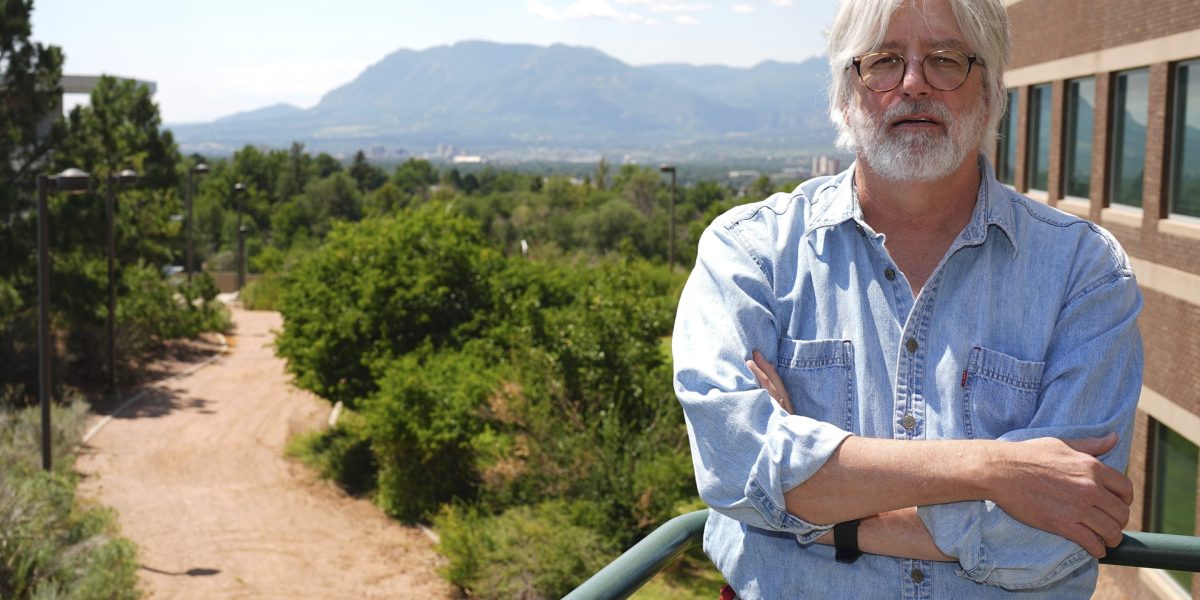
Administrators at the state university’s campus in Colorado Springs thought they stood a solid chance of dodging the Trump administration’s offensive on higher education.
Located on a picturesque bluff with a stunning view of Pikes Peak, the school is far removed from the Ivy League colleges that have drawn President Donald Trump’s ire. Most of its students are commuters, getting degrees while holding down full-time jobs. Students and faculty alike describe the university, which is in a conservative part of a blue state, as politically subdued, if not apolitical.
That optimism was misplaced.
An Associated Press review of thousands of pages of emails from school officials, as well as interviews with students and professors, reveals that school leaders, teachers and students soon found themselves in the Republican administration’s crosshairs, forcing them to navigate what they described as an unprecedented and haphazard degree of change.
Whether Washington has downsized government departments, clawed back or launched investigations into diversity programs or campus antisemitism, the University of Colorado-Colorado Springs has confronted many of the same challenges as elite universities across the nation.
The school lost three major federal grants and found itself under investigation by the Trump’s Education Department. In the hopes of avoiding that scrutiny, the university renamed websites and job titles, all while dealing with pressure from students, faculty and staff who wanted the school to take a more combative stance.
“Uncertainty is compounding,” the school’s chancellor told faculty at a February meeting, according to minutes of the session. “And the speed of which orders are coming has been a bit of a shock.”
The college declined to make any administrators available to be interviewed. A spokesman asked the AP to make clear that any professors or students interviewed in this story were speaking for themselves and not the institution. Several faculty members also asked for anonymity, either because they did not have tenure or they did not want to call unnecessary attention to themselves and their scholarship in the current political environment.
“Like our colleagues across higher education, we’ve spent considerable time working to understand the new directives from the federal government,” the chancellor, Jennifer Sobanet, said in a statement provided to the AP.
Students said they have been able to sense the stress being felt by school administrators and professors.
“We have administrators that are feeling pressure, because we want to maintain our funding here. It’s been tense,” said Ava Knox, a rising junior who covers the university administration for the school newspaper.
Faculty, she added, “want to be very careful about how they’re conducting their research and about how they’re addressing the student population. They are also beholden to this new set of kind of ever-changing guidelines and stipulations by the federal government.”
A White House spokesperson did not respond to a request for comment.
Misplaced optimism
Shortly after Trump won a second term in November, UCCS leaders were trying to gather information on the Republican’s plans. In December, Sobanet met the newly elected Republican congressman who represented the school’s district, a conservative one that Trump won with 53% of the vote. In her meeting notes obtained by the AP, the chancellor sketched out a scenario in which the college might avoid the drastic cuts and havoc under the incoming administration.
“Research dollars — hard to pull back grant dollars but Trump tried to pull back some last time. The money goes through Congress,” Sobanet wrote in notes prepared for the meeting. “Grant money will likely stay but just change how they are worded and what it will fund.”
Sobanet also observed that dismantling the federal Education Department would require congressional authorization. That was unlikely, she suggested, given the U.S. Senate’s composition.
Like many others, she did not fully anticipate how aggressively Trump would seek to transform the federal government.
Conservatives’ desire to revamp higher education began well before Trump took office.
They have long complained that universities have become bastions of liberal indoctrination and raucous protests. In 2023, Republicans in Congress had a contentious hearing with several Ivy League university leaders. Shortly after, the presidents of Harvard and the University of Pennsylvania resigned. During the presidential campaign last fall, Trump criticized campus protests about Gaza, as well as what he said was a liberal bias in classrooms.
His new administration opened investigations into alleged antisemitism at several universities. It froze more than $400 million in research grants and contracts at Columbia, along with more than $2.6 billion at Harvard. Columbia reached an agreement last month to pay $220 million to resolve the investigation.
When Harvard filed a lawsuit challenging Trump’s actions, his administration tried to block the school from enrolling international students. The Trump administration has also threatened to revoke Harvard’s tax-exempt status.
Northwestern University, Penn, Princeton and Cornell have seen big chunks of funding cut over how they dealt with protests about Israel’s war in Gaza or over the schools’ support for transgender athletes.
Trump’s decision to target the wealthiest, most prestigious institutions provided some comfort to administrators at the approximately 4,000 other colleges and universities in the country.
Most higher education students in the United States are educated at regional public universities or community colleges. Such schools have not typically drawn attention from culture warriors.
Students and professors at UCCS hoped Trump’s crackdown would bypass the school and others like it.
“You’ve got everyone — liberals, conservatives, middle of the road,” said Jeffrey Scholes, a professor in the philosophy department. “You just don’t see the kind of unrest and polarization that you see at other campuses.”
The purse strings
The federal government has lots of leverage over higher education. It provides about $60 billion a year to universities for research. In addition, a majority of students in the U.S. need grants and loans from various federal programs to help pay tuition and living expenses.
This budget year, UCCS got about $19 million in research funding from a combination of federal, state and private sources. Though that is a relatively small portion of the school’s overall $369 million budget, the college has made a push in recent years to bolster its campus research program by taking advantage of grant money from government agencies such as the U.S. Defense Department and National Institutes for Health. The widespread federal grant cut could derail those efforts.
School officials were dismayed when the Trump administration terminated research grants from the National Endowment for the Humanities, the Defense Department and the National Science Foundation, emails show. The grants funded programs in civics, cultural preservation and boosting women in technology fields.
School administrators scrambled to contact federal officials to learn if other grants were on the chopping block, but they struggled to find answers, the records show.
School officials repeatedly sought out the assistance of federal officials only to learn those officials were not sure what was happening as the Trump administration halted grant payments, fired thousands of employees and shuttered agencies.
“The sky is falling” at NIH, a university official reported in notes on a call in which the school’s lobbyists were providing reports of what was happening in Washington.
There are also concerns about other changes in Washington that will affect how students pay for college, according to interviews with faculty and education policy experts.
While only Congress can fully abolish the U.S. Department of Education, the Trump administration has tried to dramatically cut back its staff and parcel out many of its functions to other agencies. The administration laid off nearly 1,400 employees, and problems have been reported in the systems that handle student loans. Management of student loans is expected to shift to another agency entirely.
In addition, an early version of a major funding bill in Congress included major cuts to tuition grants. Though that provision did not make it into the law, Congress did cap loans for students seeking graduate degrees. That policy could have ripple effects in the coming years on institutions such as UCCS that rely on tuition dollars for their operating expenses.
DEI and transgender issues hit Campus
To force change on campus, the Trump administration has begun investigations targeting diversity programs and efforts to combat antisemitism.
The Education Department, for example, opened an investigation in March targeting a Ph.D. scholarship program that partnered with 45 universities, including UCCS, to expand opportunities to women and nonwhites in graduate education. The administration alleged the program was only open to certain nonwhite students and amounted to racial discrimination.
“Sorry to be the bearer of bad news UCCS is included on the list” of schools being investigated, wrote Annie Larson, assistant vice president of federal relations and outreach for the entire University of Colorado system.
“Oh wow, this is surprising,” wrote back Hillary Fouts, dean of the graduate school at UCCS.
UCCS also struggled with how to handle executive orders, particularly those on transgender issues.
In response to an order that aimed to revoke funds to schools that allowed transwomen to play women’s sports, UCCS began a review of its athletic programs. It determined it had no transgender athletes, the records show. University officials were also relieved to discover that only one school in their athletic conference was affected by the order, and UCCS rarely if ever had matches or games against that school.
“We do not have any students impacted by this and don’t compete against any teams that we are aware of that will be impacted by this,” wrote the vice chancellor for student affairs to colleagues.
Avoiding the Spotlight
The attacks led UCCS to take preemptive actions and to self-censor in the hopes of saving programs and avoiding the Trump administration’s spotlight.
Emails show that the school’s legal counsel began looking at all the university’s websites and evaluating whether any scholarships might need to be reworded. The university changed the web address of its diversity initiatives from www.diversity.uccs.edu to www.belonging.uccs.edu.
And the administrator responsible for the university’s division of Inclusive Culture & Belonging got a new job title in January: director of strategic initiatives. University professors said the school debated whether to rename the Women’s and Ethnic Studies department to avoid drawing attention from Trump but so far the department has not been renamed.
Along the same lines, UCCS administrators have sought to avoid getting dragged into controversies, a frequent occurrence in the first Trump administration. UCCS officials attended a presentation from the education consulting firm EAB, which encouraged schools not to react to every news cycle. That could be a challenge because some students and faculty are seeking vocal resistance on issues from climate change to immigration.
Soon after Trump was sworn in, for example, a staff member in UCCS’s sustainability program began pushing the entire University of Colorado system to condemn Trump’s withdrawal from an international agreement to tackle climate change. It was the type of statement universities had issued without thinking twice in past administrations.
In an email, UCCS’s top public relations executive warned his boss: “There is a growing sentiment among the thought leadership in higher ed that campus leaders not take a public stance on major issues unless they impact their campus community.”
—-
AP Education Writer Collin Binkley in Washington contributed to this report.