
Business
A $400 million lawsuit against UBS is designed to punish banks who throw employees to the wolves
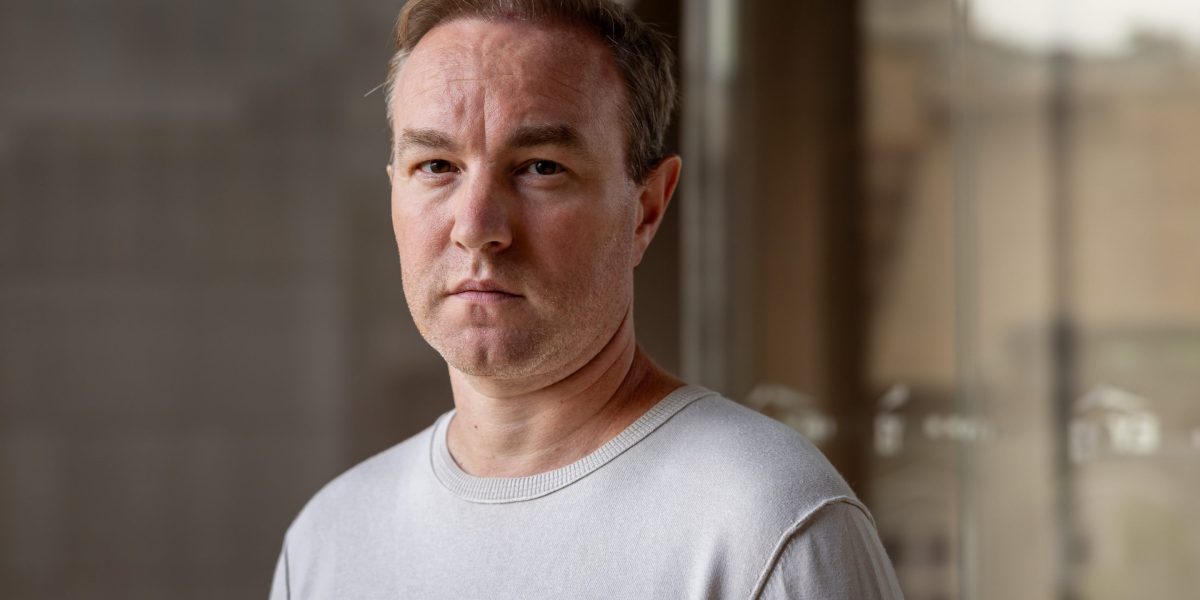
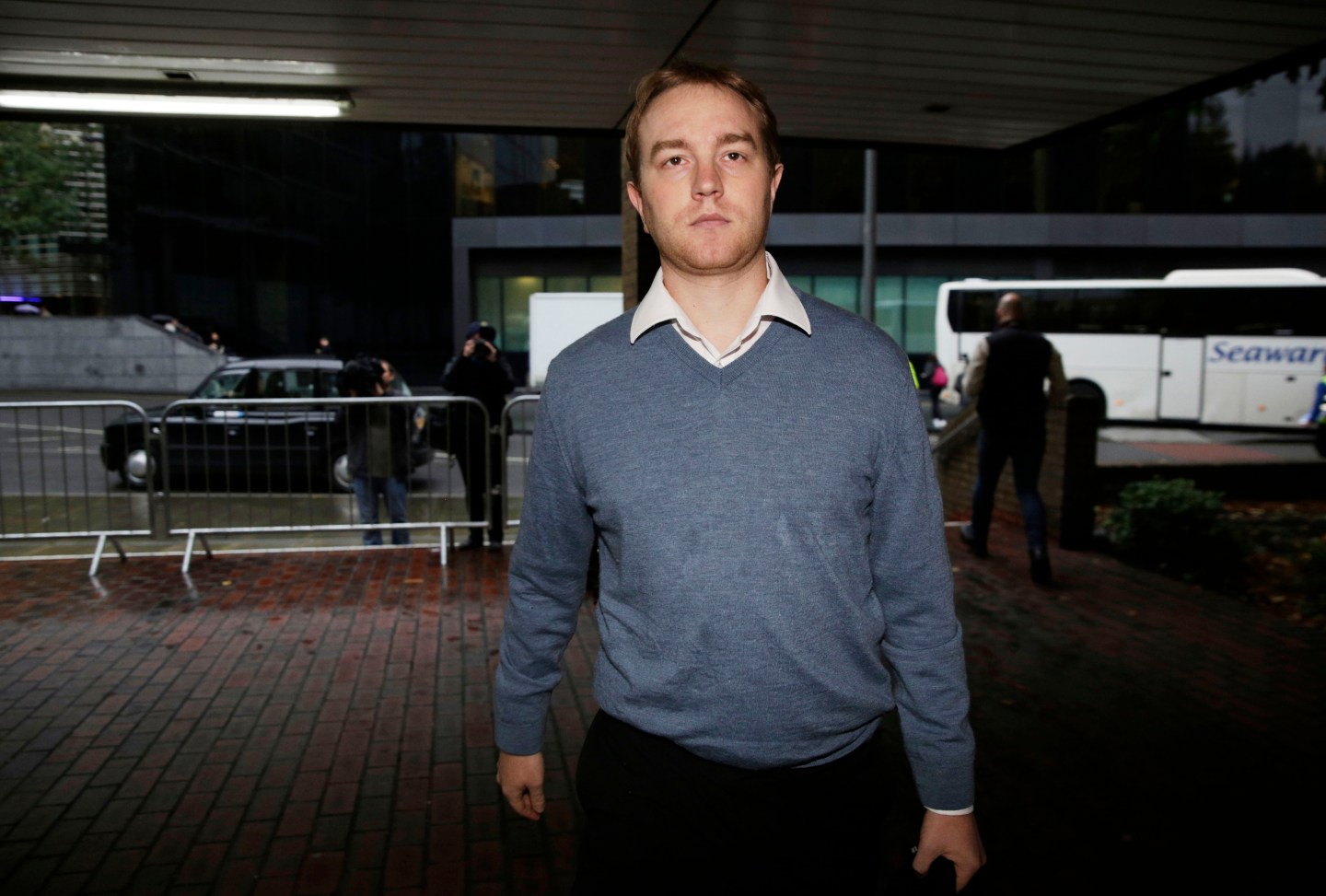
In August 2015, former UBS banker Tom Hayes sat in a London courtroom after being found guilty of eight counts of conspiracy to defraud, for his involvement in the Libor interest-rate rigging scandal. That day, he would be sentenced to 14 years in prison, the longest white-collar sentence in British history. Packed in the prison bag he never thought he would need was Amanda Knox’s book Waiting To Be Heard. He read the memoir in segregation, but it wasn’t until his conviction was overturned in July of this year, after he spent five and a half years in some of Britain’s highest security prisons, that the title truly resonated with him. Now, Hayes is seeking justice for himself—against his former employer.
On October 23, Hayes filed a $400 million lawsuit against UBS in Connecticut state court for allegedly wrongly casting him as the “evil mastermind” responsible for Libor rate manipulation to protect senior executives and avoid substantial regulatory sanctions and prosecution. The Swiss bank paid $1.5 billion to settle various U.S., U.K., and Swiss regulatory penalties in 2012 when Hayes was criminally charged. The former banker also filed a duplicate case against UBS in a New York state court.
Prior to Hayes’ incarceration, he was a highly successful trader. According to the civil complaint, he was positioned to earn at least $5-10 million annually for years to come. His finances now, however, have been decimated. Aside from spending more than $1 million on his criminal defense, Hayes’s assets were frozen by prosecutors and he was debanked. Blackballed from the financial industry and fired from non-finance jobs due to negative press reports, Hayes alleges he has been unable to secure even basic employment due to his reputation.
Beyond the monetary losses, Hayes’ legal battles and imprisonment also cost him his marriage and harmed his health. While in prison, Hayes told Fortune, one of his cellmates attempted to kill him and he required protection from fellow inmates to remain safe. During his trial and in prison, he also struggled with depression and intense emotional distress. And, four years ago, Hayes was formally diagnosed with multiple sclerosis, which the complaint alleges was triggered by the stress endured throughout his prosecution and imprisonment.
“It’s important for people to recognize that this is not about me getting rich,” Hayes told Fortune. “It’s about stopping corporations screwing over their employees, and the only language that they speak is money.”
CHRIS RATCLIFFE—Bloomberg/Getty Images
Hayes isn’t alone in his legal crusade. From London to Frankfurt, a wave of former bankers who claim they were thrown under the bus for institutional misconduct are now suing their ex-employers for hundreds of millions in damages. Most recently, six former Deutsche Bank bankers filed lawsuits against the German lender—after being acquitted of charges related to a derivatives scandal involving Banca Monte dei Paschi di Siena—claiming the bank’s internal investigation wrongfully blamed them for institutional misconduct. And, last year, two ex-Deutsche Bank traders charged with Libor-rigging settled with the German bank in similar lawsuits for an undisclosed amount.
“The bank is aware that five individuals are raising claims in the UK in the context of this matter, and that a claim has been filed in Frankfurt—as we disclosed in our annual report. Deutsche Bank considers the claims to be entirely without merit and will defend itself against them robustly,” a Deutsche Bank spokesperson told Fortune.
The cases represent an emerging trend that experts say could reshape how corporations handle internal investigations and cooperate with prosecutors—or force them to finally hold senior management accountable if they orchestrate the wrongful criminal prosecutions of their own staff.
UBS declined a Fortune request for comment.
The system built to be rigged
To understand why Hayes and others are fighting back, it’s essential to grasp what Libor was, why its manipulation mattered, and why Hayes’s case was taken so seriously by the courts.
The London Interbank Offered Rate, calculated by averaging submissions from major international banks, served as the primary benchmark for short-term interest rates globally. Those rates eventually filtered through into the property mortgage market—where the Great Financial Crisis of 2007 originated.
Every morning, a panel of major banks would submit an estimate of what interest rate it would have to pay if it borrowed money from other banks. Thomson Reuters would then discard the four highest and four lowest submissions and average the remaining eight to calculate Libor for that day.
The system was designed as an honor system where banks would report their borrowing costs. But, as the former Federal Reserve Chairman Ben Bernanke said, the Libor system was “structurally flawed” because banks exposed to changes in Libor through derivatives contracts had a significant incentive to favorably skew survey responses, and there was little risk in doing so.
Libor-rigging was deeply embedded across the entire banking industry as a normalized practice. Between 2005 and 2011, traders at UBS, Deutsche Bank, Barclays, Royal Bank of Scotland, Rabobank, Citibank, and other major institutions routinely adjusted their Libor submissions to benefit their trading positions—sometimes at the behest of their supervisors, and sometimes to protect their banks’ reputations during the 2008 financial crisis.
The manipulation was often overt. Thousands of emails and messages between bankers and senior managers subpoenaed by the Commodity Futures Trading Commission (CFTC) featured blatant boasting about and collusion to manipulate rates. For Hayes, this included a November 2006 chat during which he told a UBS Libor submitter he “really need high 6m [6-month] fixes till Thursday.” The submitter responded: “yep we on the case there . . . will def[initely] be on the high side.”
When regulators finally came looking for someone to blame for the financial crisis, they cracked down hard on banks involved in setting Libor. UBS was fined $1.5 billion in December 2012. Deutsche Bank paid $2.5 billion in 2015—the largest penalty in CFTC history at the time. Barclays, RBS, Rabobank, Citibank, and others collectively brought total industry fines to over $9 billion.
DREW ANGERER—Getty Images
The institutions settled and moved on, but individual traders faced criminal prosecution. By 2020, 38 individuals had been charged in the U.S. and Europe, with 20 convicted. Hayes, arrested on December 11, 2012, in the U.K.—one week before UBS settled with regulators—was the first to face a jury trial.
Hayes’ arrest coincided with the U.S. Department of Justice unsealing federal criminal charges against him and fellow UBS trader Roger Darin. The indictment accused both men of conspiracy to commit wire fraud, wire fraud, and price-fixing violations.
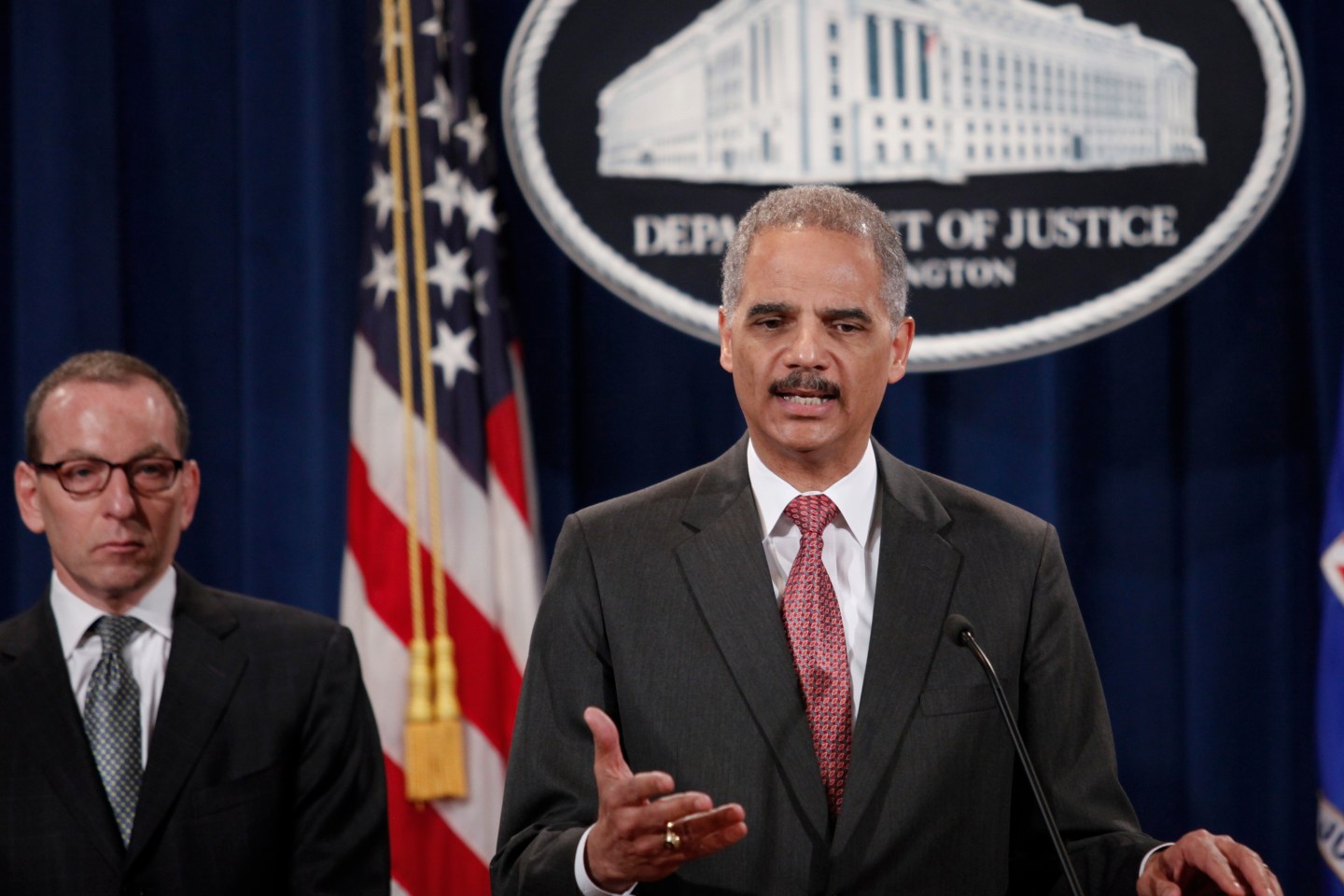
The criminal complaint laid out by then Attorney General Eric Holder described Hayes, then 33 years old, as the “kingpin” of a three-year campaign to manipulate global interest rates. Holder, however, also made the controversial decision not to criminally indict UBS itself, instead entering a non-prosecution agreement. This decision, then Criminal Division chief Lanny Breuer said, was based on concerns about “collateral consequences” to the financial system—effectively prioritizing systemic financial stability over holding an individual institution criminally responsible. The DOJ did criminally charge UBS’s Japanese subsidiary, UBS Securities Japan Co. Ltd., which agreed to plead guilty to felony wire fraud.
Holder did not respond to a Fortune request for comment.
The U.S. charges against Hayes were ultimately dropped in January 2022 without him ever being tried or convicted. Abandoning the indictment came after the U.S. Court of Appeals for the Second Circuit overturned the convictions of two other traders who had been prosecuted on similar Libor manipulation charges in federal court in New York in 2018. This appellate decision essentially dismantled the legal theory that prosecutors had been using to pursue Libor traders.
The perfect fall guy
Hayes’ lawsuit paints a damning picture of how UBS allegedly planned his downfall. According to the complaint, the bank “gained control” over the DOJ and CFTC’s inquiries into its own alleged misconduct by hiring the law firm Gibson Dunn to conduct an internal investigation, which would then be provided to authorities. That investigation, Hayes’ complaint claims, was “fundamentally flawed” and designed to identify him as the ultimate scapegoat.
Gibson Dunn did not respond to a Fortune request for comment.
“They call it a cleansing service,” Hayes told Fortune. “Basically the third party counsel is paid tens, if not hundreds of millions of dollars by these banks who will go in, and identify who’s going to go to jail. They’ll work out with the prosecutors how high up the chain they’ll go. They’ll discuss how much fines they’ll pay.”
Through this process, the complaint alleges, UBS and Gibson Dunn identified Hayes as collateral to be served up to prosecutors.
Several factors made Hayes an ideal candidate for this role. He worked in Japan, allowing UBS’s Japanese subsidiary—not its US or Swiss entities—to plead guilty to wire fraud while the parent company secured a non-prosecution agreement. He was relatively young, autistic (diagnosed with Asperger’s syndrome just before his U.K. trial, but referred to on the trading floor as “Rain Man” by his colleagues), and hadn’t attended elite schools. Most importantly, he left an extensive paper trail.
Hayes admits he sent emails and made recorded phone calls requesting Libor adjustments on an almost daily basis—more than 2,000 documented requests, according to U.K. regulators. “Either I’m the stupidest fraudster ever or I didn’t think I was doing anything wrong,” he told Fortune.
His autism may have also contributed to this lack of discretion. “Being on the spectrum gives me a curious sense of loyalty. I always sought approval from my managers,” Hayes said. “There’s no way I would have done anything to let my bosses down. There’s no way I would have done anything that they didn’t want me to do.”
But Hayes insists senior management not only knew about his activities—they encouraged them. His lawsuit claims UBS had “a company policy to set the rate in alignment with commercial interests.” At least 45 UBS staff were involved in Libor manipulation, with at least 2,000 documented requests for inappropriate submissions—plus “an unquantifiable number of oral requests”—according to the U.K. Financial Services Authority. Between November 2006 and August 2009, Hayes or his colleagues attempted to manipulate Yen Libor on 335 out of 738 trading days. The bank had even given traders formal responsibility for making Libor submissions, creating a direct conflict of interest.
“We operated in a system that was really grossly conflicted and really poorly set up and really open to conflicts of interest, and us traders, who were basically trained within an inch of our lives to find edge wherever we can, to operate in this system that basically wasn’t regulated, had no rules,” Hayes explained.
MATTHEW LLOYD—Bloomberg/Getty Images
Eugene Soltes, a business ethics professor at Harvard Business School who has studied white-collar prosecutions extensively, confirmed that Hayes’ paper trail made him especially vulnerable in a way that could shield more senior executives. “The challenge is that you need evidence,” Soltes told Fortune. “What is the evidence people actually look for? It’s chat messages, emails. In a lot of organizations you have the senior-most people—a lot of it is oral and verbal conversations, things that are understood as norms and driven by incentives that are set up. When push comes to shove, it’s much harder to get the kind of evidence that we would use in a legal system to hold the senior-most people accountable”.
According to Brandon Garrett, a Duke Law professor and author of Too Big to Jail, it’s because those higher up at corporations leave less of a footprint or evidence of intent, that they are more difficult to hold accountable. “It is typically lower or middle-level employees who get prosecuted and convicted,” he told Fortune.
The government bargain
The dynamic Garrett and Soltes describe creates the perfect conditions for potential scapegoating. When prosecutors investigate corporate crime, they face a stark choice: spend years and enormous resources (which they often don’t have) trying to build cases against senior executives with little direct evidence, or accept the corporation’s cooperation—along with massive fines—in exchange for prosecuting lower-level employees whose fingerprints are all over the misconduct.
Arthur Wilmarth, a law professor at George Washington University who has studied banking regulation for decades, explained that authorities want to collect fines from corporations and administrations want to demonstrate they are tough on crime—and to accomplish these goals they lean on firms with prosecutorial threats. “There’s a ton of pressure on UBS, because even if UBS thinks internally they didn’t do anything wrong, if UBS gets indicted, they are effectively out of business, because they lose all their banking licenses upon being indicted,” he told Fortune.
Growing pressures following the 2008 financial crisis to see individual accountability, Soltes said, has also, by expansion, pressured organizations to “identify culpable individuals when misconduct does occur.”
According to Wilmarth, this means determining who is expendable. “Hayes was useful when they were doing all the Libor rigging, but those days are over,” He said. (Libor was phased out in 2021.)
Miriam Baer, the dean and at California Western School of Law who specializes in corporate criminal law, acknowledges this creates a troubling dynamic, especially given prosecutors take into account whether or not businesses involved in crimes cooperated with authorities.
“Organizations are incentivized by the law to come forward with information of wrongdoing if they want to demonstrate that they’ve detected wrongdoing, that they’re attempting to change,” she told Fortune.
The result, Baer says, is that “the people who feel the greatest accountability legally aren’t always the people who we, the public, would invest with moral responsibility for the ultimate outcome.”
A path forward
For Hayes, the lawsuit isn’t about money—though $400 million would represent one of the largest individual claims against a bank by a former employee. “One thing I learned in prison is money is just stuff, and stuff doesn’t make you happy,” he said.
Instead, Hayes insists the case is about deterrence and accountability. “What is a deterrent for a corporation? Does 10 million matter to UBS? No. Does 100 million matter to UBS? No. Does 400 million matter to shareholders? Maybe a little bit,” he said.
Jonathan Harris, his attorney, has similar motivations. “My primary goal is to get some measure of satisfaction for Tom Hayes,” he told Fortune. “But my secondary goal is … I hate it when companies do this. And I would like them, when they are sitting around the table and deciding to point the finger at some autistic guy in Japan, that they think twice.”
Hayes said he is eager to take the stand. But UBS will likely file motions to dismiss the case or move it from Connecticut to another venue.
But Hayes has already forced a conversation about corporate accountability that prosecutors and regulators have tried to avoid for more than a decade. As Wilmarth put it: “Whatever you might think the culpability of the individuals was or might have been, exposing the fact that what they did was absolutely approved and blessed and encouraged by their superiors, that’s a public service.”
But ameliorating banking culture and compliance, and greater institutional accountability, faces an upward battle, according to Soltes. “The challenge that we face right now when it comes to corporate and individual level accountability, is that there’s a lot of things that people can do that are sketchy and, frankly, undesirable from our economic and financial well being as a society, but because of how the system is set up, and our rules and our means of accountability are simply things that you’re not going to be held, either criminally or civilly accountable or sanctioned for,” he told Fortune.
Until that happens, the wave of lawsuits by disgraced bankers may be the only mechanism forcing institutions to reckon with their role in creating the conditions for widespread misconduct—and then sacrificing individuals to protect the executive suite.
Hayes, for his part, seems at peace with whatever comes next. After finding Christianity in prison and welcoming a daughter he named Themi (derived from Themis, the Greek goddess of justice), he’s learned to live with uncertainty. “The one thing I have to believe in, whether it’s worked for me or not, is justice,” he said.
In November 2025, Hayes will travel to Washington, D.C., where his legal case has been nominated for legal case of the year—an award ceremony ironically sponsored by Gibson Dunn, the very law firm he alleges helped UBS scapegoat him. Despite fears he could still be arrested, Hayes is determined to attend.
“I have to confront the thing I’m so scared of,” he explained. “If I can go to Washington and leave Washington, then I’m not going to be afraid of going anywhere. I’ll be fine for the rest of my life.”