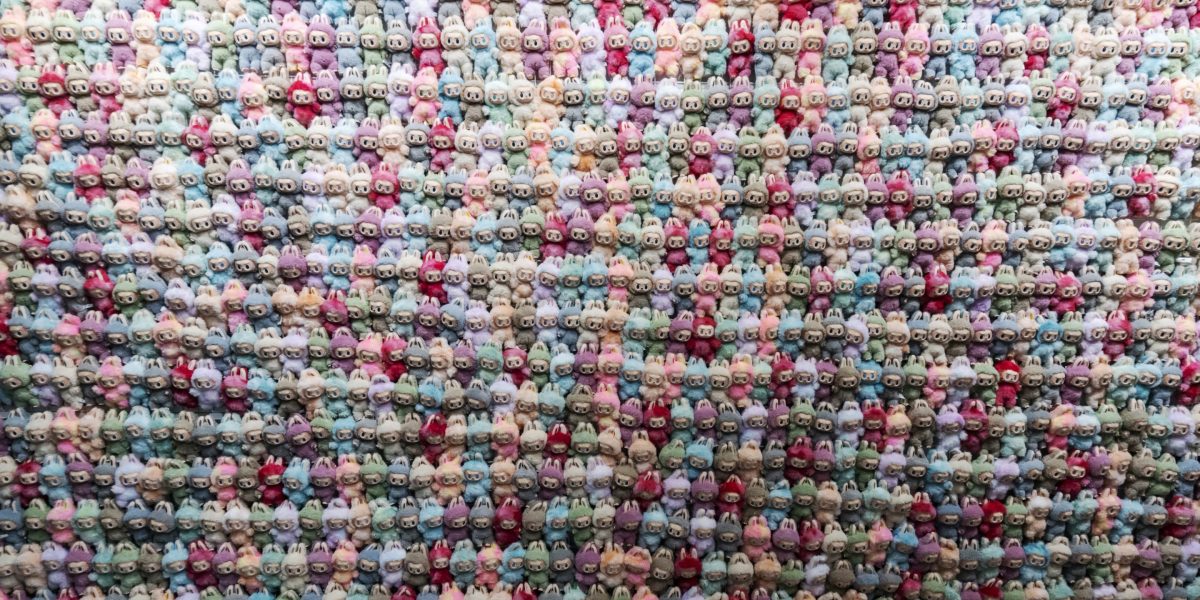
At the Fortune Global Forum in late October, the CEO of Hong Kong Exchanges and Clearing, the operator of the Chinese city’s stock exchange, shared an investor obsession.
“What is also emerging is a very interesting phenomenon, what we call ‘new consumption,’” Bonnie Chan told the audience. Her prime example? “This thing called Labubu.”
The ugly-cute doll, sold by Chinese toymaker and retailer Pop Mart, is the hottest item of 2025 and, as Chan mentioned, evidence of the new trend in Chinese consumers making emotionally driven purchases. Shoppers have queued up at Pop Mart outlets in Beijing, Shanghai, and Hong Kong to buy the dolls. Celebrities like Rihanna, Lisa, and Dua Lipa have been photographed with the toy hooked on their handbags. Tennis star Naomi Osaka has proudly touted her bejeweled, customized Labubu dolls on TV, naming them “Andre Swagassi” and “Billie Jean Bling.”
Pop Mart’s fortunes have swelled as Labubu dolls have sold out around the world. The Beijingheadquartered toy retailer, known for selling toys via “blind boxes,” reported 13 billion Chinese yuan in revenue ($1.9 billion) for the first six months of 2025, up more than 200% from the same period a year earlier. Profits have surged by even more: Pop Mart earned 4.5 billion yuan ($630 million) in net income, up almost 400%. Labubu alone made up a third of its sales. The global surge has been so strong, that even CEO Wang Ning has admitted he can’t accurately forecast how long it will last.
The toy store’s shares have surged over 125% since the beginning of 2025, making it one of the best-performing stocks on Hong Kong’s benchmark Hang Seng Index. (Pop Mart joined the index in September.) Even after shares dropped 40% from their peak, Pop Mart’s $37 billion market cap is still worth as much as Hasbro, Mattel, and Sanrio combined. The stock surge also hiked the wealth of Pop Mart’s founder, Wang, who’s now worth $18 billion, according to Bloomberg.
Labubu hype will eventually fade, but Pop Mart clearly hopes its fortunes don’t fade with it. What may be longer lasting is the consumption trend behind Labubu: The Chinese intellectual property and local brands beloved by this generation of Chinese shoppers are gaining traction outside of China, finally cementing the world’s second largest economy as a global cultural powerhouse.
Wang Ning, born in 1987, started Pop Mart in 2010, after a brief stint working in China’s tech sector. The first outlet was in Zhongguancun, a neighborhood in Beijing known for its tech companies. Wang has cited Japan’s gachapon vending machines—stations where children turn a dial to receive a small toy at random—as well as Hong Kong’s Log-on retail chain of variety stores, as inspirations for Pop Mart.
There’s an element of chance at Pop Mart, too. Customers don’t buy toys outright. Instead, they buy a blind box that contains a mystery toy, say, a Labubu doll. Some variants are rarer than others. It’s a business model that pushes customers to try their luck, perhaps multiple times, to get their hands on a rarer doll. And it’s tailor-made for social media, as creators leverage the mystery to attract followers.
Pop Mart got its start capitalizing on the IP of brands like Disney but has since designed its own toys.
Li Peiyun—VCG/Getty Images
Early on, Pop Mart sold toys based on IP from companies like Disney. But it soon pivoted to selling toys based on designs that it owned outright. “Molly,” a series of wide-eyed girl figurines designed by Hong Kong artist Kenny Wong, was Pop Mart’s first big hit. Then came Labubu, the brainchild of another Hong Kong artist, Kasing Lung, who developed the creature in 2015 as part of “The Monsters,” a series inspired by Nordic folklore.
“First Pop Mart identifies an IP, then it turns this IP into a culture moment, then it builds a media ecosystem to boost it,” says Ashley Dudarenok, founder of ChoZan, a consultancy that helps foreign brands market themselves in China. “They’re more like cultural anthropologists than toymakers.”
Pop Mart is embarking on rapid global expansion, with over 570 stores in Europe, North America, Southeast Asia, and the Middle East. It generates 40% of its revenue outside of Greater China, up from less than 25% a year ago.
Over the summer, analysts tied the Labubu craze to a trend spreading among China’s youth: “emotional” or “new” consumption. The idea is that young urban shoppers, frustrated by limited career options and social mobility, are spending on hobbies and small pleasures, rather than on big-ticket items like a home.
Pop Mart is not the only one to benefit. Laopu Gold, a Chinese jewelry chain, is up over 150% for the year. Mao Geping, a cosmetics brand, is up 57%.
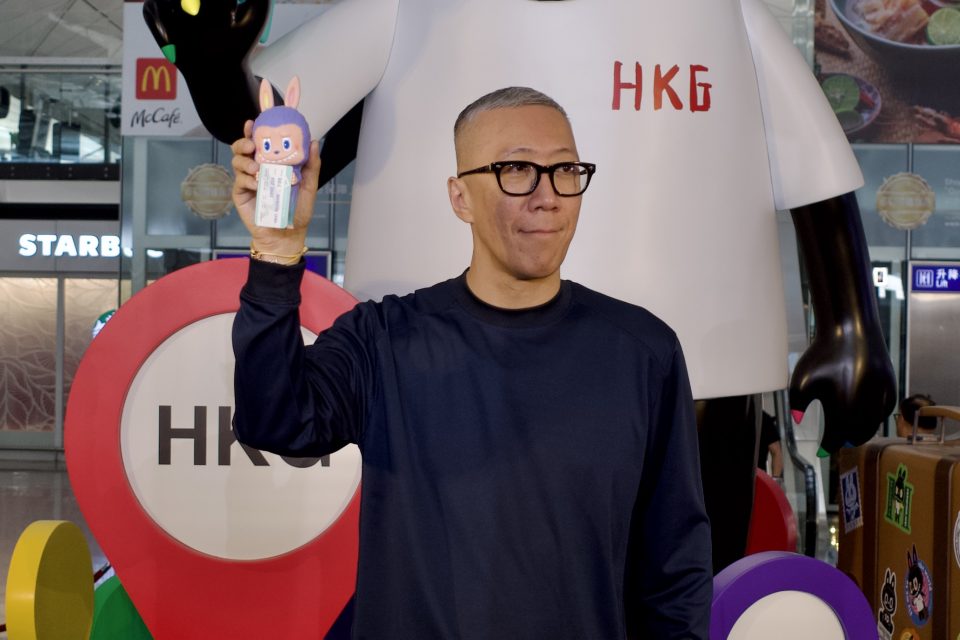
Labubu is the creation of Hong Kong artist Kasing Lung.
Li Zhihua—China News Service/VCG/Getty Images
“It’s the discretionary shopping that’s creating this booming consumption scene in China, because that’s where people can really express their personality,” notes Amber Zhang, a partner at Chinese research firm BigOne Lab.
In the past, shoppers might have bought a foreign brand; they now favor domestic ones that better align with their cultural values. “People are buying them because they feel like: ‘Hey, this is a great statement of my personality, and it doesn’t matter that it doesn’t have a [foreign] logo on it,’” says Zhang.
China, despite its size and rich history, has punched below its weight in global culture. Japan and South Korea, meanwhile, are global cultural powerhouses—Japan with anime and video games; Korea with dramas, pop music, and cosmetics.
But now the affordable treasures that Chinese consumers are clamoring for are finding audiences outside the mainland, too. Chinese video games, like miHoYo’s Genshin Impact and Game Science’s Black Myth: Wukong, have attracted global fan bases, with the latter setting player count records.
Ne Zha 2, an animated film from Chinese studio Beijing Enlight Pictures, is this year’s top grossing film globally, winning almost $2 billion at the box office (with the vast majority of sales in China).
Cheng Lu, CEO of CreateAI, a Chinese generative AI platform for animation and video games, says lower costs allow Chinese producers to “have more content out there.”
Chinese drink brands are also dipping into overseas markets. Luckin Coffee, bubble tea brand Chagee, and ice cream chain Mixue are all expanding into Southeast Asia, East Asia, and the U.S.
Even Chinese cosmetics are starting to elbow into a space dominated by Japanese and Korean brands, thanks to affordable products and aggressive digital marketing. “You know how crazy social media is in China?” Malina Ngai, CEO of Hong Kong– based health and beauty retail chain AS Watson, told Fortune in September. “When they go outside of China, they immediately surpass a lot of the brands when it comes to social media, storytelling, and endorsements.”
“They’re more like cultural anthropologists than toymakers.” Ashley Dudarenok, Founder of consultancy ChoZan, on Pop Mart’s retail savvy
Zhang isn’t surprised by China’s rising global prominence. “China now has this huge population base who are both rooted in China but also exposed to the global market,” she says, pointing to the many Chinese who have lived, worked, and attended school overseas. “They know how China works, and they know how the world works, and they have this opportunity to create and combine something that can resonate not just with Chinese people, but also a broader audience.”
Labubu mania has come down from its summertime frenzy. Investors are wary of declining secondary market prices for the dolls, a sign of dwindling popularity. They’re clearly jumpy. In early November, Chinese media shared a surreptitiously livestreamed conversation with a Pop Mart salesperson who said the company’s blind boxes are overpriced. Pop Mart lost almost $2.2 billion in market value that day.
Still, some analysts are hopeful that Pop Mart is more than just Labubu. “We believe Pop Mart is still in a growth stage of taking its IP products global, and that its relevant peers should be top global IP companies, such as Lego, Sanrio, and Jellycat,” HSBC analysts wrote in late October, dismissing parallels to the Beanie Baby bubble of the 1990s.
“The question now is, can Pop Mart—beyond Labubu, beyond Molly— make the transition into being a lifestyle?” Dudarenok asks. Pop Mart is experimenting with movies and has a theme park, but, she says, it’s unclear if the company can make a majority of its revenue from “lifestyle”—and not depend quite so much on a fuzzy, grinning yeti-like toy.
This article appears in the December 2025/January 2026 issue of Fortune with the headline “Behind Labubu Mania.”
Netflix Inc. has won the heated takeover battle for Warner Bros. Discovery Inc. Now it must convince global antitrust regulators that the deal won’t give it an illegal advantage in the streaming market.
The $72 billion tie-up joins the world’s dominant paid streaming service with one of Hollywood’s most iconic movie studios. It would reshape the market for online video content by combining the No. 1 streaming player with the No. 4 service HBO Max and its blockbuster hits such as Game Of Thrones, Friends, and the DC Universe comics characters franchise.
That could raise red flags for global antitrust regulators over concerns that Netflix would have too much control over the streaming market. The company faces a lengthy Justice Department review and a possible US lawsuit seeking to block the deal if it doesn’t adopt some remedies to get it cleared, analysts said.
“Netflix will have an uphill climb unless it agrees to divest HBO Max as well as additional behavioral commitments — particularly on licensing content,” said Bloomberg Intelligence analyst Jennifer Rie. “The streaming overlap is significant,” she added, saying the argument that “the market should be viewed more broadly is a tough one to win.”
By choosing Netflix, Warner Bros. has jilted another bidder, Paramount Skydance Corp., a move that risks touching off a political battle in Washington. Paramount is backed by the world’s second-richest man, Larry Ellison, and his son, David Ellison, and the company has touted their longstanding close ties to President Donald Trump. Their acquisition of Paramount, which closed in August, has won public praise from Trump.
Comcast Corp. also made a bid for Warner Bros., looking to merge it with its NBCUniversal division.
The Justice Department’s antitrust division, which would review the transaction in the US, could argue that the deal is illegal on its face because the combined market share would put Netflix well over a 30% threshold.
The White House, the Justice Department and Comcast didn’t immediately respond to requests for comment.
US lawmakers from both parties, including Republican Representative Darrell Issa and Democratic Senator Elizabeth Warren have already faulted the transaction — which would create a global streaming giant with 450 million users — as harmful to consumers.
“This deal looks like an anti-monopoly nightmare,” Warren said after the Netflix announcement. Utah Senator Mike Lee, a Republican, said in a social media post earlier this week that a Warner Bros.-Netflix tie-up would raise more serious competition questions “than any transaction I’ve seen in about a decade.”
European Union regulators are also likely to subject the Netflix proposal to an intensive review amid pressure from legislators. In the UK, the deal has already drawn scrutiny before the announcement, with House of Lords member Baroness Luciana Berger pressing the government on how the transaction would impact competition and consumer prices.
The combined company could raise prices and broadly impact “culture, film, cinemas and theater releases,”said Andreas Schwab, a leading member of the European Parliament on competition issues, after the announcement.
Paramount has sought to frame the Netflix deal as a non-starter. “The simple truth is that a deal with Netflix as the buyer likely will never close, due to antitrust and regulatory challenges in the United States and in most jurisdictions abroad,” Paramount’s antitrust lawyers wrote to their counterparts at Warner Bros. on Dec. 1.
Appealing directly to Trump could help Netflix avoid intense antitrust scrutiny, New Street Research’s Blair Levin wrote in a note on Friday. Levin said it’s possible that Trump could come to see the benefit of switching from a pro-Paramount position to a pro-Netflix position. “And if he does so, we believe the DOJ will follow suit,” Levin wrote.
Netflix co-Chief Executive Officer Ted Sarandos had dinner with Trump at the president’s Mar-a-Lago resort in Florida last December, a move other CEOs made after the election in order to win over the administration. In a call with investors Friday morning, Sarandos said that he’s “highly confident in the regulatory process,” contending the deal favors consumers, workers and innovation.
“Our plans here are to work really closely with all the appropriate governments and regulators, but really confident that we’re going to get all the necessary approvals that we need,” he said.
Netflix will likely argue to regulators that other video services such as Google’s YouTube and ByteDance Ltd.’s TikTok should be included in any analysis of the market, which would dramatically shrink the company’s perceived dominance.
The US Federal Communications Commission, which regulates the transfer of broadcast-TV licenses, isn’t expected to play a role in the deal, as neither hold such licenses. Warner Bros. plans to spin off its cable TV division, which includes channels such as CNN, TBS and TNT, before the sale.
Even if antitrust reviews just focus on streaming, Netflix believes it will ultimately prevail, pointing to Amazon.com Inc.’s Prime and Walt Disney Co. as other major competitors, according to people familiar with the company’s thinking.
Netflix is expected to argue that more than 75% of HBO Max subscribers already subscribe to Netflix, making them complementary offerings rather than competitors, said the people, who asked not to be named discussing confidential deliberations. The company is expected to make the case that reducing its content costs through owning Warner Bros., eliminating redundant back-end technology and bundling Netflix with Max will yield lower prices.
Nearly all leading artificial intelligence developers are focused on building AI models that mimic the way humans reason, but new research shows these cutting-edge systems can be far more energy intensive, adding to concerns about AI’s strain on power grids.
AI reasoning models used 30 times more power on average to respond to 1,000 written prompts than alternatives without this reasoning capability or which had it disabled, according to a study released Thursday. The work was carried out by the AI Energy Score project, led by Hugging Face research scientist Sasha Luccioni and Salesforce Inc. head of AI sustainability Boris Gamazaychikov.
The researchers evaluated 40 open, freely available AI models, including software from OpenAI, Alphabet Inc.’s Google and Microsoft Corp. Some models were found to have a much wider disparity in energy consumption, including one from Chinese upstart DeepSeek. A slimmed-down version of DeepSeek’s R1 model used just 50 watt hours to respond to the prompts when reasoning was turned off, or about as much power as is needed to run a 50 watt lightbulb for an hour. With the reasoning feature enabled, the same model required 7,626 watt hours to complete the tasks.
The soaring energy needs of AI have increasingly come under scrutiny. As tech companies race to build more and bigger data centers to support AI, industry watchers have raised concerns about straining power grids and raising energy costs for consumers. A Bloomberg investigation in September found that wholesale electricity prices rose as much as 267% over the past five years in areas near data centers. There are also environmental drawbacks, as Microsoft, Google and Amazon.com Inc. have previously acknowledged the data center buildout could complicate their long-term climate objectives.
More than a year ago, OpenAI released its first reasoning model, called o1. Where its prior software replied almost instantly to queries, o1 spent more time computing an answer before responding. Many other AI companies have since released similar systems, with the goal of solving more complex multistep problems for fields like science, math and coding.
Though reasoning systems have quickly become the industry norm for carrying out more complicated tasks, there has been little research into their energy demands. Much of the increase in power consumption is due to reasoning models generating much more text when responding, the researchers said.
The new report aims to better understand how AI energy needs are evolving, Luccioni said. She also hopes it helps people better understand that there are different types of AI models suited to different actions. Not every query requires tapping the most computationally intensive AI reasoning systems.
“We should be smarter about the way that we use AI,” Luccioni said. “Choosing the right model for the right task is important.”
To test the difference in power use, the researchers ran all the models on the same computer hardware. They used the same prompts for each, ranging from simple questions — such as asking which team won the Super Bowl in a particular year — to more complex math problems. They also used a software tool called CodeCarbon to track how much energy was being consumed in real time.
The results varied considerably. The researchers found one of Microsoft’s Phi 4 reasoning models used 9,462 watt hours with reasoning turned on, compared with about 18 watt hours with it off. OpenAI’s largest gpt-oss model, meanwhile, had a less stark difference. It used 8,504 watt hours with reasoning on the most computationally intensive “high” setting and 5,313 watt hours with the setting turned down to “low.”
OpenAI, Microsoft, Google and DeepSeek did not immediately respond to a request for comment.
Google released internal research in August that estimated the median text prompt for its Gemini AI service used 0.24 watt-hours of energy, roughly equal to watching TV for less than nine seconds. Google said that figure was “substantially lower than many public estimates.”
Much of the discussion about AI power consumption has focused on large-scale facilities set up to train artificial intelligence systems. Increasingly, however, tech firms are shifting more resources to inference, or the process of running AI systems after they’ve been trained. The push toward reasoning models is a big piece of that as these systems are more reliant on inference.
Recently, some tech leaders have acknowledged that AI’s power draw needs to be reckoned with. Microsoft CEO Satya Nadella said the industry must earn the “social permission to consume energy” for AI data centers in a November interview. To do that, he argued tech must use AI to do good and foster broad economic growth.
SpaceX is preparing to sell insider shares in a transaction that would value Elon Musk’s rocket and satellite maker at a valuation higher than OpenAI’s record-setting $500 billion, people familiar with the matter said.
One of the people briefed on the deal said that the share price under discussion is higher than $400 apiece, which would value SpaceX at between $750 billion and $800 billion, though the details could change.
The company’s latest tender offer was discussed by its board of directors on Thursday at SpaceX’s Starbase hub in Texas. If confirmed, it would make SpaceX once again the world’s most valuable closely held company, vaulting past the previous record of $500 billion that ChatGPT owner OpenAI set in October. Play Video
Preliminary scenarios included per-share prices that would have pushed SpaceX’s value at roughly $560 billion or higher, the people said. The details of the deal could change before it closes, a third person said.
A representative for SpaceX didn’t immediately respond to a request for comment.
The latest figure would be a substantial increase from the $212 a share set in July, when the company raised money and sold shares at a valuation of $400 billion.
The Wall Street Journal and Financial Times, citing unnamed people familiar with the matter, earlier reported that a deal would value SpaceX at $800 billion.
News of SpaceX’s valuation sent shares of EchoStar Corp., a satellite TV and wireless company, up as much as 18%. Last month, Echostar had agreed to sell spectrum licenses to SpaceX for $2.6 billion, adding to an earlier agreement to sell about $17 billion in wireless spectrum to Musk’s company.
The world’s most prolific rocket launcher, SpaceX dominates the space industry with its Falcon 9 rocket that launches satellites and people to orbit.
SpaceX is also the industry leader in providing internet services from low-Earth orbit through Starlink, a system of more than 9,000 satellites that is far ahead of competitors including Amazon.com Inc.’s Amazon Leo.
SpaceX executives have repeatedly floated the idea of spinning off SpaceX’s Starlink business into a separate, publicly traded company — a concept President Gwynne Shotwell first suggested in 2020.
However, Musk cast doubt on the prospect publicly over the years and Chief Financial Officer Bret Johnsen said in 2024 that a Starlink IPO would be something that would take place more likely “in the years to come.”
The Information, citing people familiar with the discussions, separately reported on Friday that SpaceX has told investors and financial institution representatives that it is aiming for an initial public offering for the entire company in the second half of next year.
A so-called tender or secondary offering, through which employees and some early shareholders can sell shares, provides investors in closely held companies such as SpaceX a way to generate liquidity.
SpaceX is working to develop its new Starship vehicle, advertised as the most powerful rocket ever developed to loft huge numbers of Starlink satellites as well as carry cargo and people to moon and, eventually, Mars.