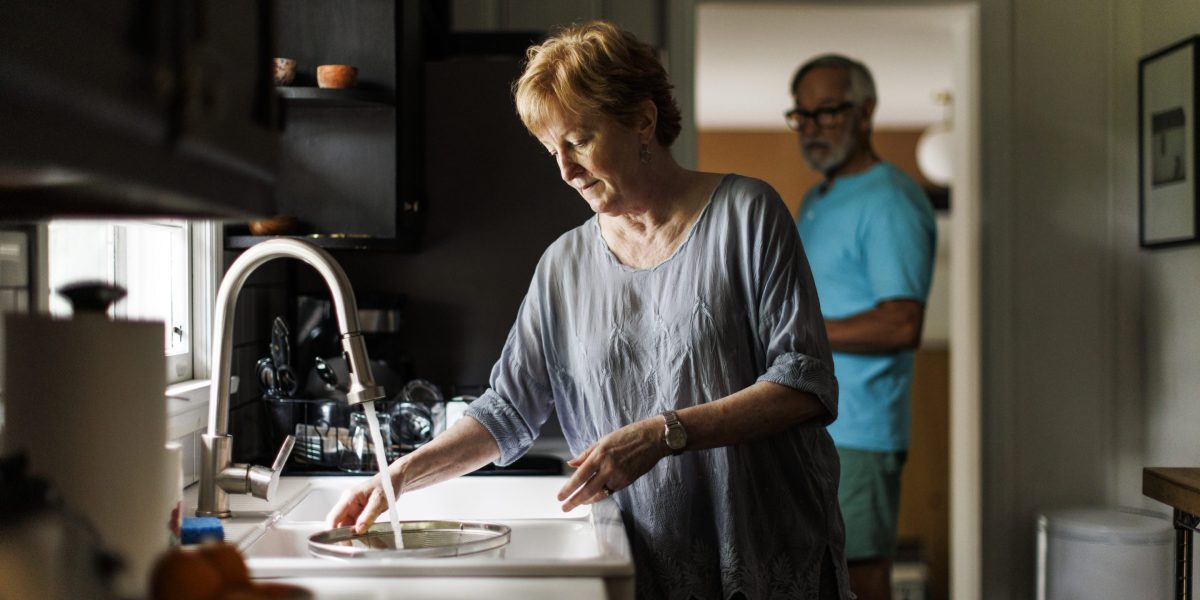
The comment sections of TikTok’s “middle-class house tours” feature thousands of Americans arguing about what qualifies as middle class in 2025. Viral videos of average homes are sparking comment threads filled with passionate arguments, as users weigh in on everything from income definitions and house size to family struggles and lifestyle choices. Users boldly label themselves as, alternately, “lower middle class,” “middle middle class,” or “upper middle class”—but the comment sections reveal fierce debates about whoʼs really where on the economic ladder.
Some viewers feel showcased homes look more affluent than their own reality, prompting debate over whether the poster is truly middle class or, as one commenter put it, “upper class hiding behind modest decor.” Posts that offer relatable glimpses of chipped baseboards, mismatched furniture, and paper window shades are championed by those who feel social media is otherwise awash in unattainable luxury. Others point out that the middle class can’t be defined solely by appearances, given regional cost differences and inflation.
Itʼs a vivid new window into just how confused people are about class in 2025. Many Americans seem genuinely unsure what distinguishes the different class gradations, or where their own household falls. The confusion is heightened by cost-of-living differences across the country and shifting economic benchmarks caused by persistent inflation and wage stagnation.
No consensus on income
Many Americans now argue that the income thresholds associated with middle-class status no longer match reality. While the Pew Research Center defines middle class as falling between two-thirds and double the median household income—which can vary in U.S. metro areas from about $53,000 to $161,000 annually—a viral TikTok recently featured one creator asserting, “$50 an hour is the new middle class,” reflecting how rising living costs have shifted public perceptions. With the median household income coming to roughly $83,000 as of September 2025, and steadily climbing as inflation has pushed up household costs, any resident of California or Massachusetts will tell you that the threshold for middle class status is even higher, and a home that looks upper class in one state could count as only middle class in another.
As more Americans take to TikTok to share—and comment on—their version of middle-class life, opinions remain divided. Some users argue that “middle class” is aspirational and increasingly out of reach, a sentiment strengthened by home tours that seem far from attainable for many families. Others believe the label should adapt to reflect a comfort and stability, even as incomes stagnate and home ownership feels elusive.
The ‘average home tour’ trend
A wave of content creators are responding to the pressure to show off spotless homes by filming unvarnished “average” or “normal” house tours. These videos highlight the mundane details and minor imperfections of a lived-in space—pantry doors left unfinished, creative workarounds for broken blinds, and evidence of daily chaos in the form of junk drawers and cluttered countertops. The creators’ message is clear: Being middle class is less about perfection and more about making do, sharing moments of love and memory, and managing the squeeze of costs that leave little room for luxury.
Despite some relief in headline inflation rates, the cost of daily living is still climbing, and cumulative price increases have become a permanent burden for many households. Wages havenʼt kept up, with the JPMorgan Chase Institute recently finding real income growth stagnating to its slowest rate since the Great Recession. Meanwhile, the wealthiest Americans have seen net worth rise owing to asset appreciation. While the top 10% can absorb higher housing costs and continue discretionary spending, many in the so-called middle class are scaling back, feeling squeezed by rising grocery, utility, and housing costs.
Fortune’s recent story profiling author and Ritholtz Wealth COO Nick Maggiulli emphasizes that asset mix (businesses and stocks versus cars and homes); a broken housing market with record numbers of millionaire renters; and an aging-driven wealth transfer are reshaping what wealth means in practical and psychological terms. Maggiulli highlights his “Wealth Ladder” framework and “the new economic classes” of the U.S. He divides Americans into six wealth levels and spotlights the rapid rise—and growing angst—of what he calls “level 4”: the upper-middle-class person who is wealthy on paper but not in their feelings. UBS calls this the “everyday millionaire.”
Maggiulli argued that “something weird’s going on” because people who are objectively very successful seem to be struggling to enjoy the fruits of their labor. “They’ve done well in life … but on a relative basis in the United States, the competition for these higher-end goods is very high, so now it feels like we’re all canceling each other out with all this extra wealth.” An economy that wasn’t built for so many affluent households is straining under intensified competition for scarce high-end goods, housing, and lifestyle perks, leaving many statistically rich families feeling squeezed rather than secure. In the contemporary U.S., he added, “the poor own cars, the middle class own homes, and the rich own businesses.” The average-home tours of TikTok are revealing that middle-class homes seem to look and feel different from what many people expect.
Maggiulli’s generalization assumes that the middle class can even afford to buy a home, and some top housing CEOs say that’s no sure thing these days. CEO Sean Dobson of the Amherst Group, one of America’s biggest institutional landlords, recently told the ResiDay conference in New York that “we’ve probably made housing unaffordable for a whole generation of Americans” with our recent economic policies. The math suggests to Amherst that, with the median homebuyer now 40 years old and the median home price around $400,000, affordability would require home prices to fall by more than a third, interest rates by around 4.6%, or income to increase by about 55%.
“What are our goals?” Dobson asked Fortune hypothetically, on the sidelines of the conference. “Is our goal to get everyone long real estate? Or is our goal to get everybody to live where their kids can go [to a good school] and be successful?” He said there’s a big, glaring problem for the traditional driver of middle-class wealth: “In reality, the problem is that homeownership is too difficult to reach, and there aren’t enough homes—across all types and price points—to meet consumer needs.”
SpaceX is preparing to sell insider shares in a transaction that would value Elon Musk’s rocket and satellite maker at a valuation higher than OpenAI’s record-setting $500 billion, people familiar with the matter said.
One of the people briefed on the deal said that the share price under discussion is higher than $400 apiece, which would value SpaceX at between $750 billion and $800 billion, though the details could change.
The company’s latest tender offer was discussed by its board of directors on Thursday at SpaceX’s Starbase hub in Texas. If confirmed, it would make SpaceX once again the world’s most valuable closely held company, vaulting past the previous record of $500 billion that ChatGPT owner OpenAI set in October. Play Video
Preliminary scenarios included per-share prices that would have pushed SpaceX’s value at roughly $560 billion or higher, the people said. The details of the deal could change before it closes, a third person said.
A representative for SpaceX didn’t immediately respond to a request for comment.
The latest figure would be a substantial increase from the $212 a share set in July, when the company raised money and sold shares at a valuation of $400 billion.
The Wall Street Journal and Financial Times, citing unnamed people familiar with the matter, earlier reported that a deal would value SpaceX at $800 billion.
News of SpaceX’s valuation sent shares of EchoStar Corp., a satellite TV and wireless company, up as much as 18%. Last month, Echostar had agreed to sell spectrum licenses to SpaceX for $2.6 billion, adding to an earlier agreement to sell about $17 billion in wireless spectrum to Musk’s company.
The world’s most prolific rocket launcher, SpaceX dominates the space industry with its Falcon 9 rocket that launches satellites and people to orbit.
SpaceX is also the industry leader in providing internet services from low-Earth orbit through Starlink, a system of more than 9,000 satellites that is far ahead of competitors including Amazon.com Inc.’s Amazon Leo.
SpaceX executives have repeatedly floated the idea of spinning off SpaceX’s Starlink business into a separate, publicly traded company — a concept President Gwynne Shotwell first suggested in 2020.
However, Musk cast doubt on the prospect publicly over the years and Chief Financial Officer Bret Johnsen said in 2024 that a Starlink IPO would be something that would take place more likely “in the years to come.”
The Information, citing people familiar with the discussions, separately reported on Friday that SpaceX has told investors and financial institution representatives that it is aiming for an initial public offering for the entire company in the second half of next year.
A so-called tender or secondary offering, through which employees and some early shareholders can sell shares, provides investors in closely held companies such as SpaceX a way to generate liquidity.
SpaceX is working to develop its new Starship vehicle, advertised as the most powerful rocket ever developed to loft huge numbers of Starlink satellites as well as carry cargo and people to moon and, eventually, Mars.
Financially strained and cautious customers leaned heavily on buy now, pay later (BNPL) services over the holiday weekend.
Cyber Monday alone generated $1.03 billion (a 4.2% increase YoY) in online BNPL sales with most transactions happening on mobile devices, per Adobe Analytics. Overall, consumers spent $14.25 billion online on Cyber Monday. To put that into perspective, BNPL made up for more than 7.2% of total online sales on that day.
As for Black Friday, eMarketer reported $747.5 million in online sales using BNPL services with platforms like PayPal finding a 23% uptick in BNPL transactions.
Likewise, digital financial services company Zip reported 1.6 million transactions throughout 280,000 of its locations over the Black Friday and Cyber Monday weekend. Millennials (51%) accounted for a chunk of the sizable BNPL purchases, followed by Gen Z, Gen X, and baby boomers, per Zip.
The Adobe data showed that people using BNPL were most likely to spend on categories such as electronics, apparel, toys, and furniture, which is consistent with previous years. This trend also tracks with Zip’s findings that shoppers were primarily investing in tech, electronics, and fashion when using its services.
And while some may be surprised that shoppers are taking on more debt via BNPL (in this economy?!), analysts had already projected a strong shopping weekend. A Deloitte survey forecast that consumers would spend about $650 million over the Black Friday–Cyber Monday stretch—a 15% jump from 2023.
“US retailers leaned heavily on discounts this holiday season to drive online demand,” Vivek Pandya, lead analyst at Adobe Digital Insights, said in a statement. “Competitive and persistent deals throughout Cyber Week pushed consumers to shop earlier, creating an environment where Black Friday now challenges the dominance of Cyber Monday.”
A recent report card from an AI safety watchdog isn’t one that tech companies will want to stick on the fridge.
The Future of Life Institute’s latest AI safety index found that major AI labs fell short on most measures of AI responsibility, with few letter grades rising above a C. The org graded eight companies across categories like safety frameworks, risk assessment, and current harms.
Perhaps most glaring was the “existential safety” line, where companies scored Ds and Fs across the board. While many of these companies are explicitly chasing superintelligence, they lack a plan for safely managing it, according to Max Tegmark, MIT professor and president of the Future of Life Institute.
“Reviewers found this kind of jarring,” Tegmark told us.
The reviewers in question were a panel of AI academics and governance experts who examined publicly available material as well as survey responses submitted by five of the eight companies.
Anthropic, OpenAI, and GoogleDeepMind took the top three spots with an overall grade of C+ or C. Then came, in order, Elon Musk’s Xai, Z.ai, Meta, DeepSeek, and Alibaba, all of which got Ds or a D-.
Tegmark blames a lack of regulation that has meant the cutthroat competition of the AI race trumps safety precautions. California recently passed the first law that requires frontier AI companies to disclose safety information around catastrophic risks, and New York is currently within spitting distance as well. Hopes for federal legislation are dim, however.
“Companies have an incentive, even if they have the best intentions, to always rush out new products before the competitor does, as opposed to necessarily putting in a lot of time to make it safe,” Tegmark said.
In lieu of government-mandated standards, Tegmark said the industry has begun to take the group’s regularly released safety indexes more seriously; four of the five American companies now respond to its survey (Meta is the only holdout.) And companies have made some improvements over time, Tegmark said, mentioning Google’s transparency around its whistleblower policy as an example.
“[They] have really made a lot of people realize that this isn’t the future we’re talking about—it’s now,” Tegmark said.
The Future of Life Institute recently enlisted public figures as diverse as Prince Harry and Meghan Markle, former Trump aide Steve Bannon, Apple co-founder Steve Wozniak, and rapper Will.i.am to sign a statement opposing work that could lead to superintelligence.
Tegmark said he would like to see something like “an FDA for AI where companies first have to convince experts that their models are safe before they can sell them.
“The AI industry is quite unique in that it’s the only industry in the US making powerful technology that’s less regulated than sandwiches—basically not regulated at all,” Tegmark said. “If someone says, ‘I want to open a new sandwich shop near Times Square,’ before you can sell the first sandwich, you need a health inspector to check your kitchen and make sure it’s not full of rats…If you instead say, ‘Oh no, I’m not going to sell any sandwiches. I’m just going to release superintelligence.’ OK! No need for any inspectors, no need to get any approvals for anything.”
“So the solution to this is very obvious,” Tegmark added. “You just stop this corporate welfare of giving AI companies exemptions that no other companies get.”