
Politics
Charlie Crist closer to St. Pete mayoral bid, launches political committee

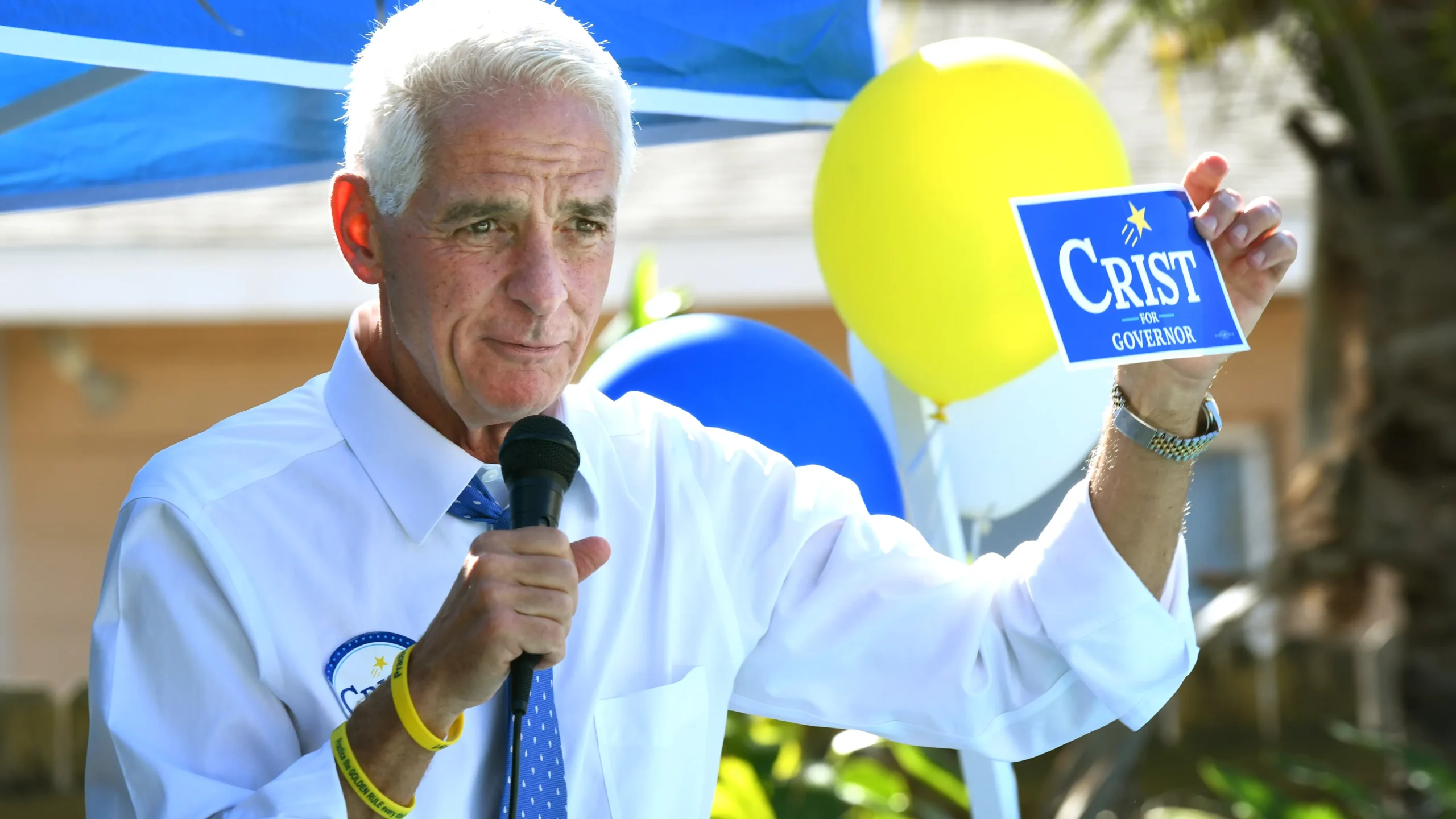
Former U.S. Rep. Charlie Crist is raising funds ahead of a potential bid for St. Petersburg Mayor. A political committee, St. Pete Shines, was established earlier this month, the Tampa Bay Times first reported Wednesday.
Paperwork was filed Nov. 7 and an acknowledgement letter sent Nov. 12 officially establishing the committee, which has not yet reported fundraising totals.
Michelle Todd Schorsch is the registered chairperson. Todd Schorsch previously worked as a special assistant to Crist when he was Florida Governor as a Republican. Crist is now a Democrat. Todd Schorsch is married to Florida Politics Publisher Peter Schorsch.
Schorsch addressed concerns about any perceived conflict of interest in coverage of the 2026 Mayor’s race, given his wife’s role with the political committee.
“While I absolutely retain my right to comment on the state of St. Pete politics, as I have for two decades, I have specifically hired a new reporter to provide independent coverage of the race, offering a fresh perspective and ensuring that Florida Politics’ coverage of the race is fair, accurate and extensive,” Schorsch said.
The recent hire, Jesse Mendoza, came to Florida Politics earlier this month from the Sarasota Herald-Tribune where he covered Manatee County government. Mendoza will be covering the St. Pete Mayor’s race when it kicks into gear. It’s worth noting that neither incumbent Mayor Ken Welch nor Crist have officially filed for the race.
Crist told the Tampa Bay Times in October that he was mulling a bid, but has not made an official announcement.
It’s been reported that Schorsch worked on Crist’s 2010 U.S Senate race, which is not accurate. By 2010, Schorsch had established SaintPetersBlog, the precursor to what is now Florida Politics, and had not worked for Crist since 2008, though he acknowledges they remain close friends.
While fundraising data is not yet publicly available because the St. Pete Shines committee was just formed this month, Todd Schorsch said the reception so far has been good.
“St. Pete Shines was created to build financial support for candidates committed to a brighter future for St Petersburg. I’m pleased with the response we’ve received thus far. We’ll have more to say in the coming weeks,” she told Florida Politics in a texted statement.

Crist told the Times he is “overwhelmed and humbled by the response” so far, and that it “is certainly helping me make a decision.”
The first financial report for St. Pete Shines is due Jan. 12 and will outline fundraising and expenditures. Welch’s political committee, The Pelican Political Action Committee, has raised nearly $235,000 as of Sept. 30, financial reports show.
St. Petersburg City Council member Brandi Gabbard has also announced she plans to run for Mayor, but has also not yet filed for the race. Only one candidate has actually filed: former St. Pete NAACP leader Maria Scruggs, who has run unsuccessfully several times for public office.
If Crist runs, it would be his eighth bid for public office in about two decades, including failed bids for U.S. Senate in 2010 and Governor in 2022. He lost the latter race to incumbent Republican Ron DeSantis by nearly 20 percentage points.
Crist’s political career dates back to the early ’90s, when he served in the Florida Senate as a Republican from 1993 until 1999. He left his seat early to run unsuccessfully for U.S. Senate. He served two years as Florida Education Commissioner, then an elected post, and as Florida Attorney General from 2003 until he was elected Governor in late 2006.
Crist later lost another U.S. Senate bid in 2010, when he ran as an independent. He ran again for Governor in 2014, as a Democrat, losing to Republican Rick Scott. Crist won election to Florida’s 13th Congressional District in 2016, defeating then-Republican incumbent David Jolly, who is now running for Florida Governor as a Democrat.
Amid unfavorable redistricting, Crist resigned his seat in Congress to run again for Governor, losing in 2022 to DeSantis.
With Gabbard already committing to a bid for Mayor, and Crist mulling one, it’s clear Welch could face a challenge unlike one he has faced in recent memory. His most recent election, against Republican Robert Blackmon for Mayor four years ago, was a blowout. Welch won by more than 20 percentage points.
As a Pinellas County Commissioner, Welch didn’t face opposition at all in 2008 or 2016. In 2012, when he did have a challenger, it was Scruggs, whom he trounced by 29 percentage points.

Florida lawmakers are once again being asked to expand unsupervised anesthesia practice, this time under the familiar banner of “access,” “cost savings,” and “modernization.” We are told this is inevitable — that “48 states already have similar laws,” and Florida is simply behind the curve.
That claim collapses under even minimal scrutiny.
Let’s be clear about what is being proposed: allowing Certified Registered Nurse Anesthetists to practice independently, without physician anesthesiologist supervision, in all settings. This is not a minor regulatory tweak. It is a fundamental change in how anesthesia care — one of the riskiest aspects of modern medicine — is delivered.
If lawmakers want to make policy based on evidence rather than talking points, three facts matter most.
Physician-led anesthesia care is the safest model.
Anesthesia is not just about “putting patients to sleep.” It involves managing complex physiology, responding to sudden, life-threatening emergencies, and caring for patients with multiple comorbidities — often when things go wrong quickly. Physicians who practice anesthesiology complete four years of medical school, four years of residency, and often additional fellowship training. That depth of training matters when seconds count.
The safest anesthesia outcomes consistently occur in physician-led teams, where anesthesiologists work alongside Certified Registered Nurse Anesthetists. Team-based care maximizes patient safety by matching expertise to the complexity of each patient’s care. Eliminating physician oversight does not improve safety; it removes a critical layer of protection.
Florida should be strengthening team-based care — not dismantling it.
Unsupervised anesthesia is not more cost-effective.
Proponents often claim that removing physician supervision lowers costs. The data do not support this. Medicare pays the same for anesthesia services regardless of whether a physician anesthesiologist is involved. Further, having an anesthesiologist present to manage complications helps control costs by reducing hospital stays and downstream medical expenses.
The cheapest anesthesia is the one that goes right the first time — and the safest model is also the most cost-effective in the long run.
These laws do not help rural communities.
This is where rhetoric diverges most sharply from reality. State “opt-out” laws allowing unsupervised anesthesia have been studied for more than a decade. The conclusion is consistent: they do not increase access to anesthesia services in rural or underserved areas.
Certified Registered Nurse Anesthetists, like all health care professionals, tend to practice where hospitals are well-resourced and professionally supportive. Opt-out states did not see a meaningful expansion of anesthesia services in rural hospitals. Workforce shortages remained unchanged.
If unsupervised practice were the solution, rural access problems would already be solved. They are not.
Supporters now claim that nearly every state has “similar” laws — a creative redefinition that lumps together wildly different regulatory frameworks. Supervised practice, delegated authority, limited opt-outs, and emergency exceptions are being counted as “unsupervised care.” Florida should not make major patient-safety decisions based on inflated numbers and fuzzy definitions.
This proposal is not about modernization. It is not about rural access. And it is not about saving money. It is about replacing the safest, most cost-effective anesthesia model with one that offers no proven benefit — and real risk.
Florida’s patients deserve policies grounded in evidence, not exaggeration. Lawmakers should reject unsupervised anesthesia and instead invest in physician-led, team-based care that puts safety first — every time.
___
Rebekah Bernard, M.D., is a family physician in Fort Myers and a Board member of Physicians for Patient Protection.
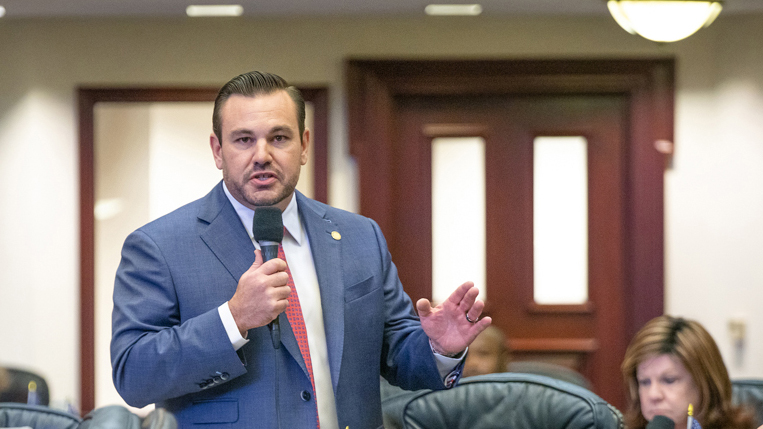
Rep. Adam Anderson has successfully ushered through its first committee stop legislation that would address a shortage of genetic counselors and strengthen the state’s capacity for advanced medical care and genetic research.
Anderson’s bill (HB 1115) cleared the Careers and Workforce Subcommittee. It would establish the Genetic Counseling Education Enhancement Grant Program within Florida’s State University System to support the development of American Board of Genetic Counseling-accredited graduate-level genetic counseling programs to eliminate Florida’s status as a genetic counseling desert.
“The need for health care professionals in the Sunshine State cannot be understated,” Anderson said.
“But specialization is the true hurdle for families praying for the next innovation that will help their child. Genetic counselors guiding difficult diagnoses are in short supply. However, Florida aims to right-set our specialization efforts at the intersection between education and employment. We’re standing by Florida families and those students willing to take the next step.”
With just 179 licensed genetic counselors in the state, patient demand is not being met. Genetic counselors guide families facing complex genetic diagnoses, and they serve as essential partners in research, innovation and precision medicine.
Sen. Danny Burgess is sponsoring an identical measure (SB 1376) in the upper chamber, though it has not yet been heard in committee. Still, he celebrated initial support for the measure in the House.
“This is legislation every Floridian can get behind,” Burgess said. “Developing our workforce is step one, but retaining specialized genetic counselors in the State of Florida to help Floridians is the entire picture. Aid shouldn’t be a state away. This grant program realizes that comfort and care for Florida families should be available within Florida.”
The bill would allow grant funds to be used to recruit and retain qualified faculty, provide financial aid to students, and establish or expand clinical rotations required to obtain a master’s degree in genetic counseling. The funds would be barred from use for general administrative costs, new facility construction and non-program-related activities.
Participating universities under the bill would be required to maintain detailed compliance records and submit annual reports on expenditures and program outcomes. The state Board of Governors would then compile the information from reports into a statewide submission.
“The progress Representative Anderson has ignited is contagious. Florida is on the cusp of developing a genetic counseling workforce that meets a crucial need for families facing uncertainty,” said Dr. Pradeep Bhide, Director of the Florida State University Institute for Pediatric Rare Diseases. “FSU is all for it.”

Under Bhide’s leadership, the Institute is developing a new master’s degree program in genetic counseling.
Currently, the University of South Florida is the only state school with an active genetic counseling program, with FSU’s program awaiting approval.
“New education programs are what drive the innovations and patient care required to address complex genetic issues. Rep. Anderson and the State of Florida have time and time again seen the value in the educational framework that leads to great progress,” said Charles J. Lockwood, executive vice president at USF Health and dean of the USF Health Morsani College of Medicine.
“USF Health has long understood the need for genetic counselors in Florida, and we are excited at the prospect of further collaboration with Florida’s other universities.”
Anderson’s bill heads next to the Higher Education Budget Subcommittee. If approved by the full Legislature and signed by Gov. Ron DeSantis, the measure would take effect July 1.


Trump added $2.25 trillion to the national debt in his first year back in charge, watchdog says

Taylor Swift Calls Justin Baldoni ‘Bitch’ In Text To Blake Lively

Florida shouldn’t gamble with patient safety on false promises
-

 Politics8 years ago
Congress rolls out ‘Better Deal,’ new economic agenda
-
Entertainment9 years ago
New Season 8 Walking Dead trailer flashes forward in time
-
Politics9 years ago
Poll: Virginia governor’s race in dead heat
-
Politics8 years ago
Illinois’ financial crisis could bring the state to a halt
-
Entertainment8 years ago
The final 6 ‘Game of Thrones’ episodes might feel like a full season
-
Entertainment9 years ago
Meet Superman’s grandfather in new trailer for Krypton
-
Business9 years ago
6 Stunning new co-working spaces around the globe
-
Tech8 years ago
Hulu hires Google marketing veteran Kelly Campbell as CMO