Connect with us

Politics

Thousands of Cubans struggle without power and water nearly a month after Hurricane Melissa
Published

on


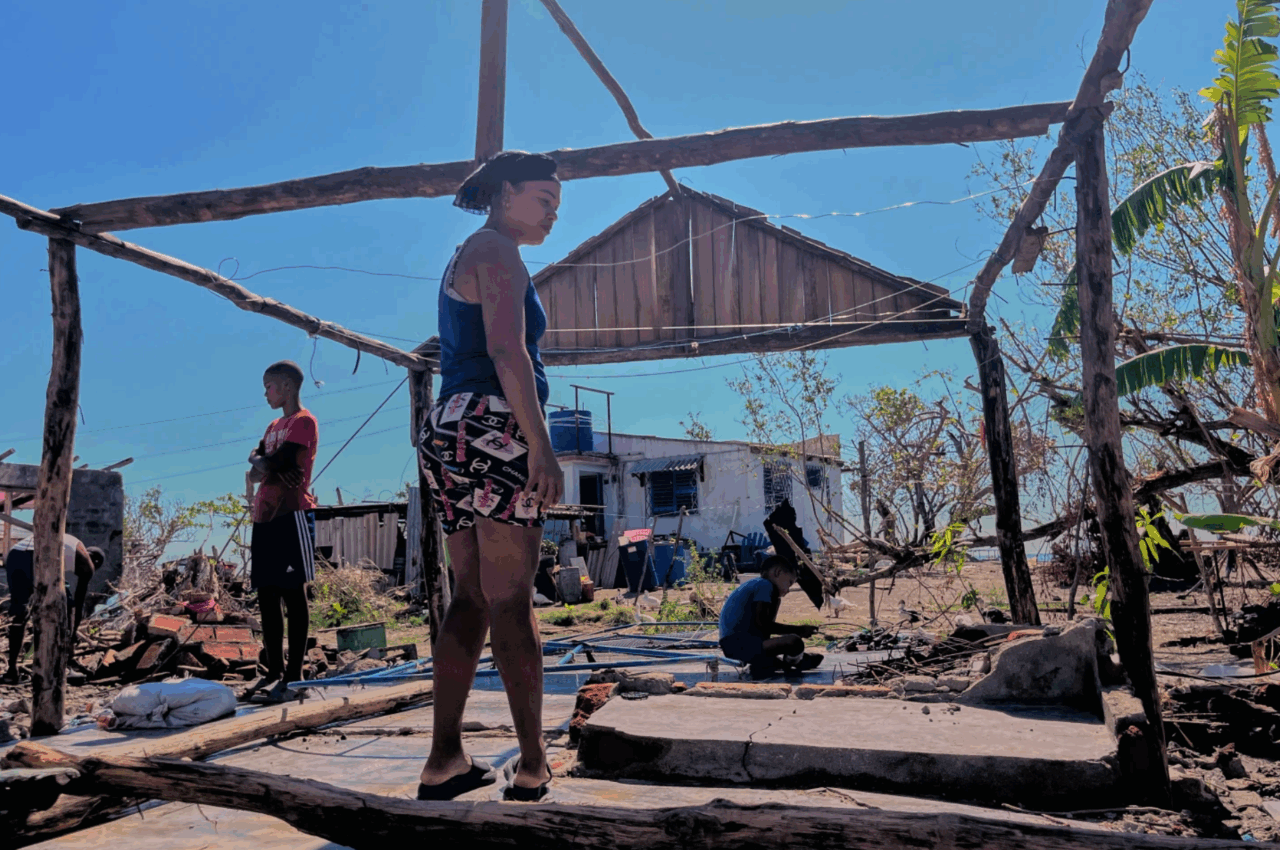
Thousands of Cubans remain without power, water or proper shelter almost a month after Hurricane Melissa pummeled the island’s eastern region as one of the strongest Atlantic storms in history.

By day, families walk toward the nearest river to fill plastic containers with water and by night, they squeeze together to sleep under temporary shelters and tents.

“We lost everything in the flood,” 80-year-old Lucía García said. “I am very depressed and very sad here.”

García is living in a small classroom with her two sons, ages 45 and 55, and her ailing 81-year-old husband, who remains bedridden.

The school where they’re staying in the town of Río Cauto serves as a shelter for 14 families and is providing daily meals to them and 25 other families living with relatives and neighbors. Water delivery trucks pass by every three or four days.

Many of the town’s residents lived by the river and lost their homes after Melissa cut through eastern Cuba, forcing nearby dams to release huge amounts of water.

More than 2,300 people were evacuated from the Río Cauto area, with more than 750 staying in private homes, according to a Nov. 10 report published in the official newspaper, Granma. It claimed that the return of residents to their homes “has been completed.”

Major damage also was reported in the nearby town of Los Mangos, where residents said massive floods hit a day after the storm made landfall.

“By dawn, the entire village was underwater,” recalled Anisleydis Hidalgo.

“We were evacuated before the hurricane hit,” she said. “When we returned home, they came to tell us there would be flooding…but no one expected the water to reach the level it did.”

She is living in a military-style tent with her 5-year-old daughter and two other families.

Lianet Socarras, a social worker from Los Mangos, said that 58 people, including 30 children, are sharing 10 tents donated by the government of India.

“The most critical problem we have now is the supply of drinking water in the community,” she said, noting that there is none.

‘The sea came into my house’

Soaked mattresses, electrical appliances, clothing, food, furniture and other belongings remain scattered outside the homes, with the smell of decaying carcasses of animals killed during the storm hanging over the town.

Neither the hurricane nor the floods damaged the electrical system in Los Mangos, but scheduled power outages have lasted many hours, further exacerbating an already difficult situation.

In the southern coastal municipality of Guamá, several towns are still reeling from the storm.

“The sea came into my house and soaked mattresses, electrical appliances and everything else that was there,” said Altagracia Fonseca, a 65-year-old retiree.

On a recent day, she walked to a nearby river to wash some of the clothes she was able to salvage after the storm.

Before Melissa hit, she had evacuated and packed only two changes of clothes, a toothbrush, toothpaste and a towel.

“I packed things like someone would when they are going to be away from home for a day,” she said as she burst into tears. “I never imagined I would find my house in such a state of disrepair. It was sad, very painful.”

Elizandra Sorrilla was in a similar situation.

“I packed clothes for myself and my children in a backpack; that’s all we have,” she said. “It’s something none of us will ever forget.”

Sorrilla, along with her husband, two children, and their dog, Roki, are living out of a small grocery store where they have improvised a kitchen and a space that serves as both bedroom and living room.

“They tell us they’re going to help us, but the resources haven’t arrived yet,” Sorrilla said.

Patience is running out

Power outages are constant in Guamá, and officials from the National Electric Union warned that repairs could take until mid-December.

But patience is running out.

Residents in the town of El Carmen recently blocked a main highway with fallen trees and electrical posts, noting they had been without electricity —even before Melissa hit.

“Everyone wants electricity, and we are working tirelessly to achieve this,” said Alfredo López, Director General of the National Electric Union, in a heated discussion with residents in the middle of the blocked road.

While food, mattresses, roof tiles and other items are being distributed to those affected by the storm, many needs are still going unmet as relations between Cuba and the U.S. are at their most tense since U.S. President Donald Trump and Secretary of State Marco Rubio took office.

They have implemented a radical tightening of sanctions against the island that were imposed more than six decades ago to pressure it to change its economic model.

No storm-related deaths were reported in Cuba, where authorities evacuated more than 700,000 people from coastal areas.

The U.N. said that some 53,000 people in Cuba have been unable to return to their homes, including 7,500 living in official shelters.

Melissa also made landfall in Jamaica, where at least 45 deaths were reported, and its outer bands swiped Haiti, where at least 43 people were killed.

____

Republished with permission of The Associated Press.


Source link

Continue Reading

Politics

Consumer protections for Hispanics, veterans, seniors, and retirees are smart policy

Published

on


Hispanic Floridians have played a pivotal role in building our state, and today their impact is stronger than ever. Increasing numbers of Hispanic families, business owners, seniors, retirees, and veterans call Florida home.

As our community grows, public policy must keep pace in protecting those most at risk.

Florida has a longstanding record of defending seniors, veterans, and retirees — from expanded homestead exemptions to laws guarding against elder abuse and financial exploitation. HB 427 and SB 266 build on that tradition by addressing a pressing problem: predatory public adjuster contracts targeting vulnerable residents after home damage.

When fires, plumbing disasters, or storms strike, seniors, retirees, and veterans often face pressure to sign complicated contracts quickly — sometimes while recovering from hospitalization or other emergencies.

Many Hispanic seniors face an additional hurdle: English is not their primary language, yet contracts are not required to be available in Spanish or other easy-to-understand formats.

Too often, elderly Hispanic residents are navigating these high-stakes decisions alone. Adult children may live far away and cannot assist immediately. Contracts must be reviewed and signed quickly, leaving residents exposed to confusing terms or high-pressure tactics.

HB 427 and SB 266 provide common sense relief. They allow seniors, retirees, and veterans to cancel public adjuster agreements — without penalty — if they are unable to fully understand the contract. This safeguard is especially important for Spanish-speaking residents and others facing language or comprehension challenges.

Ethical public adjusters have nothing to worry about. The bills target exploitative practices, not responsible business operations. They strike a balance: protecting Floridians while leaving legitimate professionals free to do their work.

At its core, this legislation is about fairness, clarity, and respect. It ensures that those who have contributed to Florida — Hispanics, seniors, retirees, and veterans alike — are not taken advantage of in moments of vulnerability.

Florida can once again demonstrate leadership in consumer protection. HB 427 and SB 266 offer practical, balanced reforms that reflect our values and protect those who need it most.

On behalf of Hispanic seniors, and all of Florida’s retirees and veterans, I urge lawmakers to act in support of these commonsense protections.

___

Julio A. Fuentes is president and CEO of the Florida State Hispanic Chamber of Commerce (FSHCC).


Source link

Continue Reading

Politics

John Harshman announces Sarasota City Commission bid

Published

on


Business leader John Harshman has entered the race for the Sarasota City Commission, running for an at-large seat in the city’s next municipal election.

Harshman, a longtime Sarasota commercial real estate executive, said decades of local business experience and civic involvement have prepared him for his bid for office. He faces incumbent Jen Ahearn-Koch, Flo Entler and Rob Rominiecki for two at-large seats.

“I fell in love with Sarasota and have built my career and life here,” Harshman said in a statement. “It would be my privilege to serve all members of our community on the city commission.”

Harshman, who moved to Sarasota more than five decades ago, founded Harshman & Co., Inc. in 1989. The firm has since grown into one of Southwest Florida’s top commercial real estate companies.

In his announcement, Harshman emphasized land-use policy and fiscal responsibility as core issues driving his candidacy. Harshman said he decided to run after completing a 45-day “listening tour,” during which he met with neighborhood leaders, business owners, arts organizations, environmental advocates and local government officials.

“The encouragement that I received from this very diverse group convinced me that my decades of living, working, and volunteering in the Sarasota community have prepared me for serving the citizens of the town I dearly love,” Harshman said.

Beyond his business career, Harshman has held leadership or volunteer roles with civic and nonprofit organizations, including the Sarasota Chamber of Commerce; Association of Downtown Commercial Property Owners, Inc.; Downtown Sarasota Alliance, Girls, Inc.; The Pines of Sarasota, Inc.; Sarasota County Public Facilities Finance Advisory Board; Sarasota Community Redevelopment Advisory Board; Sarasota County Environmental Lands Oversight Committee; City of Sarasota Tree Advisory Committee; National Estuary Program Volunteer; Sarasota Ballet Board; and John and Mable Ringling Museum of Art.

Harshman is a graduate of the University of South Florida and a Leadership Sarasota alumnus. He is also an honorary alumnus of New College of Florida.

Outside of his professional and civic work, Harshman also taught Taekwondo to hundreds of local families and earned a fifth-degree black belt — winning several national championships as a competitor.


Source link

Continue Reading

Politics

Michael Carbonara amasses $1.7M to challenge Debbie Wasserman Schultz

Published

on


That includes funding raised through a public bitcoin wallet.

Republican congressional candidate Michael Carbonara says he has raised $1.7 million to challenge Democratic U.S. Rep. Debbie Wasserman Schultz.

“For far too long, Debbie Wasserman Schultz has been a fixture in Washington, and she’s done nothing to help working families struggling with inflation, high taxes and needless bureaucracy, while pushing policies that harm Florida families and take away their freedoms,” Carbonara said.

“Her approach to government is rooted in Washington bureaucracy and big spending, not in accountability or affordability.”

Of note, Wasserman Schultz had just over $1.6 million in cash on hand at the close of the third quarter. The Weston Democrat hasn’t announced quarterly numbers for the final three months of 2025.

Details on Carbonara’s fundraising are not yet publicly available. The campaign said it did invest a portion of funds accrued through a dedicated public blockchain wallet with bitcoin personally raised by Carbonara.

But Carbonara’s campaign said he demonstrated the ability to raise more than she had in the bank in her last report. The candidate has stressed a hunger for change as he challenges the longest-serving Democrat in Florida’s congressional delegation.

“District 25 deserves a leader who will fight for Florida and restore Floridians’ freedom,” he said. “I’m in the business of breaking down barriers, solving problems and creating jobs, and I’ll do the same for our community in Congress.”

No other Republican who filed to challenge Wasserman Schultz last cycle raised as much as Carbonara has this cycle. Ahead of the 2024 contest, Republican Chris Eddy raised more than $416,000 for the seat. Wasserman Schultz beat Eddy in November 2024 with 54.5% of the vote.

That was a tighter margin than when she defeated Republican Carla Spalding in 2022 with 55.1% of the vote, the only other time she ran under the current district lines. Notably, Republican leaders in Florida have signaled that redistricting will happen again before the Midterms.

Carbonara’s campaign said it also has employed social media in new ways to directly reach voters in the district. A launch video on X has been viewed more than 9.3 million times as of this writing.


Source link

Continue Reading

Trending

Copyright © Miami Select.