
Politics
These 6 kitchen tools can make or break your Thanksgiving dinner
It’s the start of Thanksgiving week, the time when home cooks across America suddenly recognize the daunting task ahead.
More than 90% of people in the U.S. celebrate the food-centric holiday and more than 1 in 4 attend meals that include more than 10 other people, according to the Pew Research Center.
Under that kind of pressure, what host wouldn’t want the best tools to make sure the holiday dinner goes off without a hitch?
With that in mind, we asked national food safety experts which kitchen devices and aids are essential to ensure a safe and tasty Thanksgiving meal.
Here are their top four suggestions for aids that can make or break your holiday dinner, plus two bonus tips for after the meal:
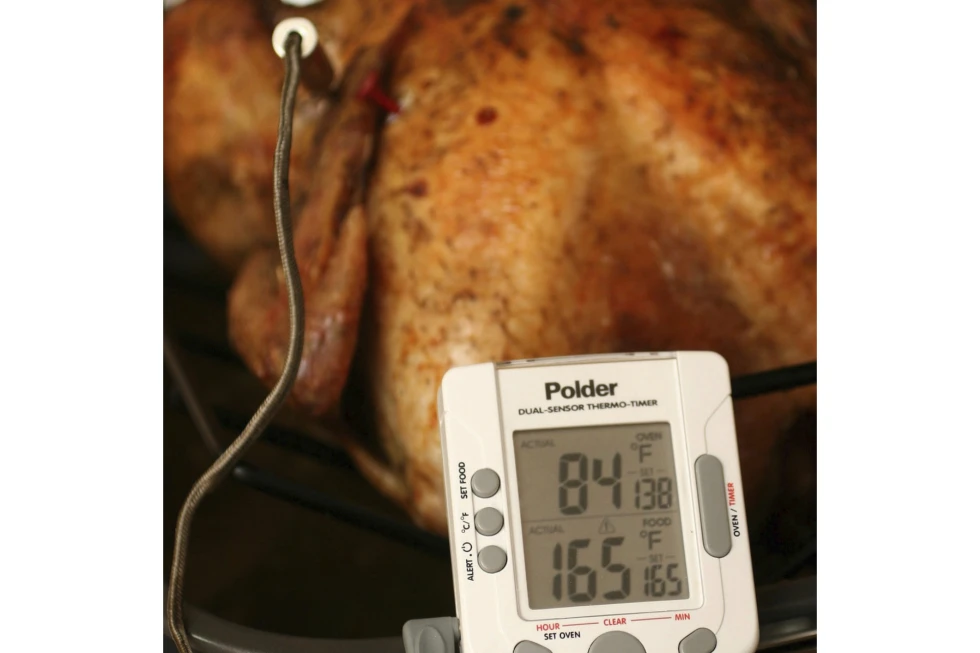
Digital meat thermometer
Our panel of experts unanimously agreed that an instant-read digital thermometer is vital to ensuring roast turkey and other dishes reach 165 degrees Fahrenheit (74 degrees Celsius) to eliminate the risk of foodborne illness from germs like Salmonella and Campylobacter.
“This is non-negotiable,” said Darin Detwiler, a Northeastern University food safety expert. “A reliable thermometer ensures you’re not guessing, because guessing is not a food safety strategy.”
This article is part of AP’s Be Well coverage, focusing on wellness, fitness, diet and mental health. Read more Be Well.
Color-coded cutting boards
In the hustle of a holiday kitchen, the risk of cross-contamination is real. That’s when germs from one food, such as raw turkey, may be spread to other foods, such as fresh vegetables or fruits.

It’s best to use dedicated cutting boards for each type of food, and color-coding — red for meat, yellow for poultry, green for veggies — can help, said Barbara Kowalcyk, director of the Institute for Food Safety and Nutrition Security at George Washington University.
“I try not to use wooden cutting boards,” said Kowalcyk, noting that they can retain bacteria that thrive and grow to large enough quantities to cause illness.
Sharp knives
As an emergency medicine doctor who has stitched up many Thanksgiving injuries, Dr. Tony Cirillo urges home cooks to make sure their kitchen knives are sharp.
A sharp knife cuts cleanly, while a dull knife requires more pressure that can cause dangerous slips, said Cirillo, president of the American College of Emergency Physicians.
Sturdy roasting pans
Pulling a hot turkey out of the oven is tricky, especially if the pan you cook it in is flimsy, Cirillo added. Use a sturdy metal roasting pan or, in a pinch, stack two foil roasting pans together for strength.
“I’m a big fan of double-panning,” Cirillo said. “Dropping the turkey is generally not good on Thanksgiving.”
Cooking timer
Just as important as getting food to the table is making sure it doesn’t sit out too long, said Don Schaffner, a food safety expert at Rutgers University.
Use a cooking timer or clock alarm to make sure to pack away leftovers within two hours to prevent bacterial growth that can cause illness.
Ruler
And when you’re storing those leftovers, make sure to put them in shallow containers, Schaffner said.
Measure using a ruler — or even the short side of a credit card — to make sure that dense foods like stuffing and sweet potatoes reach a depth of no more than 2 inches (5 centimeters) to allow for quick and complete cooling in the refrigerator.
___
Jonel Aleccia reports via The Associated Press; republished with permission.