
Fashion
TM Lewin store expansion continues and CEO has big plans for the future

Published
November 24, 2025
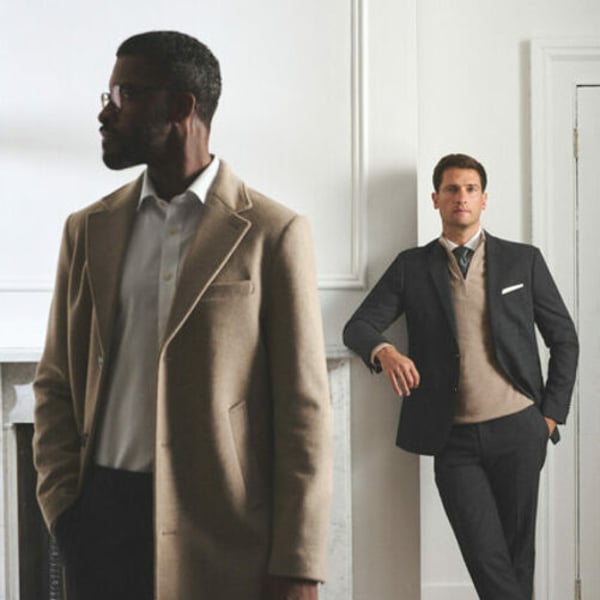
UK menswear label TM Lewin is continuing its physical stores comeback and has opened its second standalone space at 360-365 Cabot Square in London’s Canary Wharf. It’s also got a brand new outlet store opening at the O2 on 28 November.
We spoke to its CEO Dan Ferris about both the company’s store and products strategy ahead of the Canary Wharf opening. But first, let’s look at some of its recent history and that strategy.
The company has over-expanded pre-pandemic and went into administration when Covid hit. Bought out of administration, it went online-only with Ferris brought in to lead it back to health.
He oversaw it as an online-only business until this year. The new Canary Wharf space follows the firm’s Bow Lane flagship that opened earlier in 2025. That set the pattern for its store rollout and the new Canary Wharf full-price store again sees it focusing on the heart of London’s financial district.
Smart-meets-casual hybrid
That should be good news for its shirts and tailoring. Yet the formerly-formalwear-focused brand isn’t only about suits and shirts these days. The company has evolved in recent years as it has adapted to new ways of working with what it calls its ‘professional lifestyle’ products.
For instance, under this banner, smart-casual pieces (think rugby shirts, tees, chinos) account for around 25% of total revenue.

In fact, while many people think of TM Lewin as a ‘shirt brand’, maybe one day they’ll think ’T-shirt brand’. T-Shirts drive casualwear sales and account for around 70% of the brand’s more casual items.
Chinos are only around 5% of casualwear sales but since expanding the chino range last month (with new colours and fits), the brand has doubled the number of pairs sold compared to the month prior. Further chino expansion will come next year too.
Of course, formal clothing remains at the heart of the brand and opening new full-price stores should boost that further. While suits account for 10% of online sales, they make up 30% of in-store turnover so the new Canary Wharf location should be a boon here.
Interestingly too, while casualwear sales have risen, the company said dinner suit sales are up 30% year on year too. That’s a clear sign that formalwear’s days aren’t done. And with over 7,000 shirts having been sold in-store along with 30% of all sales being tailoring since the Bow Lane location opened, that’s even more evidence that the company’s dual smart+casual strategy is the way forward.
View from the top

As for Dan Ferris, FashionNetwork.com spoke to him as he prepped for the Canary Wharf opening. And having see his headshot, we were quite surprised to find him dressed casually…
Dan Ferris: Well, that’s part of the turnaround story! There’s a lot of people that do still wear suits and shirts, but there’s a lot of people who now, especially when they’re working from home, wear things like sweatshirts.
FashionNetwork.com: That was clearly a problem for the business in recent years though, rather than an opportunity as it is now.
DF: Yes, probably more so than [many other companies] due to the nature of the product that was sold. There weren’t too many people wearing suits and shirts at home during Covid! But what we’ve really developed over the last 18 months is really re-identifying what our customers, or what consumers generally, want.

FN: And that appears to be a much wider spread of product types?
DF: Yeah. People do still wear shirts and suits to the office, and we’ve seen quite an uptick in demand recently with a lot of the banks, for example, going back five days a week. But there’s still a lot of hybrid workwear out there. So things like the quarter-zip sweatshirt, you could wear with a T shirt underneath, like I am at home, but you can also wear it to the office. We’ve expanded the product range to get that demand and start to try and target a younger customers in the 20s to 30s demographics.
FN: Despite the change is the way men dress, that evolution must still have been a risk for a brand like yours.
DF: A big part of the turnaround was resetting the brand. So a challenge for us was, how do you make 125-year-old heritage brand relevant for the modern workplace? What we did was focus on shirt-making expertise and use the reputation and quality that the team was known for in shirts to show everyone else that we make these other great products. T-shirts and quarter-zip sweatshirts are underpinned by the shirt-making credentials that TM Lewin developed over a century.
FN: And the stores are part of that?
DF: We’re trying to make that come through in every touchpoint for the customers. So a big part of this relaunch has been getting TM Lewin back on the high street. We opened Bow Lane in April. That was a big success for us [and got] lots of press attention, commercial success, etc. We’re really happy with how that’s gone.
FN: So how do you put across that heritage image that’s been modernised in your stores?
DF: What we’ve tried to do there is juxtapose the aged wooden floors against minimalist white walls. It’s bringing that heritage into the modern world.
FN: The figures cited earlier show that your stores are hugely important for your core formalwear sales. How big a percentage does formalwear remain for you?
DF: It’s about 60% still on the more formal side. We’ve definitely been helped with the return to office. People return and they start to replenish and refresh their shirts. And Bow Lane has been key for us on tailoring. It’s really hard to sell suits online. People [want to] find a good fit in a suit, otherwise you’re not going to pay the money for it. That’s really difficult to achieve online. A big part of executing the retail rollout is giving customers the physical availability to come and try things on in the store before, hopefully, they come back time and time again, online or wherever.
FN: TM Lewin used to have so many stores but you still only have two full-price spaces with the new Canary Wharf location. I assume more are planned?
DF: They all got closed during Covid. Bow Lane was the first [under the new strategy]. With Canary Wharf, you can see that we’re targeting that very [City of London] demographic. [But] a big part of our our growth plan over the next three years is to execute a rollout across the other areas of London as well as hopefully Manchester and Edinburgh. They’re high-target areas for us. A lot of our demographic is London-based, so we’ll want to narrow London and before we expand out, but we’ve got every intention of getting And we’ve got an outlet store too. We’ll get the December trade, hopefully, and then we are looking at another City location for Q1 next year. Then we just keep an eye out on those locations that we think are going to work for us. But we don’t want to go back to the old TM Lewin model where, I’m sure you remember, there was one on every corner or sometimes two!

FN: In order to fund all this expansion, you must be in a better place financially now?
DF: We returned to profitability this year. We had to execute a turnaround before we went on this growth journey. We had to address a lot of legacy issues. We rebuilt the foundations of the business, and we’re in a good position now.
FN: And most of that will have been achieved online so your webstore will still be key? Do you sell internationally online?
DF: We’ll continue to grow the online business. It was UK-only for a while. We relaunched international trading last year. We actually sell to [almost] every country[and sales are] probably 25% international.
FN: What’s your biggest international market?
DF: Australia. The previous management had sort of cracked Australia, where I think they had five stores established at the point of Covid. In the US, TM Lewin is not so well known. But there’s still 10 times the population. Australia is our first [international] market, and then US is the next one. The key growth levers for us over the next three years are continuing to expand the product range with more of the ‘professional lifestyle’ products; the UK retail rollout; and then international expansion to that untapped global demand. We’re super-excited for all the opportunity out there.

FN: That opportunity must also come with challenges though. Have you found problems this year with the whole tariff situation?
DF: Yes and no. It has an impact, of course, but there’ll be competitors, where their business model was predicated on taking advantage of the [de minimis] situation where their shirts would be under the minimum limit, so therefore they were getting shipped for 20% less than anyone else. That’s gone away now. We’ve absorbed the hits in our bottom line for the US, the rest of it is more of a knock-on effect for the supply chain generally.
FN: And in terms of your general growth trajectory, you say you’re relatively small now. Where do you expect to be within a few years?
DF: The ambitious growth plan we’ve set for ourselves is to get back to £50 million [turnover] and maintain profitability. Pre-pandemic, it was £100 million, driven by a 66-store portfolio that had already been scaled back from 100 stores prior to that. We want to go fast, but we want to do it right!
Copyright © 2025 FashionNetwork.com All rights reserved.
Published
January 21, 2026
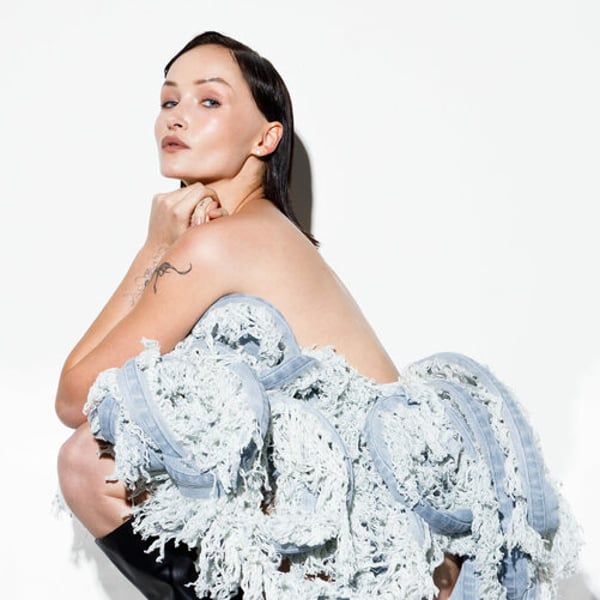
To coincide with Milan Fashion Week, the S|STYLE 2025- Denim Lab is setting up at Fondazione Sozzani for an edition devoted to the future of sustainable denim and water management in the textile industry. Led by the S|STYLE Sustainable Style platform, founded in 2020 by independent journalist and curator Giorgia Cantarini, this initiative forms part of an ongoing programme of research and experimentation into responsible innovations applied to contemporary fashion.
The exhibition, open to the public on September 27 and 28, features a site-specific art installation by Mariano Franzetti, crafted from recycled and regenerative denim. Conceived as an immersive experience, it brings fashion design, technological innovation and artistic expression into dialogue.
Water: a central issue in fashion sustainability
Developed in collaboration with Kering‘s Material Innovation Lab (MIL), the Denim Lab brings together a selection of young international designers invited to create a denim look using low-impact materials and processes. They benefit from technical support and access to textiles developed with innovative technologies aimed at significantly reducing water consumption, chemical use, and the carbon footprint of denim production.
This edition places water at its core, an essential issue for a fabric whose production has traditionally demanded substantial volumes of water, from cotton cultivation through to dyeing and finishing. Denim therefore serves as an emblematic testing ground, both familiar and closely associated with the environmental challenges facing the fashion industry.

The fabrics were developed by PureDenim Srl, a specialist in low-impact dyeing techniques, while treatments and finishes were applied by Tonello Srl, a recognised leader in sustainable washing and finishing technologies. The selected designers, from Europe, Asia, and Africa, each offer a distinctive interpretation of denim, blending formal exploration, textile innovation and reflection on the contemporary uses of clothing.
This article is an automatic translation.
Copyright © 2026 FashionNetwork.com All rights reserved.
Fashion
GoldenTree to buy about $200 million of Saks Global bankruptcy financing, Bloomberg News reports


As risk skyrockets, current and former CFOs are in demand for audit committees

The Denim Lab project examines the environmental impact of denim at Milan Fashion Week

Exclusive: Alphabet’s CapitalG names Jill Chase and Alex Nichols as general partners
-

 Politics8 years ago
Congress rolls out ‘Better Deal,’ new economic agenda
-
Entertainment9 years ago
New Season 8 Walking Dead trailer flashes forward in time
-
Politics9 years ago
Poll: Virginia governor’s race in dead heat
-
Politics8 years ago
Illinois’ financial crisis could bring the state to a halt
-
Entertainment9 years ago
The final 6 ‘Game of Thrones’ episodes might feel like a full season
-
Entertainment9 years ago
Meet Superman’s grandfather in new trailer for Krypton
-
Business9 years ago
6 Stunning new co-working spaces around the globe
-
Tech8 years ago
Hulu hires Google marketing veteran Kelly Campbell as CMO