In early 2021, an army of retail traders made massive bets on meme stocks and briefly melted down the market. Trading volume swelled to such a huge extent that popular brokerage Robinhood had to halt buy orders for stocks like GameStop for a few days in order to escape a liquidity crisis. At the time, the situation led to claims of a conspiracy, but the reason for the meltdown was more mundane: Wall Street’s creaky infrastructure could not settle trades fast enough.
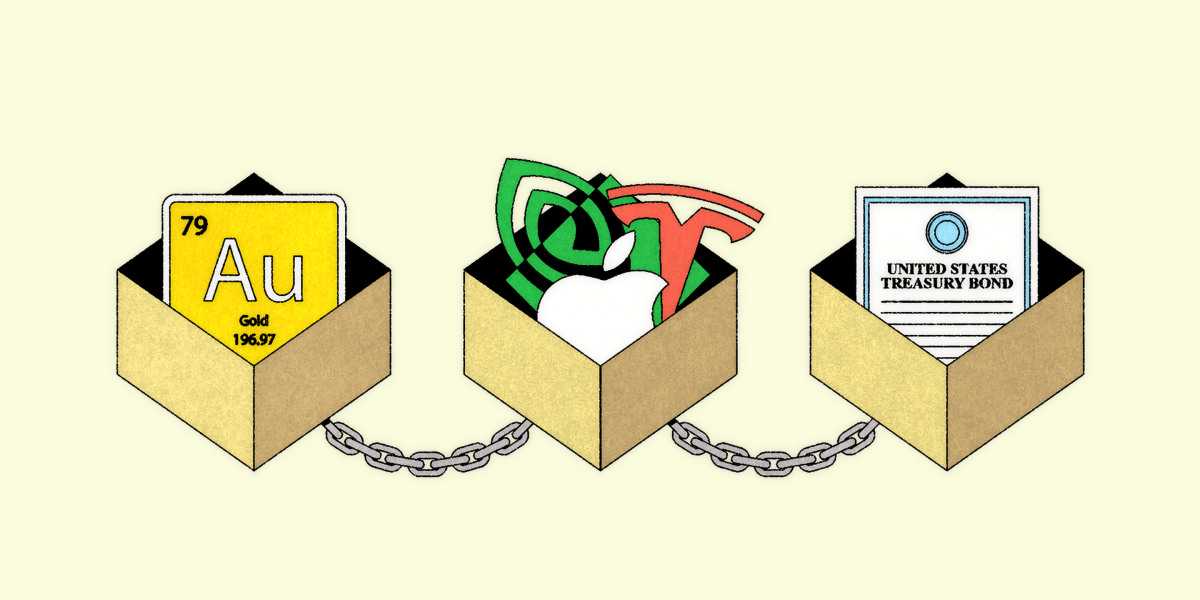
Robinhood CEO Vlad Tenev and others called for an overhaul, and since then there has already been progress, as stock trades now settle a day sooner than in 2021. But the financial industry is also pushing ahead with a more radical solution: turning stocks into digital assets that can be traded and settled instantly on a blockchain.
It is not just crypto firms and fintech players leading this charge for “tokenization.” Big banks like J.P. Morgan are also using blockchains to facilitate trades in certain assets and, in doing so, transforming the financial ecosystem more broadly. Already, tokenization—which Tenev has described as a “freight train” poised to eat Wall Street—has brought fundamental changes to how stocks and other assets are traded.
The potential upsides to tokenization are huge, but significant questions remain over how to implement it. Meanwhile, some fear the coming train could undermine some protections for individual “retail” investors and destabilize a U.S. equities market whose reliability has for decades been the envy of the world.
The tokenization wave isn’t the first push to overhaul Wall Street’s under-the-hood operations. In the 1970s, traders confronted what became known as the “paperwork crisis,” which saw stock markets, drowning in orders, shut down mid-week simply to keep up with recordkeeping. Repeated work stoppages finally led to a computer-based solution.
“Once upon a time there were leather-bound journals that said who owns all the stock,” explains Robert Leshner, a former economist who now runs the tokenization firm Superstate. “Then, people said, ‘This is too hard, let’s not update anymore,’ so they decided to create a legal fiction that assigned ownership of all the stock to the Depository Trust & Clearing Corporation,” or DTCC.
The DTCC regime, which has been in place for decades, means it’s no longer necessary to record every single share transfer. Instead, the clearinghouse keeps track of the stock held by different brokerages on behalf of their customers and settles up transactions between those brokerages the next business day.
Under this system, the brokerages nominally own the stock, but all the rights that attach to it—dividends, voting privileges, and so on—remain with the customers. The system has worked pretty well over the decades, and for those who insist on doing things the old-fashioned way, DTCC means they can still demand physical copies of their shares. (This option is popular with “GameStop truthers,” who believe reverting to paper will thwart a Wall Street conspiracy against retail investors.)
Now, though, the current DTCC system of “T+1”—in which the clearinghouse closes out trades the next business day by reconciling accounts among brokerages—has come to feel outdated in an age when so much business is conducted instantly and around the clock. This has prompted companies like Leshner’s Superstate to offer a faster alternative. The startup is working with companies to issue versions of their shares that trade on a blockchain, an arrangement under which the firms don’t have to rely on intermediaries to hold or track their stock. It also means stock trades can be settled instantly, while allowing firms to interact with their shareholders more directly.
Outside the U.S., tokenized assets are already helping investors avoid big trading commissions and invest in private companies like SpaceX
Other firms are approaching tokenization in a different fashion. Robinhood, for example, doesn’t help firms tokenize their stocks, but instead takes stocks available on the open market and offers them in a blockchain “wrapper” as a sort of derivative. These offerings are currently available only in Europe, where stock owners can buy and sell the “Stock Tokens” alongside assets like Bitcoin.
Retail investors unfamiliar with tokenization may be surprised, and possibly alarmed, to discover that a company they own is trading in the crypto-verse. For now, at least, it’s not something to worry about. Currently, even tokenization boosters say the new blockchain system will exist alongside the old one rather than replace it. So why do all this in the first place?
For the average investor who trades only from time to time, the arrival of tokenized assets won’t mean much. Active traders, though, will appreciate the move to blockchain, since it opens the door for more trading after hours and on weekends. The new regime will also be appealing to institutional investors, since it will free up collateral that might otherwise be tied up waiting for settlement.
“Imagine you’re a hedge fund and want to buy $1 million of Tesla stock,” says Johann Kerbrat, SVP of Robinhood Crypto. “You buy it on Friday, so you don’t have the money anymore, but you don’t get the shares in your account until Monday. So for three days, you can’t do anything.” It’s not just stocks being tokenized. BlackRock’s BUIDL fund, working with Superstate’s tokenization rival Securitize, offers access to money-market funds and U.S. Treasuries via blockchain, and has already grown to $2 billion in assets under management. Meanwhile,J.P. Morgan is offering tokenized versions of private equity assets on its in-house Kinexys blockchain, in part because the process makes capital calls easier to track and manage.
This is likely just the beginning. Rob Hadick, a partner at venture capital firm Dragonfly Capital, notes that other realms of finance like credit and fixed income are still conducted primarily in pre-digital fashion, with some transactions still made official by means of a fax. A switch to tokenization could enable such transactions to settle faster and more reliably. Hadick says it will also produce savings for banks and brokerages since it will reduce the ranks of back-office staff and disrupt specialized middlemen who handle tasks like loan origination and servicing fees. Meanwhile, for traders of all sorts, tokenized assets will be easier to move across brokerages or post as collateral.
It is still early days, especially in the U.S., where the Securities and Exchange Commission has yet to give the green light to tokenized equities. As of mid-November, the total value of such assets worldwide was about $660 million, according to research site RWA.xyz; the most popular ones include tokenized versions of index-tracking ETFs and Big Tech stocks such as Tesla, Nvidia, and Alphabet.
But that nascent state hasn’t stopped brokerages from pushing forward, including crypto shop Kraken, whose tokenized versions of select U.S. stocks are doing a brisk trade in markets like Brazil and South Africa, where traders still pay hefty commissions that can amount to 10% or more, even as such fees have largely been eliminated in the U.S. Robinhood, meanwhile, got its hands on shares of privately held OpenAI and SpaceX, and has given away tokenized versions of them to European customers.
As for the DTCC, it would be easy to assume the clearinghouse opposes the tokenization wave. Quite the opposite: According to two sources familiar with the company, the outfit is eager to move into blockchain, partly because it offers a potential way to expand into private markets. Asked for comment, the DTCC did not provide details but did suggest it is embracing the technology.
“DTCC believes in the power and potential of tokenization to evolve and modernize market infrastructure. We are actively working to enable capabilities that further our products and services,” said Brian Steele, DTCC’s president of clearing and securities services.
Not everyone is convinced a rush to tokenization is a good thing. Those urging caution include Citadel Securities, which has asked the SEC to adopt a go-slow approach. According to a source close to the firm, the trading giant fears that some crypto-aligned firms want to use the rulemaking process around tokenization to gain exemptions from long-standing consumer protection obligations. The person also expressed concern that a rapid shift could undermine trust in a U.S. equities market that is the biggest in the world and has been fine-tuned for decades.
This concern may not be unfounded. Already, there have been notable discrepancies between the prices of traditional shares of a company’s stock and the prices of tokenized versions offered by the likes of Kraken. Meanwhile, it’s unclear if every firm offering tokenized equities has put in place adequate guardrails when it comes to custody and fiduciary obligations to the customer. What happens, for instance, in the event of a crypto firm going bankrupt while holding tokenized shares of a customer’s stock?
And while every financial institution appears to view blockchain as the technology of the future, they may not agree as to which blockchain. Robinhood, among others, is relying on the open-source Ethereum chain to build out its tokenization business, while J.P. Morgan appears wedded to its own proprietary chain. According to Hadick, the venture capitalist, this situation could slow adoption, since, he says, other big firms like Goldman Sachs will be reluctant to rely on a blockchain controlled by a rival.
Hadick adds, though, that any impasse is unlikely to last long, since “one thing blockchains do well is coordinate trust.”
This article appears in the December 2025/January 2026 issue of Fortune with the headline: “Get ready to own a tokenized portfolio.”
Hollywood writers, producers, directors and theater owners voiced skepticism over Netflix Inc.’s proposed $82.7 billion takeover of Warner Bros. Discovery Inc.’s studio and streaming businesses, saying it threatens to undermine their interests.
The Writers Guild of America, which announced in October it would oppose any sale of Warner Bros., reiterated that view on Friday, saying the purchase by Netflix “must be blocked.”
“The world’s largest streaming company swallowing one of its biggest competitors is what antitrust laws were designed to prevent,” the guild said in an emailed statement. “The outcome would eliminate jobs, push down wages, worsen conditions for all entertainment workers, raise prices for consumers, and reduce the volume and diversity of content for all viewers.”
The worries raised by the movie and TV industry’s biggest trade groups come against the backdrop of falling movie and TV production, slack ticket sales and steep job cuts in Hollywood. Another legacy studio, Paramount, was sold earlier this year.
Warner Bros. accounts for about a fourth of North American ticket sales — roughly $2 billion — and is being acquired by a company that has long shunned theatrical releases for its feature films. As part of the deal, Netflix co-CEO Ted Sarandos has promised Warner Bros. will continue to release moves in theaters.
“The proposed acquisition of Warner Bros. by Netflix poses an unprecedented threat to the global exhibition business,” Michael O’Leary, chief executive officer of the theatrical trade group Cinema United, said in en emailed statement Friday. “The negative impact of this acquisition will impact theaters from the biggest circuits to one-screen independents.”
The buyout of Warner Bros. by Netflix “would be a disaster,” James Cameron, the director of some of Hollywood’s highest-grossing films in history including Titanic and Avatar, said in late November on The Town, an industry-focused podcast. “Sorry Ted, but jeez. Sarandos has gone on record saying theatrical films are dead.”
On a conference call with investors Friday, Sarandos said that his company’s resistance to releasing films in cinemas was mostly tied to “the long exclusive windows, which we don’t really think are that consumer friendly.”
The company said Friday it would “maintain Warner Bros.’ current operations and build on its strengths, including theatrical releases for films.”
On the call, Sarandos reiterated that view, saying that, “right now, you should count on everything that is planned on going to the theater through Warner Bros. will continue to go to the theaters through Warner Bros.”
Competition from online outfits like YouTube and Netflix has forced a reckoning in Hollywood, opening the door for takeovers like the Warner Bros. deal announced Friday. Media giants including Comcast Corp., parent of NBCUniversal, are unloading cable-TV networks like MS Now and USA, and steering resources into streaming.
In an emailed note to Warner Bros. employees on Friday, Chief Executive Officer David Zaslav said the board’s decision to sell the company “reflects the realities of an industry undergoing generational change in how stories are financed, produced, distributed, and discovered.”
The Producers Guild of America said Friday its members are “rightfully concerned about Netflix’s intended acquisition of one of our industry’s most storied and meaningful studios,” while a spokesperson for the Directors Guild of America raised concerns about future pay at Warner Bros.
“We will be meeting with Netflix to outline our concerns and better understand their vision for the future of the company,” the Directors Guild said.
In September, the DGA appointed director Christopher Nolan as its president. Nolan has previously criticized Netflix’s model of releasing films exclusively online, or simultaneously in a small number of cinemas, and has said he won’t make movies for the company.
The Screen Actors Guild said Friday that the transaction “raises many serious questions about its impact on the future of the entertainment industry, and especially the human creative talent whose livelihoods and careers depend on it.”
Oscar winner Jane Fonda spoke out on Thursday before the deal was announced.
“Consolidation at this scale would be catastrophic for an industry built on free expression, for the creative workers who power it, and for consumers who depend on a free, independent media ecosystem to understand the world,” the star of the Netflix series Grace and Frankie wrote on the Ankler industry news website.
Netflix and Warner Bros. obviously don’t see it that way. In his statement to employees, Zaslav said “the proposed combination of Warner Bros. and Netflix reflects complementary strengths, more choice and value for consumers, a stronger entertainment industry, increased opportunity for creative talent, and long-term value creation for shareholders.”
He said it four times in seven seconds: Somali immigrants in the United States are “garbage.”
It was no mistake. In fact, President Donald Trump’s rhetorical attacks on immigrants have been building since he said Mexico was sending “rapists” across the border during his presidential campaign announcement a decade ago. He’s also echoed rhetoric once used by Adolf Hitler and called the 54 nations of Africa “s—-hole countries.” But with one flourish closing a two-hour Cabinet meeting Tuesday, Trump amped up his anti-immigrant rhetoric even further and ditched any claim that his administration was only seeking to remove people in the U.S. illegally.
“We don’t want ‘em in our country,” Trump said five times of the nation’s 260,000 people of Somali descent. “Let ’em go back to where they came from and fix it.” The assembled Cabinet members cheered and applauded. Vice President JD Vance could be seen pumping a fist. Defense Secretary Pete Hegseth, sitting to the president’s immediate left, told Trump on-camera, “Well said.”
The two-minute finale offered a riveting display in a nation that prides itself as being founded and enriched by immigrants, alongside an ugly history of enslaving millions of them and limiting who can come in. Trump’s U.S. Immigration and Customs Enforcement raids and deportations have reignited an age-old debate — and widened the nation’s divisions — over who can be an American, with Trump telling tens of thousands of American citizens, among others, that he doesn’t want them by virtue of their family origin.
“What he has done is brought this type of language more into the everyday conversation, more into the main,” said Carl Bon Tempo, a State University of New York at Albany history professor. “He’s, in a way, legitimated this type of language that, for many Americans for a long time, was seen as outside the bounds.”
A question that cuts to the core of American identity
Some Americans have long felt that people from certain parts of the world can never really blend in. That outsider-averse sentiment has manifested during difficult periods, such as anti-Chinese fear-mongering in the late 19th century and the imprisonment of some 120,000 Japanese Americans during World War II.
Trump, reelected with more than 77 million votes last year, has launched a whole-of-government drive to limit immigration. His order to end birthright citizenship — declaring that children born to parents who are in the United States illegally or temporarily are not American citizens despite the 14th Amendment — is being considered by the Supreme Court. He has largely frozen the country’s asylum system and drastically reduced the number of refugees it is allowed to admit. And his administration this week halted immigration applications for migrants from 19 travel-ban nations.
Immigration remains a signature issue for Trump, and he has slightly higher marks on it than on his overall job approval. According to a November AP-NORC poll, roughly 4 in 10 adults — 42% — approved of how the president is handling the issue, down from about half who approved in March. And Trump has pushed his agenda with near-daily crackdowns. On Wednesday, federal agents launched an immigration sweep in New Orleans,
There are some clues that Trump uses stronger anti-immigration rhetoric than many members of his own party. A study of 200,000 speeches in Congress and 5,000 presidential communications related to immigration between 1880 and 2020 found that the “most influential” words on the subject were terms like “enforce,” “terrorism” and “policy” from 1973 through Trump’s first presidential term.
The authors wrote in the Proceedings of the National Academy of Sciences that Trump is “the first president in modern American history to express sentiment toward immigration that is more negative than the average member of his own party.” And that was before he called thousands of Somalis in the U.S. “garbage.”
The U.S. president, embattled over other developments during the Cabinet meeting and discussions between Russian President Vladimir Putin and U.S. envoys, opted for harsh talk in his jam-packed closing.
Somali Americans, he said, “come from hell” and “contribute nothing.” They do “nothing but bitch” and “their country stinks.” Then Trump turned to a familiar target. Rep. Ilhan Omar, D-Minn., an outspoken and frequent Trump critic, “is garbage,” he said. “Her friends are garbage.”
His remarks on Somalia drew shock and condemnation from Minneapolis to Mogadishu.
“My view of the U.S. and living there has changed dramatically. I never thought a president, especially in his second term, would speak so harshly,” Ibrahim Hassan Hajji, a resident of Somalia’s capital city, told The Associated Press. “Because of this, I have no plans to travel to the U.S.”
Omar called Trump’s “obsession” with her and Somali-Americans “creepy and unhealthy.”
“We are not, and I am not, someone to be intimidated,” she said, “and we are not gonna be scapegoated.”
Trump’s influence on these issues is potent
But from the highest pulpit in the world’s biggest economy, Trump has had an undeniable influence on how people regard immigrants.
“Trump specializes in pushing the boundaries of what others have done before,” said César Cuauhtémoc García Hernández, a civil rights law professor at Ohio State University. “He is far from the first politician to embrace race-baiting xenophobia. But as president of the United States, he has more impact than most.” Domestically, Trump has “remarkable loyalty” among Republicans, he added. “Internationally, he embodies an aspiration for like-minded politicians and intellectuals.”
In Britain, attitudes toward migrants have hardened in the decade since Brexit, a vote driven in part by hostility toward immigrants from Eastern Europe. Nigel Farage, leader of the hard-right Reform U.K. party, has called unauthorized migration an “invasion” and warned of looming civil disorder.
France’s Marine Le Pen and her father built their political empire on anti-immigrant language decades before Trump entered politics. But the National Rally party has softened its rhetoric to win broader support. Le Pen often casts the issue as an administrative or policy matter.
In fact, what Trump said about people from Somalia would likely be illegal in France if uttered by anyone other than a head of state, because public insults based on a group’s national origin, ethnicity, race or religion are illegal under the country’s hate speech laws. But French law grants heads of state immunity.
One lawyer expressed concerns that Trump’s words will encourage other heads of state to use similar hate speech targeting people as groups.
“Comments saying that a population stinks — coming from a foreign head of state, a top world military and economic power — that’s never happened before,” said Paris lawyer Arié Alimi, who has worked on hate speech cases. “So here we are really crossing a very, very, very important threshold in terms of expressing racist … comments.”
But the “America first” president said he isn’t worried about others think of his increasingly polarizing rhetoric on immigration.
“I hear somebody say, ‘Oh, that’s not politically correct,’” Trump said, winding up his summation Tuesday. “I don’t care. I don’t want them.”
___
Contributing to this report are Associated Press writers Will Weissert and Linley Sanders in Washington, John Leicester in Paris, Jill Lawless in London, Evelyne Musambi in Nairobi, Kenya, and Omar Faruk in Mogadishu.
President Donald Trump and his administration insist that costs are coming down, but voters are skeptical, including those who put him back in the White House.
Despite Republicans getting hammered on affordability in off-year elections last month, Trump continues to downplay the issue, contrasting with his message while campaigning last year.
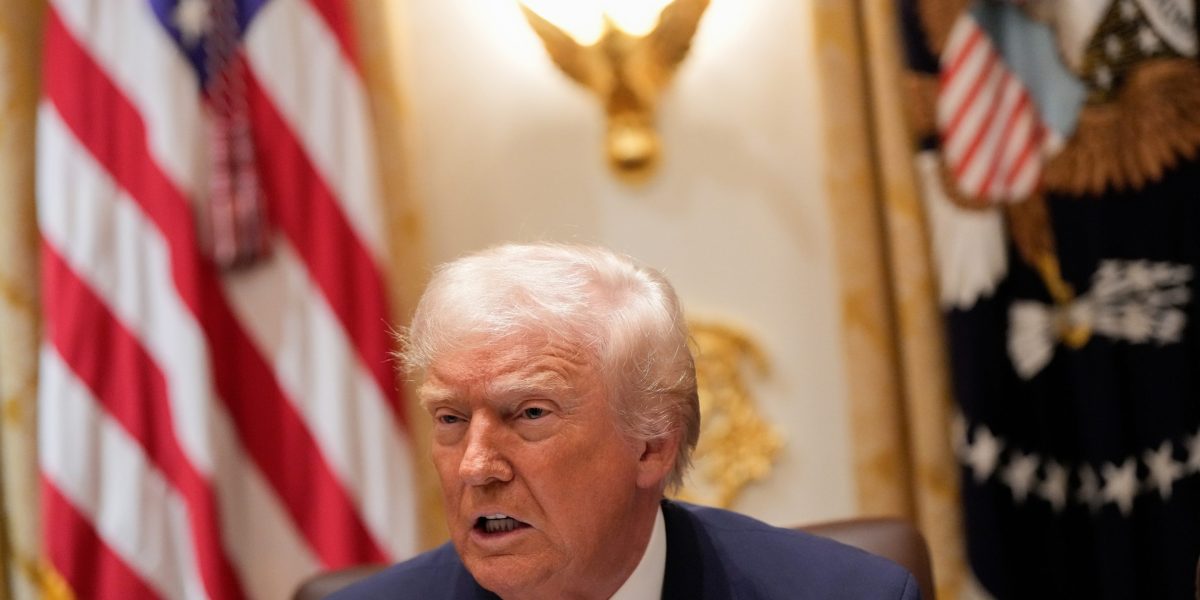
“The word affordability is a con job by the Democrats,” Trump said during a Cabinet meeting on Tuesday. “The word affordability is a Democrat scam.”
But a new Politico poll found that 37% of Americans who voted for him in 2024 believe the cost of living is the worst they can ever remember, and 34% say it’s bad but can think of other times when it was worse.
The White House has said Trump inherited an inflationary economy from President Joe Biden and point to certain essentials that have come down since Trump began his second term, such as gasoline prices.
The poll shows that 57% of Trump voters say Biden still bears full or almost full responsibility for today’s economy. But 25% blame Trump completely or almost completely.
That’s as the annual rate of consumer inflation has steadily picked up since Trump launched his global trade war in April, and grocery prices have gained 1.4% between January and September.
Meanwhile, Vice President JD Vance pleaded for “patience” on the economy last month as Americans want to see prices decline, not just grow at a slower pace.
Even a marginal erosion in Trump’s electoral coalition could tip the scales in next year’s midterm elections, when the president will not be on the ballot to draw supporters.
A soft spot could be Republicans who don’t identify as “MAGA.” Among those particular voters, 29% said Trump has had a chance to change things in the economy but hasn’t taken it versus 11% of MAGA voters who said that.
Across all voters, 45% named groceries as the most challenging things to afford, followed by housing (38%) and health care (34%), according to the Politico poll.
“If the crisis threshold—the floor below which families cannot function—is honestly updated to current spending patterns, it lands at $140,000,” he wrote. “What does that tell you about the $31,200 line we still use? It tells you we are measuring starvation.”






 Politics8 years ago