Connect with us

Business

Trump’s attacks push India, Brazil, South Africa closer together

Published

on


U.S. President Donald Trump’s targeted attacks against three of the world’s major emerging economies are prompting leaders of those countries to forge closer ties and push back against his aggressive trade policies.

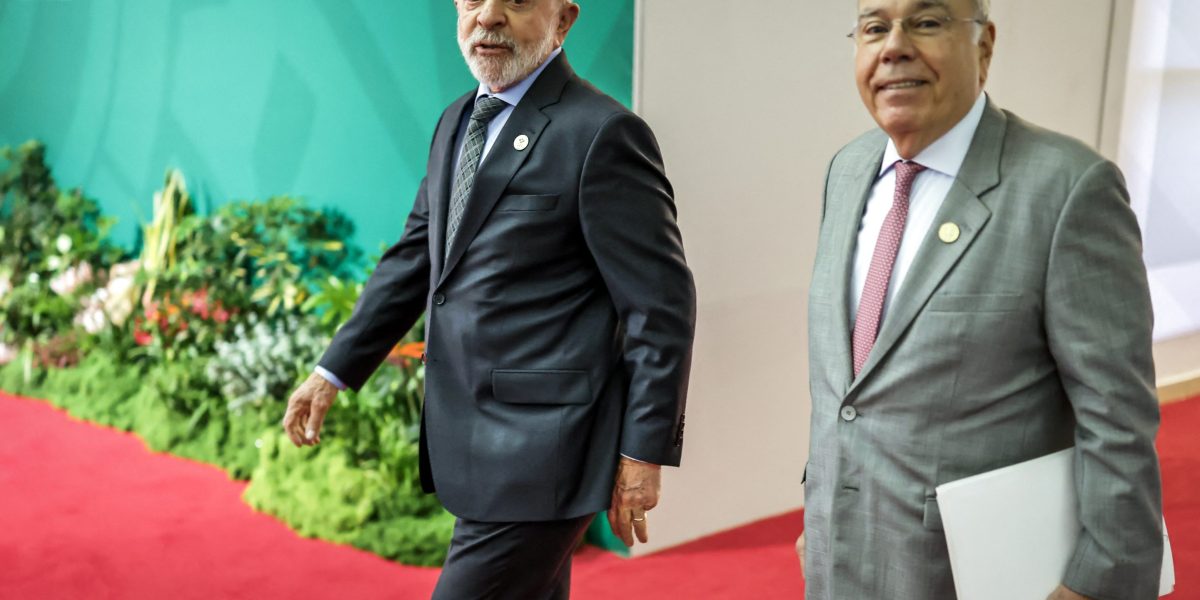
Leaders from India, Brazil and South Africa met in Johannesburg on the sidelines of the Group of 20 summit on Sunday to give greater importance to a trilateral grouping, the so-called IBSA forum. It’s the first time in more than a decade that the leaders are gathering under the auspices of the grouping, although foreign ministers have done so regularly over the years.

Trump has upended Washington’s decades of careful diplomacy to cultivate relations with the three major emerging markets. He’s targeted them with high tariffs and publicly rebuked the leaders for their domestic policies. The US president snubbed the G-20 summit in Johannesburg this weekend in a blow to South Africa and other developing nations pushing to curb global inequality.

“Our grouping affirms that diversity is not a fault line but a source of strength,” South African President Cyril Ramaphosa said in opening remarks at the IBSA meeting. “We must position ourselves as co-architects of a more representative and responsive multilateral system.”

The absence of Chinese President Xi Jinping from the summit — only the second time he’s skipped the G-20 forum — may have also been an opening for the three leaders to revive their trilateral grouping. Normally, Xi would huddle with Modi, Ramaphosa and Lula as part of the BRICS grouping alongside Russia, whose leader Vladimir Putin hasn’t attended the G-20 in years.

Xi has often taken a leading role in forums such as BRICS and the Shanghai Cooperation Organization that he’s cultivated as a counterweight to the US-led world order. He’s also been one of the few politicians to successfully stand up to Trump’s tariffs this year.

China’s Foreign Ministry didn’t reply to a request for comment made outside working hours.

VIDEO | Johannesburg: PM Narendra Modi (@narendramodi) participates in the IBSA Leaders’ Meeting in South Africa.

IBSA – a trilateral forum comprising India, Brazil, and South Africa – focuses on South-South cooperation, global governance reforms, and strengthening collaboration… pic.twitter.com/WGFxk3JzaX— Press Trust of India (@PTI_News) November 23, 2025

BRICS, however, has become dominated by the agendas of China and Russia, and its membership has grown rapidly over the years beyond the five founding nations to include countries like Iran and Ethiopia.

The smaller IBSA grouping gives the three leaders the ability to coordinate steps in a smaller forum, where it can execute policies faster.  

“South Africa, which was previously happy to subsume IBSA under BRICS, is looking at a more coherent grouping,” said Syed Akbaruddin, a former Indian envoy to the United Nations, who now teaches at the Kautilya School of Public Policy.

South Africa proposed reviving the IBSA leaders meeting on the sidelines of the G-20, viewing the smaller bloc as more agile in taking decisions around trade, market access and investments, according to Indian diplomats familiar with the matter, who asked not to be identified because the discussions are private. 

Ben Joubert, a South African foreign affairs official, said in the trilateral grouping “it is quite easy to get consensus and move forward on the issues which are important to us.”

“The geoeconomic and geopolitical challenges that we have in the world are now driving the need to coordinate better and bring IBSA to the fore,” he said in an interview Sunday in Johannesburg. “We are going to put all efforts on the table to pronounce and promote our cooperation.”

Brazil’s President Luiz Inacio Lula da Silva said it was important for IBSA to have an agenda that’s different to BRICS.  

“I believe that if IBSA insists on duplicating the BRICS agenda, we will remain in its shadow,” Lula said Sunday. “I think we leave this meeting with homework: To begin a deep reflection on future paths for IBSA, with a view toward our next summit.”

Trump’s Tariffs

The IBSA forum last hosted a leaders meeting in South Africa in 2011. Formed in 2003, the three-country grouping primarily coordinates on issues of global governance and promotes South-South cooperation, including through joint-funding of development projects. 

“We all agree that global institutions do not reflect the realities of the 21st century,” Modi said Sunday. He called the summit between South Africa, Brazil and India as “both historic and timely.”

Trump has punished India for its ties with Russia by imposing 50% tariffs on goods shipped to the US, and angered New Delhi with his repeated claims of brokering a ceasefire with Pakistan. In South Africa, Trump has boycotted the G-20 summit and made false allegations of a genocide of White farmers in the country. 

The US president has also targeted Brazil with high tariffs to force it drop a trial against his friend, former leader Jair Bolsonaro, who is accused of plotting a coup against Lula. The Brazilian leader fought back against Trump, who has since moved to exempt many goods from tariffs in a win for the Brazilian leader. 

The revival of the IBSA forum shows Trump’s actions are pushing developing countries to look at economic integration on their own. 

The Johannesburg meeting is not expected to produce major deliverables, but will signal renewed cooperation among emerging economies.

India’s participation in IBSA and G-20  is “significant” as nations try “de-risking and diversifying supply chains,” said Veda Vaidyanathan, a fellow at the Centre for Social and Economic Progress, a New Delhi-based independent think tank.


Source link

Continue Reading

Business

Nathan’s Famous goes from 5-cent hot dog stand in Coney Island to $450 million acquisition by Smithfield Foods over 100 years later

Published

on


Nathan’s Famous, which opened as a 5-cent hot dog stand in Coney Island more than a century ago, has been sold to packaged meat giant Smithfield Foods in a $450 million all-cash deal, the companies announced Wednesday.

Smithfield, which has held rights to produce and sell Nathan’s products in the U.S., Canada and at Sam’s Clubs in Mexico since 2014, will acquire all of Nathan’s outstanding shares for $102 each. The transaction is expected to close in the first half of 2026.

Smithfield said it expects to achieve annual savings of about $9 million within two years of closing the deal.

“As a long-time partner, Smithfield has demonstrated an outstanding commitment to investing in and growing our brand while maintaining the utmost quality and customer service standards,” said Nathan’s CEO Eric Gatoff.

Nathan’s board of directors, which own or control nearly 30% of the outstanding shares of Nathan’s Famous common stock, approved the buyout and agreed to recommend to its shareholders to vote in favor of the deal.

Smithfield, which also owns the Gwaltney bacon and Armour frozen meat brands, rang up more than $1 billion in operating profit in 2024 on sales of $14.1 billion. It’s on track to eclipse both those figures when it reports its fourth-quarter results.

Smithfield shares were unchanged in midday trading Wednesday at $23.39.

In fiscal 2025, Nathan’s reported profit of $24 million on revenue approaching $150 million.

Join us at the Fortune Workplace Innovation Summit May 19–20, 2026, in Atlanta. The next era of workplace innovation is here—and the old playbook is being rewritten. At this exclusive, high-energy event, the world’s most innovative leaders will convene to explore how AI, humanity, and strategy converge to redefine, again, the future of work. Register now.


Source link

Continue Reading

Business

Trump tones down escalating Greenland rhetoric in Davos

Published

on


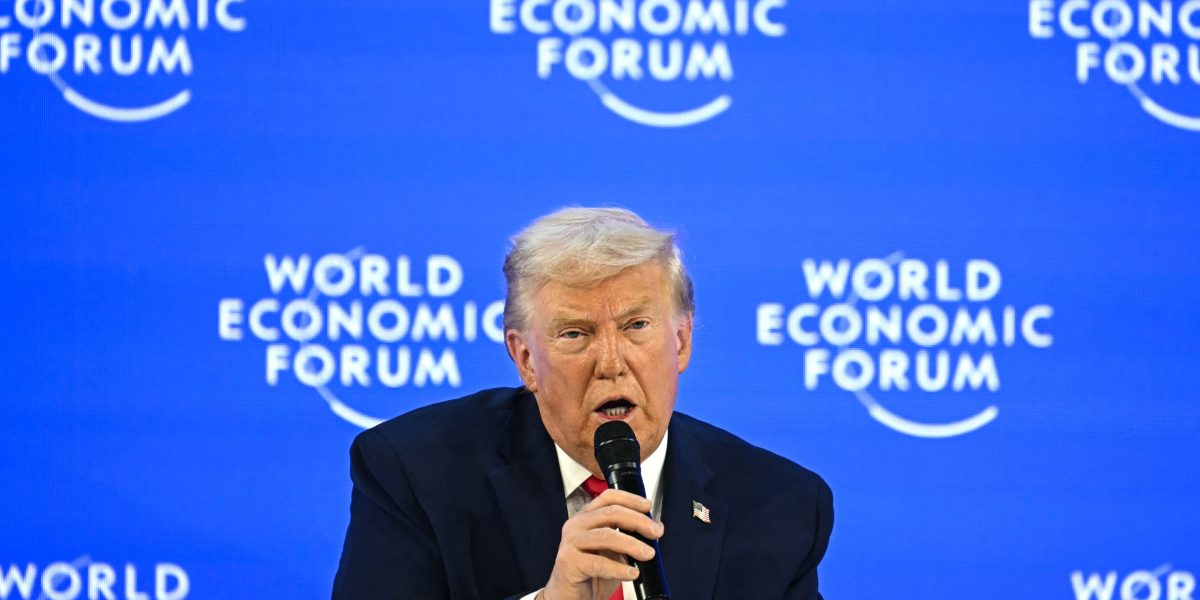
President Donald Trump, in his own inimitable way, struck a bellicose and yet conciliatory tone with European leaders in Davos, Switzerland, on Wednesday, somewhat tempering rising trans-Atlantic tensions and stock market jitters over concerns the U.S. is considering a takeover of Greenland. 

The nearly 90-minute speech, in which Trump lectured and hectored the tech executives and government officials in the audience, many from Europe, before clarifying that he didn’t want to use force and ultimately wanted peace, could be summed up by Trump ribbing French President Emmanuel Macron, seemingly unaware of his eye injury. “I watched him yesterday with his beautiful sunglasses. I said, ‘What the hell happened?’” Trump later added, “I actually like him. I do.” 

And while the president ruled out using military force to acquire the Danish territory of Greenland, he did not back down from antagonistic rhetoric while repeating his contested claim of having stopped eight wars around the world. (Trump’s desire for a Nobel Peace Prize, one measure of his competitiveness with predecessor Barack Obama, has hung on this eight-war figure, which some countries such as India and Pakistan reject.)

Trump used his highly anticipated address at the World Economic Forum as a platform to reaffirm his critique of European nations and of the U.S.’s status as a global superpower, but clarified that he prefers a peaceful resolution to the question over Greenland’s ownership that has threatened to kneecap the 76-year-old NATO alliance.

“I don’t have to use force. I don’t want to use force. I won’t use force,” he said.

Trump’s statement on having resolved multiple conflicts first emerged in a leaked text message the president sent to Norwegian prime minister Jonas Gahr Støre over the weekend in which he said, ominously, that he was no longer obliged to “think purely of Peace.” In that message, Trump linked his Greenland bombast to the Nobel committee deciding not to award him a Peace Prize last October, despite having “stopped 8 wars PLUS.” The committee that awards Nobel Prizes is based in Norway, although the Norwegian government does not have a say in allocating the prizes. 

Sigh of relief in the mountains

The statement assuaged the concerns of some European leaders about a possible military confrontation with the U.S. and seemed to reassure markets jittery about the onset of a new trade war, or the end of the western alliance. 

Markets responded positively after their big Tuesday sell-off. As of late morning, both the S&P 500 and the Dow Jones Industrial Average had risen over 1%, while the Nasdaq Composite index had advanced 1.3%. The 10-year Treasury yield turned lower, and the U.S. dollar stabilized after big losses Tuesday.

But Trump’s comments were an olive branch in text only, not in tone. Speaking for over an hour, the president reiterated his desire for Greenland, stating “that’s our territory” with regards to the island, while claiming he had “stopped eight wars.” (India has repeatedly rejected Trump’s claim that he stopped a war between the countries, while Pakistan has welcomed his involvement, nominating him for a Nobel.)

And while Trump toned down aggressive rhetoric of an impending military takeover of Greenland, he made clear to foreign leaders that it was a choice, even a favor: “We probably won’t get anything unless I decide to use excessive strength and force, where we would be, frankly, unstoppable, but I won’t do that,” he said.

Trump’s claim has been disputed. While the president did not specify which wars he was referring to, the U.S. has been involved in six ceasefires, although tensions have occasionally flared between Israel and Hamas and India and Pakistan. He may also be referring to agreements brokered during his first term.

Trump’s ruling out of military force on Wednesday soothed some European officials. Rasmus Jarlov, who chairs the defense committee in Denmark’s parliament, told The New York Times he “wasn’t too upset” with the president’s comments.

Lars Lokke Rasmussen, Denmark’s foreign minister, was encouraged as well: “It is positive that it is being said that military force will not be used,” he told local reporters Wednesday. “But that will not make this case go away,” he added.

While Trump reiterated his desire for a peaceful resolution during his speech, he challenged European leaders to remain opposed to him.

“You can say yes and we will be very appreciative, or you can say no and we will remember,” he said.


Source link

Continue Reading

Business

One Trump proposal meant to prevent ‘nation of renters’ may make homeownership harder, experts say

Published

on


President Donald Trump said he is reestablishing the American dream of homeownership, but one of his most recent housing policy proposals may put the dream even more out of reach, experts say.

Speaking Wednesday at the World Economic Forum in Davos, Switzerland, Trump touted his barrage of recent housing policy executive orders, including preventing institutional investors from buying single-family homes and attempting to lower mortgage rates by directing government-controlled mortgage finance firms Fannie Mae and Freddie Mac to purchase $200 billion in mortgage-backed securities.

“It’s just not fair to the public [that] they’re not able to buy a house,” Trump said Wednesday of institutional homebuying. “And I’m calling on Congress to pass that ban into permanent law, and I think they will.” Trump has also asked Congress to cap credit-card interest rates at 10%, which he claimed Wednesday “will help millions of Americans save for a home.” 

Trump also spoke directly to Wall Street giants and institutional homebuyers at Davos, saying that “many of you are good friends of mine [and] many of you are supporters,” but “you’ve driven up housing prices by purchasing hundreds of thousands of single family homes.” 

“It’s been a great investment for them, often as much as 10% of houses on the market,” Trump said. “You know, the crazy thing is, a person can’t get depreciation on a house, but when a corporation buys it, they get depreciation.” 

One policy that went unmentioned during Trump’s Wednesday speech in Davos, and one experts say could carry potentially big risks and do little to address the root causes of high housing costs, is his proposal that would allow Americans tap their 401(k) savings for mortgage down payments, which now averages 19% of a home’s price. The current U.S. median home price is about $428,000, according to Redfin, meaning a down payment could amount to a whopping $81,000. Trump hasn’t put a dollar or percentage figure on the cap for the amount Americans could pull from their 401(k)s to use toward a down payment.

Trump’s final plan on allowing Americans to use their retirement savings for down payments would likely require congressional approval because it may involve changing the tax code. The proposal, announced Friday by Kevin Hassett, director of the National Economic Council, is Trump’s latest attempt to address growing concerns about affordability across the U.S. economy, especially in the housing market, and prevent America from becoming “a nation of renters,” as he said in his address at the World Economic Forum Wednesday.

Benefits of using 401(k) funds for a down payment

Trump’s idea has some benefits. The number of first time homebuyers has fallen to half of what it was about a decade ago, according to data from the National Association of Realtors. In addition, 22% of those who are able to buy their first home are already using either borrowed money or a gift from a friend or relative for their downpayment, according to the NAR.

While Americans can already withdraw up to $10,000 to pay for a home from individual retirement accounts (IRAs) without repaying it before age 59 ½ , this rule doesn’t apply to employer-sponsored 401(k)s, the most common retirement account, unless account holders pay a 10% penalty. 

Americans can withdraw money without a penalty from their retirement plans for some exempted purposes such as recovering from a natural disaster and some medical expenses, but still have to pay income taxes on their tax-deferred accounts. These “hardship withdrawals” increased to 4.8% of participants in Vanguard retirement plans in 2024, up from 3.6% in 2023.

Most employer-sponsored 401(k)s also allow Americans to borrow for a limited time from their retirement savings penalty-free before 59 ½, including for a home purchase, as long as they repay the amount borrowed to the account with interest.

Given the limited options for accessing retirement accounts, the president’s proposal could help Americans in need of cash to unlock liquidity for a down payment. This could be especially helpful for those who may struggle to repay an IRA loan, Robert Goldberg, a finance professor at Adelphi University in Garden City, N.Y., told Fortune.

Drawbacks of using 401(k) funds for a down payment

Still, Goldberg warned swapping out the diversified investments of a 401(k) and concentrating a large chunk of their investment into one asset is risky. While some believe home prices always go up, the housing market collapse of 2008 showed this isn’t always the case.

“Imagine home prices drop so much that the home price goes not just down to the mortgage level, but to below the mortgage level, wipes out your equity position,” he said. “You would have lost your equity, your 401(k) equity. Bad outcome.” 

Experts say Trump’s proposal also does little to address the supply side of the housing market, which has been largely frozen as homebuyers who bought in at lower interest rates prior to the pandemic have been hesitant to sell, Goldberg said. Giving more people the means to buy homes without adding more supply may inadvertently increase prices and lock more people out of the housing market, instead of making it more affordable, he argued. 

“Some people will benefit from [Trump’s plan], but overall it will just be more competition for homes,” Goldberg said. 

Yet, Trump’s proposal dealing with retirement savings is especially risky because it makes it easier for Americans to use crucial retirement savings meant for the future for non-retirement uses, said Jake Falcon, a chartered retirement planning counselor and the CEO of Falcon Wealth Advisors.

The median retirement savings for an American between the ages of 45 and 55 was $115,000 as of 2022, according to the Federal Reserve. Yet, this amount may not suffice for everyone, as some experts suggest the average person needs to have saved eight to 10 times their annual salary to retire comfortably.  

“People, generally speaking, are more than likely behind, and this will just make them further behind,” Falcon said.

Given the bleak data on American retirement savings, Falcon said the government should make dipping into a retirement account for other uses harder instead of easier.

“Allowing people to raid their 401(k) doesn’t solve the problem,” he said.


Source link

Continue Reading

Trending

Copyright © Miami Select.