
Politics
When nurses disappear, health care collapses


Florida’s health care system runs on many moving parts, but the truth we don’t say out loud often enough is this: everything works because nurses show up.
They are the first to notice subtle changes, the ones who catch emergencies before they unfold, the steady hands families depend on, and for many rural communities, nurse practitioners are the only primary care providers available at all.
That is why the Department of Education’s recent suggestion that nursing degrees are “not professional” is not just insulting, it’s dangerous. And it deserves a response grounded in reality, not bureaucracy.
To understand what this proposal really means, imagine a morning in Florida where nurses simply don’t come to work.
Hospitals would still flick on their lights at 7 a.m., but the hallways would feel wrong: quiet, still, and missing the heartbeat of clinical life. Physicians would be ready to round, but there would be no overnight reports. No vitals. No medication passes. Monitors would sound with no one to silence them. Surgeries would be delayed because pre-op assessments never happened. The most advanced medical technology in the world would be useless without the professionals who operate it.

By mid-morning, primary care clinics, especially in rural areas like mine, would be overwhelmed. Rooms would fill, but nothing could move. No triage. No injections. No chronic care visits. Lab work would halt. Patients who rely on ongoing management of diabetes, COPD, hypertension, or behavioral health needs would be pushed off indefinitely.
Nursing homes would face even more immediate danger. Medications wouldn’t be delivered on time. Breathing treatments would be missed. Residents who depend on constant monitoring would sit waiting, frightened, calling out for help that isn’t coming.
Even in our schools, the absence would be felt. A child with asthma needs rescue treatment. A student with diabetes whose alarm is blaring. A teenager having a seizure in a classroom. Without a school nurse, those moments turn from manageable to life-threatening.
And by noon, the entire system, one we depend on every hour of every day, would be broken.
This is why the Department of Education’s classification matters. Labeling nursing as “not professional” has real-world consequences, especially for federal student loan access. In a state already facing critical shortages, especially in rural and underserved areas, restricting pathways into nursing could collapse our workforce pipeline at the worst possible time.

Florida relies on its nurses. We rely on them in hospitals, clinics, long-term care, jails, home health, schools, and disaster response. Nurse practitioners have become the backbone of rural health care delivery, often serving as the sole primary care provider in entire communities. If federal policy makes nursing education less accessible, it will be the sickest and most vulnerable Floridians who pay the price.
Nurses are not assistants. They are not “nonprofessional.” They are licensed, highly educated clinicians who keep every corner of our health care system functioning. Without them, the structure collapses quickly, sometimes within hours.
For the sake of patients, families, and every community that depends on us, the Department of Education must reconsider. Florida cannot afford a future with fewer nurses.
___
Dr. Monica Barfield is the owner of New Horizon Primary Care and a statewide advocate for improving health care access in rural Florida.
Politics
James Uthmeier issues opinion that municipalities can’t force businesses to have shopping cart container plans

Politics
Lois Frankel, Debbie Wasserman Schultz scold Florida for proposed cuts to AIDS care eligibility
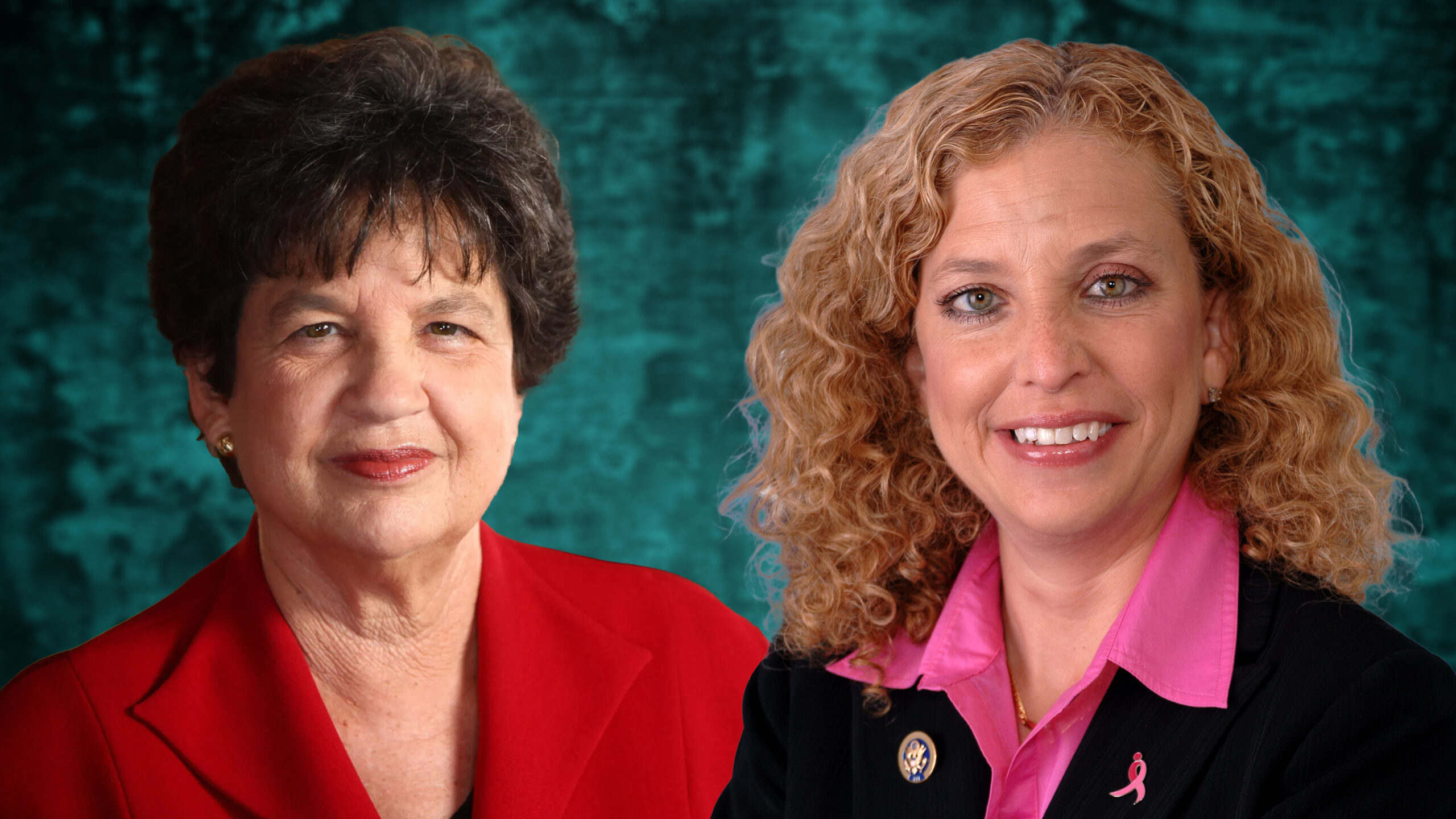
Democrats representing Florida in Congress say Florida’s Health Department doesn’t need to nix support for 10,000 AIDS patients. Worse, they say doing so could both cost lives and lead to further spread of the disease.
U.S. Reps. Lois Frankel and Debbie Wasserman Schultz slammed a recent decision by the Department of Health (DOH) to change eligibility requirements for the Ryan White AIDS Drug Assistance Program. That program, named for deceased child AIDS activist Ryan White, provides prescription drugs for more than 50,000 people living with HIV or AIDS in Florida. But financial eligibility changes strip coverage for more than 10,000 people.
“Researchers estimate the average lifetime health care costs associated with HIV infection can get up into the hundreds of thousands,” said Frankel, a West Palm Beach Democrat.
She made the comments on a press call featuring Florida Democrats and medical experts.
Frankel said the decision to kill funding for the program likely means a death sentence for many who will lose access to care, and now she wants the U.S. Department of Health and Human Services to investigate Florida’s administration of the program.
Wasserman Schultz, a Weston Democrat, said ending coverage for many would be a choice, and a wrong one, by Gov. Ron DeSantis’ administration.
“This is a lifeline that provides critical financial assistance to low-income Floridians living with HIV and AIDS. It helps ensure that they can afford their prescriptions and their health insurance, and despite its resounding success now the program is in jeopardy,” she said.
She said the change means most Floridians applying for the program would be denied if they made $120,000 or more, but HIV medication can cost thousands each month.
The subject has already spurred discussions in the Florida Legislature about whether other funding should be diverted.
Florida Surgeon General Joseph Ladapo told the Senate Health and Human Service Appropriations Committee, “It’s a really, really serious issue,” as reported by the Tampa Bay Times.

He notably blamed a budget shortfall on a federal government shutdown in the Fall, one that ultimately failed to lead to any extension in funding for pandemic-era Affordable Care Act tax credits. Ultimately, he said, that left funding for the program $120 million short.
But cutting the AIDS program is the wrong answer, experts on the call said. Michael Rajner, a public health advocate who personally has lived with HIV since 1995, said cutting the eligibility for the program will create an impossible financial burden on many patients.
“We need the Surgeon General and the Governor to give a halt to this and reverse these cuts and find the money, whether it’s through a budget spending authority request to the Legislature and the Governor,” he said.
Moreover, he said he believed money had been misappropriated. DOH has been criticized for spending money on marketing campaigns about marijuana and abortion ballot measures ultimately defeated at the ballot box last year, though Rajner declined to say explicitly which funding he was referring to. But he said some spending mistakes are easily documented.
“This is a problem that they created themselves because of how they administer the program and the fact that they’ve also forced out several staff over the last year,” Rajner said.
Carl Baloney Jr., President and CEO of AIDS United, said the consequences of cutting participation in the program could be far-reaching.
“This is not only morally wrong, it’s financially reckless,” Baloney said. “Consistent HIV treatment saves money, and disrupting care leads to emergency room visits, hospitalizations and higher uncompensated care. Florida is acting without transparency, without following the required regulatory process.”
Wasserman Schultz noted that Biktarvy was the most prescribed once-daily pill used by HIV patients, and forcing people to switch off that drug could cost individuals thousands each year and put their health at risk.
Dr. Elizabeth Sherman of Nova Southeastern University, an HIV clinical pharmacy specialist, said Florida ranks third in the nation right now for new HIV diagnoses. But with the help of public funding, the state has also seen fast incorporation of treatments like Pre-Exposure Prophylaxis, or PrEP, which uses drugs that not only treat HIV, but prevent its transmission.
That suggests that ending programs won’t just shorten lives, but will potentially lead to more infections.
“We have been the envy of many other states for successfully implementing test-and-treat programs where people with HIV are started on treatment on day one of their diagnosis,” she said. “We can continue to make incredible progress, or we can let our guard down now and watch it get worse.”
Frankel dismissed accusations that the problem came from the federal government. The U.S. House Appropriations Committee member said Florida has not requested additional help.
“Florida, I think, last year got about $130 million. And as far as I know, there has not been any request by the federal government to the states to put in their own funds,” she said, “nor do I know of any outreach by Gov. DeSantis to any of us on appropriations for more money.”
She said the impact on eligibility warranted a federal investigation to figure out the true cause of the funding shortfall.

A House panel is on board with legislation that aims to increase regulations of electronic bikes and scooters in Florida.
Rep. Yvette Benarroch, a Naples Republican and co-sponsor of the House bill (HB 243), presented it before the House Government Operations Subcommittee. She offered a committee substitute bill, which the panel unanimously approved.
It’s identical to a measure that was approved by the Senate Transportation Committee Tuesday.
E-bikes especially have gained unflattering attention in recent years as they have been involved in more and more accidents. Benarroch during her presentation provided a list of about a half-dozen fatalities involving e-bikes on Florida roads recently.
“Unfortunately, this bill was inspired by tragedy,” Benarroch said during her presentation. “Young people have been seriously injured.”
She added that the number of e-bike accidents is not going down and there needs to be more data collected to understand how profound the issue is. She said she’s been working on the bill for about the past half-year.
“There are many others whose stories do not make the headlines,” Benarroch said. “The call to act is immediate.”
Benarroch’s bill is identical to Sen. Keith Truenow’s measure (SB 382). The Tavares Republican amended his original bill to include provisions establishing an “electric bicycle task force,” which are also included in the House proposal.
That task force would collect data on e-bike and scooter accidents, provide recommendations on enforcement, and submit a report to the Florida Department of Highway Safety and Motor Vehicles.
The bill would also limit e-bikes to operating at 10 mph on sidewalks if a pedestrian is within 50 feet.

Several law enforcement organizations, hospitals and School Boards supported Benarroch’s bill Wednesday.
Rep. Linda Chaney, a St. Petersburg Republican and Chair of the House subcommittee, said she was thankful for Benarroch’s work on the measure because local municipalities have approached the e-bike issue with inconsistent measures.
“There are a lot of different areas in our state with different laws, depending on how fast the bike goes, how you peddle it if you have a motor (and) there’s a lot of confusion out there. … This is going to have far-reaching impact,” Chaney said.
Two actions in North Florida in 2024 demonstrate the wide range of approaches to dealing with e-bikes.
Two 15-year-old boys were seriously injured in St. Johns County alone last year. The St. Johns County Commission passed a resolution in August to join forces with the Sheriff’s Office and the St. Johns County School District to promote more awareness and safety for the operators of e-bikes, as well as e-scooters and other electronic motorized devices.
The County Commission’s measure promised joint education with the St. Johns County Sheriff’s Office and the St. Johns County School District.
St. Johns County Sheriff Rob Hardwick said the resolution’s timing was right.
The Palm Coast City Council in 2025 also passed an ordinance that makes it illegal for e-bike owners to modify their vehicles so they can exceed state-defined speed limits on streets, sidewalks or paths.


James Uthmeier issues opinion that municipalities can’t force businesses to have shopping cart container plans

Fortune Article | Fortune

‘Wheel Of Fortune’ Icon Vanna White Ties the Knot With John Donaldson
-

 Politics9 years ago
Congress rolls out ‘Better Deal,’ new economic agenda
-
Entertainment9 years ago
New Season 8 Walking Dead trailer flashes forward in time
-
Politics9 years ago
Poll: Virginia governor’s race in dead heat
-
Politics9 years ago
Illinois’ financial crisis could bring the state to a halt
-
Entertainment9 years ago
The final 6 ‘Game of Thrones’ episodes might feel like a full season
-
Entertainment9 years ago
Meet Superman’s grandfather in new trailer for Krypton
-
Business9 years ago
6 Stunning new co-working spaces around the globe
-
Tech9 years ago
Hulu hires Google marketing veteran Kelly Campbell as CMO