Connect with us

Business

Warren Buffett’s exit is ‘leadership at its most selfless,’ McKinsey CEO whisperer says. It’s a powerful lesson in Fortune 500 succession

Published

on


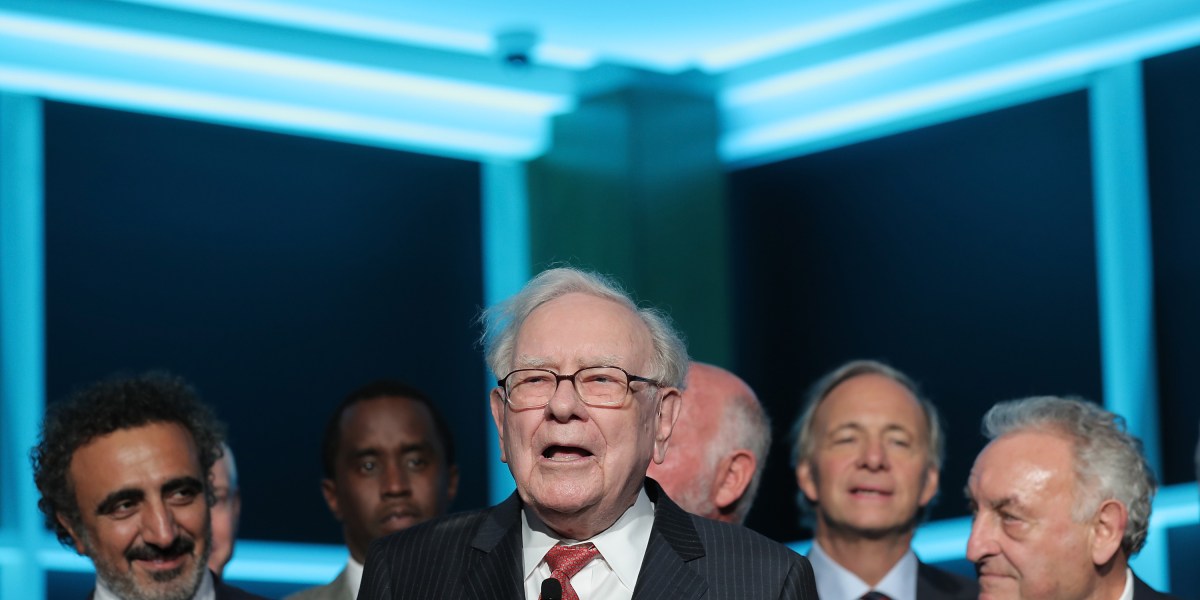
Warren Buffett’s recent exit as CEO of Berkshire Hathaway is being widely recognized not only for its impact on Wall Street but also as a masterclass in selfless leadership. Carolyn Dewar, senior partner and co-leader of McKinsey’s CEO Practice, one of the firm’s vaunted “CEO whisperers” describes Buffett’s handover as “leadership at its most selfless”—a quiet but powerful lesson for leaders everywhere.​

Dewar, who has talked to hundreds of CEOs and leaders for her role, including for her recently co-authored work, A CEO For All Seasons, wrote on LinkedIn that Buffett’s final letter to Berkshire shareholders is so typical of the man they call the “Oracle of Omaha.” For instance, when he reminds readers that “the cleaning lady is as much a human being as the Chairman,” Dewar writes that it sums up his whole leadership philosophy. “Decency is not decorative. Respect is what sustains loyalty, trust, and long-term success.”

In conversation with Fortune, Dewar emphasized that Buffett’s exit is itself an example of leadership. Buffett’s decision was not only personal but deeply organizational, reflecting the importance of choosing the right moment to ensure a thriving future for Berkshire Hathaway. Leaders must ask themselves whether they would pick themselves for the evolving needs of their company—a rarely practiced but crucial reflection. “For any leader, really saying from a company point of view … given the kind of skills we’ll need in our next leader, am I the right person to take us on that next journey?”

She also referred back to her recent book, including research on former Intuit CEO Brad Smith, who had impressed her with his own succession mindset. He was CEO for 11 years and discussed succession with his board 44 times: every single quarter. Many of his deputies went on to be successful CEOs at other companies, she said, itself a representation of Smith’s legacy. She told Fortune that there was a fitting sports metaphor in the succession from one Hall of Fame quarterback to another.

The Steve Young problem—and opportunity

Before Intuit’s Brad Smith stepped down as CEO, he suggested that he and his successor, Sasan Goodarzi, talk to Steve Young, who succeeded the iconic Joe Montana as the playcaller for the San Francisco 49ers. “He talked to us about how for part of his first year he tried to be Joe Montana,” Smith told Dewar. “He grew his hair out like Joe and began to dress like Joe. He even tried to change his throwing mechanics like Joe. And he had the worst half year ever.”

The lesson, Dewar recounted, is that eventually, Steve stopped trying to be like Joe and had a great career. “Steve looked right at Sasan and said, ‘You need to be the best Sasan Goodarzi in the world.’” Buffett passing the torch to his longtime deputy Greg Abel reminded her of this, she added. “How do you give the person the confidence and space to be themselves? There’s a reason they were picked, right? They shouldn’t be trying to be their predecessor.”

As Dewar explained, “once it’s clear what that timing is…have you done all the things to get your successor ready?” Buffett’s preparation for Greg Abel as his successor was methodical and generous. Dewar emphasized the unique nature of the CEO role and how effective leaders create opportunities for potential successors to experience the scope of executive responsibility before taking the job. Buffett’s warm public handoff—accompanied by confidence and supportive messaging—not only inspired trust, but reinforced the value of setting up successors for success, allowing the new leader to “find their voice and be seen as the CEO” without interference from predecessors. ​​

The beauty of ‘going quiet’

Dewar was particularly struck by Buffett’s intention to “go quiet for a while.” This is a rare and graceful move among iconic leaders, ensuring the new CEO gets the space to lead authentically: to be Steve Young, in other words. Successful transitions occur when the outgoing CEO avoids “chipping in from the cheap seats” and supports the new leader from a respectful distance, recognizing the need to “give the person the confidence and space to be themselves.” Adding that she was not close to the story directly, she said the current succession at Walmart looked similar, with Doug McMillon passing the torch to John Furner, who was in a deputy role very similar to Abel.

Dewar added that, even though Buffett may be going quiet and making fewer headlines with his wise pronouncements going forward, “he’s done so much writing and going back and reading all of his letters to shareholders, I think is a gift that he’s left behind, that all of us can read and learn from.” Obviously, she added, “whenever there’s an incredible leader, you’re going to miss them. And I think the key for everyone then is to distill, well, what are those lessons learned? What are the things we admire, and how do this next generation of leaders embody that and take it forward in a way that works for them?”

To her point, Buffett’s famous quotes are legion, nearly all of them easier said than done. “Rule No. 1 is never lose money. Rule No. 2 is never forget Rule No. 1,” he said in his folksy style, a typically deceptively simple quote. Another is to “Be fearful when others are greedy and greedy only when others are fearful.” Finally, there’s the famous quote that refers to bubbles as the great exposer of true investors and poseurs: “Only when the tide goes out do you discover who’s been swimming naked.”

Dewar said the fourth season in A CEO For All Seasons is “not talked about enough.” What we’re seeing with Walmart and Berkshire Hathaway, she said, is that “how you finish strong not only sets your successor up for success, but it sets the organization up to thrive beyond you. And that should be the goal, that should be the legacy.” She added that “it’s nice to feel like you’re going to be missed, but honestly, your real legacy is when you’ve left the next generation in such a great place that they’re going to do even better than when you were there.”


Source link

Continue Reading

Business

U.S. consumers are so strained they put more than $1B on BNPL during Black Friday and Cyber Monday

Published

on


Financially strained and cautious customers leaned heavily on buy now, pay later (BNPL) services over the holiday weekend.

Cyber Monday alone generated $1.03 billion (a 4.2% increase YoY) in online BNPL sales with most transactions happening on mobile devices, per Adobe Analytics. Overall, consumers spent $14.25 billion online on Cyber Monday. To put that into perspective, BNPL made up for more than 7.2% of total online sales on that day.

As for Black Friday, eMarketer reported $747.5 million in online sales using BNPL services with platforms like PayPal finding a 23% uptick in BNPL transactions.

Likewise, digital financial services company Zip reported 1.6 million transactions throughout 280,000 of its locations over the Black Friday and Cyber Monday weekend. Millennials (51%) accounted for a chunk of the sizable BNPL purchases, followed by Gen Z, Gen X, and baby boomers, per Zip.

The Adobe data showed that people using BNPL were most likely to spend on categories such as electronics, apparel, toys, and furniture, which is consistent with previous years. This trend also tracks with Zip’s findings that shoppers were primarily investing in tech, electronics, and fashion when using its services.

And while some may be surprised that shoppers are taking on more debt via BNPL (in this economy?!), analysts had already projected a strong shopping weekend. A Deloitte survey forecast that consumers would spend about $650 million over the Black Friday–Cyber Monday stretch—a 15% jump from 2023.

“US retailers leaned heavily on discounts this holiday season to drive online demand,” Vivek Pandya, lead analyst at Adobe Digital Insights, said in a statement. “Competitive and persistent deals throughout Cyber Week pushed consumers to shop earlier, creating an environment where Black Friday now challenges the dominance of Cyber Monday.”

This report was originally published by Retail Brew.


Source link

Continue Reading

Business

AI labs like Meta, Deepseek, and Xai earned worst grades possible on an existential safety index

Published

on


A recent report card from an AI safety watchdog isn’t one that tech companies will want to stick on the fridge.

The Future of Life Institute’s latest AI safety index found that major AI labs fell short on most measures of AI responsibility, with few letter grades rising above a C. The org graded eight companies across categories like safety frameworks, risk assessment, and current harms.

Perhaps most glaring was the “existential safety” line, where companies scored Ds and Fs across the board. While many of these companies are explicitly chasing superintelligence, they lack a plan for safely managing it, according to Max Tegmark, MIT professor and president of the Future of Life Institute.

“Reviewers found this kind of jarring,” Tegmark told us.

The reviewers in question were a panel of AI academics and governance experts who examined publicly available material as well as survey responses submitted by five of the eight companies.

Anthropic, OpenAI, and GoogleDeepMind took the top three spots with an overall grade of C+ or C. Then came, in order, Elon Musk’s Xai, Z.ai, Meta, DeepSeek, and Alibaba, all of which got Ds or a D-.

Tegmark blames a lack of regulation that has meant the cutthroat competition of the AI race trumps safety precautions. California recently passed the first law that requires frontier AI companies to disclose safety information around catastrophic risks, and New York is currently within spitting distance as well. Hopes for federal legislation are dim, however.

“Companies have an incentive, even if they have the best intentions, to always rush out new products before the competitor does, as opposed to necessarily putting in a lot of time to make it safe,” Tegmark said.

In lieu of government-mandated standards, Tegmark said the industry has begun to take the group’s regularly released safety indexes more seriously; four of the five American companies now respond to its survey (Meta is the only holdout.) And companies have made some improvements over time, Tegmark said, mentioning Google’s transparency around its whistleblower policy as an example.

But real-life harms reported around issues like teen suicides that chatbots allegedly encouraged, inappropriate interactions with minors, and major cyberattacks have also raised the stakes of the discussion, he said.

“[They] have really made a lot of people realize that this isn’t the future we’re talking about—it’s now,” Tegmark said.

The Future of Life Institute recently enlisted public figures as diverse as Prince Harry and Meghan Markle, former Trump aide Steve Bannon, Apple co-founder Steve Wozniak, and rapper Will.i.am to sign a statement opposing work that could lead to superintelligence.

Tegmark said he would like to see something like “an FDA for AI where companies first have to convince experts that their models are safe before they can sell them.

“The AI industry is quite unique in that it’s the only industry in the US making powerful technology that’s less regulated than sandwiches—basically not regulated at all,” Tegmark said. “If someone says, ‘I want to open a new sandwich shop near Times Square,’ before you can sell the first sandwich, you need a health inspector to check your kitchen and make sure it’s not full of rats…If you instead say, ‘Oh no, I’m not going to sell any sandwiches. I’m just going to release superintelligence.’ OK! No need for any inspectors, no need to get any approvals for anything.”

“So the solution to this is very obvious,” Tegmark added. “You just stop this corporate welfare of giving AI companies exemptions that no other companies get.”

This report was originally published by Tech Brew.


Source link

Continue Reading

Business

Hollywood writers say Warner takeover ‘must be blocked’

Published

on


Hollywood writers, producers, directors and theater owners voiced skepticism over Netflix Inc.’s proposed $82.7 billion takeover of Warner Bros. Discovery Inc.’s studio and streaming businesses, saying it threatens to undermine their interests.

The Writers Guild of America, which announced in October it would oppose any sale of Warner Bros., reiterated that view on Friday, saying the purchase by Netflix “must be blocked.”

“The world’s largest streaming company swallowing one of its biggest competitors is what antitrust laws were designed to prevent,” the guild said in an emailed statement. “The outcome would eliminate jobs, push down wages, worsen conditions for all entertainment workers, raise prices for consumers, and reduce the volume and diversity of content for all viewers.”

The worries raised by the movie and TV industry’s biggest trade groups come against the backdrop of falling movie and TV production, slack ticket sales and steep job cuts in Hollywood. Another legacy studio, Paramount, was sold earlier this year.

Warner Bros. accounts for about a fourth of North American ticket sales — roughly $2 billion — and is being acquired by a company that has long shunned theatrical releases for its feature films. As part of the deal, Netflix co-CEO Ted Sarandos has promised Warner Bros. will continue to release moves in theaters.

“The proposed acquisition of Warner Bros. by Netflix poses an unprecedented threat to the global exhibition business,” Michael O’Leary, chief executive officer of the theatrical trade group Cinema United, said in en emailed statement Friday. “The negative impact of this acquisition will impact theaters from the biggest circuits to one-screen independents.”

The buyout of Warner Bros. by Netflix “would be a disaster,” James Cameron, the director of some of Hollywood’s highest-grossing films in history including Titanic and Avatar, said in late November on The Town, an industry-focused podcast. “Sorry Ted, but jeez. Sarandos has gone on record saying theatrical films are dead.”

On a conference call with investors Friday, Sarandos said that his company’s resistance to releasing films in cinemas was mostly tied to “the long exclusive windows, which we don’t really think are that consumer friendly.”

The company said Friday it would “maintain Warner Bros.’ current operations and build on its strengths, including theatrical releases for films.”

On the call, Sarandos reiterated that view, saying that, “right now, you should count on everything that is planned on going to the theater through Warner Bros. will continue to go to the theaters through Warner Bros.” 

Competition from online outfits like YouTube and Netflix has forced a reckoning in Hollywood, opening the door for takeovers like the Warner Bros. deal announced Friday. Media giants including Comcast Corp., parent of NBCUniversal, are unloading cable-TV networks like MS Now and USA, and steering resources into streaming. 

In an emailed note to Warner Bros. employees on Friday, Chief Executive Officer David Zaslav said the board’s decision to sell the company “reflects the realities of an industry undergoing generational change in how stories are financed, produced, distributed, and discovered.”

The Producers Guild of America said Friday its members are “rightfully concerned about Netflix’s intended acquisition of one of our industry’s most storied and meaningful studios,” while a spokesperson for the Directors Guild of America raised concerns about future pay at Warner Bros.

“We will be meeting with Netflix to outline our concerns and better understand their vision for the future of the company,” the Directors Guild said.

In September, the DGA appointed director Christopher Nolan as its president. Nolan has previously criticized Netflix’s model of releasing films exclusively online, or simultaneously in a small number of cinemas, and has said he won’t make movies for the company.

The Screen Actors Guild said Friday that the transaction “raises many serious questions about its impact on the future of the entertainment industry, and especially the human creative talent whose livelihoods and careers depend on it.”

Oscar winner Jane Fonda spoke out on Thursday before the deal was announced. 

“Consolidation at this scale would be catastrophic for an industry built on free expression, for the creative workers who power it, and for consumers who depend on a free, independent media ecosystem to understand the world,” the star of the Netflix series Grace and Frankie wrote on the Ankler industry news website.

Netflix and Warner Bros. obviously don’t see it that way. In his statement to employees, Zaslav said “the proposed combination of Warner Bros. and Netflix reflects complementary strengths, more choice and value for consumers, a stronger entertainment industry, increased opportunity for creative talent, and long-term value creation for shareholders.”


Source link

Continue Reading

Trending

Copyright © Miami Select.