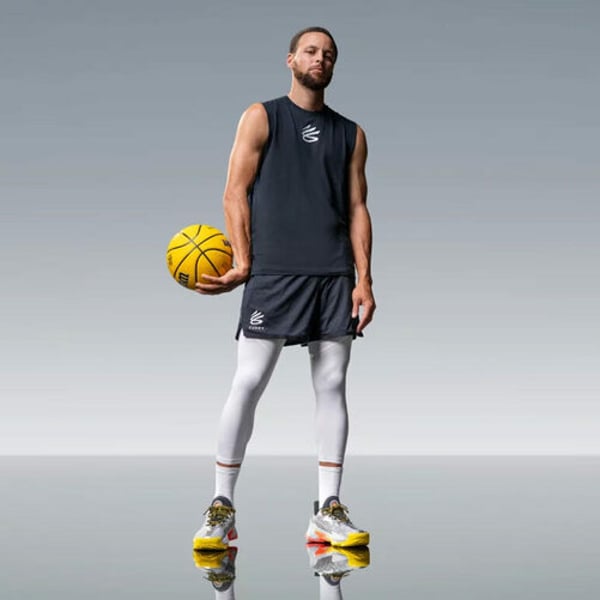
The day after parting ways with Under Armour to become one of the biggest sneaker free agents ever, NBA superstar Stephen Curry warmed up for a game in a pair of Nike shoes.
Stephen Curry could be moving into new sneaker territory – Curry
It was a striking turn. A decade earlier, Curry’s first Under Armour sneaker had taken off as he led the Golden State Warriors to an NBA Finals victory over LeBron James — a top Nike-sponsored athlete — and the Cleveland Cavaliers.
In the following years, Curry had visions of becoming the next Jordan brand, a Nike-owned unit that dominates the basketball market. And Kevin Plank, Under Armour Inc.’s founder and chief executive officer, talked about overtaking Nike as the world’s largest sporting goods company.
But all that promise never materialised. Curry and his advisers became frustrated by what they viewed as underinvestment in the brand, according to people familiar with the situation who asked to not be identified because details of the relationship are private. Meanwhile, the division’s sales weren’t meeting the company’s or Curry’s expectations, the people said.
“This decision was made thoughtfully and respectfully, with a shared sense of pride in what we built together, and a mutual understanding that a separation was best for both Under Armour and Stephen Curry,” Under Armour and a public relations firm representing Curry said in a joint statement.
Under Armour said it’s responding jointly with Curry because questions from Bloomberg concern when they worked together. Curry didn’t respond to a separate request for comment.
According to the separation agreement announced last week, Curry and Under Armour have unfinished business. The company will debut the final Curry shoe in February, with the last products from the partnership released through October.
The arrival of Curry’s shoes in 2015 just as he evolved into an NBA superstar was crucial in helping Under Armour build a footwear business after getting its start in workout apparel. He quickly became one of the faces of the brand — joining the likes of NFL stars Tom Brady and Cam Newton — as the company put marketing muscle behind him that included promotional tours to key markets like China.
But early on, there were doubts about how big the brand could get because the shoes were viewed as more for playing basketball than casual footwear. The fashion side of the industry, driven by sneakerhead culture, accounts for the overwhelming majority of sales.
Under Armour doesn’t report the brand’s revenue, but projects basketball sales, which includes the Curry division, to be as much as $120 million this year. That’s less than 3% of annual revenue expected to be about $5 billion. Nike’s Jordan brand alone generated more than $7 billion in the company’s last fiscal year.
Ending the Curry deal will also be part of a nearly $100 million increase in restructuring costs for Under Armour, according to a regulatory filing.
After warming up in Nike shoes last week, Curry wore his Under Armour sneakers for the game. But that’s not likely to last long. With a potential partnership up for grabs, industry insiders say the biggest basketball brands, including Nike, Adidas, and Puma, are sure to approach him. Curry hasn’t discussed a potential new deal yet with any sneaker companies, said a person familiar.
One sore point for Curry was the attempt last year to recruit Caitlin Clark to join his brand, according to people familiar with the matter. He and the company pursued the phenom, but Under Armour’s offer trailed the total value of Nike’s pitch, the people said. Clark, now a star in the WNBA, opted to sign with Nike.
Representatives for Under Armour and Curry said in their joint statement that they had “maintained a healthy professional working relationship throughout the build out of the Curry Brand, including the mutual decision to separate.”
In recent years, Under Armour signed NBA star De’Aaron Fox and college standout MiLaysia Fulwiley to the Curry Brand. The company has other basketball players on endorsement deals with the Under Armour brand, including WNBA Star Kelsey Plum.
After leaving the CEO job in 2020, but remaining chairman, Plank returned to the helm early in 2024, trying to revive the company’s robust sales growth and investor confidence. (The stock is currently trading at about $4 — down from a high of more than $50 a decade ago and at its lowest point in 15 years.)
Curry hoped that Plank would invest more in his line, one of the people said. At a conference hosted by Bloomberg in September, Plank suggested the partnership wasn’t going well, saying the company hadn’t done a “good enough job yet” telling Curry’s story through the brand.
As part of Plank’s push to turn around the company, he spearheaded a restructuring that involved job cuts, more automation and reducing the number of products sold by 25%.
The CEO also refocused resources on the field sports that had been the core of its business in its early days: football, flag football and baseball, according to people familiar with the matter. They were seen as bigger priorities than basketball, the people said.
“Under Armour remains deeply committed to basketball,” and will continue to develop innovative products, the company said. Fox and Fulwiley, who were signed to the Curry brand, remain under contract with Under Armour at this time, the company said.
In April, Under Armour added a cohort of incoming NFL players to boost the football business, including quarterback Cam Ward, the No. 1 overall NFL draft pick in 2025. This year, Curry’s brand only signed NBA guard Davion Mitchell, who is on his third team in five seasons.
Stock Award
During his time with Under Armour, Curry was given authority and equity as his role grew. In 2020, he signed a deal to create Curry Brand, then agreed to extend that arrangement in 2023 to expand the business beyond footwear as a sub-brand of Under Armour. He was named the brand’s president and granted stock worth $75 million at the time as part of his compensation package, according to a regulatory filing.
The shares have fallen by about half since then and weren’t scheduled to start vesting until 2029. The agreement calls for Curry to receive a prorated amount of stock if the deal ends early. Under Armour declined to comment on how this was resolved.
Plank said in a statement last week that for Curry it was “the right moment to let what we created evolve on his terms.” Curry thanked Under Armour and said he’s going to focus on “aggressive growth.”
“The sneaker industry is difficult,” Curry said at a press conference last week. “You give your best effort to create something sustainable.”
Curry now presents a rare opportunity for the world’s largest sportswear companies. He’s among the highest-profile athletes in the world, with the sort of global star power only surpassed by the likes of Michael Jordan and James – both are locked into lifetime deals with Nike.
At stake is the opportunity for a brand with the greatest shooter of all time while he’s still playing and into his retirement. Curry told Bloomberg last year that he expects to keep playing basketball for another four or five seasons.
Any future discussions might be awkward for Nike, which had bungled a past deal with Curry. He had signed a deal with the brand when he went pro in 2009, and Nike had a chance to re-sign Curry four years later as he became a star.
But executives held a haphazard pitch meeting, where they mispronounced Curry’s name and presented a slide deck with another athlete’s name on it, people familiar with the meeting said in confirming previous reporting by ESPN.
Nike, however, remains dominant in basketball and has signed many of the sport’s top athletes to its brands, including Clark, 2024 Rookie of the Year Victor Wembanyama and reigning NBA Most Valuable Player Shai Gilgeous-Alexander.
Meanwhile, Adidas has made inroads on the court through a buzzy shoe line with Anthony Edwards. New Balance has a deal with Cooper Flagg, the NBA Draft’s top pick. And two Chinese brands – Anta and Li Ning – have made strides in the US.
When asked at a postgame press conference about the Nikes he wore, Curry said it was “new beginnings.”
“I know it’s weird seeing me in something that’s not my own shoes,” Curry said. “I’m going to have some fun with this.”