Connect with us

Business

As U.S. women leave the workforce in droves, South Korean banks offer baby bonuses, flexible schedules, and child-raising sabbaticals


Published

on


Working women across the world continue to face wage inequality and a rollback in leadership representation—and the “motherhood penalty” makes their career success even harder. As employer demands force women in the U.S. out of the workforce, South Korean companies are stepping up to better the situation for female talent.

South Korean banks have rolled out several special perks to maintain women staffers. Last year, KB Kookmin Bank offered a “parental resignation” program where employees can take up to three years of unpaid child leave, and return to the job with the same rank and position from before—ensuring they don’t experience career setbacks from a long break. Financial group Woori offered its staffers a similar deal, with the cap set at two-and-a-half years. Other employers, like Shinhan Bank, also offer congratulatory “baby bonuses” to its staffers. 

Even foreign banks that have set up shop in the country are making changes; Citibank Korea was the first company to offer four weeks of paid paternity leave to ease the burden on working parents, and also created a Flexible Work System in which employees can apply for remote or flex time. Standard Charteredhas also implemented 20 weeks of paid parental leave globally to all workers—regardless of their gender.

To incentivize workers to have children, some South Korean companies beyond the banking sector are also putting their money where their mouth is. Earlier this year, South Korean construction company Booyoung Group announced it would give 100 million Korean won ($75,000) to each employee that has a baby. The business is also helping its parent staffers by aiding in college tuition for their kids, expensing medical coverage for direct family members, and shelling out on child allowances. The perk is available to both working men and women among the 2,500-person workforce.

Early results are positive

So far, it’s helped women stay in the labor force; South Korean women stick around at Korean banks for an average of 14.5 years, compared to men who stay for 15.4 years, according to Seoul-based business data platform Leaders Index. And with women accounting for more than half of the nation’s financial sector workforce, it’s critical they keep this talent group in the loop. 

However, it should be noted that these working women still face stark differences on the job; South Korea still has the widest gender pay gap among wealthy countries in the OECD, with women earning 33.7% less than men, despite boasting a level of advanced education above the average. 

While South Korean companies attempt to bridge the gender gap and keep their top performers, U.S. employers are moving forward with their own policies—no matter the impact on its women workers. 

South Korea and America’s strategies with working moms 

South Korea and the U.S. are both facing one major long-term labor issue: birthrates are declining. As women have gained access to higher education, unlocked prestigious jobs, and reprioritized their life goals, many are opting out of motherhood. But also, finances are straining opportunities to start a family; childcare costs have outpaced rent and mortgages in the U.S., the prices of everyday goods are skyrocketing, and the “motherhood penalty” can set women back $500,000 over the course of their careers. 

The policy response in the U.S. is largely different from South Korea, though: U.S. companies are bringing down the hammer on working mothers. Employers including Amazon, JPMorgan, and Paramount Skydance have enforced strict return-to-office measures, leaving parents with a new burden. It’s a trend that’s forced tens of thousands of American women—particularly those with young kids—to up and leave the workforce. The labor force participation rate of women aged 25 to 44 taking care of children under 5 fell nearly 3% between January and June 2025, falling to the lowest level in over three years, according to an analysis of federal data by Misty Heggeness of the University of Kansas, a former federal economist.

The decline is even starker for the highly educated, presumably more affluent cohort. The labor force participation of college‑educated mothers caring for young kids fell to about 77% in August 2025 from nearly 80% in 2023, while participation of fathers in similar situations edged up, according to a 2025 KPMG report. Women with children who have attained a bachelors or higher represent the largest decline in labor force participation since 2023.


Source link

Continue Reading

Business

National Park Service drops free admission on MLK Day and Juneteenth while adding Trump’s birthday

Published

on


The National Park Service will offer free admission to U.S. residents on President Donald Trump’s birthday next year — which also happens to be Flag Day — but is eliminating the benefit for Martin Luther King Jr. Day and Juneteenth.

The new list of free admission days for Americans is the latest example of the Trump administration downplaying America’s civil rights history while also promoting the president’s image, name and legacy.

Last year, the list of free days included Martin Luther King Jr Day and Juneteenth — which is June 19 — but not June 14, Trump’s birthday.

The new free-admission policy takes effect Jan. 1 and was one of several changes announced by the Park Service late last month, including higher admission fees for international visitors.

The other days of free park admission in 2026 are Presidents Day, Memorial Day, Independence Day, Constitution Day, Veterans Day, President Theodore Roosevelt’s birthday (Oct. 27) and the anniversary of the creation of the Park Service (Aug. 25).

Eliminating Martin Luther King Jr. Day and Juneteenth, which commemorates the day in 1865 when the last enslaved Americans were emancipated, removes two of the nation’s most prominent civil rights holidays.

Some civil rights leaders voiced opposition to the change after news about it began spreading over the weekend.

“The raw & rank racism here stinks to high heaven,” Harvard Kennedy School professor Cornell William Brooks, a former president of the NAACP, wrote on social media about the new policy.

Kristen Brengel, a spokesperson for the National Parks Conservation Association, said that while presidential administrations have tweaked the free days in the past, the elimination of Martin Luther King Jr. Day is particularly concerning. For one, the day has become a popular day of service for community groups that use the free day to perform volunteer projects at parks.

That will now be much more expensive, said Brengel, whose organization is a nonprofit that advocates for the park system.

“Not only does it recognize an American hero, it’s also a day when people go into parks to clean them up,” Brengel said. “Martin Luther King Jr. deserves a day of recognition … For some reason, Black history has repeatedly been targeted by this administration, and it shouldn’t be.”

Some Democratic lawmakers also weighed in to object to the new policy.

“The President didn’t just add his own birthday to the list, he removed both of these holidays that mark Black Americans’ struggle for civil rights and freedom,” said Democratic Sen. Catherine Cortez Masto of Nevada. “Our country deserves better.”

A spokesperson for the National Park Service did not immediately respond to questions on Saturday seeking information about the reasons behind the changes.

Since taking office, Trump has sought to eliminate programs seen as promoting diversity across the federal government, actions that have erased or downplayed America’s history of racism as well as the civil rights victories of Black Americans.

Self-promotion is an old habit of the president’s and one he has continued in his second term. He unsuccessfully put himself forwardfor the Nobel Peace Prize, renamed the U.S. Institute of Peace after himself, sought to put his name on the planned NFL stadium in the nation’s capital and had a new children’s savings program named after him.

Some Republican lawmakers have suggested putting his visage on Mount Rushmore and the $100 bill.


Source link

Continue Reading

Business

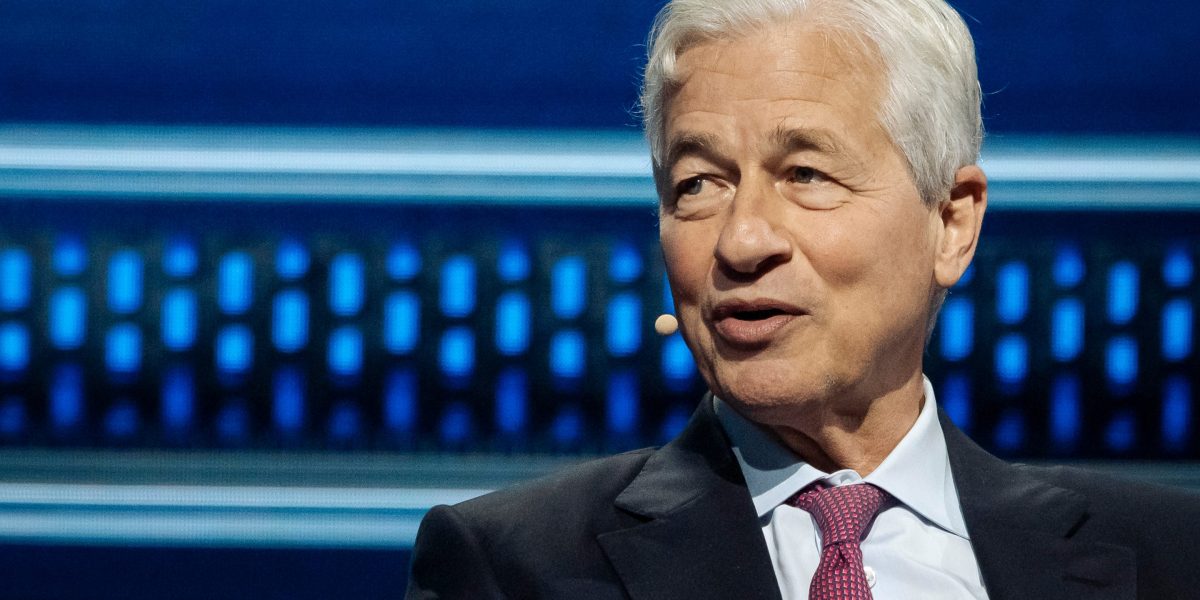
JPMorgan CEO Jamie Dimon says Europe has a ‘real problem’

Published

on


JPMorgan Chase & Co. Chief Executive Officer Jamie Dimon called out slow bureaucracy in Europe in a warning that a “weak” continent poses a major economic risk to the US.

“Europe has a real problem,” Dimon said Saturday at the Reagan National Defense Forum. “They do some wonderful things on their safety nets. But they’ve driven business out, they’ve driven investment out, they’ve driven innovation out. It’s kind of coming back.”

While he praised some European leaders who he said were aware of the issues, he cautioned politics is “really hard.” 

Dimon, leader of the biggest US bank, has long said that the risk of a fragmented Europe is among the major challenges facing the world. In his letter to shareholders released earlier this year, he said that Europe has “some serious issues to fix.”

On Saturday, he praised the creation of the euro and Europe’s push for peace. But he warned that a reduction in military efforts and challenges trying to reach agreement within the European Union are threatening the continent.

“If they fragment, then you can say that America first will not be around anymore,” Dimon said. “It will hurt us more than anybody else because they are a major ally in every single way, including common values, which are really important.”

He said the US should help.

“We need a long-term strategy to help them become strong,” Dimon said. “A weak Europe is bad for us.”

The administration of President Donald Trump issued a new national security strategy that directed US interests toward the Western Hemisphere and protection of the homeland while dismissing Europe as a continent headed toward “civilizational erasure.”

Read More: Trump’s National Security Strategy Veers Inward in Telling Shift

JPMorgan has been ramping up its push to spur more investments in the national defense sector. In October, the bank announced that it would funnel $1.5 trillion into industries that bolster US economic security and resiliency over the next 10 years — as much as $500 billion more than what it would’ve provided anyway. 

Dimon said in the statement that it’s “painfully clear that the United States has allowed itself to become too reliant on unreliable sources of critical minerals, products and manufacturing.”

Investment banker Jay Horine oversees the effort, which Dimon called “100% commercial.” It will focus on four areas: supply chain and advanced manufacturing; defense and aerospace; energy independence and resilience; and frontier and strategic technologies. 

The bank will also invest as much as $10 billion of its own capital to help certain companies expand, innovate or accelerate strategic manufacturing.

Separately on Saturday, Dimon praised Trump for finding ways to roll back bureaucracy in the government.

“There is no question that this administration is trying to bring an axe to some of the bureaucracy that held back America,” Dimon said. “That is a good thing and we can do it and still keep the world safe, for safe food and safe banks and all the stuff like that.”


Source link

Continue Reading

Business

Hegseth likens strikes on alleged drug boats to post-9/11 war on terror

Published

on


Defense Secretary Pete Hegseth defended strikes on alleged drug cartel boats during remarks Saturday at the Ronald Reagan Presidential Library, saying President Donald Trump has the power to take military action “as he sees fit” to defend the nation.

Hegseth dismissed criticism of the strikes, which have killed more than 80 people and now face intense scrutiny over concerns that they violated international law. Saying the strikes are justified to protect Americans, Hegseth likened the fight to the war on terror following the Sept. 11, 2001 attacks.

“If you’re working for a designated terrorist organization and you bring drugs to this country in a boat, we will find you and we will sink you. Let there be no doubt about it,” Hegseth said during his keynote address at the Reagan National Defense Forum. “President Trump can and will take decisive military action as he sees fit to defend our nation’s interests. Let no country on earth doubt that for a moment.”

The most recent strike brings the death toll of the campaign to at least 87 people. Lawmakers have sought more answers about the attacks and their legal justification, and whether U.S. forces were ordered to launch a follow-up strike following a September attack even after the Pentagon knew of survivors.

Though Hegseth compared the alleged drug smugglers to Al-Qaida terrorists, experts have noted significant differences between the two foes and the efforts to combat them.

Hegseth’s remarks came after the Trump administration released its new national security strategy, one that paints European allies as weak and aims to reassert America’s dominance in the Western Hemisphere.

During the speech, Hegseth also discussed the need to check China’s rise through strength instead of conflict. He repeated Trump’s vow to resume nuclear testing on an equal basis as China and Russia — a goal that has alarmed many nuclear arms experts. China and Russia haven’t conducted explosive tests in decades, though the Kremlin said it would follow the U.S. if Trump restarted tests.

The speech was delivered at the Reagan National Defense Forum at the Ronald Reagan Presidential Foundation and Institute in California, an event which brings together top national security experts from around the country. Hegseth used the visit to argue that Trump is Reagan’s “true and rightful heir” when it comes to muscular foreign policy.

By contrast, Hegseth criticized Republican leaders in the years since Reagan for supporting wars in the Middle East and democracy-building efforts that didn’t work. He also blasted those who have argued that climate change poses serious challenges to military readiness.

“The war department will not be distracted by democracy building, interventionism, undefined wars, regime change, climate change, woke moralizing and feckless nation building,” he said.


Source link

Continue Reading

Trending

Copyright © Miami Select.
