Good morning. AI is reshaping jobs faster than workers can retrain for them. Data fluency, machine collaboration, and digital literacy are now essential—but how do we address the skills gap?
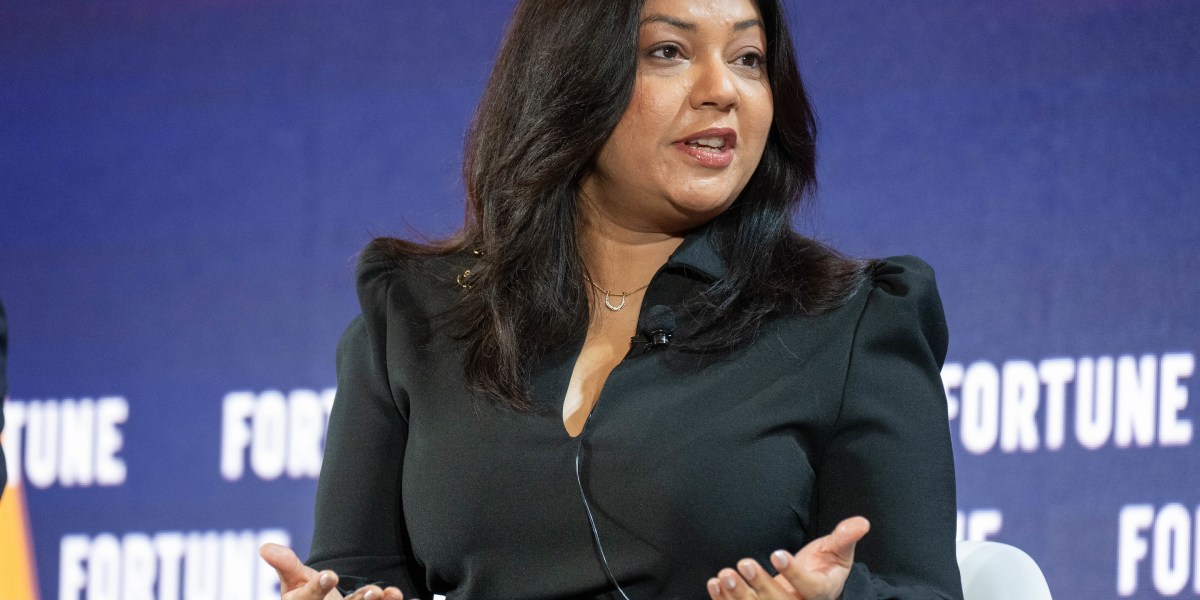
“The skills we need in the AI age are fundamentally different from before,” said Charu Mahajan, senior partner and VP of IBM Consulting APAC, during a panel session moderated by Fortune’s Jeremy Kahn at the Fortune Innovation Forum in Kuala Lumpur, Malaysia, on Tuesday.
“There’s a greater emphasis on data literacy,” Mahajan said. “And it’s not just about being an advanced data professional.” It now entails working with machines and understanding what human collaboration with them looks like, she said. Being data fluent—and knowing how to work with agents and robotics—is becoming essential.
‘Thinking outside the box’ becomes essential
For employers, it’s not just technical skills that are most sought after. According to Mahajan, IBM’s CEO research reveals that “the emphasis and premium on creativity, thinking outside the box, and being able to be innovative have become really important.”
There remains an emphasis on hiring younger people, but increasingly those who come from fields or areas that may be diametrically opposed to what a business traditionally focuses on, Mahajan said. “There is a greater emphasis on: How do you bring in creative people?” she said. Because fundamentally, with AI, you will need people to truly be innovative.”
This marks a dramatic shift from the previous decade, when coding and STEM credentials were seen as essential for a competitive career. As Mahajan points out, technology is becoming a commodity.
“You don’t find yourself hard-pressed for technology, because you have models and technology agents available to you,” she said. The real differentiator now is having people who know how to use these tools and work with them—skills like prompt engineering and the human intervention needed to leverage technology, she explained. Using technology creatively is where the value now lies, she said.
A startup mindset for the AI age
Achmad Zaky, a founding partner of Init 6, an investor fostering startups in Indonesia, said that success in the AI era also relies on an “experimental spirit.” Speaking during the panel session, he credited the most effective founders with always being curious about the future, trying new things, and learning from failure. The main characteristic of successful founders, he said, is the willingness to try, fail, and try again—each time pushing harder.
Major corporations are slowly adapting, but many still struggle to adopt the startup mentality that rewards experimentation over perfection. AI has made businesses rethink the kinds of skills—and the “spirit of failure”—they need to keep experimenting, Mahajan said. Many companies are stuck in “pilot purgatory,” constantly trying to innovate with AI but going nowhere, she said. What’s happening is that while many are beginning to experiment with these technologies, they don’t yet have the skills to adapt, she added.
Mahajan argues that success requires breaking down traditional corporate silos: Technology is present across all functions—it’s no longer just the remit of the CIO or CTO, she said.
Cor van den Berg was appointed CFO of Sunsweet Growers Inc., a global leader in dried fruit and beverage categories. He joins Sunsweet with more than 25 years of financial leadership experience. Most recently, van den Berg served as CFO at Darigold (Cooperative). Before that, he held CFO and other key finance and strategy positions at Mars, Inc. and City of Hope.
Scott Lipman was promoted to CFO of Avenzo Therapeutics, Inc., a clinical-stage biotechnology company. He will continue to serve as the company’s chief business officer. Lipman succeeds Paolo Tombesi, who has retired from his CFO role. Lipman joined Avenzo in March 2023 as SVP of corporate development and was promoted to chief business officer in November 2024. Previously, he was on the leadership team at Turning Point Therapeutics, where he played a key role in its acquisition by Bristol Myers Squibb.
Big Deal
The 2025 Gartner AI in Finance survey of 183 CFOs finds that adoption in 2025 is consistent with last year, with 59% of finance leaders reporting the use of AI in their finance function.
Three use cases have been adopted by more than a third of respondents who have implemented AI in their departments. Knowledge management—helping organizations organize, retrieve, and leverage information for better decision-making—is the most common AI use case (49%) in finance organizations, followed by accounts payable process automation (37%) and error and anomaly detection (34%), according to Gartner.
Courtesy of Gartner
Going deeper
“Nvidia blows past revenue targets and forecasts trillions in AI infrastructure spending by end of decade” is a Fortune article by Sharon Goldman.
Goldman writes: “Nvidia blew past Wall Street financial targets in its third quarter, posting a 62% surge in revenue and better-than-expected growth for the current quarter, as executives shrugged off concerns of a potential AI bubble and added fuel to the fire, forecasting trillions of dollars in industry-wide spending on AI infrastructure by the end of the decade. ‘There’s been a lot of talk about an AI bubble,’ Nvidia CEO Jensen Huang said during a conference call on Wednesday. ‘From our vantage point, we see something very different.’ Read the complete article here.
Overheard
“Tonight, the markets and tech stocks got a ‘pop the champagne’ moment.”
—Wedbush Securities analysts wrote in an industry note on Wednesday night regarding Nvidia’s robust earnings and guidance. “Nvidia gave January guidance of $65 billion vs. the Street’s $61.7 billion estimate, an eye-popping guidance raise that will be a major positive catalyst for Nvidia and the bullish AI Revolution thesis,” according to the analysts.
AI lab GoogleDeepMind announced a major new partnership with the U.K. government Wednesday, pledging to accelerate breakthroughs in materials science and clean energy, including nuclear fusion, as well as conducting joint research on the societal impacts of AI and on ways to make AI decision-making more interpretable and safer.
As part of the partnership, Google DeepMind said it would open its first automated research laboratory in the U.K. in 2026. That lab will focus on discovering advanced materials including superconductors that can carry electricity with zero resistance. The facility will be fully integrated with Google’s Gemini AI models. Gemini will serve as a kind of scientific brain for the lab, which will also use robotics to synthesize and characterize hundreds of materials per day, significantly accelerating the timeline for transformative discoveries.
The company will also work with the U.K. government and other U.K.-based scientists on trying to make breakthroughs in nuclear fusion, potentially paving the way for cheaper, cleaner energy. Fusion reactions should produce abundant power while producing little to no nuclear waste, but such reactions have proved to be very difficult to sustain or scale up.
Additionally, Google DeepMind is expanding its research alliance with the government-run U.K. AI Security Institute to explore methods for discovering how large language models and other complex neural network-based AI models arrive at decisions. The partnership will also involve joint research into the societal impacts of AI, such as the effect AI deployment is likely to have on the labor market and the impact increased use of AI chatbots may have on mental health.
British Prime Minister Keir Starmer said in a statement that the partnership would “make sure we harness developments in AI for public good so that everyone feels the benefits.”
“That means using AI to tackle everyday challenges like cutting energy bills thanks to cheaper, greener energy and making our public services more efficient so that taxpayers’ money is spent on what matters most to people,” Starmer said.
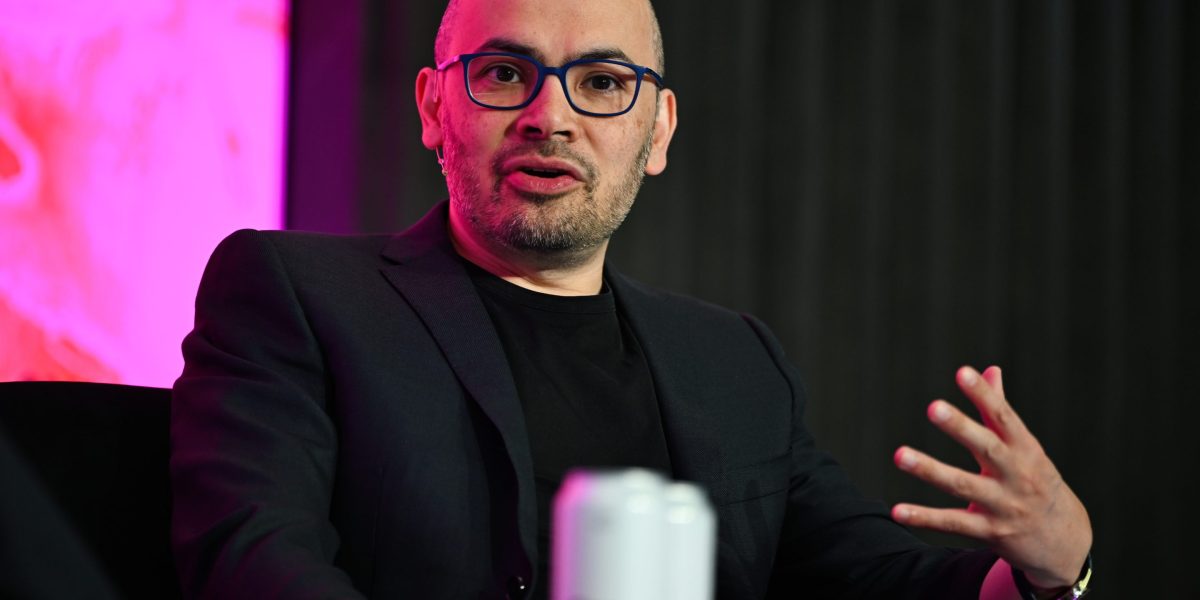
Google DeepMind cofounder and CEO Demis Hassabis said in a statement that AI has “incredible potential to drive a new era of scientific discovery and improve everyday life.”
As part of the partnership, British scientists will receive priority access to Google DeepMind’s advanced AI tools, including AlphaGenome for DNA sequencing; AlphaEvolve for designing algorithms; DeepMind’s WeatherNext weather forecasting models; and its new AI co-scientist, a multi-agent system that acts as a virtual research collaborator.
DeepMind was founded in London in 2010 and is still headquartered there; it was acquired by Google in 2014.
Gemini’s U.K. footprint expands
The collaboration also includes potential development of AI systems for education and government services. Google DeepMind will explore creating a version of Gemini tailored to England’s national curriculum to help teachers reduce administrative workloads. A pilot program in Northern Ireland showed that Gemini helped save teachers an average of 10 hours per week, according to the U.K. government.
For public services, the U.K. government’s AI Incubator team is trialing Extract, a Gemini-powered tool that converts old planning documents into digital data in 40 seconds, compared to the current two-hour process.
The expanded research partnership with the U.K. AI Security Institute will focus on three areas, the government and DeepMind said: developing techniques to monitor AI systems’ so-called “chain of thought”—the reasoning steps an AI model takes to arrive at an answer; studying the social and emotional impacts of AI systems; and exploring how AI will affect employment.
U.K. AISI currently tests the safety of frontier AI models, including those from Google DeepMind and a number of other AI labs, under voluntary agreements. But the new research collaboration could potentially raise concerns about whether the U.K. AISI will remain objective in its testing of its now-partner’s models.
In response to a question on this from Fortune, William Isaac, principal scientist and director of responsibility at Google DeepMind, did not directly address the issue of how the partnership might affect the U.K. AISI’s objectivity. But he said the new research agreement puts in place “a separate kind of relationship from other points of interaction.” He also said the new partnership was focused on “question on the horizon” rather than present models, and that the researchers would publish the results of their work for anyone to review.
Isaac said there is no financial or commercial exchange as part of the research partnership, with both sides contributing people and research resources.
“We’re excited to announce that we’re going to be deepening our partnership with the U.K. AISI to really focus on exploring, really the frontier research questions that we believe are going to be important for ensuring that we have safe and responsible development,” he said.
He said the partnership will produce publicly accessible research focused on foundational questions—such as how AI impacts jobs or how talking to chatbots effects mental health—rather than policy-specific recommendations, though the findings could influence how businesses and policymakers think about AI and how to regulate it.
“We want the research to be meaningful and provide insights,” Isaac said.
Isaac described the U.K. AISI as “the crown jewel of all of the safety institutes” globally and said deepening the partnership “sends a really strong signal” about the importance of engaging responsibly as AI systems become more widely adopted.
The partnership also includes expanded collaboration on AI-enhanced approaches to cybersecurity. This will include the U.K. government exploring the sue of tools like Big Sleep, an AI agent developed by Google that autonomously hunts for previously unknown “Zero Day” cybersecurity exploits, and CodeMender, another AI agent that can search for and then automatically patch security vulnerabilities in open source software.
British Technology Secretary Liz Kendall is visiting San Francisco this week to further the U.K.-U.S. Tech Prosperity Deal, which was agreed to during U.S. President Trump’s state visit to the U.K. in September. In November alone, the British government said the pact helped secure more than $32.4 billion of private investment committed to the U.K tech sector.
The Google-U.K. partnership builds on a £5 billion ($6.7 billion) investment commitment from Google made earlier this year to support U.K. AI infrastructure and research, and to help modernize government IT systems.
The British government also said collaboration supports its AI Opportunities Action Plan and its £137 million AI for Science Strategy, which aims to position the UK as a global leader in AI-driven research.
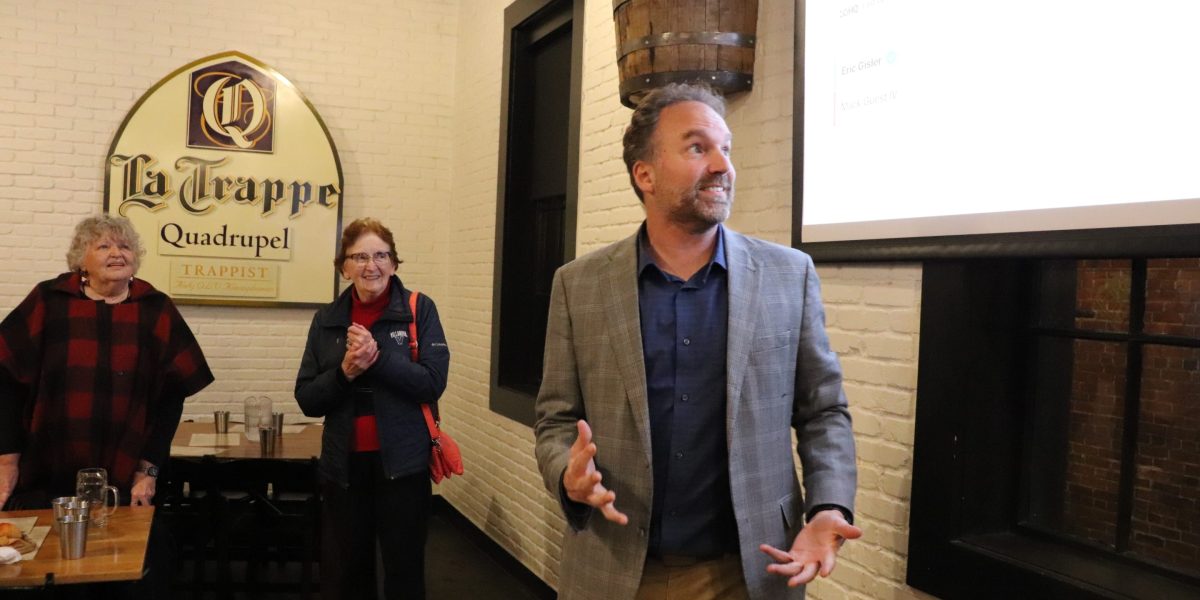
Democrat Eric Gisler claimed an upset victory Tuesday in a special election in a historically Republican Georgia state House district.
Gisler said he was the winner of the contest, in which he was leading Republican Mack “Dutch” Guest by about 200 votes out of more than 11,000 in final unofficial returns.
Robert Sinners, a spokesperson with the secretary of state’s office, said there could be a few provisional ballots left before the tally is finalized.
“I think we had the right message for the time,” Gisler told The Associated Press in a phone interview. He credited his win to Democratic enthusiasm but also said some Republicans were looking for a change.
“A lot of what I would call traditional conservatives held their nose and voted Republican last year on the promise of low prices and whatever else they were selling,” Gisler said. “But they hadn’t received that.”
Guest did not immediately respond to a text message seeking comment late Tuesday.
Democrats have seen a number of electoral successes in 2025 as the party’s voters have been eager to express dissatisfaction with Republican President Donald Trump.
In Georgia in November, they romped to two blowouts in statewide special elections for the Public Service Commission, unseating two incumbent Republicans in campaigns driven by discontent over rising electricity costs.
Nationwide, Democrats won governor’s races by broad margins in Virginia and New Jersey. On Tuesday a Democrat defeated a Trump-endorsed Republican in the officially nonpartisan race for Miami mayor, becoming the first from his party to win the post in nearly 30 years.
Democrats have also performed strongly in some races they lost, such as a Tennessee U.S. House race last week and a Georgia state Senate race in September.
Republicans remain firmly in control of the Georgia House, but their majority is likely fall to 99-81 when lawmakers return in January. Also Tuesday, voters in a second, heavily Republican district in Atlanta’s northwest suburbs sent Republican Bill Fincher and Democrat Scott Sanders to a Jan. 6 runoff to fill a vacancy created when Rep. Mandi Ballinger died.
The GOP majority is down from 119 Republicans in 2015. It would be the first time the GOP holds fewer than 100 seats in the lower chamber since 2005, when they won control for the first time since Reconstruction.
The race between Gisler and Guest in House District 121 in the Athens area northeast of Atlanta was held to replace Republican Marcus Wiedower, who was in the seat since 2018 but resigned in the middle of this term to focus on business interests.
Most of the district is in Oconee County, a Republican suburb of Athens, reaching into heavily Democratic Athens-Clarke County. Republicans gerrymandered Athens-Clarke to include one strongly Democratic district, parceling out the rest of the county into three seats intended to be Republican.
Gisler ran against Wiedower in 2024, losing 61% to 39%. This year was Guest’s first time running for office.
A Democrat briefly won control of the district in a 2017 special election but lost to Wiedower in 2018.
Gisler, a 49-year-old Watkinsville resident, works for an insurance technology company and owns a gourmet olive oil store. He campaigned on improving health care, increasing affordability and reinvesting Georgia’s surplus funds
Guest is the president of a trucking company and touted his community ties, promising to improve public safety and cut taxes. He was endorsed by Republican Gov. Brian Kemp, an Athens native, and raised far more in campaign contributions than Gisler.
If Rivian’s sales are any indication, owning an electric vehicle isn’t such a partisan issue, despite President Donald Trump’s rollbacks of mandates, incentives, and targets for EVs.
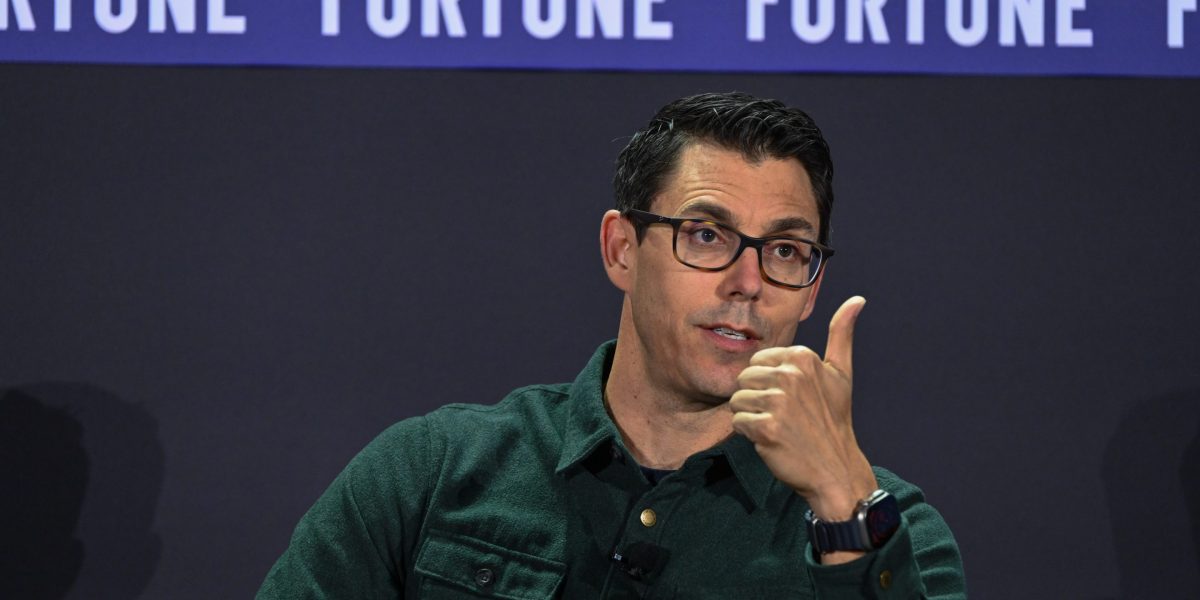
At the Fortune Brainstorm AI conference in San Francisco on Tuesday, Rivian CEO RJ Scaringe said it’s a misconception that electrification is politicized, explaining that most customers buy a product based on how it fits their needs, not their ideology. The questions car buyers ask, he said, are the same whether they’re purchasing one with an internal-combustion engine or a battery: “Is it exciting? Are you attracted to the product? Does it draw you in? Does the brand positioning resonate with you? Do the features answer needs that you have?”
Buyers of Rivian’s R1 electric SUV are split roughly 50-50 between Republicans and Democrats, Scaringe told Fortune’s Andrew Nusca. “I think that’s extraordinarily powerful news for us to recognize—that this isn’t just left-leaning buyers,” he added. “These are people that are saying, ‘I like the idea of this product, I’m excited about it.’ And this is thousands and thousands of customers. This is statistically relevant information.”
Buying an EV was once an indication of left-leaning politics, but the politics got scrambled after Tesla CEO Elon Musk became the top Republican donor and a close adviser to Trump. That drew some new customers to Tesla, and turned off a lot of progressive EV buyers, with many existing owners putting bumper stickers on their Teslas explaining that they bought their cars before Musk’s hard-right turn. Trump and Musk later had a stunning public feud, in part over the administration’s elimination of EV and solar tax credits.
But Scaringe said he started Rivian with a long-term view, independent of any policy framework or political trends. He also insisted that if Americans have more EV choices, sales would follow. Right now, Tesla dominates a key corner of the market, namely EVs in the $50,000 price range. Rivian’s forthcoming R2 mid-size SUV will represent a new choice in that market, with a starting price of $45,000 versus the R1’s $70,000.
Ten years from now, Scaringe said he hopes—and believes—that EV adoption in the U.S. will be meaningfully higher than it is today across the board, explaining that the main constraint isn’t on the demand side. Instead, it’s on the supply side, which suffers from “a shocking lack of choice,” especially compared to Europe and China, he added. EV options in the U.S. are limited by the fact that Chinese brands are shut out of the market.
More choices for U.S. EV buyers would presumably create more competition for Rivian—and indeed, the flood of low-priced Chinese EVs in other auto markets has created a backlash, with countries such as Canada imposing steep tariffs on them. But Scaringe appears to view more competition as positive for the market overall.
“I do think that the existence of choice will help drive more penetration, and it actually creates a unique opportunity in the United States,” he said.





 Politics8 years ago