Connect with us

Business

Jeff Bezos is putting $6.2 billion—and himself as co-CEO—behind a new AI startup. Bubble? That’s no trouble

Published

on


AI bubble talk continues to fizz, but Amazon founder Jeff Bezos—one of the world’s richest people—doesn’t seem bothered by the mounting foam.

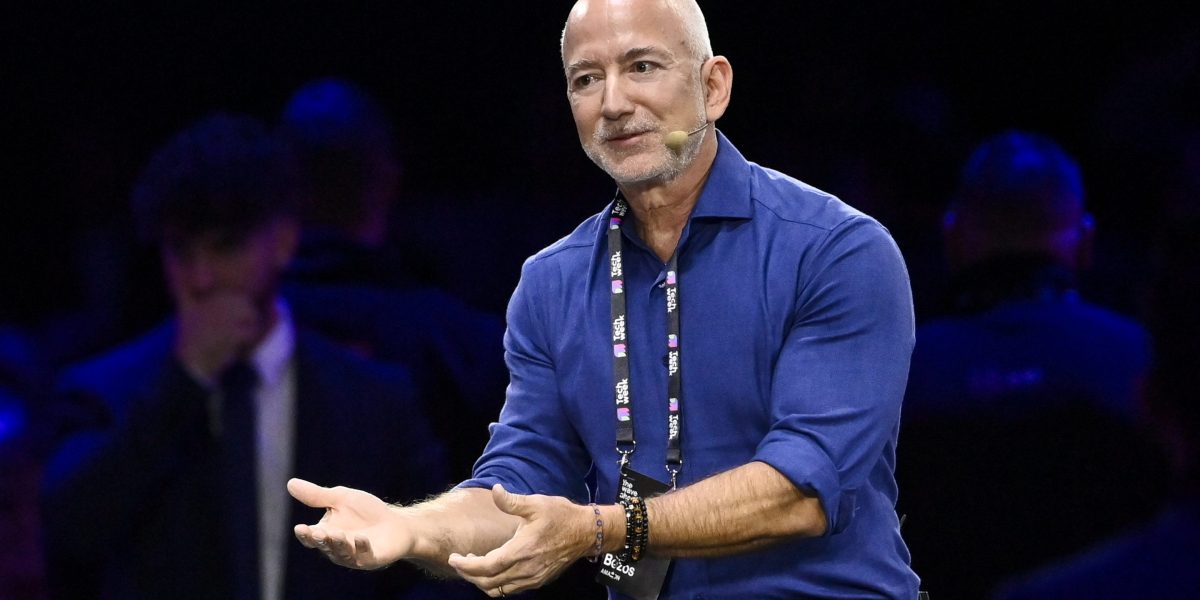
As the New York Times reported yesterday, Bezos has helped fund a new AI startup called Project Prometheus, which—with $6.2 billion in backing—would make it one of the most well-financed early-stage startups in the world. Notably, as co-CEO alongside Vik Bajaj, a physicist and chemist who previously worked at [hotlink]Google,[/hotlink] X, the company’s “Moonshot Factory,” Bezos has taken a formal operational role in a company for the first time since stepping down as Amazon CEO in July 2021. 

According to the article, the company is focusing on AI-powered engineering and manufacturing in areas including computers, aerospace and automobiles, and has poached researchers from OpenAI, Google DeepMind and Meta. According to someone familiar with Project Prometheus’ work, the startup seeks to apply AI to physical tasks, which requires systems that can learn not just from massive amounts of digital data, like LLMs do, but from real-world trial and error. 

Still, even in the high-flying, multi-billion-dollar AI startup space, the competition is fierce: Besides the billions poured into the likes of OpenAI, Anthropic, and Elon Musk’s xAI, former OpenAI CTO Mira Murati’s Thinking Machines raised $2 billion earlier this year, while former OpenAI chief scientist Ilya Sutskever has raised $3 billion for his research startup, Safe Superintelligence. Then there is Paris-based Mistral, which closed a Series C of about $2 billion in September, and even You.com’s Richard Socher is rumored to be trying to raise $1 billion for a new research lab. 

Bezos, of course, has more than enough Benjamins to lead in this bubbly AI landscape. He has also clarified that while he admits that an AI bubble exists, it’s not the same as the dot-com boom and bust of the late 1990s and early 2000s, when around $5 trillion in market value evaporated.

“This is a kind of industrial bubble, as opposed to financial bubbles,” he said at Italian Tech Week last month. 

Ultimately, industrial bubbles can be positive, Bezos added, pointing out that the biotech and pharmaceutical bubble in the 1990s led to the development of life-saving drugs—though in the process, many public companies that IPO’d during the boom went bankrupt or were acquired at a fraction of their starting value by the end. But, Bezos said industrial bubbles are “not nearly as bad” as other bubbles.

“It can even be good, because when the dust settles and you see who are the winners, societies benefit from those investors,” Bezos said. “That is what is going to happen here too. This is real, the benefits to society from AI are going to be gigantic.”

Bezos, who also invested last year in Physical Intelligence, a robotics AI start-up, is clearly betting that this industrial AI bubble will pay off big. But in the world of AI, even $6.2 billion isn’t enough to pop the champagne—at least not yet.

See you tomorrow,

Sharon Goldman
X:
@sharongoldman
Email: sharon.goldman@fortune.com

Submit a deal for the Term Sheet newsletter here.

Joey Abrams curated the deals section of today’s newsletter.Subscribe here.

VENTURE DEALS

CeleroCommunications, an Irvine, Calif.-based digital signal processor technology company, raised $140 million across Series B, Series A, and seed rounds. CapitalG led the Series B round and SutterHillVentures led the Series A and seed rounds.

SolveTherapeutics, a Belmont, Calif.-based developer of therapies for solid tumor malignancies, raised $120 million in funding. Yosemite led the round and was joined by Abingworth, AllyBridgeGroup, B Capital, BalyasnyAssetManagement, Merck &Co., SymBiosis, and existing investors.

Gridware, a San Francisco-based developer of active grid response technology, raised $55 million in Series B funding. Tiger Global and GenerationInvestmentManagement led the round and were joined by existing investors SequoiaCapital, Convective Capital, FiftyYears, True Ventures, Lowercarbon, and Y Combinator

Voize, a Berlin, Germany-based AI companion designed for nursing care, raised $50 million in Series A funding. BaldertonCapital led the round and was joined by existing investors HVCapital, Redalpine, and YCombinator.

PowerLattice, a Vancouver, Wash.-based developer of a power delivery chiplet designed to reduce compute power needs for AI accelerators, raised $25 million in Series A funding. PlaygroundGlobal and CelestaCapital led the round.

Hummink, a Paris, France-based high precision capillary printing company, raised €15 million ($17.4 million) in funding. KBCFocusFund, CapHorn, and Bpifrance led the round.

Mate, a Tel Aviv, Israel-based cybersecurity platform, raised $15.5 million in seed funding. Team8 and InsightPartners led the round.

Endolith, a Denver, Colo.-based developer of technology designed to help miners recover copper from already discarded ore, raised $13.5 million in Series A funding. SquadraVentures led the round and was joined by DraperAssociates, DenverVentures, EverBlue, AlumniVentures, ManaVentures, and others.

Albatross, a Baar, Switzerland-based AI platform designed to help with real-time product discovery, raised $12.5 million in funding. MMCVentures led the round and was joined by Redalpine, Daphni, and angel investors.

Reelables, a London, U.K.-based developer of smart labels for tracking cargo and inventory, raised $10.4 million in Series A funding from AmigosVentures, Moneta, and others.

Keychain, a New York City-based AI-powered private label operating system, raised $10 million in funding from W23Global and others.

Shipday, a Menlo Park, Calif.-based delivery and logistics technology company, raised $7 million in Series A funding. ECPGrowth and IbexInvestorsMobility VC led the round and were joined by B Capital and SupplyChainVentures

Luminal, a San Francisco-based GPU optimization company, raised $5.3 million in seed funding. FelicisVentures led the round and was joined by angel investors.

SubImage, a San Francisco-based cloud security platform designed to map a company’s entire infrastructure, raised $4.2 million in seed funding from FundersClub, Y Combinator, PhosphorCapital, and TransposePlatform.

Cellbyte, a Munich, Germany-based AI-powered platform designed to help pharmaceutical companies accelerate drug launches, raised $2.8 million in seed funding. FrontlineVentures led the round and was joined by YCombinator, PaceVentures, SarasCapital, and SpringboardHealthAngels

PRIVATE EQUITY

CD&R agreed to take SealedAirCorporation, a Charlotte, N.C.-based food and protective packaging company, private for $10.3 billion.

BainCapital acquired a majority stake in ConcertGolf Partners, a Lake Mary, Fla.-based owner-operator of private golf and country clubs, from Clearlake CapitalGroup. Financial terms were not disclosed.

RootstockSoftware, backed by GryphonInvestors, acquired PraxisSolutions, a Richmond, Va.-based Salesforce consulting and implementation firm. Financial terms were not disclosed.

TPG Rise Climate agreed to acquire a majority stake in PikeCorporation, a Charlotte, N.C.-based provider of infrastructure engineering and construction solutions for the electrical grid. Financial terms were not disclosed.

EXITS

GibraltarIndustries agreed to acquire OmniMaxInternational, a Peachtree Corners, Ga.-based provider of residential roofing accessories and rainware solutions, from StrategicValuePartners for $1.3 billion.

Carlyle acquired TarrytownExpocare, an Austin, Texas-based expocare pharmacy, from SheridanCapitalPartners. Financial terms were not disclosed.

OTHER

Cloudflare agreed to acquire Replicate, a San Francisco-based platform designed to make it easier for developers to deploy and run AI models. Financial terms were not disclosed.

FUNDS + FUNDS OF FUNDS

The LegalTech Fund, a Fort Lauderdale, Fla.-based venture capital fund, raised $110 million for its second fund focused on legal technology companies.


Source link

Continue Reading

Business

Trump finally meets Claudia Sheinbaum face to face at the FIFA World Cup draw

Published

on


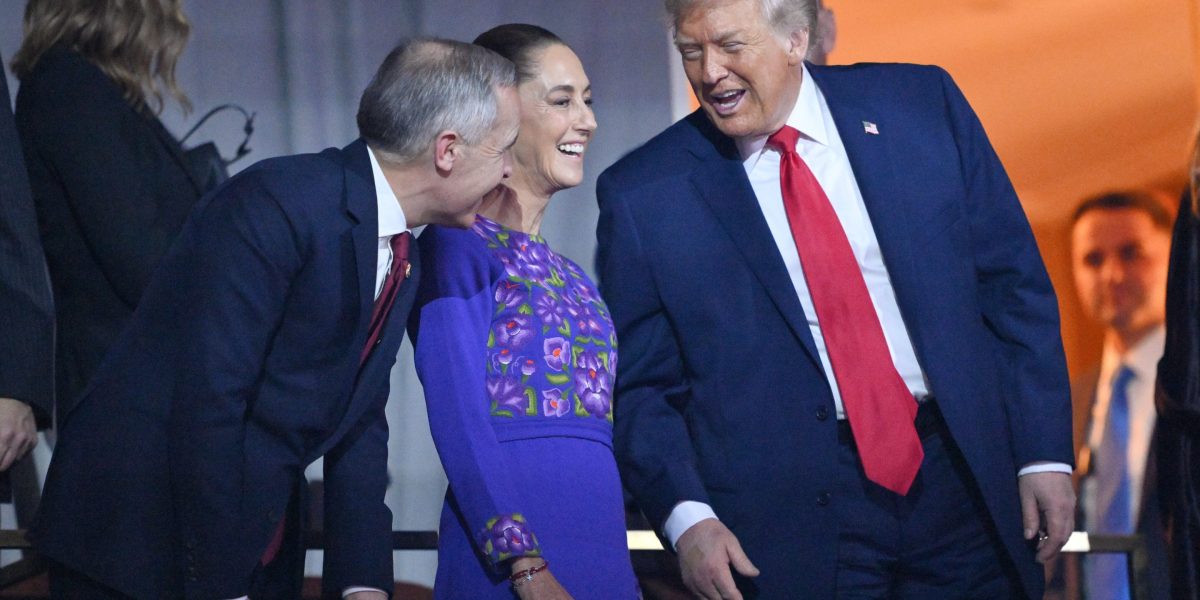
Their long-delayed first face-to-face discussion focused on next year’s World Cup — and included side discussions about trade and tariffs — but immigration was not the top issue. That’s despite Trump’s push to crack down on the U.S.-Mexico border being a centerpiece of his administration, and the driving force in the relations between both countries.

Trump has been in office for more than 10 months, and his having taken so long to see Sheinbaum in-person is striking given that meeting with the leader of the country’s southern neighbor is often a top priority for U.S. presidents.

Trump and Sheinbaum had been set to meet in June on the sidelines of the Group of Seven summit in Canada, but that was scrapped after Trump rushed back to Washington early amid rising tensions between Israel and Iran.

Soccer took center stage — but tariffs still loom large

Trump and Sheinbaum sat talking in the president’s box and also appeared onstage with Canadian Prime Minister Mark Carney at the Kennedy Center for Friday’s 2026 World Cup draw. The U.S., Mexico and Canada are co-hosting the tournament, which begins in June.

A senior White House official, who spoke on the condition of anonymity to discuss private meetings, said Trump, Sheinbaum and Carney met privately after participating in the draw.

Sheinbaum had said before leaving Mexico that she’d talk to Trump about tariffs that his administration has imposed on automobiles, steel and aluminum from Mexico, among other things. She said after appearing at the Kennedy Center that the three leaders “talked about the great opportunity that the 2026 FIFA World Cup represents for the three countries and about the good relationship we have.”

“We agreed to continue working together on trade issues with our teams,” Sheinbaum posted on X.

Mexico is the United States’ largest trading partner. The the U.S.-Mexico-Canada Agreement which Trump forged in his first term as a replacement for 1994’s North American Free Trade Agreement also remains in place. But U.S. Trade Representative Jamieson Greer has begun scrutinizing it ahead of a joint review process set for July.

In the meantime, the U.S. and Mexico’s priorities have been reshaped by the steep drop in the number of people crossing into the U.S. illegally along its southern border, as well as the White House’s — so far largely unrealized — threats to impose large trade tariffs on its neighbor.

Before speaking in-person, Trump and Sheinbaum had repeatedly talked by phone, discussing tariffs and Mexican efforts to help combat the trafficking of fentanyl into the U.S. But despite other world leaders, including Russian President Vladimir Putin and Chinese President Xi Jinping, having already met with Trump this term, the meeting with Sheinbaum hadn’t happened until Friday.

The Trump whisperer?

Waiting so long to meet in person hasn’t seemed to hurt Mexico’s president’s standing with Trump.

The two spoke by phone in November 2024, with the then-U.S. president-elect declaring afterward that they’d agreed “to stop Migration through Mexico” — even as Sheinbaum suggested her country had already been doing enough.

Trump soon after taking office threatened to impose a 25% tariff on goods imported from Mexico in an effort to force that country to better combat fentanyl smuggling, only to later agree to a pause.

The White House subsequently backed off tariff threats against most Mexican goods. Then, in October, Sheinbaum announced that the U.S. had given her country another extension to avoid sweeping 25% tariffs on goods it imports to the U.S. — even as many items covered by the USMCA trade deal remain exempt.

Mexico, though, hasn’t avoided all U.S. tariffs. Sheinbaum’s country continues to try to negotiate its way out of import levies Trump has imposed worth 25% on the automotive sector and 50% on steel and aluminum.

Sheinbaum’s success at mitigating many tariffs, and other successes in the bilateral relationship, has led some to wonder if she has a special gift for getting what she wants from him.

She’s largely pulled it off by affording Trump the respect the U.S. president demands from leaders around the world — but especially a neighboring country — and by deploying occasional humor and pushing back, always respectfully, when necessary.

Sheinbaum also defused another potential point of contention, Trump’s renaming of the Gulf of Mexico to the “Gulf of America,” by proposing dryly that North America should be renamed “América Mexicana,” or “Mexican America.” That’s because a founding document dating from 1814 that preceded Mexico’s constitution referred to it that way.

Still, Mexican officials continue to work furiously to lessen the trade blow from tariffs going into 2026 — levies that could wreck its already low-growth economy, particularly in its all-important automotive sector. Sheinbaum’s government has also sought to defend its citizens living in the U.S. as the Trump administration expands its mass deportation operations.

Sheinbaum’s government also lobbied unsuccessfully against a 1% U.S. tax on remittances, or money transfers that millions of Mexicans send home every year from the United States. It was approved as part of Trump’s tax cut and spending package and takes effect Jan. 1.

Trump’s push for mass deportations

Trump has directed federal officials to prioritize major deportation pushes in Democratic-run cities — an extraordinary move that lays bare the politics of the issues. He’s also deployed the National Guard in an effort to curb crime, which has led to a spike in immigration-related arrests, in places like Los Angeles, Chicago and Washington, as well as Memphis, Tennessee, and Portland, Oregon.

The Trump administration says its priority is targeting “the worst of the worst” criminals, but most of the people detained in operations around the country have not had violent criminal histories.

Such operations often meant targeting Mexican citizens who have lived and worked in the United States for years and may face deportation to a homeland they no longer know well. It also has meant serious threats of declining remittance income, which has fallen for seven consecutive months.

The lower number of illegal U.S.-Mexico border crossings has knocked immigration off its perch as the top agenda item for the U.S.-Mexico bilateral relations for the first time in recent memory.

Mexican officials now say conversations around immigration have shifted toward cajoling countries into taking back their citizens and reintegrating them to keep them from leaving again — a major Trump administration priority around the world.

Cooperation on security

Sheinbaum has blunted some of the Trump administration’s tough talk on fentanyl and drug smuggling cartels by giving her security chief Omar García Harfuch more authority.

Mexico has also extradited dozens of drug cartel figures to the U.S., including Rafael Caro Quintero, long sought in the 1985 killing of a DEA agent. That show of goodwill, and a much more visible effort against the cartels’ fentanyl production, has gotten the Trump administration’s attention.

That’s a significant improvement. Only a few years ago, the DEA struggled to get visas for its people in Mexico, and then-President Andrés Manuel López Obrador accused the U.S. government of fabricating evidence against a former Mexican defense secretary, though he never presented evidence to back up the allegation.

Not everything has gone so smoothly, though. Trump criticized Sheinbaum for rejecting his proposal to send U.S. troops to Mexico to help thwart the illegal drug trade.

Last month, Sheinbaum said there was no way the U.S. military would be able to make strikes in Mexico, after Trump said he was open to the idea. And she has denounced U.S. strikes on boats allegedly carrying drugs in the Caribbean and eastern Pacific.

“The president of Mexico is a lovely woman, but she is so afraid of the cartels that she can’t even think straight,” Trump said earlier this year.

Sheinbaum declined to take the bait — and avoided turning up the political pressure — by sidestepping Trump’s criticism.

___

Associated Press writer Chris Sherman contributed from Mexico City.


Source link

Continue Reading

Business

Former Amazon exec warns Netflix-WBD deal will make Hollywood ‘a system that circles a single sun’

Published

on


A Netflix-Warner Bros. merger would risk a monopsony where a single buyer wields enormous control over the marketplace, the former head of Amazon Studios warned.

Roy Price, who is now chief executive of the studio International Art Machine, wrote in a New York Times op-ed on Saturday that predictions of doom are nothing new in the film industry, pointing to the advent of TV, home video, streaming, and AI.

“But if Netflix acquires Warner Bros., this long-prophesied death may finally arrive, not in the sense that filmmaking will cease but in the sense that Hollywood will become a system that circles a single sun, materially changing its cultural output,” he added. “All orbits—every deal, every creative decision, every creative career—will increasingly revolve around the gravitational mass and imprimatur of one entity.”

To be sure, Netflix has said Warner Bros. operations will continue, and the studio’s films will still be released in theaters. Meanwhile, Warner’s TV channels will be spun off via a separate company, though HBO will be included in Netflix.

But Price said the danger “is not annihilation but centralization,” with the combined company accounting for an even bigger slice of overall content spending.

A reduction in bidders also means less content will be produced, while a separate development culture, set of tastes, and risk tolerances will be sidelined, he predicted.

“A Netflix merger with Warner Bros. would create a monopsony problem: too few buyers with too much bargaining power,” Price explained. “Writers, directors, actors, showrunners, puppeteers, visual effects artists—all are suppliers. The fewer buyers competing to hire them, the lower their compensation and the narrower their opportunities.”

Such reasoning sank Penguin Random House’s attempt to merge with Simon & Schuster that would’ve created a book publisher with too much leverage over authors, he pointed out.

Of course, the remaining players in Hollywood and content creation are giants in their own right as well. A KPMG survey of spending in 2024 put NBC Universal parent Comcast at the top with $37 billion, followed by Alphabet’s YouTube ($32 billion), Disney ($28 billion), Amazon ($20 billion), Netflix ($17 billion) and Paramount ($15 billion). Comcast and Paramount also made bids for Warner Bros.

Theater owners, producers and other creative workers have also voiced opposition to the deal. In addition to the business impact of a Warner Bros. takeover, other opponents raised even weightier concerns.

Oscar winner Jane Fonda sounded the alarm on a “constitutional crisis” and demanded that the Justice Department not use its regulatory power to “extract political concessions that influence content decisions or chill free speech.”

For its part, the Trump administration views the deal with “heavy skepticism,” sources told CNBC. The merger is expected to face exceptional antitrust scrutiny, and Netflix’s $5.8 billion breakup fee is among the biggest ever.

On Wall Street, analysts see a tech angle in the merger, namely the importance of content to train and power the next generation of AI models that will shape the entertainment industry’s future.

The acquisition of Warner Bros. would help Netflix stand out in an AI future, Divyaunsh Divatia, research analyst at Janus Henderson Investors, said in a note on Friday.

“They’re also levering up on premium entertainment at a time when competition on engagement from short form video is expected to intensify especially if AI models democratize video creation at an increasing rate,” he wrote.


Source link

Continue Reading

Business

25-year DEA veteran charged with helping Mexican drug cartel launder millions of dollars, secure guns and bombs

Published

on


A former high-level agent with the U.S. Drug Enforcement Administration and an associate have been charged with conspiring to launder millions of dollars and obtain military-grade firearms and explosives for a Mexican drug cartel, according to an indictment unsealed Friday in New York.

Paul Campo, 61, of Oakton, Virginia, who retired from the DEA in 2016 after a 25-year career, and Robert Sensi, 75, of Boca Raton, Florida, were caught in sting involving a law enforcement informant who posed as a member of the Jalisco New Generation Cartel, prosecutors said.

The cartel, also know as CJNG, was designated as a foreign terrorist organization by the U.S. in February.

U.S. Attorney Jay Clayton said Campo betrayed his DEA career by helping the cartel, which he said was responsible for “countless deaths through violence and drug trafficking in the United States and Mexico.”

Campo and Sensi appeared Friday afternoon before a magistrate judge in New York, who ordered them detained without bail. Their lawyers entered not guilty pleas on their behalf.

Campo’s lawyer, Mark Gombiner, called the indictment “somewhat sensationalized and somewhat incoherent.” He denied the two men had agreed to explore obtaining weapons for the cartel.

Prosecutors say pair talked of laundering money, obtaining weapons

Over the past year, Campo and Sensi agreed to launder about $12 million in drug proceeds for the cartel and converted about $750,000 in cash to cryptocurrency, thinking it was going to the group when it really went to the U.S. government, the indictment said. They also provided a payment for about 220 kilograms of cocaine they were told would be sold in the U.S. for about $5 million, thinking they would get a cut of the proceeds, prosecutors said.

The two men also said they would look into procuring commercial drones, AR-15 semiautomatic rifles, M4 carbines, grenade launchers and rocket-propelled grenades for the cartel, the indictment said.

Campo boasted about his law enforcement experience during conversations with the informant and offered to be a “strategist” for the cartel, authorities said. He began his career as a DEA agent in New York and rose to become deputy chief of financial operations for the agency, the indictment said.

Evidence in the case includes hours of recordings of the two men talking with the informant, as well as cellphone location data, emails and surveillance images, Assistant U.S. Attorney Varun Gumaste said in court Friday.

Sensi’s attorney, Amanda Kramer, unsuccessfully argued that Sensi should be freed while he awaits trial, saying he wouldn’t flee partly because he has multiple health problems, including injuries from a fall two months ago, early-stage dementia and Type II diabetes.

Sensi was convicted in the late 1980s and early 1990s of mail fraud, defrauding the government and stealing $2.5 million, said the prosecutor, Gumaste. He said evidence shows Sensi also was engaged in a scheme to procure military-grade helicopters for a Middle East country.

Other criminal cases have roiled the DEA

DEA Administrator Terrance Cole said in a statement that while Campo is no longer employed by the DEA, the allegations undermine trust in law enforcement.

The DEA has been roiled in recent years by several embarrassing instances of misconduct in its ranks. The Associated Press has tallied at least 16 agents over the past decade brought up on federal charges ranging from child pornography and drug trafficking to leaking intelligence to defense attorneys and selling firearms to cartel associates, revealing gaping holes in the agency’s supervision.

Starting in 2021, the agency placed new controls on how DEA funds can be used in money laundering stings, and warned agents they can now be fired for a first offense of misconduct if serious enough, a departure from prior administrations.

Campo and Sensi are charged with four conspiracy counts related to narcoterrorism, terrorism, narcotics distribution and money laundering.

____

Collins reported from Hartford, Connecticut. Associated Press writer Joshua Goodman in Miami contributed to this report.


Source link

Continue Reading

Trending

Copyright © Miami Select.