
Politics
New College critics are misreading the data — here’s the truth

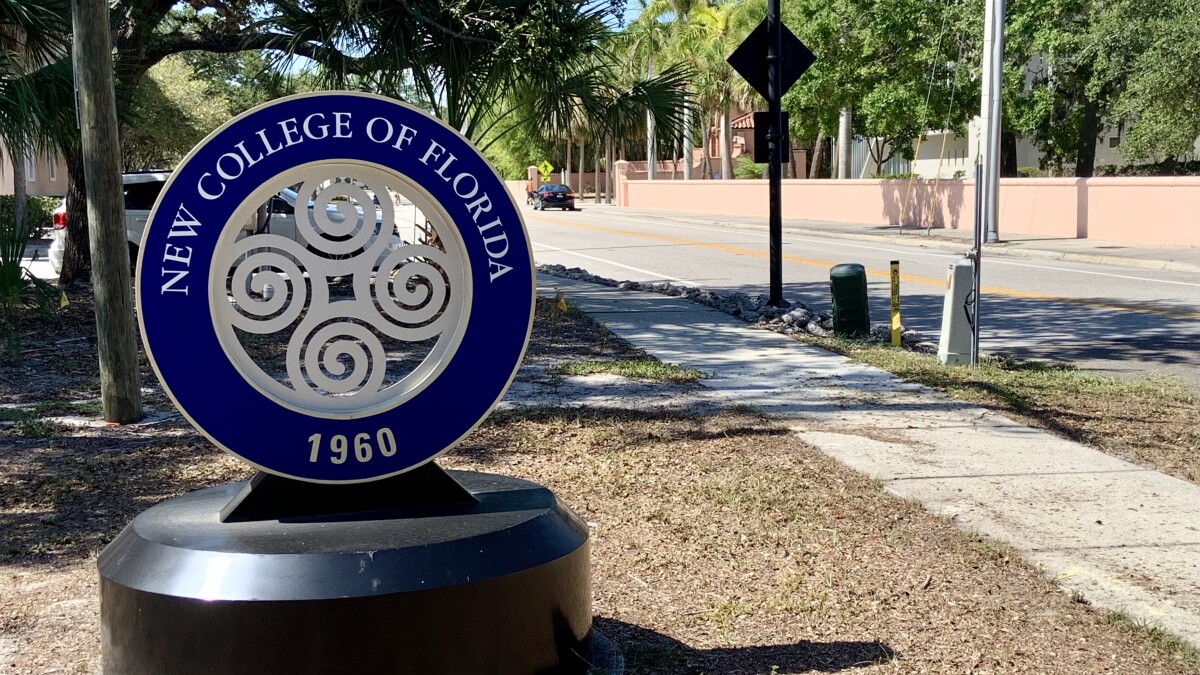
Data is only as honest as the people who interpret it.
Currently, critics are weaponizing a single spreadsheet, with no interest in truth or context. The DOGE report is being waved around by critics who want a headline, not an understanding. The DOGE report claims New College’s cost-per-student is far higher than that of the other 11 state universities. Still, critics are seizing on that single figure without acknowledging the simple truth: the underlying numbers compare apples to oranges.
Less than three years ago (January 2023), New College wasn’t struggling; it was in a death spiral.
The Legislature’s own reports showed almost $80 million in deferred maintenance. This left us with hundreds of dorm rooms and key facilities unusable and taken off-line, failing HVAC systems, and black mold. Three historic mansions were in ruins. Enrollment had cratered. The school’s spirit, once nationally recognized for rigor and intellectual independence, had become so dysfunctional that it was described as “toxic.”
Then Gov. Ron DeSantis made a bold decision: appoint a new Board to rescue the state’s honors college. And we did. In less than three years, enrollment jumped from just over 600 to more than 900, and we are on track to reach our 1,200-student benchmark by 2028. The New College Foundation grew from $39 million to $53 million. We became the first college in America to voluntarily eliminate DEI, without a mandate.
For the first time in decades, deferred maintenance is under control.
Yet critics point to the DOGE report and claim our budget is “too high.” Here’s why that conclusion is not only wrong, but wildly misleading.
- Deferred maintenance blows the numbers out of reality.
Critics waving around the DOGE report never mention the most consequential fact: all but $10 million of the funding New College received in the last three years was non-recurring money used to repair decades of catastrophic neglect we inherited.
We weren’t replacing lightbulbs. We were rebuilding a campus that had been allowed to decay, flood-damaged dorms, leaking roofs, broken HVAC systems, and black mold that shut down 300 beds and forced students into hotels. Three historic mansions were in ruin, and the grounds had deteriorated into dead grass and sand.
We fixed all of it, not because it was optional, but because student safety demanded it. For the first time in decades, deferred maintenance is back to routine levels. Treating these one-time capital repairs as “operating cost-per-student” isn’t just sloppy; it’s dishonest.

As Ben Watkins told the Board of Governors, New College has been in a turnaround, practically a startup phase. Remove the non-recurring dollars and the numbers fall into place: our per-student cost drops from $83,207 to $58,784, our cost per degree fell nearly 30%, and New College becomes one of the lowest-cost top liberal arts institutions in America.
That’s the truth critics hope you never see.
- Growth requires investment. Always.
Any leader who has ever built, scaled, or even observed a successful organization knows the basic rule: growth comes first, efficiencies follow.
New College is in the middle of an unprecedented growth surge in modern higher education, on pace to double enrollment in five years. That is a once-in-a-generation expansion. And, as with any growth phase, investment is required upfront. Once we reach the business-plan target of 1,200 students, our cost per student and cost per degree will fall by another 45%. That’s not bureaucracy; that’s responsible, intentional expansion.
We are building for the future and doing it faster than anyone predicted.
- Florida law requires New College to be a residential college.
This is the structural reality critics pretend doesn’t exist. New College is the only institution in the State University System legally required to operate as a residential liberal arts college.
Nearly 80% of our students live on campus. At UF, it’s 25%. At UCF, just 12%. Our operating budget must support housing, dining, infrastructure, and residential services for eight out of every ten students, not one or two. That mandate alone changes the financial landscape. It is not optional.
Any honest comparison must acknowledge it.
- Graduation and employment metrics are inherited, not created.
Every single graduation rate, employment statistic, and degree yield in the DOGE report reflects students admitted years before the January 2023 turnaround. In other words, the data critics are attacking us with what is attributable entirely to the old New College.
The revitalized institution’s outcomes cannot be reasonably measured until 2028, when our first fully recruited cohort reaches graduation.
To judge the new leadership on the outcomes of students recruited under the old one is not analysis; it’s a political tactic.
- “Cost per credit hour” is not a measure of educational excellence.
DOGE reduces efficiency to a simplistic equation: total credit hours divided by full-time faculty. If that truly were the standard, then the state could shutter every campus tomorrow, move everything online, and call it a victory for efficiency.
But that would be a demolition of education, not an improvement.
We learned during COVID what genuine educators already knew: face-to-face instruction is superior; small classes produce stronger outcomes; and residential colleges build better citizens. Efficiency without efficacy is a hollow metric. And New College is surging on measures that actually matter — quality, demand, growth, and momentum. There is also tangible public value in being the institution that voluntarily eliminated DEI, ended gender-studies degrees, and signed the national compact defending free speech and civil discourse.
These aren’t spreadsheets, they’re standards.
- Scale makes comparisons meaningless.
New College is intentionally small.
By design, by statute, and by mission, we will never exceed roughly 1,800 students. Meanwhile, SUS institutions range from 1,770 students to nearly 70,000. Of course, their cost-per-student numbers are lower. They benefit from massive economies of scale that we are not meant to replicate.
But scale cuts both ways. If we insisted on comparing everything “per-student,” we could claim to have the most successful endowment in Florida. Our $53 million endowment (one of the smallest in the system) appears to be the largest per student at $57,797. It’s an absurd distortion, and policymakers would laugh at anyone who used it seriously.
That is the same distortion at play in the cost-per-student arguments being made about New College.

Yet when measured per student, our endowment is the highest in the state, at $57,797.

This is obviously not a helpful way for policymakers and education leaders to consider this metric, just as overreliance on per-student costs distorts New College’s value and mission more generally.
A final, inconvenient truth
A decade ago, New College was spending three times more per degree at $79,250 than the SUS average, and no one cared. No national outrage. No op-eds. No “crisis” narratives. Many of the same voices shouting today were begging the Legislature to give the college even more money back then.
So why is there a sudden uproar now, when the revitalization is working?
Because the answer is obvious.
We are succeeding.
We are ahead of schedule on every major benchmark in our BOG-approved plan. We have restored enrollment, rebuilt the campus, transformed the culture, and revived the mission. And we are doing it boldly, transparently, and without apology.
New College is no longer the failing school critics once ignored. It is the model they fear — because it proves that courage, conviction, and higher expectations still work in American higher education.
We are just getting started. Our charge is unmistakable: to make New College of Florida the number one public liberal arts college in America.
We have the plan. We have momentum. We have the resolve.
The old New College is gone. The new New College is rising. The people trying hardest to tear it down are the ones who understand that we are succeeding.
___
Richard Corcoran is president of New College of Florida.
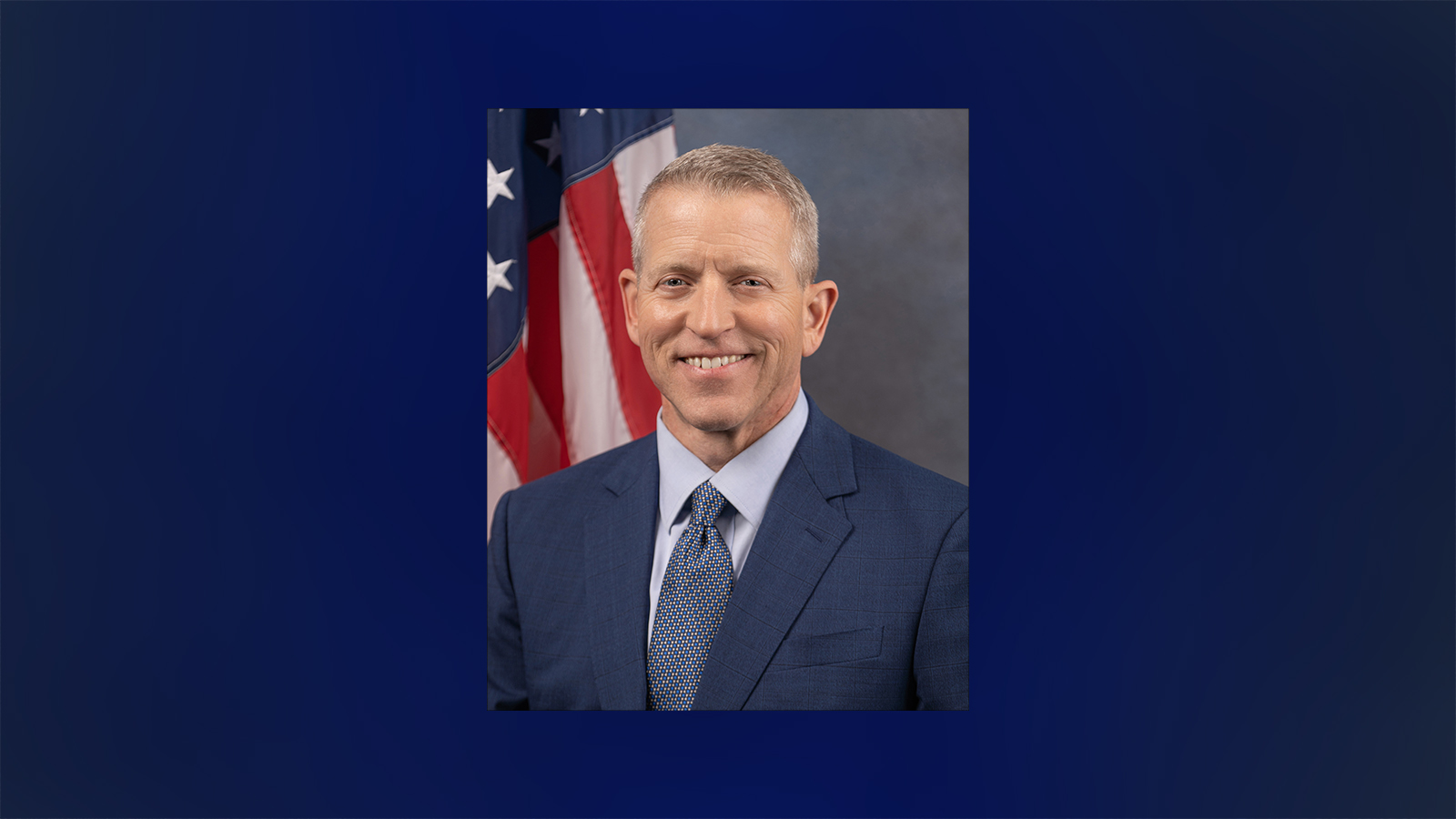
Mills was a day-one Byron Donalds backer in the gubernatorial race.
A former House Speaker and current candidate for Governor is leading the charge for Republicans as scandal swirls around a Congressman.
Saying the “evidence is mounting” against Rep. Cory Mills, Paul Renner says other candidates for Governor should “stand up and be counted” and join him in the call for Mills to leave Congress.
Renner made the call earlier this week.
But on Friday, the Palm Coast Republican doubled down.
He spotlighted fresh reporting from Roger Sollenberger alleging that Mills’ company “appears to have illegally exported weapons while he serves in Congress, including to Ukraine,” that Mills failed to disclose conflicts of interest, “tried to fistfight other Republican members of Congress, and lied about his party stature to bully other GOP candidates out of primaries that an alleged romantic interest was running in,” and lied about his conversion to Islam.
The House Ethics Committee is already probing Mills, a New Smyrna Beach Republican, over allegations of profiting from federal defense contracts while in Congress. More recently, the Committee expanded its work to review allegations that he assaulted one ex-girlfriend and threatened to share intimate photos of another.
Other candidates have been more reticent in addressing the issue, including Rep. Byron Donalds.
“When any other members have been involved and stuff like this, my advice is the same,” said Donalds, a Naples Republican. “They need to actually spend a lot more time in the district and take stock of what’s going on at home, and make that decision with their voters.”
The response came less than a year after Mills, a New Smyrna Beach Republican, spoke at the launch of Donalds’ gubernatorial campaign.
___

Staff writer Jacob Ogles contributed reporting.
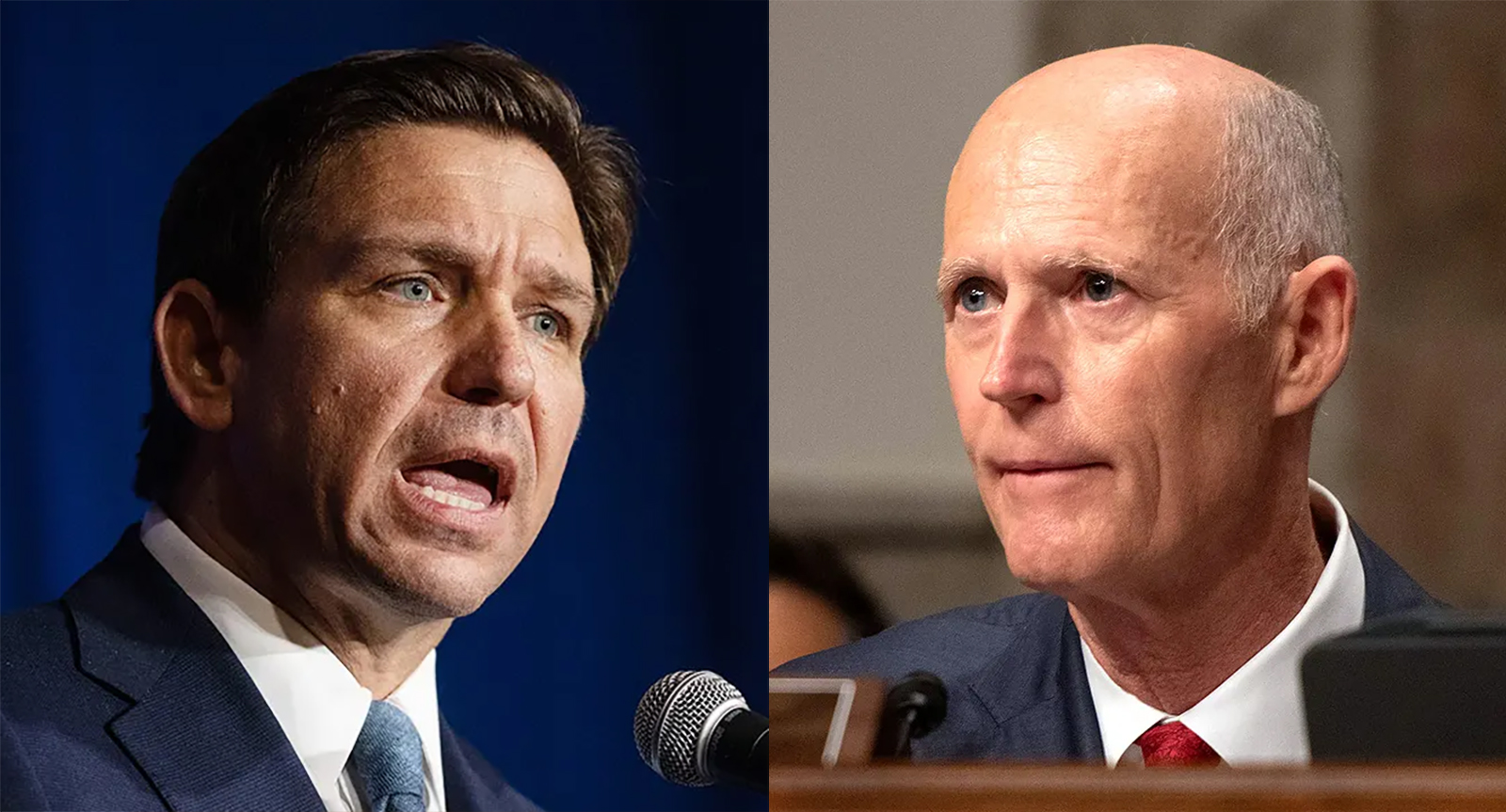
The cold war between Florida’s Governor and his predecessor is nearly seven years old and tensions show no signs of thawing.
On Friday, Sen. Rick Scott weighed in on Florida Politics’ reporting on the Agency for Health Care Administration’s apparent repayment of $10 million of Medicaid money from a settlement last year, which allegedly had been diverted to the Hope Florida Foundation, summarily filtered through non-profits through political committees, and spent on political purposes.
“I appreciate the efforts by the Florida legislature to hold Hope Florida accountable. Millions in tax dollars for poor kids have no business funding political ads. If any money was misspent, then it should be paid back by the entities responsible, not the taxpayers,” Scott posted to X.
While AHCA Deputy Chief of Staff Mallory McManus says that is an “incorrect” interpretation, she did not respond to a follow-up question asking for further detail this week.
The $10 million under scrutiny was part of a $67 million settlement from state Medicaid contractor Centene, which DeSantis said was “a cherry on top” in the settlement, arguing it wasn’t truly from Medicaid money.
But in terms of the Scott-DeSantis contretemps, it’s the latest example of tensions that seemed to start even before DeSantis was sworn in when Scott left the inauguration of his successor, and which continue in the race to succeed DeSantis, with Scott enthusiastic about current front runner Byron Donalds.
Earlier this year, Scott criticized DeSantis’ call to repeal so-called vaccine mandates for school kids, saying parents could already opt out according to state law.
While running for re-election to the Senate in 2024, Scott critiqued the Heartbeat Protection Act, a law signed by DeSantis that banned abortion after the sixth week of pregnancy with some exceptions, saying the 15 week ban was “where the state’s at.”
In 2023 after Scott endorsed Donald Trump for President while DeSantis was still a candidate, DeSantis said it was an attempt to “short circuit” the voters.
That same year amid DeSantis’ conflict over parental rights legislation with The Walt Disney Co., Scott said it was important for Governors to “work with” major companies in their states.

The critiques went both ways.
When running for office, DeSantis distanced himself from Scott amid controversy about the Senator’s blind trust for his assets as Governor.
“I basically made decisions to serve in uniform, as a prosecutor, and in Congress to my financial detriment,” DeSantis said in October 2018. “I’m not entering (office) with a big trust fund or anything like that, so I’m not going to be entering office with those issues.”
In 2020, when the state’s creaky unemployment website couldn’t handle the surge of applicants for reemployment assistance as the pandemic shut down businesses, DeSantis likened it to a “jalopy in the Daytona 500” and Scott urged him to “quit blaming others” for the website his administration inherited.
The chill between the former and current Governors didn’t abate in time for 2022’s hurricane season, when Scott said DeSantis didn’t talk to him after the fearsome Hurricane Ian ravaged the state.


Former NASCAR Driver Michael Annett Dead at 39

‘Its own research shows they encourage addiction’: Highest court in Mass. hears case about Instagram, Facebook effect on kids

National Park Service Cuts Free Entry for MLK Day, Juneteenth and Adds Trump’s Birthday
-

 Politics8 years ago
Congress rolls out ‘Better Deal,’ new economic agenda
-
Entertainment8 years ago
New Season 8 Walking Dead trailer flashes forward in time
-
Politics8 years ago
Poll: Virginia governor’s race in dead heat
-
Entertainment8 years ago
The final 6 ‘Game of Thrones’ episodes might feel like a full season
-
Entertainment8 years ago
Meet Superman’s grandfather in new trailer for Krypton
-
Politics8 years ago
Illinois’ financial crisis could bring the state to a halt
-
Business8 years ago
6 Stunning new co-working spaces around the globe
-
Tech8 years ago
Hulu hires Google marketing veteran Kelly Campbell as CMO