Connect with us

Business

The Coast Guard has seized a record amount of cocaine while Trump says interdiction has failed

Published

on


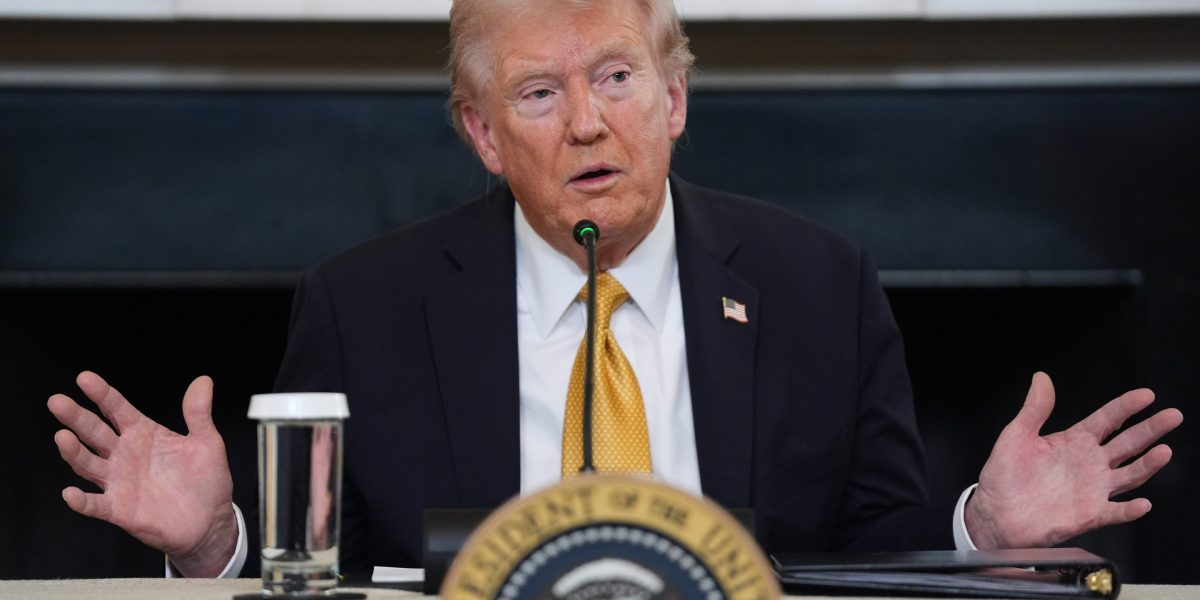
 In justifying American military strikes on boats suspected of smuggling drugs, President Donald Trump has asserted that the longtime U.S. strategy of interdicting such vessels at sea has been a major failure.

“We’ve been doing that for 30 years,” he said last month, “and it’s been totally ineffective.”

Trump’s comments came around the same time that the U.S. Coast Guard announced it had set a record for cocaine seizures — a haul of 225 metric tons of the drug over the previous year. That milestone, however, has not dissuaded the Republican president from upending decades of U.S. counternarcotics policy.

Under Trump, the U.S. military has blown up 20 suspected drug boats, resulting in 80 deaths, in the Pacific Ocean and Caribbean Sea. Trump and other top officials have contended that such boats are being operated by narco-terrorists and cartel members with deadly drugs bound for America.

The strikes have generated international pushback from foreign leaders, human rights groups, Democrats and some Republicans who have raised concerns that the United States is engaging in extrajudicial killings that undermine its stature in the world.

Veterans of the drug war, meanwhile, say U.S. resources would be better spent doubling down on the traditional approach of interdicting drug boats, especially in the long term. That is because crews of drug boats frequently have valuable intelligence that can help authorities better target cartels and trafficking networks. Dead men, they say, tell no tales.

The Coast Guard has fought the drug war a long time

The Coast Guard for decades has interdicted small vessels suspected of smuggling illicit narcotics. Much of that work is focused on halting shipments of cocaine, most of which is produced in the jungles of Colombia.

Working with partner nations and other federal agencies — the Drug Enforcement Administration, the departments of State and Justice as well as U.S. Southern Command’s Joint Interagency Task Force-South in Key West, Florida — the aim is to inflict heavy losses on traffickers and limit the amount of drugs entering the U.S.

That campaign, by at least one measure, has never been more successful, despite constant complaints by the Coast Guard that it lacks funding to seize even more drugs.

The Coast Guard’s recent record cocaine seizure was almost 40% higher than the past decade’s annual average. The haul included 38 tons of cocaine offloaded by the cutter Hamilton when it returned from a two-month patrol. It was the largest amount confiscated by a single Coast Guard ship during a deployment, the Coast Guard reported. The interdictions have continued as part of what’s known as Operation Pacific Viper even during the federal government shutdown, with several cutters reporting major seizures last month.

In almost every case, drug smugglers have been brought to the U.S. for prosecution, and valuable information about ever-changing smuggling routes and production methods was collected — all without any loss of life and a far lower cost to American taxpayers. Experts said each missile strike is likely to cost far more than the payload of cocaine on every ship.

“The Coast Guard has extraordinary powers and authorities to do effective drug interdiction without killing unidentified people on small boats,” said Douglas Farah, a national security expert on Latin America and president of IBI Consultants. “When resourced, they are far more effective, sustainable and likely legal than the current Pentagon-led operations.”

Trump administration officials say strategy needed to change

Secretary of State Marco Rubio this week defended the shift in strategy, saying that “interdictions alone are not effective.”

“Interdictions have limited to no deterrent effect,” he added. “These drug organizations, they’ve already baked in the fact they may lose 5% of their drug shipments. It doesn’t stop them from coming.”

Part of the problem is that demand for cocaine is high, and supplies have never been so robust, according to authorities and experts. A sign of that trend: Cocaine prices have been hovering at historical lows for more than a decade.

The Coast Guard also does not have enough vessels or crew to halt it all. At most, it seizes not even 10% of the cocaine that officials believe flows to the U.S. on small vessels through what is known as the “Transit Zone” — a vast area of open water larger than Russia.

Cocaine shipments bound for the U.S. primarily work their way up the west coast of South America to Central America and then overland into the U.S. via Mexico. Shipments heading to Europe are smuggled through the Caribbean, often hidden in container ships.

Such interdiction efforts target cocaine, not fentanyl

In social media posts, Trump has claimed that his strikes have blown up boats carrying fentanyl and that each destroyed vessel has saved 25,000 American lives. According to experts and former U.S. counternarcotics officials, Trump’s statements are either exaggerations or false.

For the past decade, U.S. officials have sounded the alarm about rising overdose deaths in the U.S., particularly from opioids and synthetic opioids. Overdose deaths from opioidspeaked in 2023 at 112,000 but dropped to 74,000 in April. Experts have attributed that decline mostly to Biden administration efforts to boost the availability of lifesaving drugs that prevent overdose deaths.

The drug flowing to the U.S. from South America is cocaine. Fentanyl, on the other hand, is typically trafficked to the U.S. overland from Mexico, where it is produced with chemicals imported from China and India. Cocaine overdose deaths are less frequent than those from fentanyl. In the last year, just under 20,000 people in America died from cocaine overdoses, federal data shows.

Trump and administration officials have also claimed that the crews of targeted vessels were narco-terrorists or members of cartels.

The Associated Press visited a region in Venezuela from which some of the suspected boats have departed and identified four men who were killed in the strikes. In dozens of interviews, residents of the region and relatives said t he dead men were mostly laborers or fisherman making $500 a trip.

Law enforcement officials and experts echoed those findings, saying the smugglers captured by the Coast Guard are hired for little money to ferry drugs from point A to point B.

“They are hardly kingpins,” said Kendra McSweeney, an Ohio State University geographer who has spent years researching U.S. drug policies.

Trump administration officials recently promoted big seizures

In April, months before Trump launched his military campaign, his attorney general, Pam Bondi, traveled to South Florida to welcome home the Coast Guard cutter James from its latest antinarcotics patrol. It had seized 20 tons of cocaine worth more than $500 million.

Flanked by FBI Director Kash Patel, she praised a “prosecutor-led, intelligence driven approach to stopping these criminal enterprises in their tracks.”

“This is not a drop in the bucket,” said Bondi, standing in front of the vessel loaded with colorful, plastic-wrapped bales of narcotics stacked several feet high. “Behind you is half a billion dollars of pure, uncut cocaine.”


Source link

Continue Reading

Business

Nvidia CEO says U.S. data centers take 3 years, but China ‘can build a hospital in a weekend’

Published

on


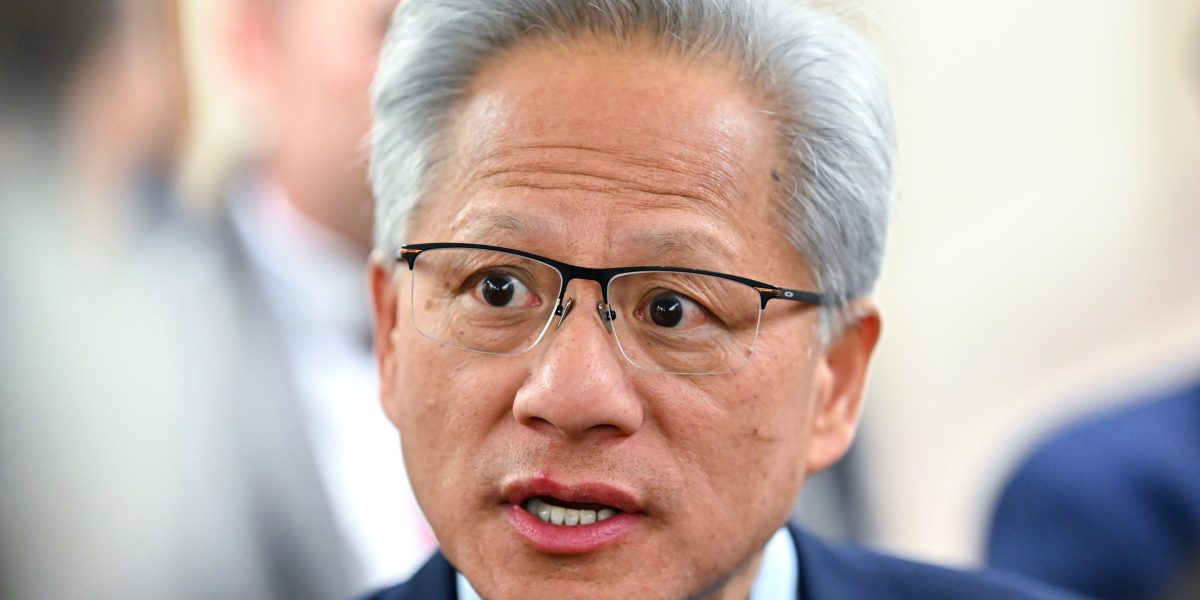
Nvidia CEO Jensen Huang said China has an AI infrastructure advantage over the U.S., namely in construction and energy.

While the U.S. retains an edge on AI chips, he warned China can build large projects at staggering speeds.

“If you want to build a data center here in the United States from breaking ground to standing up a AI supercomputer is probably about three years,” Huang told Center for Strategic and International Studies President John Hamre in late November. “They can build a hospital in a weekend.”

The speed at which China can build infrastructure is just one of his concerns. He also worries about the countries’ comparative energy capacity to support the AI boom.

China has “twice as much energy as we have as a nation, and our economy is larger than theirs. Makes no sense to me,” Huang said.

He added that China’s energy capacity continues to grow “straight up”, while the U.S.’s remains relatively flat.

Still, Huang maintained that Nvidia is “generations ahead” of China on AI chip technology to support the demand for the tech and semiconductor manufacturing process.

But he warned against complacency on this front, adding that “anybody who thinks China can’t manufacture is missing a big idea.”

Yet Huang is hopeful about Nvidia’s future, noting President Donald Trump’s push to reshore manufacturing jobs and spur AI investments.

‘Insatiable AI demand’

Early last month, Huang made headlines by predicting China would win the AI race—a message he amended soon thereafter, saying the country was “nanoseconds behind America” in the race in a statement shared to his company’s X account.

Nvidia is just one of the big tech companies pouring billions of dollars into a data center buildout in the U.S., which experts tell Fortune could amount to over $100 billion in the next year alone.

Raul Martynek, the CEO of DataBank, a company that contracts with tech giants to construct data centers, said the average cost of a data center is $10 million to $15 million per megawatt (MW), and a typical data centers on the smaller side requires 40 MW.

“In the U.S., we think there will be 5 to 7 gigawatts brought online in the coming year to support this seemingly insatiable AI demand,” Martynek said.

This shakes out to $50 billion on the low end, and $105 billion on the high end.


Source link

Continue Reading

Business

Trump finally meets Claudia Sheinbaum face to face at the FIFA World Cup draw

Published

on


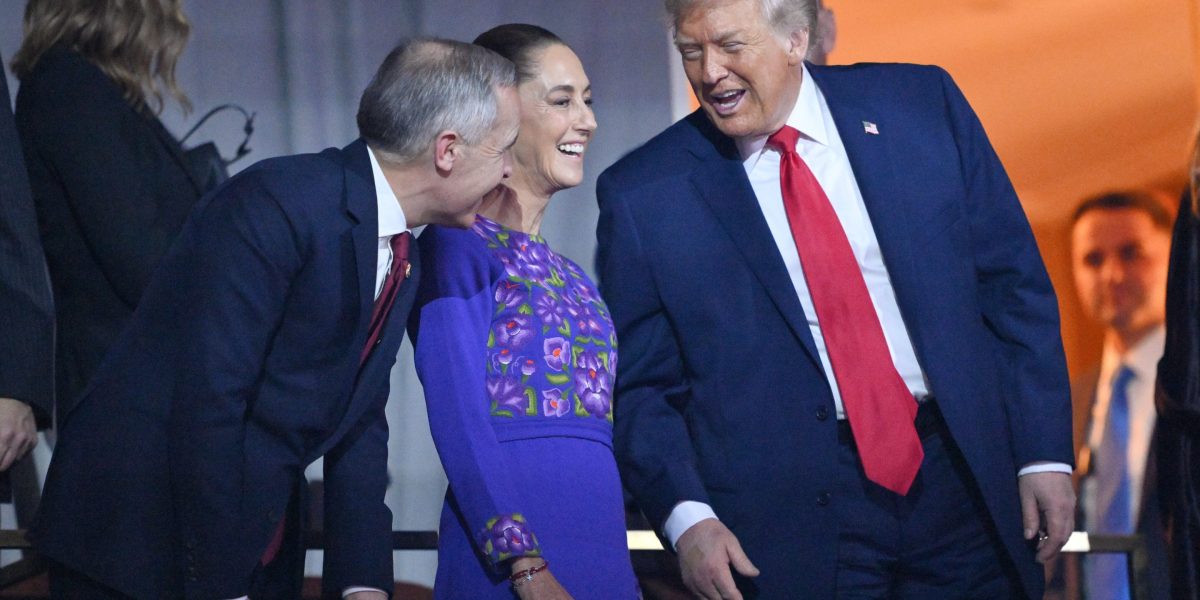
Their long-delayed first face-to-face discussion focused on next year’s World Cup — and included side discussions about trade and tariffs — but immigration was not the top issue. That’s despite Trump’s push to crack down on the U.S.-Mexico border being a centerpiece of his administration, and the driving force in the relations between both countries.

Trump has been in office for more than 10 months, and his having taken so long to see Sheinbaum in-person is striking given that meeting with the leader of the country’s southern neighbor is often a top priority for U.S. presidents.

Trump and Sheinbaum had been set to meet in June on the sidelines of the Group of Seven summit in Canada, but that was scrapped after Trump rushed back to Washington early amid rising tensions between Israel and Iran.

Soccer took center stage — but tariffs still loom large

Trump and Sheinbaum sat talking in the president’s box and also appeared onstage with Canadian Prime Minister Mark Carney at the Kennedy Center for Friday’s 2026 World Cup draw. The U.S., Mexico and Canada are co-hosting the tournament, which begins in June.

A senior White House official, who spoke on the condition of anonymity to discuss private meetings, said Trump, Sheinbaum and Carney met privately after participating in the draw.

Sheinbaum had said before leaving Mexico that she’d talk to Trump about tariffs that his administration has imposed on automobiles, steel and aluminum from Mexico, among other things. She said after appearing at the Kennedy Center that the three leaders “talked about the great opportunity that the 2026 FIFA World Cup represents for the three countries and about the good relationship we have.”

“We agreed to continue working together on trade issues with our teams,” Sheinbaum posted on X.

Mexico is the United States’ largest trading partner. The the U.S.-Mexico-Canada Agreement which Trump forged in his first term as a replacement for 1994’s North American Free Trade Agreement also remains in place. But U.S. Trade Representative Jamieson Greer has begun scrutinizing it ahead of a joint review process set for July.

In the meantime, the U.S. and Mexico’s priorities have been reshaped by the steep drop in the number of people crossing into the U.S. illegally along its southern border, as well as the White House’s — so far largely unrealized — threats to impose large trade tariffs on its neighbor.

Before speaking in-person, Trump and Sheinbaum had repeatedly talked by phone, discussing tariffs and Mexican efforts to help combat the trafficking of fentanyl into the U.S. But despite other world leaders, including Russian President Vladimir Putin and Chinese President Xi Jinping, having already met with Trump this term, the meeting with Sheinbaum hadn’t happened until Friday.

The Trump whisperer?

Waiting so long to meet in person hasn’t seemed to hurt Mexico’s president’s standing with Trump.

The two spoke by phone in November 2024, with the then-U.S. president-elect declaring afterward that they’d agreed “to stop Migration through Mexico” — even as Sheinbaum suggested her country had already been doing enough.

Trump soon after taking office threatened to impose a 25% tariff on goods imported from Mexico in an effort to force that country to better combat fentanyl smuggling, only to later agree to a pause.

The White House subsequently backed off tariff threats against most Mexican goods. Then, in October, Sheinbaum announced that the U.S. had given her country another extension to avoid sweeping 25% tariffs on goods it imports to the U.S. — even as many items covered by the USMCA trade deal remain exempt.

Mexico, though, hasn’t avoided all U.S. tariffs. Sheinbaum’s country continues to try to negotiate its way out of import levies Trump has imposed worth 25% on the automotive sector and 50% on steel and aluminum.

Sheinbaum’s success at mitigating many tariffs, and other successes in the bilateral relationship, has led some to wonder if she has a special gift for getting what she wants from him.

She’s largely pulled it off by affording Trump the respect the U.S. president demands from leaders around the world — but especially a neighboring country — and by deploying occasional humor and pushing back, always respectfully, when necessary.

Sheinbaum also defused another potential point of contention, Trump’s renaming of the Gulf of Mexico to the “Gulf of America,” by proposing dryly that North America should be renamed “América Mexicana,” or “Mexican America.” That’s because a founding document dating from 1814 that preceded Mexico’s constitution referred to it that way.

Still, Mexican officials continue to work furiously to lessen the trade blow from tariffs going into 2026 — levies that could wreck its already low-growth economy, particularly in its all-important automotive sector. Sheinbaum’s government has also sought to defend its citizens living in the U.S. as the Trump administration expands its mass deportation operations.

Sheinbaum’s government also lobbied unsuccessfully against a 1% U.S. tax on remittances, or money transfers that millions of Mexicans send home every year from the United States. It was approved as part of Trump’s tax cut and spending package and takes effect Jan. 1.

Trump’s push for mass deportations

Trump has directed federal officials to prioritize major deportation pushes in Democratic-run cities — an extraordinary move that lays bare the politics of the issues. He’s also deployed the National Guard in an effort to curb crime, which has led to a spike in immigration-related arrests, in places like Los Angeles, Chicago and Washington, as well as Memphis, Tennessee, and Portland, Oregon.

The Trump administration says its priority is targeting “the worst of the worst” criminals, but most of the people detained in operations around the country have not had violent criminal histories.

Such operations often meant targeting Mexican citizens who have lived and worked in the United States for years and may face deportation to a homeland they no longer know well. It also has meant serious threats of declining remittance income, which has fallen for seven consecutive months.

The lower number of illegal U.S.-Mexico border crossings has knocked immigration off its perch as the top agenda item for the U.S.-Mexico bilateral relations for the first time in recent memory.

Mexican officials now say conversations around immigration have shifted toward cajoling countries into taking back their citizens and reintegrating them to keep them from leaving again — a major Trump administration priority around the world.

Cooperation on security

Sheinbaum has blunted some of the Trump administration’s tough talk on fentanyl and drug smuggling cartels by giving her security chief Omar García Harfuch more authority.

Mexico has also extradited dozens of drug cartel figures to the U.S., including Rafael Caro Quintero, long sought in the 1985 killing of a DEA agent. That show of goodwill, and a much more visible effort against the cartels’ fentanyl production, has gotten the Trump administration’s attention.

That’s a significant improvement. Only a few years ago, the DEA struggled to get visas for its people in Mexico, and then-President Andrés Manuel López Obrador accused the U.S. government of fabricating evidence against a former Mexican defense secretary, though he never presented evidence to back up the allegation.

Not everything has gone so smoothly, though. Trump criticized Sheinbaum for rejecting his proposal to send U.S. troops to Mexico to help thwart the illegal drug trade.

Last month, Sheinbaum said there was no way the U.S. military would be able to make strikes in Mexico, after Trump said he was open to the idea. And she has denounced U.S. strikes on boats allegedly carrying drugs in the Caribbean and eastern Pacific.

“The president of Mexico is a lovely woman, but she is so afraid of the cartels that she can’t even think straight,” Trump said earlier this year.

Sheinbaum declined to take the bait — and avoided turning up the political pressure — by sidestepping Trump’s criticism.

___

Associated Press writer Chris Sherman contributed from Mexico City.


Source link

Continue Reading

Business

Former Amazon exec warns Netflix-WBD deal will make Hollywood ‘a system that circles a single sun’

Published

on


A Netflix-Warner Bros. merger would risk a monopsony where a single buyer wields enormous control over the marketplace, the former head of Amazon Studios warned.

Roy Price, who is now chief executive of the studio International Art Machine, wrote in a New York Times op-ed on Saturday that predictions of doom are nothing new in the film industry, pointing to the advent of TV, home video, streaming, and AI.

“But if Netflix acquires Warner Bros., this long-prophesied death may finally arrive, not in the sense that filmmaking will cease but in the sense that Hollywood will become a system that circles a single sun, materially changing its cultural output,” he added. “All orbits—every deal, every creative decision, every creative career—will increasingly revolve around the gravitational mass and imprimatur of one entity.”

To be sure, Netflix has said Warner Bros. operations will continue, and the studio’s films will still be released in theaters. Meanwhile, Warner’s TV channels will be spun off via a separate company, though HBO will be included in Netflix.

But Price said the danger “is not annihilation but centralization,” with the combined company accounting for an even bigger slice of overall content spending.

A reduction in bidders also means less content will be produced, while a separate development culture, set of tastes, and risk tolerances will be sidelined, he predicted.

“A Netflix merger with Warner Bros. would create a monopsony problem: too few buyers with too much bargaining power,” Price explained. “Writers, directors, actors, showrunners, puppeteers, visual effects artists—all are suppliers. The fewer buyers competing to hire them, the lower their compensation and the narrower their opportunities.”

Such reasoning sank Penguin Random House’s attempt to merge with Simon & Schuster that would’ve created a book publisher with too much leverage over authors, he pointed out.

Of course, the remaining players in Hollywood and content creation are giants in their own right as well. A KPMG survey of spending in 2024 put NBC Universal parent Comcast at the top with $37 billion, followed by Alphabet’s YouTube ($32 billion), Disney ($28 billion), Amazon ($20 billion), Netflix ($17 billion) and Paramount ($15 billion). Comcast and Paramount also made bids for Warner Bros.

Theater owners, producers and other creative workers have also voiced opposition to the deal. In addition to the business impact of a Warner Bros. takeover, other opponents raised even weightier concerns.

Oscar winner Jane Fonda sounded the alarm on a “constitutional crisis” and demanded that the Justice Department not use its regulatory power to “extract political concessions that influence content decisions or chill free speech.”

For its part, the Trump administration views the deal with “heavy skepticism,” sources told CNBC. The merger is expected to face exceptional antitrust scrutiny, and Netflix’s $5.8 billion breakup fee is among the biggest ever.

On Wall Street, analysts see a tech angle in the merger, namely the importance of content to train and power the next generation of AI models that will shape the entertainment industry’s future.

The acquisition of Warner Bros. would help Netflix stand out in an AI future, Divyaunsh Divatia, research analyst at Janus Henderson Investors, said in a note on Friday.

“They’re also levering up on premium entertainment at a time when competition on engagement from short form video is expected to intensify especially if AI models democratize video creation at an increasing rate,” he wrote.


Source link

Continue Reading

Trending

Copyright © Miami Select.