
Politics
Winner and Loser of the Week in Florida politics — Week of 11.9.25


Kevin Steele’s decision to launch a campaign for Chief Financial Officer sets off what may quickly become a high-stakes intraparty clash: not just between him and Blaise Ingoglia, but between two pillars of the GOP’s power structure.
Steele, the Pasco County Republican Representative, is expected to kick off his run in early January. His entry is significant, as his campaign is being encouraged by President Donald Trump’s team, which immediately elevates what could otherwise be seen as a standard statewide contest into something with a bit more drama.
On the other side stands Ingoglia, handpicked as CFO by Gov. Ron DeSantis earlier this year. DeSantis’ move to install a loyalist helped tighten his influence over the Cabinet — but it has also inflamed tensions with Trump-aligned Republicans, who saw the appointment as a snub of Joe Gruters.
Gruters, now the Chair of the Republican National Committee, is doing just fine. But by backing Steele, Trump’s team is still looking to pick a fight here.
Steele brings to the race both legislative experience and hefty financial resources. That alone makes him a serious contender. Ingoglia’s campaign has also already gained traction. He’s raised millions in fundraising and is positioning himself as a fiscal watchdog for DeSantis’ agenda — promising to crack down on local government waste and lower property taxes.
As DeSantis nears the end of his time in office, 2026 was ripe for a proxy battle between him and Trump over who would shape Florida’s next chapter. Some of those potential showdowns have been resolved as the two camps have tried to make amends. Trump endorsed longtime DeSantis ally James Uthmeier for Florida Attorney General, for instance.
But Steele’s maneuvering here shows that there remains friction behind the scenes, no matter how many photo ops and flowery statements the Trump and DeSantis allies put out.
Will the Governor’s race be the next battleground?
Now, it’s onto our weekly game of winners and losers.
Winners

Honorable mention: Oyster farmers. Months after the state announced the long-awaited return of oyster harvesting in the Apalachicola Bay, applications are now open for the 2026 season.
The state began taking applications on Nov. 10. Those seeking to apply have until Dec. 16.
The first limited season will run from Jan. 1 to Feb. 28. Commercial harvesters will need a new endorsement from the state, and recreational pickers will be selected via lottery.
Once, Apalachicola Bay was the crown jewel of Florida’s oyster industry. At its peak it supplied more than 90% of the state’s oysters and about 10% of the nation’s wild harvest. But a combination of mismanagement and natural events caused the oyster beds to collapse, pushing a way of life to the edge of extinction.
Now, following years of restoration work and regulatory reforms, the Florida Fish and Wildlife Conservation Commission has approved a revised management plan. Apalachicola’s fishermen, crew members, processors and waterfront businesses have been on standby for years, many forced into non-maritime jobs as their boats sat idle. The economic ripple effect touched restaurants, festivals and the identity of the community. The reopening gives them a tangible reason to hope again.
That said, caution remains prudent so we don’t end up having to do this all over again. But the fact that recovery has advanced to this point is meaningful.
Almost (but not quite) the biggest winner: City of Westlake. Mayor J.P. O’Connor and incumbent Council members each qualified for elections in Palm Beach County’s newest city unopposed, locking in another term without a single ballot cast and sparing residents the cost, noise and theatrics that usually accompany even the quietest of local races.
For a city incorporated less than a decade ago, that kind of stability is notable. Westlake has been growing at an astonishing pace, driven largely by large-scale residential development and families drawn to its newer infrastructure, schools and amenities.
Rapid growth often brings political turnover, policy fights and the usual turf wars that arise when a young city is still shaping its identity. But this cycle, Westlake is setting a different tone — one where continuity is the headline.
Skipping a municipal election also comes with a very real financial benefit. Elections aren’t cheap, and for a small but expanding city, every avoided expense means more dollars available for services, infrastructure and long-term planning. A drama-free ballot not only reinforces confidence in the current leadership team but also helps Westlake keep its fiscal footprint tight at a time when residents everywhere are watching the rising cost of local government.
The lack of challengers doesn’t mean the city is standing still. Westlake continues to guide major development, navigate county-level coordination and manage an influx of new residents who expect modern services delivered efficiently. But at least for this cycle, the political waters are calm.
The biggest winner: Josie Tomkow. After previously announcing her intent to run in Senate District 14, Department of Business and Professional Regulation Secretary Melanie Griffin decided this week to back off a bid.
That’s good news for Tomkow, as her most credible potential opponent is now out of the race, leaving Tomkow as the clear front-runner in the contest.
Tomkow already entered the cycle with significant advantages. She’s well-liked within the caucus, has relationships across the Capitol, and enjoys a deep bank of institutional support that most early-career legislators can only envy. Her fundraising capacity is established, and she has built a brand as a reliably conservative, agriculture-minded voice that fits a district like SD 14.
Yes, perennial candidate Amaro Lionheart is also set to run as a Republican. But Griffin’s exit ensures Republican leaders will continue coalescing around Tomkow, allowing her to further consolidate support.
The timing matters too. With Session approaching and donor attention fragmenting across high-profile federal and statewide contests, avoiding a divisive and expensive Primary is welcome in a seat previously held by a Republican, but which has been competitive in the past.
Now, instead of batting through August, Tomkow gets to run the kind of disciplined, methodical campaign that front-runners rely on: locking down endorsements, servicing key constituencies and focusing on General Election positioning rather than defending her right flank (not that she needs to).
Griffin stepping aside doesn’t hand Tomkow the seat — but it unquestionably strengthens her hold on the path to it.
Losers
Dishonorable mention: Bowen Kou. Kou’s ill-advised 2024 Senate campaign continues to be an albatross after a Judge held him in contempt of court for failing to pay nearly $167,000 and threatened him with jail time if he doesn’t comply.
Kou’s troubles stem from a defamation lawsuit stemming from that race that he filed against the Florida Republican Senatorial Campaign Committee (FRSCC). The court found the FRSCC did not defame him, granted summary judgment, and said his evidence was shredded by Florida’s anti-SLAPP statute because he failed to show “actual malice” and relied on hearsay. The court then ordered Kou to pay up and deposit the funds into the court registry.
When Kou didn’t meet the deadline, Judge D.R. Mosley moved to hold him in contempt and warned of 30 days in jail if the payment isn’t made within 10 days.
Mind you, Kou has a reported net worth of around $16.1 million, and yet the court says he could pay but chose not to meet the order.
After losing the 2024 Senate District 13 Republican Primary to Keith Truenow, Kou tried to turn the tables with litigation and instead found the courts throwing out his claims and ordering payment. The public spectacle of a Judge threatening jail time should be more than enough to keep Kou away from trying — and likely failing — to win over voters anytime soon.
Almost (but not quite) the biggest loser: James Fishback. Fishback is toying with entering a race for Governor that already has one GOP front-runner in terms of polling and fundraising — who also touts an endorsement from Trump — and another former House Speaker.
That is to say, if he wants to make a dent in this race as an outsider candidate, he needs to hit the ground running and present himself as a serious alternative.
That’s not happening.
Fishback is trying to align himself as the spiritual successor to DeSantis. Yet he has already been forced to scrub his social media history, deleting posts criticizing Hope Florida over the Centene scandal.
He also deleted a post from just over two months ago praising Byron Donalds as “the future of America First. That’s beyond awkward given Fishback’s now ongoing crusade to criticize Donalds and mount a run against him.
You have a White House official calling him a liar and another accusing him of “chasing clout on right-wing X.” Fishback is so aggressively anti-immigration that U.S. Rep. Randy Fine is labeling Fishback a “groyper” and a “weirdo loser.”
And that’s all from members of his own party.
So yeah, not great.
Now Fishback would like to make this race about him, an outsider, running against the establishment. That’s a fair framing of some races and an attractive argument, if you can pull it off, in an era where frustration among the electorate is palpable.
But it’s also a convenient rhetorical trick that lets a candidate frame anyone who doesn’t support their longest of long shot campaigns as “the establishment.”
The reality is that very few voters know who this guy is, and he’s going scorched earth and earning the ire of most respected Republican leaders who are in a far stronger position to frame Fishback’s candidacy than he is.
And inside that framing is a pretty ugly picture so far. We’re not really sure what the endgame here aside from that aforementioned social media clout chasing. Good luck with that.
The biggest loser: Matt Gaetz, Chris Dorworth. Gaetz may have moved on from Congress, but the scandals that colored his congressional career continue to linger.
According to The New York Times, newly unsealed court documents offer new details from a woman who accused Gaetz of having sex with her when she was underage.
The NYT article describes her as “a then-homeless 17-year-old high schooler” who had signed up on a “sugar-dating” website to earn money for braces. That adds new — and, if true, far more disturbing — color to an already unseemly story.
The documents allege she attended a party at Dorworth’s home where Gaetz was also present. The Times story contains all of the nitty gritty details, including allegations of drug use and sex. Gaetz continues to deny wrongdoing, and no charges were ever filed against him in this case. But the weight of the allegations nevertheless continues to shadow him and any future ambitions.
As for Dorworth, the former Florida legislator and lobbyist continues to find himself entangled in the controversy as well. Although Dorworth has repeatedly stated he was not home at the time of the party, phone records cited in the filings raise questions about his claims.
New layers to this story keep emerging. And though Gaetz and Dorworth are more than ready to put this story to bed and/or claim exoneration, the continued drip-drip-drip of new facts is making that impossible.
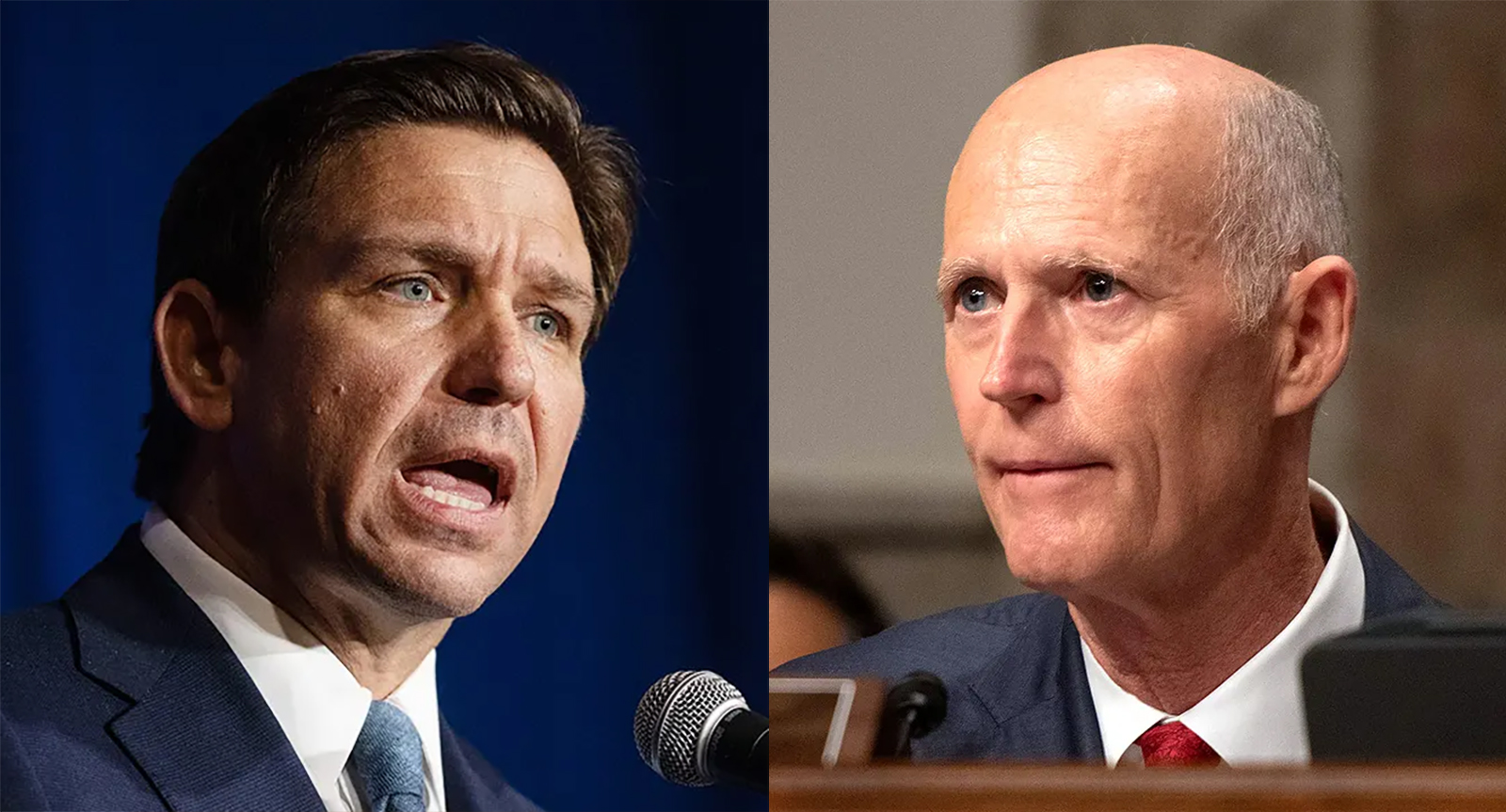
The cold war between Florida’s Governor and his predecessor is nearly seven years old and tensions show no signs of thawing.
On Friday, Sen. Rick Scott weighed in on Florida Politics’ reporting on the Agency for Health Care Administration’s apparent repayment of $10 million of Medicaid money from a settlement last year, which allegedly had been diverted to the Hope Florida Foundation, summarily filtered through non-profits through political committees, and spent on political purposes.
“I appreciate the efforts by the Florida legislature to hold Hope Florida accountable. Millions in tax dollars for poor kids have no business funding political ads. If any money was misspent, then it should be paid back by the entities responsible, not the taxpayers,” Scott posted to X.
While AHCA Deputy Chief of Staff Mallory McManus says that is an “incorrect” interpretation, she did not respond to a follow-up question asking for further detail this week.
The $10 million under scrutiny was part of a $67 million settlement from state Medicaid contractor Centene, which DeSantis said was “a cherry on top” in the settlement, arguing it wasn’t truly from Medicaid money.
But in terms of the Scott-DeSantis contretemps, it’s the latest example of tensions that seemed to start even before DeSantis was sworn in when Scott left the inauguration of his successor, and which continue in the race to succeed DeSantis, with Scott enthusiastic about current front runner Byron Donalds.
Earlier this year, Scott criticized DeSantis’ call to repeal so-called vaccine mandates for school kids, saying parents could already opt out according to state law.
While running for re-election to the Senate in 2024, Scott critiqued the Heartbeat Protection Act, a law signed by DeSantis that banned abortion after the sixth week of pregnancy with some exceptions, saying the 15 week ban was “where the state’s at.”
In 2023 after Scott endorsed Donald Trump for President while DeSantis was still a candidate, DeSantis said it was an attempt to “short circuit” the voters.
That same year amid DeSantis’ conflict over parental rights legislation with The Walt Disney Co., Scott said it was important for Governors to “work with” major companies in their states.

The critiques went both ways.
When running for office, DeSantis distanced himself from Scott amid controversy about the Senator’s blind trust for his assets as Governor.
“I basically made decisions to serve in uniform, as a prosecutor, and in Congress to my financial detriment,” DeSantis said in October 2018. “I’m not entering (office) with a big trust fund or anything like that, so I’m not going to be entering office with those issues.”
In 2020, when the state’s creaky unemployment website couldn’t handle the surge of applicants for reemployment assistance as the pandemic shut down businesses, DeSantis likened it to a “jalopy in the Daytona 500” and Scott urged him to “quit blaming others” for the website his administration inherited.
The chill between the former and current Governors didn’t abate in time for 2022’s hurricane season, when Scott said DeSantis didn’t talk to him after the fearsome Hurricane Ian ravaged the state.

Enforcing what Gov. Ron DeSantis calls the “rule of law” violates international law and norms, according to a global group weighing in this week.
Amnesty International is the latest group to condemn the treatment of immigrants with disputed documentation at two South Florida lockups, the Krome North Service Processing Center (Krome) and the Everglades Detention Facility (Alligator Alcatraz).
The latter has been a priority of state government since President Donald Trump was inaugurated.
The organization claims treatment of the detained falls “far below international human rights standards.”
Amnesty released a report Friday covering what it calls a “a research trip to southern Florida in September 2025, to document the human rights impacts of federal and state migration and asylum policies on mass detention and deportation, access to due process, and detention conditions since President Trump took office on 20 January 2025.”
“The routine and prolonged use of shackles on individuals detained for immigration purposes, both at detention facilities and during transfer between facilities, constitutes cruel, inhuman and degrading treatment, and may amount to torture or other ill-treatment,” the report concludes.
Gov. DeSantis’ administration spent much of 2025 prioritizing Alligator Alcatraz.
While the state did not comment on the report, Amnesty alleges the state’s “decision to cut resources from essential social and emergency management programs while continuing to allocate resources for immigration detention represents a grave misallocation of state resources. This practice undermines the fulfillment of economic and social rights for Florida residents and reinforces a system of detention that facilitates human rights violations.”
Amnesty urges a series of policy changes that won’t happen, including the repeal of immigration legislation in Senate Bill 4-C, which proscribes penalties for illegal entry and illegal re-entry, mandates imprisonment for being in Florida without being a legal immigrant, and capital punishment for any such undocumented immigrant who commits capital crimes.
The group also recommends ending 287(g) agreements allowing locals to help with immigration enforcement, stopping practices like shackling and solitary confinement, and closing Alligator Alcatraz itself.


In one year of planning, the Dr. Phillips Center for the Performing Arts Center has pulled off an extraordinary feat: It has turned the heart of downtown into a magical Winter festival.
“It’s amazing. I had no idea just what the transformation would be,” said Orlando Mayor Buddy Dyer during a preview for the media and local officials this week for the first-ever Frontyard Holiday Festival supported by AdventHealth.
Fire pits glow. Singers perform on stage. Fake snow falls down for the Florida kids who don’t know the real thing. Holiday booths sell coquito, sandwiches and hearty snacks. It’s easy to forget that the 408 traffic is in the backdrop or ignore an ambulance siren going by. Instead, you get lost in Santa greeting children and the music on stage from Central Florida’s talent.
The free festival, which is officially open, runs 28 days through Jan. 4 and will feature 80 live performances, holiday movies, nightly tree lightings and more. The slate of performers includes opera singers, high school choirs, jazz performers, Latin Night and more. The schedule is available here.
About 300,000 people are expected to attend — a boon to the city’s economy especially since one 1 of every 4 Dr. Phillips Center visitors typically comes from outside Orange County, said Orange County Commissioner Mike Scott.
“Most importantly, this festival builds connections,” Scott said. “This festival creates a cultural and economic ripple that extends well beyond the borders of downtown.”
The performing arts center has hosted “Lion King,” “Hamilton” and more during its 10 years in business. But during the pandemic, it began using the space out front — its “front yard” — in innovative ways, said Kathy Ramsberger, President and CEO of Dr. Phillips Center.
Keeping patrons spread apart in individual seat boxes, Dr. Phillips held concerts outdoors during the pandemic.
Ramsberger said the Dr. Phillips Center purposefully has chosen not to develop the land in order to keep the space for people to come together.
“Hopefully, this will grow across the street to City Hall, down the street, over to Orange County administration building, up and down Orange Avenue, and the entire city will be connected with something that the City of Orlando started to celebrate Christmas and the holidays,” Ramsberger said.



Hope Florida fallout drives another Rick Scott rebuke of Ron DeSantis

The ‘Great Housing Reset’ is coming: Income growth will outpace home-price growth in 2026

Amnesty International alleges human rights violations at Alligator Alcatraz
-

 Politics8 years ago
Congress rolls out ‘Better Deal,’ new economic agenda
-
Entertainment8 years ago
New Season 8 Walking Dead trailer flashes forward in time
-
Politics8 years ago
Poll: Virginia governor’s race in dead heat
-
Entertainment8 years ago
The final 6 ‘Game of Thrones’ episodes might feel like a full season
-
Entertainment8 years ago
Meet Superman’s grandfather in new trailer for Krypton
-
Politics8 years ago
Illinois’ financial crisis could bring the state to a halt
-
Business8 years ago
6 Stunning new co-working spaces around the globe
-
Tech8 years ago
Hulu hires Google marketing veteran Kelly Campbell as CMO