Black Friday? No. Cyber Monday? Nope. Prime Day? Absolutely not. The world’s biggest shopping event happens in China each year – and is called Singles’ Day.
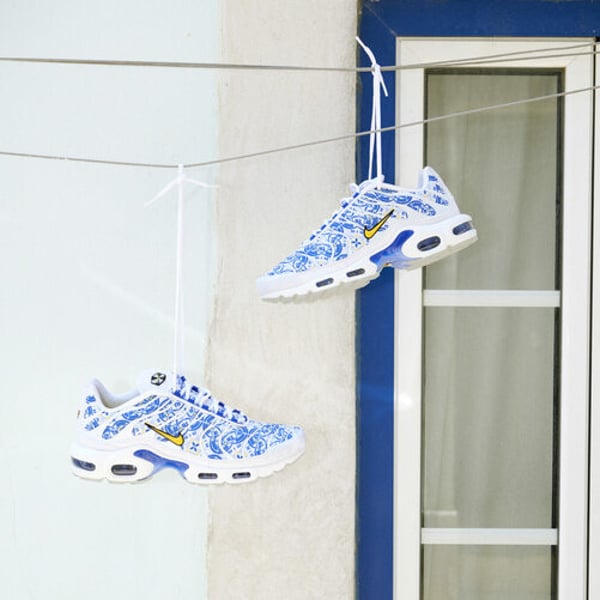
Trainers by Nike – DR
Originally a holiday to celebrate being single, as a counter to Valentine‘s Day, the event has grown into a weeks-long online shopping festival that this year began on October 9 and runs through November 11 – making it the longest Singles’ Day sales period ever.
The idea for Singles’ Day originated at China’s Nanjing University back in 1993 and was originally called “Bachelor’s Day.” On the day, single people treat themselves with gifts and presents, while also organising social gatherings and parties.
Last year, the total value of goods sold during the shopping bonanza – also known as “Double 11” – totalled 1.44 trillion yuan ($202 billion), according to data provider Syntun. That is almost five times the $41.1 billion US shoppers spent last year during Cyber Week, the period from Black Friday to Cyber Monday, per data from Adobe Analytics.
Cyber Monday immediately follows Black Friday, which falls on the day after the US Thanksgiving Day holiday, the busiest shopping day of the year in the US. But growth has been harder to come by for major e-commerce players in China, which have extended their Singles’ Day sales period and leaned heavily on subsidies and coupons to entice spending. Last year’s sales growth rate of 27% was largely attributed to a longer overall festival period.
This year Alibaba Group pledged 50 billion yuan in subsidies for its 88VIP members over the Singles’ Day period. The event has, in recent years, lost some of its novelty with the rise of other shopping festivals in China, including the midyear “618” sales which is the country’s second-largest, and has also lengthened to a weeks-long event.
While Alibaba started “Double 11” in 2009 to win over online shoppers with discounts and promotions, China’s major e-commerce platforms now all take part in it. JD.com joined in 2012 and PDD Holdings-owned Pinduoduo has also become a significant player, offering low-cost products in competition with Alibaba-owned Tmall and Taobao platforms.
Last year, categories covered by a national 150 billion yuan household-appliance-subsidy scheme outperformed. With a higher comparison base this year, those categories are expected to decline. Nomura analysts forecast in October that home appliance sales will fall 20% in the fourth quarter in China. Instant retail – one-hour delivery of online orders – is also a focus this year. Alibaba and JD.com have poured billions into subsidies throughout 2025 to attract shoppers to rapid-delivery channels, which have been growing faster than e-commerce overall.
Many global companies, from apparel maker Nike to cosmetics firm Estee Lauder and consumer goods giant Procter & Gamble, have a big presence on Chinese e-commerce platforms such as Tmall and JD.com. Aggressive discounting has been a hallmark of Chinese shopping festivals since pandemic restrictions ended in China in late 2022, though consumption overall has remained sluggish as people save more in the face of macroeconomic challenges and a prolonged property crisis.
According to Alibaba, 35 brands, including Nike, L’Oreal, and local firms Anta and Proya, sold more than 100 million yuan of merchandise in the first hour of the sale this year. At a press conference a few days into its Singles’ Day sales period, JD.com said it would list over 100,000 “hit” products at its lowest prices of the year and sell 50,000 pairs of thermal Long Johns at 2 yuan each, shipping included.
Phone sales are expected to be strong this year, given recent launches of Apple‘s iPhone 17 series and Xiaomi‘s 17 series in September. Within the first two hours, sales of iPhone on Apple’s Tmall store exceeded the full-day total for the same period last year, according to Alibaba, which did not disclose specific figures.
The demerger of Unilever‘s ice cream division, to be named ‘The Magnum Ice Cream Company,’ which had been delayed in recent months by the US government shutdown, will finally go ahead on Saturday, the British group announced.
Reuters
Unilever said in a statement on Friday that the admission of the new entity’s shares to listing and trading in Amsterdam, London, and New York, as well as the commencement of trading… is expected to take place on Monday, December 8.
The longest federal government shutdown in US history, from October 1 to November 12, fully or partially affected many parts of the federal government, including the securities regulator, after weeks without an agreement between Donald Trump‘s Republicans and the Democratic opposition.
Unilever, which had previously aimed to complete the demerger by mid-November, warned in October that the US securities regulator (SEC) was “not in a position to declare effective” the registration of the new company’s shares. However, the group said it was “determined to implement in 2025” the separation of a division that also includes the Ben & Jerry’s and Cornetto brands, and which will have its primary listing in Amsterdam.
“The registration statement” for the shares in the US “became effective on Thursday, December 4,” Unilever said in its statement. Known for Dove soaps, Axe deodorants and Knorr soups, the group reported a slight decline in third-quarter sales at the end of October, but beat market expectations.
Under pressure from investors, including the activist fund Trian of US billionaire Nelson Peltz, to improve performance, the group last year unveiled a strategic plan to focus on 30 power brands. It then announced the demerger of its ice cream division and, to boost margins, launched a cost-saving plan involving 7,500 job cuts, nearly 6% of the workforce. Unilever’s shares on the London Stock Exchange were steady on Friday shortly after the market opened, at 4,429 pence.
This article is an automatic translation. Click here to read the original article.
Burberry has named a new chief operating and supply chain officer as well as a new chief customer officer. They’re both key roles at the recovering luxury giant and both are being promoted from within.
Matteo Calonaci becomes chief operating and supply chain officer, moving from his role as senior vice-president of strategy and transformation at the firm.
In his new role, he’ll be oversee supply chain and planning, strategy and transformation, and data and analytics. He succeeds Klaus Bierbrauer, who’s currently Burberry supply chain and industrial officer. Bierbrauer will be leaving the company following its winter show and a transition period.
Matteo Calonaci – Burberry
Meanwhile, Johnattan Leon steps up as chief customer officer. He’s currently currently Burberry’s senior vice-president of commercial and chief of staff. In his new role he’ll be leading Burberry’s customer, client engagement, customer service and retail excellence teams, while also overseeing its digital, outlet and commercial operations.
Both Calonaci and Leon will join the executive committee, reporting to Company CEO Joshua Schulman.
JohnattanLeon – Burberry
Schulman said of the two execs that the appointments “reflect the exceptional talent and leadership we have at Burberry. Both Matteo and Johnattan have been instrumental in strengthening our focus on executional excellence and elevating our customer experience. Their deep understanding of our business, our people, and our customers gives me full confidence that their leadership will help drive [our strategy] Burberry Forward”.
Traditional and occasion wear designer Puneet Gupta has stepped into the world of fine jewellery with the launch of ‘Deco Luméaura,’ a collection designed to blend heritage and contemporary aesthetics while taking inspiration from the dramatic landscapes of Ladakh.
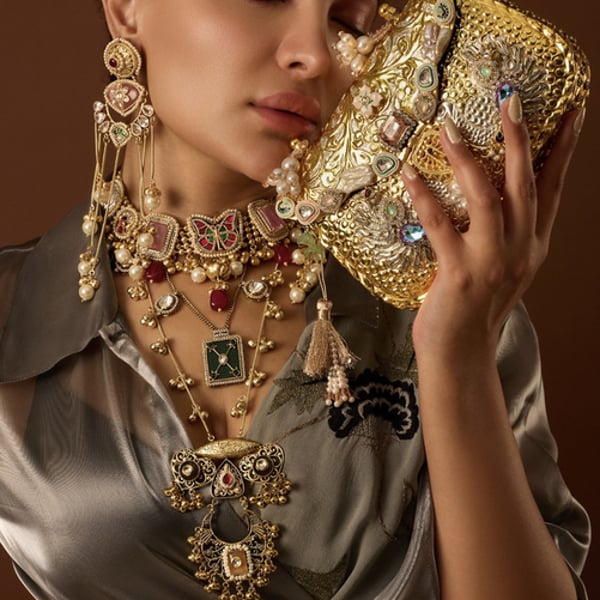
Hints of Ladakh’s heritage can be seen in this sculptural evening bag – Puneet Gupta
“For me, Deco Luméaura is an exploration of transformation- of material, of story, of self,” said Puneet Gupta in a press release. “True luxury isn’t perfect; it is intentional. Every piece is crafted to be lived with and passed on.”
The jewellery collection features cocktail rings, bangles, chokers, necklaces, and statement evening bags made in recycled brass and finished with 24 carat gold. The stones used have been kept natural to highlight their imperfect and unique forms and each piece in the collection has been hammered, polished, and engraved by hand.
An eclectic mix of jewels from the collection – Puneet Gupta
Designed to function as wearable art pieces, the colourful jewellery echoes the geometry of Art Deco while incorporating distinctly South Asian imagery such as camels, butterflies, and tassels. Gupta divides his time between his stores in Hyderabad and Delhi and aims to bring Indian artistry to a global audience while crafting a dialogue between designer and artisan.